

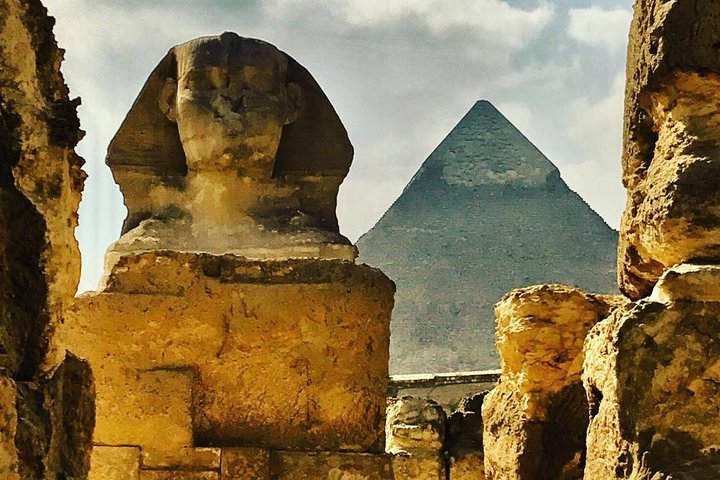
The Great Sphinx of Giza is one of the most rewarding stops on a Cairo excursion from Hurghada. The photograph is familiar; the experience becomes much more interesting when you understand what you are looking at, how the viewing stop fits into a long day, and which museum your booking actually includes. This guide brings those decisions together, with four real excursion options, practical photo ideas and a clear distinction between standard sightseeing and paid extras.
Picture your ideal visit before choosing the vehicle. You might want a relaxed explanation beside the monuments, a family photograph with the pyramids behind you, or a day that also introduces the treasures of the Grand Egyptian Museum. All three are sensible priorities, but they lead to different questions at booking. The aim is to choose a programme that gives you the experience you value, with enough energy left to enjoy it.
Explore the four programmes: Tahrir Museum + Giza by bus · Tahrir Museum + Giza by minibus · GEM + Giza by bus · GEM + Giza by minibus
Plan your Sphinx and Cairo visit on WhatsApp
Programme details checked on 1 November 2026. Confirm availability and the full total for your date and hotel. Photos illustrate the destinations; labelled archival views do not establish current access or included extras.

1. Why the Great Sphinx of Giza deserves more than a quick photograph
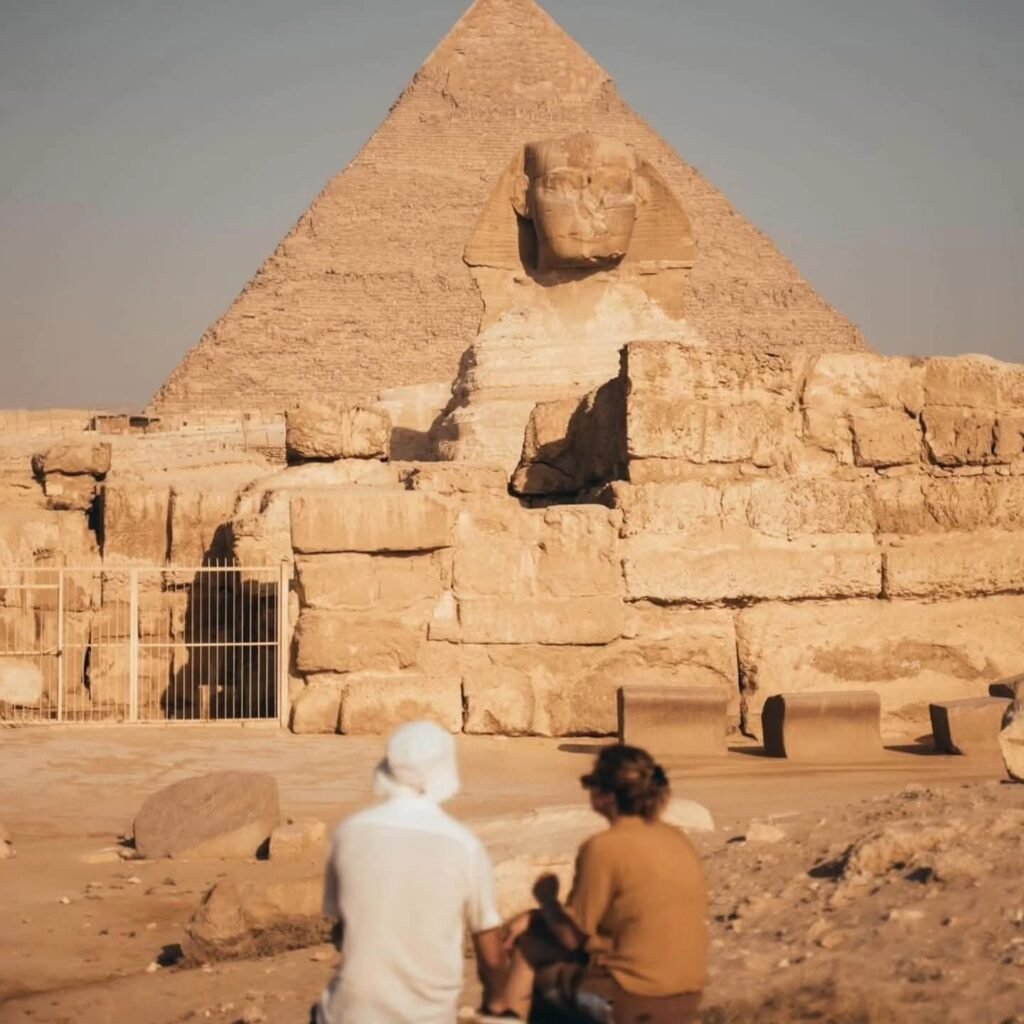
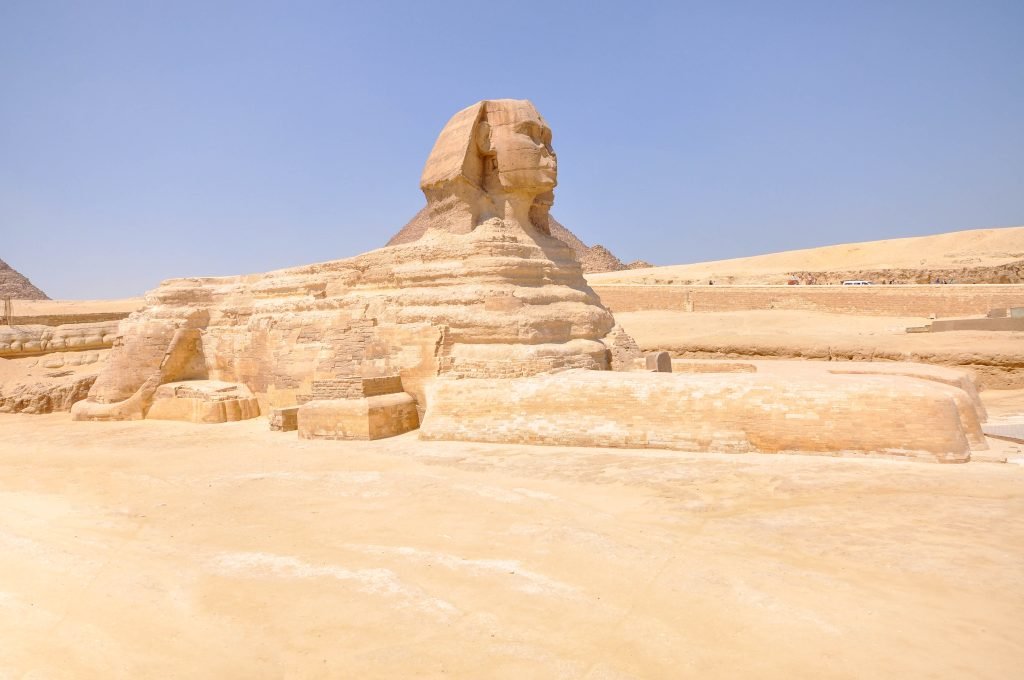
The pyramids impress through their geometry; the Sphinx gives the landscape a face. A useful way to approach the stop is to pause before looking through your phone. Notice the head, the long body, the paws and the surrounding stonework, then look back towards the pyramids. That sequence helps you appreciate the relationship between individual monuments instead of collecting disconnected snapshots.
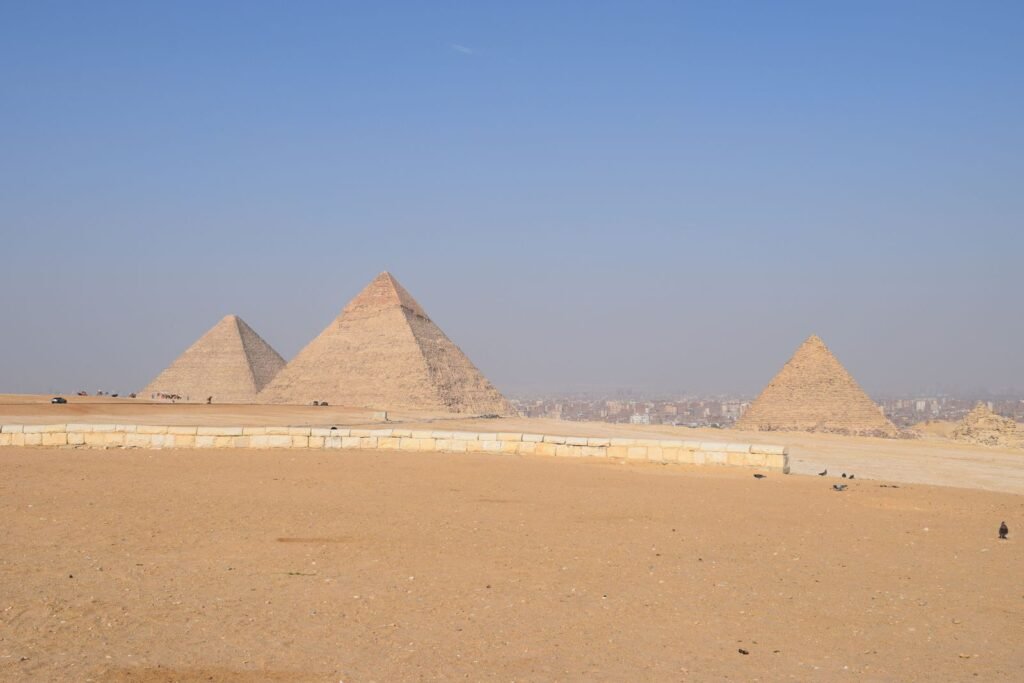
For a first visit, its particular strength is variety. You can combine looking, listening and photographing without needing to enter a narrow pyramid passage. That does not remove the walking or the long road journey, but it does mean the outdoor viewing experience has value in its own right. Someone who decides against optional pyramid interior entry can still enjoy a meaningful Giza visit.
Tell the guide what matters most to you: understanding the monument, taking one family portrait, or finding an unobstructed view. A short, clear priority is easier to accommodate than a long list of poses introduced just before departure. Agree on the meeting point and return time before moving away from the group.
Our advice is to treat the Great Sphinx of Giza as a story to explore as well as a picture to take. Ask one thoughtful question, allow a moment to look without a screen, then take your photographs. Even a busy sightseeing stop feels more memorable when you give it that small amount of attention.
2. Understand the history without getting lost in legends
The statue was carved from bedrock during Egypt’s Fourth Dynasty. Archaeological evidence associates it with Khafre, the ruler linked to Giza’s second pyramid; the royal human head and lion’s body express kingship and strength. Those are the essential historical anchors for a first visit.
Its scale is another useful starting point: Harvard’s Digital Giza gives a length of about 73.5 metres and a height of around 20 metres. Exact measurements mean little on a phone screen, so compare the sculpture with the people and structures visible from your permitted viewpoint. Perspective can make the same monument appear very different in two photographs.
Rather than expecting your guide to explain every dynasty, ask how the statue relates to the pyramid landscape. Which pyramid belongs to Khafre? What can be identified from where the group is standing? Which details are ancient stone, and which show later conservation? These questions encourage a visual explanation that is easier to remember than a list of dates.
Popular stories are entertaining, but a confident story is not automatically archaeological evidence. When you hear an extraordinary claim, ask whether it comes from an inscription, excavation, scholarly interpretation or a modern legend. You do not need to settle every debate to appreciate the place. A clear distinction between evidence and storytelling makes the Great Sphinx of Giza more interesting, not less.
3. Discover the Dream Stela and look for the details
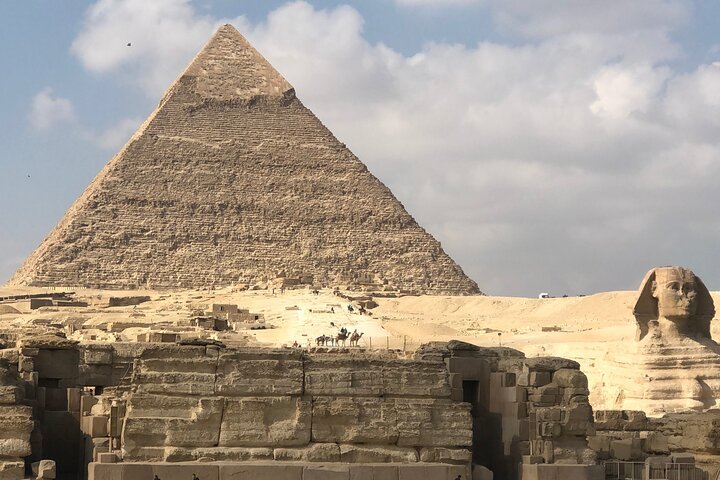
The Dream Stela stands between the front paws. Its account describes the young Thutmose IV sleeping near the monument and being promised kingship if he cleared away the sand. Read this as an ancient royal narrative, rather than independent proof that a supernatural event occurred.
The practical point is equally important: knowing about a detail does not mean your standard ticket takes you directly beside it. Do not build your plans around touching the paws, reading the inscription at close range or standing inside the enclosure. The route and viewing positions available to ordinary visitors follow the site’s arrangements on the day.
A guide can explain the stela using the overall view, a reference illustration or a description even when you cannot inspect its carved surface. Bring your questions to the explanation rather than trying to cross barriers for a closer photograph. A phone’s digital zoom also has limits; a distant inscription will not necessarily become legible because you enlarge the image.
Try a simple observation exercise with children or curious adults: first identify the face, then the paws, then the area between them. Afterwards, ask each person which detail changed their impression of the monument. This creates a shared memory without turning the visit into an exam.
The Great Sphinx of Giza rewards this kind of attentive looking. You leave with more than the familiar silhouette, while keeping realistic expectations about the distance between you and the archaeological details.

4. Check what your Sphinx visit actually includes
The four road programmes compared below include the Giza Pyramids and Great Sphinx, standard Giza Plateau admission, the named museum’s standard admission, an Egyptologist guide, lunch and drinks, and Hurghada pickup and return. The museum and vehicle are the main choices; the Sphinx is not an extra destination that requires choosing GEM over Tahrir.
Standard sightseeing is different from special access. A normal excursion does not promise a private visit inside the Sphinx enclosure, an empty viewing platform or access to every archaeological area. If a particular location is essential to your plans, ask about it specifically before booking. A photograph taken from somewhere unusual does not prove that position is available on your departure.
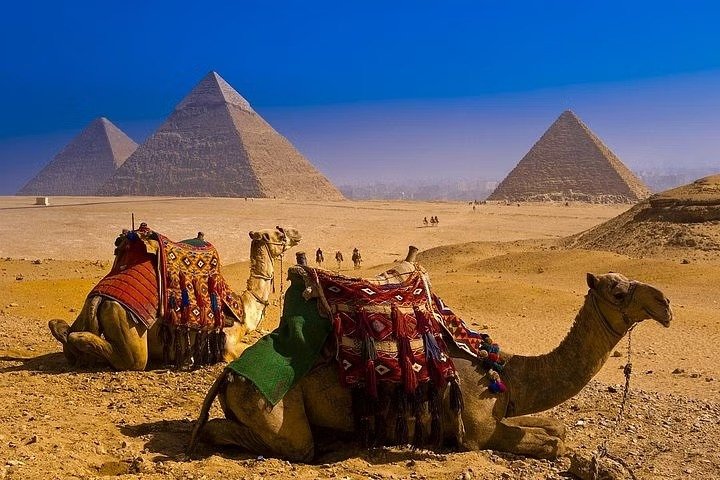
Entry inside the Great Pyramid requires a separate ticket. An optional Nile boat trip and personal purchases also cost extra. Camel photographs or rides shown in destination imagery should not be read as an included service; ask about price, duration and consent before agreeing to an activity.
Start with the experience already included and decide whether any extra genuinely interests you. Buying more activities is not necessary to make the day worthwhile. If your priority is the Great Sphinx of Giza, tell the guide early and preserve time for the included visit instead of adding optional commitments without checking the schedule.
Keep the written booking confirmation. It should identify the museum, vehicle, hotel, travellers, total price and agreed arrangements. That is more useful on the day than a screenshot containing only a large headline price.
5. Compare four Cairo programmes from Hurghada
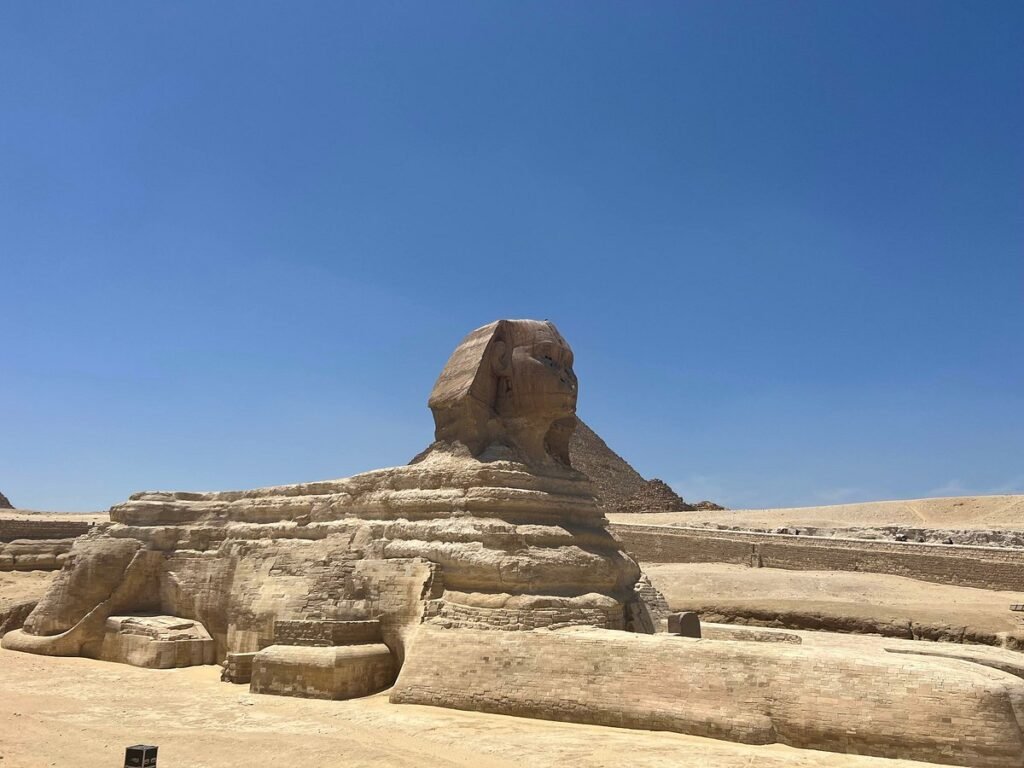
There are two decisions to make: which museum you want, and whether you prefer a shared bus or a smaller shared minibus. The Great Sphinx of Giza appears in all four itineraries. A minibus does not buy a different Sphinx ticket, and a higher fare does not automatically mean more time at every stop.
| Programme | Age 10+ | Age 4–9 | Age 0–3 | Shared group |
|---|---|---|---|---|
| Tahrir Museum + Giza by bus | €65 | €35 | €20 | Up to 30 |
| Tahrir Museum + Giza by minibus | €80 | €40 | €35 | Up to 8 |
| GEM + Giza by bus | €80 | €40 | €20 | Up to 30 |
| GEM + Giza by minibus | €95 | €50 | €40 | Up to 8 |
Programme names open the corresponding booking pages. Allow around 17–20 hours overall; Hurghada pickup is included, with resort supplements and optional extras checked separately.
Tahrir by bus: the lowest published adult fare among these four choices. Its appeal is the classic central Cairo museum combined with the Giza monuments, for travellers comfortable with a larger shared group.
Tahrir by minibus: the same museum choice in a group of up to eight. It suits guests who place more value on the smaller group format than on changing museums. It remains shared transport, with a planned itinerary and other travellers.
GEM by bus: choose this when the Grand Egyptian Museum is central to your wish list while keeping the shared coach format. The programme names the Tutankhamun Galleries; exact access and the museum route remain subject to operations and timing.
GEM by minibus: combines the GEM programme with the smaller shared group. Its main advantage is that combination, rather than a promise of private transport, guaranteed speed or unlimited museum time.
For two adults and an eight-year-old, the corresponding base totals are €165, €200, €200 and €240. These are simple fare sums, not family discounts, and exclude resort supplements and optional purchases. Compare the full total for your own ages and hotel before deciding.
6. Choose Tahrir or GEM according to your interests
The Sphinx stop does not decide your museum for you. Tahrir and GEM are different museums with different programmes, so the name on the reservation matters more than a general phrase such as “Cairo museum”. Our Egyptian Museum versus Grand Egyptian Museum comparison explains the choice in more detail.
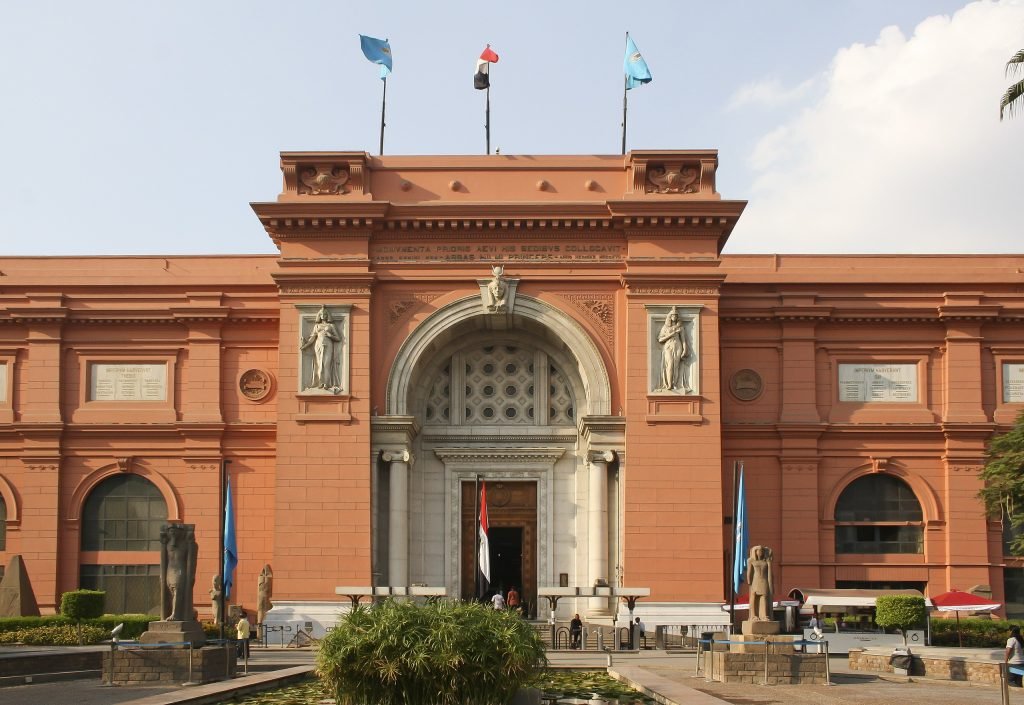
Choose Tahrir if the historic central Cairo museum is the experience you want. Its appeal is the established museum setting and a broad introduction to Egyptian antiquities alongside your outdoor Giza visit. Do not book it expecting the principal Tutankhamun collection simply because an old travel photograph shows famous objects there.
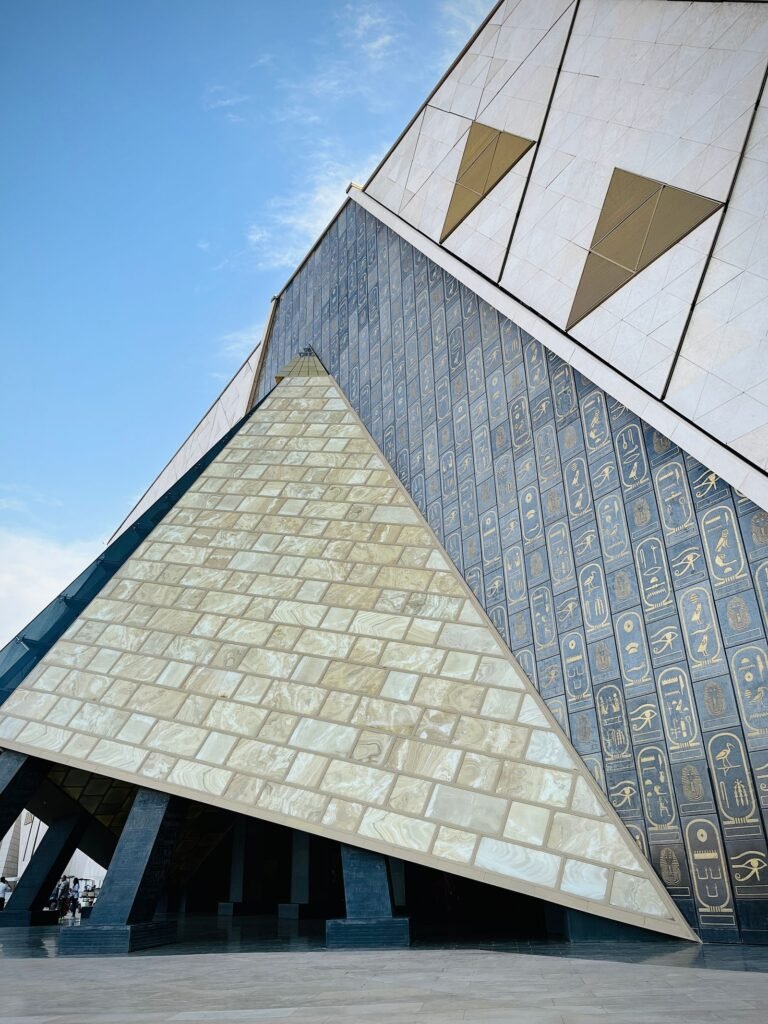
Choose GEM if the Grand Egyptian Museum and its Tutankhamun Galleries are a priority. The architecture and museum visit add another dimension to a day already centred on Giza. Still, this is a day excursion with travel, lunch and outdoor sightseeing; it is not an unlimited visit covering every gallery and object.
One useful decision exercise is to finish this sentence together: “We would be disappointed if we returned without seeing…” If the answer is the Sphinx and pyramids, either museum programme can meet that central aim. If the answer names GEM or Tutankhamun’s principal collection, select the GEM itinerary explicitly.
Do not assume both museums are included in one of the four programmes. Confirm the selected museum and your main interests in the same message. That keeps the Great Sphinx of Giza visit connected to a museum experience you actually want, rather than one chosen by accident.
7. Plan for the whole journey, not only the sightseeing stops
Allow around 17–20 hours overall for these road excursions, depending on hotel pickup, traffic, rest stops and the programme. The published activity time is not your individual hotel collection time. Send the complete hotel name and wait for the confirmed pickup instructions.
Prepare a small day bag before going to bed: comfortable footwear, water for your personal needs, sun protection, a light layer for the vehicle and a charged phone. Ask the hotel in advance whether an early breakfast arrangement is possible. Keep essentials accessible instead of burying them under everything else.
A smaller vehicle does not remove the distance between Hurghada and Cairo. Select the minibus because its group format appeals to you, not because you expect a short outing. Likewise, a museum-first itinerary is not a promise that every departure follows identical timings; traffic and site operations can change the order.
Avoid placing an important flight, prepaid evening event or inflexible dinner immediately after the expected return. The sensible question is “What return window should we allow for our hotel?” rather than “Can you guarantee this exact minute?” Leave a comfortable margin for a day that depends on the road.
At the Great Sphinx of Giza, having already thought through the practical details helps you enjoy the stop. You are less likely to spend the explanation worrying about a flat battery, a missing pickup message or another booking you may not reach in time.
8. Take better Sphinx photographs with a simple plan
Choose three photographs rather than thirty compulsory poses: a wide view showing the setting, a closer composition of the statue, and a portrait of your travelling companions. This gives your album variety while leaving time to look and listen. The best position available will depend on the open route, the light and other visitors.
For the wide view, watch the edges of the frame. A cut-off pyramid or a barrier crossing someone’s face is often more distracting than a few distant people. Move only within the permitted visitor area, and check what is behind you before stepping back. A small change in position can help without blocking the path.
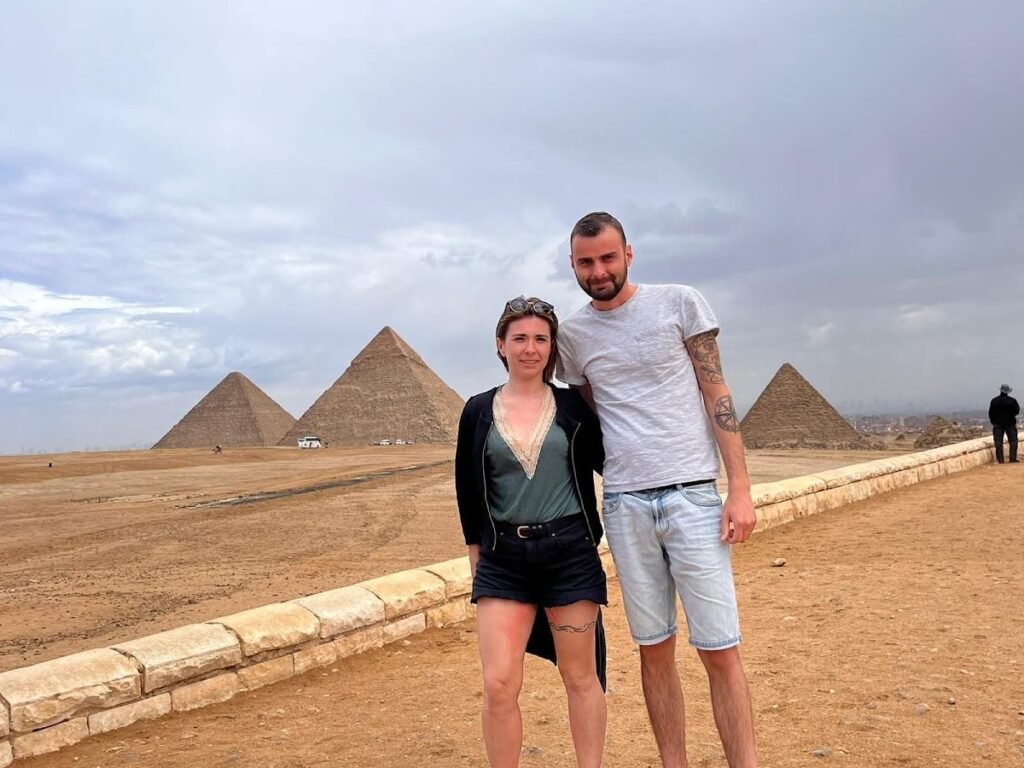
For portraits, take turns and agree on the composition before handing over the phone. Keep the Great Sphinx of Giza recognisable in the background instead of letting it become a tiny shape. If you want a playful perspective photograph, make it quick and avoid occupying a busy viewpoint for an extended session.
For details, use the camera you have confidently rather than buying equipment for one stop. Clean the lens, take several steady frames and review one image for sharpness. Strong digital zoom may lose detail, especially when you are photographing distant stonework.
No shared excursion can guarantee golden-hour light, an empty site or the exact viewpoint seen in an old image. Our excursion photography guide helps set realistic expectations. The photographs here show the destination and, where labelled, archival views; they do not promise current access to every pictured position.
9. Make the visit work for children and different walking needs
The Great Sphinx of Giza can give children a clear visual focus: a face, an animal-shaped body and an ancient story. Keep the explanation short enough for their interest, then invite a question. A simple task such as finding the paws or choosing a favourite viewpoint often works better than expecting continuous attention throughout the entire day.
The harder family decision is usually the long journey. Think about your own children’s experience of early departures and extended travel. Bring suitable snacks and familiar small activities, and discuss rest-stop arrangements. A child fare indicates the pricing band; it does not establish that every child will enjoy or comfortably manage the excursion.
For reduced mobility, describe specific needs before reserving: difficulty with steps, limits on standing, wheelchair dimensions, help needed to board a vehicle, or the need for a nearby place to rest. Do not rely on the word “easy” in a general description. Ask what the selected departure can actually support.
Stay together or agree on a clear meeting arrangement. A member of the group who prefers a shorter photo session should know where to wait and how to contact the guide. Nobody needs to enter a pyramid simply because another person wants to buy that optional ticket.
The best family plan allows different levels of enthusiasm. One person may love the history, another the photographs and another the museum. Identify a priority for each person before booking, then keep the day achievable rather than trying to satisfy every possible interest at every stop.
10. Keep pyramid interior entry separate from your Sphinx plans
Seeing the Great Sphinx of Giza and entering the Great Pyramid are separate experiences. The standard programme includes the outdoor Giza visit; the pyramid interior requires a separate ticket and enough time within the group’s schedule. Ask about feasibility before buying an additional ticket independently.
If you are curious about the interior, read our guide to going inside the Great Pyramid. Decide whether that experience interests you enough to use some of your Giza time. The right decision depends on your priorities and comfort, not on whether somebody else says a visit is incomplete without it.
Couples or families can have different preferences. Tell the guide who wishes to enter and who wishes to remain outside, then establish the meeting point and timing. Do not assume the group can wait indefinitely or that the outdoor companions will automatically receive a separate guided programme.
There is also no reason to combine every optional activity into one visit. A pyramid interior, a camel ride and an optional river outing can add costs and decisions to an already full day. Choose an extra because it matters to you, after checking the details, rather than because it is offered at the last moment.
If the Sphinx is the highlight you most want to remember, make that clear from the beginning. Protecting time and attention for your main interest is often more satisfying than returning with a long list of extras and little memory of the monument you came to see.
11. Build a complete budget and keep the confirmation
Start with the fares for the correct ages, then add the confirmed hotel supplement and any extras you choose. For these Cairo tours, the published round-trip transfer supplements are €5 per person from Makadi Bay or Sahl Hasheesh, and €10 per person from El Gouna, Safaga or Soma Bay. Send the exact hotel and every child’s age so the final amount can be checked.
The four programmes use adult fares from age ten, child fares for ages four to nine, and infant fares for ages zero to three. Infant travel is therefore not automatically free. The comparison table makes the differences visible, particularly between the bus and minibus options.
Cash bookings are paid at pickup before the excursion begins, with no advance deposit required. Online Visa or Mastercard payment is also offered; displayed euro prices are charged in Egyptian pounds online. Review the final checkout amount and any applicable processing or bank charges before paying.
The published cancellation policy allows a full refund when cancellation is made at least 24 hours before the confirmed start. Later cancellation and no-shows are non-refundable. Timely date changes depend on availability and any price difference; if the operator cancels, an available alternative date or full refund is offered. Any non-refundable exception must be disclosed before payment.
Save the confirmation where you can find it offline. It should state your chosen museum, group format, fare total, transfer supplement, pickup details and any agreed extras. A transparent budget lets you enjoy the Great Sphinx of Giza without making hurried financial decisions during the visit.

12. Book around the experience you want to remember
Use this short sequence: select the museum, choose the group format, check the ages and hotel, explain your priorities, then confirm the complete price and timing. It keeps the booking discussion focused and helps avoid misunderstandings that only become obvious once the vehicle has left Hurghada.
For a couple wanting the classic monuments at the lowest of these four adult fares, the Tahrir bus programme is a logical starting point. For travellers whose main museum interest is GEM, start with the GEM bus programme and then decide whether the smaller minibus group is worth the difference to you. Neither choice changes the historical importance of the Sphinx itself.
For a family, start with practical needs: ages, journey tolerance, vehicle arrangements and walking. For photography enthusiasts, identify the pictures you hope to take while accepting the available route and light. For history lovers, mention the Sphinx and its relationship with Khafre’s monuments so the guide knows what particularly interests you.
Send one complete message rather than several fragments. Include your date, hotel, traveller numbers and ages, preferred language, museum and vehicle choice. Add any mobility needs or optional pyramid entry request. Ask for a written confirmation of availability, pickup, total and cancellation terms.
The Great Sphinx of Giza is the centre of this guide, but the whole day determines how you remember it. Choose a realistic programme, arrive prepared, and leave room for the simple pleasure of standing in front of a monument you have known from photographs for years.
Plan your Sphinx and Cairo visit on WhatsApp
Frequently asked questions about the Great Sphinx of Giza
Is the Great Sphinx of Giza included in the Cairo tours?
Yes. All four road programmes compared here list the Giza Pyramids and Great Sphinx with standard Giza Plateau admission. Check the named museum and vehicle when choosing your departure.
Do I need to choose GEM to see the Sphinx?
No. Both the Tahrir Museum programmes and the Grand Egyptian Museum programmes include Giza and the Sphinx. Choose the museum according to your interests.
Can I walk between the paws on a standard excursion?
Do not expect special enclosure access. Standard sightseeing follows the visitor route available on the day and does not promise a position between the paws or beside the Dream Stela.
Who is associated with building the Sphinx?
The archaeological evidence points to the reign of Khafre, the ruler associated with Giza’s second pyramid. The monument belongs to the Fourth Dynasty of ancient Egypt.
How long is the excursion from Hurghada?
Allow approximately 17–20 hours overall for the compared road programmes. Hotel pickup, traffic, rest stops and site arrangements affect the actual timing.
Is the minibus a private tour?
No. The listed minibuses are smaller shared groups of up to eight guests. A smaller group does not mean a private vehicle or an individually adjustable itinerary.
Which programme is cheapest for an adult?
Among these four published options, the Tahrir Museum and Giza bus programme starts at €65 for ages ten and over, before resort supplements and optional extras.
Does the price include going inside the Great Pyramid?
No. Interior entry requires a separate ticket. Confirm that it fits the group’s schedule before purchasing or committing to the optional visit.
Can I join without buying a camel ride or Nile boat trip?
Yes. Optional activities are separate from the standard programme. Check any proposed extra’s price and timing before agreeing; destination photos do not make it an included service.
Are children and infants free?
No. The Cairo programmes have separate child and infant fares, shown in the comparison table. Give every child’s age and your exact hotel for the complete quote.
Will I see both Tahrir and GEM in one day?
Not on these four itineraries. Each includes its named museum and Giza. Reserve the GEM programme explicitly if that museum is your priority.
What should I send to book the Great Sphinx of Giza visit?
Send your date, complete hotel name, traveller numbers and ages, language, preferred museum and vehicle. Mention walking needs and any optional pyramid entry, then request the full price and pickup confirmation.
Further reading and historical sources
Continue with our Cairo excursion planning guide and guide to the realities of visiting the Giza pyramids. Historical reference points were checked against the Egyptian Ministry of Tourism and Antiquities’ Sphinx page, Harvard’s Digital Giza and AERA’s Sphinx mapping research. Our practical planning suggestions are editorial advice; daily access and programme arrangements require confirmation.