


Prepare for your first scuba dive in Hurghada: medical screening, equipment briefing and the difference between a try dive and certification.
Your first scuba dive in Hurghada: the listed introductory trip
The current introductory diving trip includes two supervised dives for eligible participants, equipment, lunch, drinks and Hurghada transfers. Allow approximately seven hours for the full boat day. The fare is €30 for ages 11 and over, €15 for ages 4–10 and free for ages 0–3; a child’s ticket category does not establish diving eligibility.
This guide focuses on preparation, briefing and questions to resolve with the instructor. For the full price, transfer and program comparison, see the main scuba diving guide. The alternative Orange Bay combination includes one introductory dive, not two.

Rechecked on 27 September 2026 against the current trip page and the guidance linked below. Dive depth, time, sites and participation depend on the professional assessment and conditions.
It is reasonable to have questions before your first scuba dive in Hurghada. Tell the team what you have done before, what feels unfamiliar and what help you need. The useful preparation is understanding the actual program and learning with the responsible diving professional, rather than expecting a particular depth or comparing yourself with another guest.
Introduction or certification: choose the right goal
An introductory experience lets an eligible beginner try scuba under professional supervision. It does not award a diving qualification. A certification course is a separate structured training program with its own knowledge development, practical sessions and assessment.
Before booking, say whether you want one introductory day or intend to train for a qualification. Ask which program is offered, which organization and instructor oversee it, what it includes and what completion requires. Do not assume the company’s introductory ticket is a specific branded course or that an introduction automatically counts toward later certification.
If you have previous experience but no certificate, explain exactly what you did. If you are certified, send your qualification and last dive date so the team can check the appropriate arrangement. Different experience levels in one family do not make the same underwater program suitable for everyone.
1) Confirm your actual pickup and meeting point
Provide your full hotel name and use the pickup time and meeting point confirmed for your booking. A general morning itinerary is not evidence that the sea will be calmer or that every hotel shares the same collection time.
Hurghada hotel pickup and return are included in the two-dive product. For hotels outside Hurghada, ask for the transfer arrangement and any supplement in writing. Do not automatically apply a fee quoted on an island or snorkeling trip.
Ask what documents to bring and how to keep them dry. If a diving center address appears in a search result, do not assume that it is your meeting point or is within walking distance. Follow the actual booking instructions and contact the team if the details are unclear.
2) Complete the required paperwork and screening
Complete the diver medical questionnaire before participating. Its answers determine whether medical evaluation is required. Confirm age eligibility, swimming ability and any medication or health concerns with the diving professional. PADI provides the screening forms for reference.
3) Check equipment fit before entering the water
The required scuba equipment is included in the introductory trip. Your briefing should identify the equipment you will use and how the professional wants you to communicate concerns. Do not change unfamiliar settings or follow another guest’s equipment advice in place of that instruction.
Tell the team early if you need a particular size or have a concern about mask fit, fins or the exposure suit. Specialist sizes or a prescription mask require confirmation; “equipment included” does not establish their availability. If something feels uncomfortable, report it before entering the water so the instructor can assess it.
Ask where personal belongings stay and what you may carry. Do not assume a waterproof phone pouch is suitable for scuba depth or that a personal camera can be taken on the first session. Your attention should remain on the supervised activity and instructions.
4) Understand the briefing and communication signals
Make sure you can understand the briefing language. Ask the professional to explain anything unclear about the equipment, planned activity, communication signals and how to indicate discomfort or a wish to stop. Do not pretend to understand because the rest of the group appears ready.
Discuss how the instructor will supervise you and whether a friend or partner can participate at the same time. The boat’s passenger limit is not an instructor-to-diver ratio. A private briefing or individual instructor is not automatically included because you booked as a couple.
The briefing and supervised practice are where the professional teaches breathing, pressure-related considerations, equipment use and responses to problems. This page is a planning guide, not a substitute for learning or demonstrating those skills with the instructor.
5) Ask how supervised practice is arranged
Ask where and how the introductory practice will take place, what you will be expected to demonstrate and how the instructor decides whether to continue. Do not assume every excursion uses a pool, sandy lagoon or shallow beach entry.
If you need more explanation or are uncomfortable with an exercise, say so. Readiness is not determined by how quickly another guest completes the preparation. Follow the professional’s directions rather than practicing unfamiliar scuba procedures alone from online instructions.
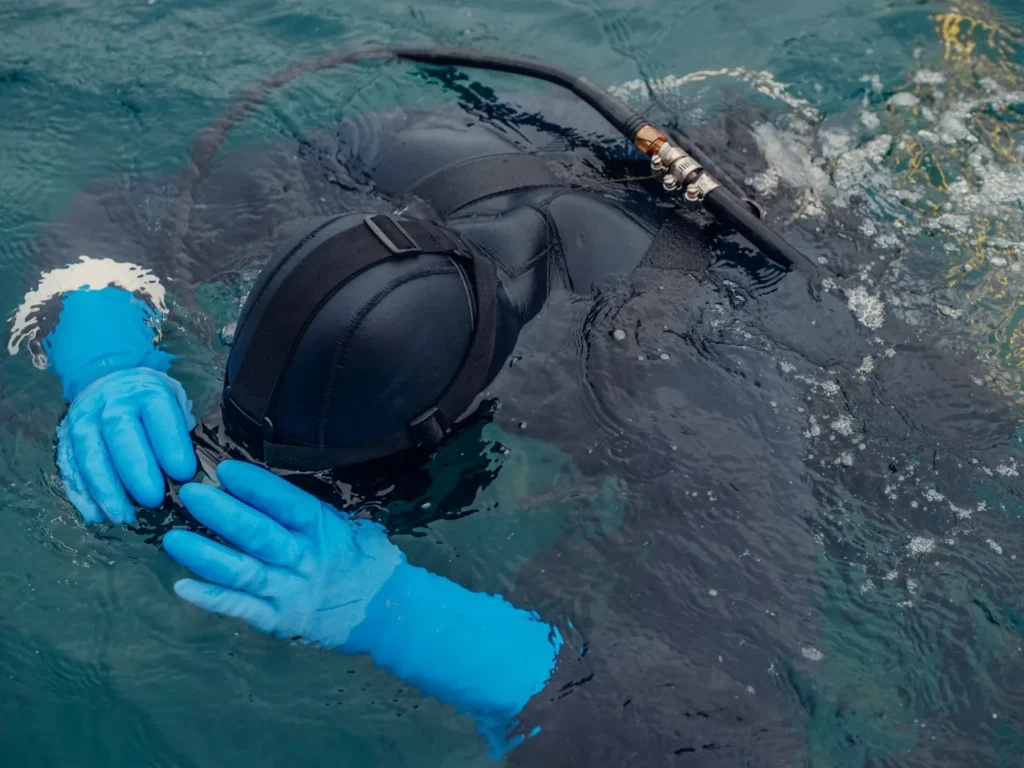
The photograph is illustrative. It does not establish the equipment brand, location or practice method used on your booked trip.
6) Follow the instructor during the first water session
Before entering, resolve how you will stay with the professional and communicate a problem. Follow the supervised plan, stay within the agreed activity and tell the instructor if you are uncomfortable. Do not pursue a target depth or continue through pain to finish a paid experience.
Your first water session may feel different from what you expected. Ask for help rather than trying to match a video or another participant’s pace. The instructor decides the appropriate profile and whether the activity should continue; an advertised number of dives does not remove that assessment.
Ask in advance what happens to the booking if you cannot participate or choose to stop. This is different from assuming that an unused component always receives a particular refund. The team should explain the applicable terms before you rely on them.
7) Ask for help with positioning and buoyancy
Positioning and buoyancy are skills taught and supervised by the diving professional. Keep your attention on the instructor and request help if you are uncertain. Do not use coral as a handhold or standing surface, and do not try to correct unfamiliar equipment independently.
Being able to snorkel or float at the surface does not mean that scuba positioning will be automatic. Give yourself room to learn under supervision without making depth, distance or a photograph the goal of the first session.

8) Marine life and visibility vary
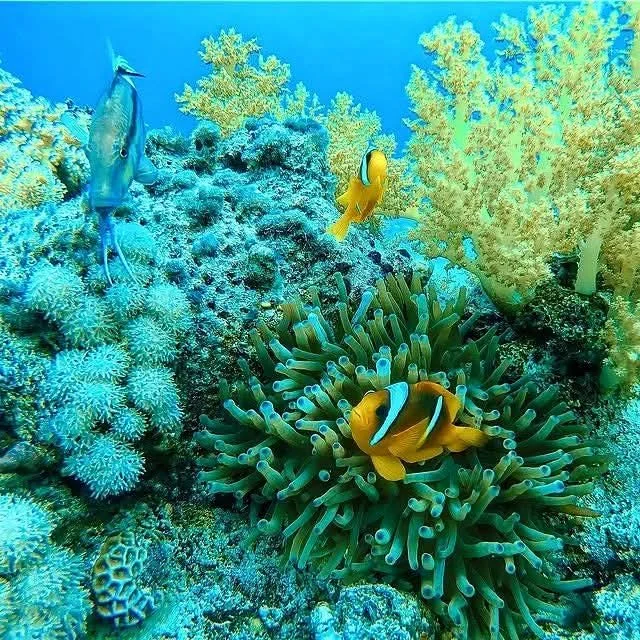
Fish, coral formations and visibility vary with the site and conditions. No particular animal sighting is guaranteed, and a clear photograph does not forecast your day. Ask about the planned type of location without assuming a fixed reef name or a specific depth.
Observe marine life without touching, chasing or feeding it, and keep equipment clear of the reef. Tell the instructor if you need help maintaining the appropriate position. Protecting the reef is part of following the briefing, not an optional extra for experienced divers.
9) Understand why dive time is not guaranteed
The current introductory trip does not guarantee a fixed underwater duration or depth. The professional decides these from conditions and the participant. Avoid planning around an older promise of 20–35 minutes or trying to stay underwater until a published number has been reached.
Two introductory dives are included for eligible participants, but the complete boat day also includes preparation, sailing, time between dives, meals and transfers. Approximately seven hours describes that complete day. Confirm the likely hotel return if you have another appointment.
10) Discuss readiness for the second dive with your instructor
After the first dive, tell the professional how it felt, including any discomfort, equipment problem or concern. Discuss readiness before another session. A second dive is not automatically easier, deeper or at a different named reef.
Follow the team’s instructions during the interval. Lunch and drinks are included in the current two-dive trip, with meal timing coordinated by the crew. Tell the booking team about dietary requirements in advance so it can check the available meal.
If friends or family have different participation plans, clarify where everyone will be and who is responsible for supervising children. A boat crew is not a substitute for a confirmed childcare arrangement.
11) Plan the interval before flying
DAN recommends at least 12 hours after a single no-decompression dive and at least 18 hours after multiple dives or multiple diving days for divers without symptoms; longer intervals reduce risk further. Follow the instructor and dive computer’s more conservative guidance. Do not fly with possible decompression-sickness symptoms; seek medical advice.
Read DAN’s flying-after-diving guidance.
What to pack for the boat day
Bring swimwear, a towel, dry clothing, sun protection and any personal essentials you normally need. Ask whether identification or other documents are required. Keep valuables secure and take only what you need for the boat day.
Required diving equipment is included; check specialist needs before booking. If you want to bring your own equipment, discuss it with the diving professional rather than assuming it will be suitable for the introductory arrangement. Confirm storage and what can be carried during the water session.
For a broader checklist, use the boat-trip packing guide. A sunscreen label does not make contact with coral acceptable, and a beach accessory should not be treated as dive equipment.
Concerns to discuss before entering the water
“What if I panic?”
Signal the instructor immediately and follow their directions. Stop the exercise when needed; do not make an uncontrolled ascent.
“What if I can’t equalize?”
Signal the instructor and stop descending. Do not force equalization or continue through pain; the instructor may end the dive.
“Will I feel claustrophobic?”
Responses vary. Discuss concerns with the instructor before entering the water and stop if you are uncomfortable.
“Are there sharks?”
The Red Sea contains wild marine life. No animal sighting or absence can be guaranteed. Follow the local briefing and instructor’s directions.
If you want to continue: introductory experience versus a course
If the introduction makes you interested in further training, ask about the actual certification course available and its requirements. Confirm the training organization, instructor, knowledge-development work, practical sessions, assessment, equipment, schedule and total cost.
Do not assume you can complete a course in a fixed three or four days or receive a qualification merely by attending. The course requirements and your progress determine completion. Ask whether any part of the introductory experience can be credited and how that is documented rather than assuming automatic credit.
A later diving plan should match the qualification you actually earn, your recent experience and the operator’s requirements. A memorable first experience is a starting point, not permission to skip training or assessment.
Before your first scuba dive in Hurghada: a practical checklist
Before the trip, make sure you can answer these practical questions:
- Which named program have I booked, and how many introductory dives are included?
- Has the team checked my age, water confidence and any screening requirements?
- Do I know the hotel pickup, meeting point and expected full-day schedule?
- Have equipment sizes, briefing language and supervision needs been discussed?
- Have I provided my flight departure and any travel to altitude?
- Do I understand how to ask questions, express discomfort or stop participation?
- Are the total price, optional photos and cancellation terms clear?
Keep the confirmation and contact details available. If something changes before departure, tell the team and obtain an updated arrangement instead of assuming the old confirmation still applies.
Questions before you book
Is an introductory dive a certification?
No. It is a supervised introduction for eligible participants. A qualification requires completing the relevant structured training and assessment; it is not included in the introductory ticket.
What screening should I complete?
Complete the diving team’s required medical questionnaire honestly and follow its instructions about medical evaluation. Discuss practical eligibility with the instructor; a booking is not medical clearance.
How should I schedule my flight?
Tell the team your actual flight departure before booking. Follow the DAN guidance above, calculated from your final dive, and any more conservative professional advice. Do not assume the phrase “the next day” establishes a sufficient interval.
Does a €15 child fare allow a child to dive?
No. The fare category is for ages 4–10, while diving eligibility requires separate confirmation. Provide the child’s age, discuss equipment and supervision, and do not pressure a child to participate.
Will the first session take place in a swimming pool?
Do not assume so. Ask the professional where and how introductory practice is arranged for the selected program and what is required before continuing.
Can I learn the practical skills online before arrival?
Use written guidance to prepare questions. Equipment use and practical responses must be taught and supervised by the diving professional; do not practice unfamiliar scuba procedures alone.
Does the instructor-to-diver ratio equal the boat capacity?
No. Passenger capacity and underwater supervision are different. Ask about the actual arrangement for your group rather than inferring it from the booking page’s maximum people field.
Can my partner and I dive together?
Ask before booking. Two tickets do not guarantee simultaneous sessions, a private instructor or an identical profile for both participants.
What if my mask or fins feel wrong?
Tell the professional before entering the water and ask for the fit to be assessed. Do not assume discomfort is something you must ignore to continue. Specialist equipment needs should be discussed before departure.
Is the second dive always easier?
No. Describe how the first session felt and discuss readiness with the instructor. Conditions, comfort and the professional assessment still apply.
Can I bring a camera on my first dive?
Ask the instructor before taking any device. A waterproof phone pouch may not be appropriate for scuba, and attention to the briefing and supervised activity takes priority. Optional professional photos are a separate purchase.
What should I ask about cancellation or non-participation?
Check the confirmed terms before payment, including how screening-related non-participation or an unused component is handled. The general cancellation policy does not establish an automatic partial refund for every situation.
Related planning guides
Use the main scuba diving Hurghada guide to compare prices and the two current introductory programs. If someone prefers surface activities, compare the snorkeling options or the Panorama viewing trip.
Read the current cancellation and date-change terms before confirming. If a companion will not dive, ask about their place, price and supervision rather than assuming all travelers have the same arrangement.