

The best time for Luxor depends on the part of the holiday you can choose. If your dates are flexible and you want to spend time walking around temples, start by comparing the cooler months. If your Hurghada holiday is already booked for summer, the useful question is different: which available programme fits your family, your tolerance for hot outdoor visits and your return arrangements?
This guide connects the seasons with the actual excursions you can book from Hurghada. You will find a monthly temperature and daylight table, advice for winter mornings and summer sightseeing, and a comparison of coach, minibus and overnight programmes. There is no single month that guarantees comfortable weather, empty monuments, low prices or a successful balloon flight. A good choice combines the broad climate pattern with the forecast and confirmed arrangements for your own date.
Programmes, published fares and booking conditions reviewed on 5 November 2026. Availability, room details, guiding language and the final hotel-specific total require confirmation.
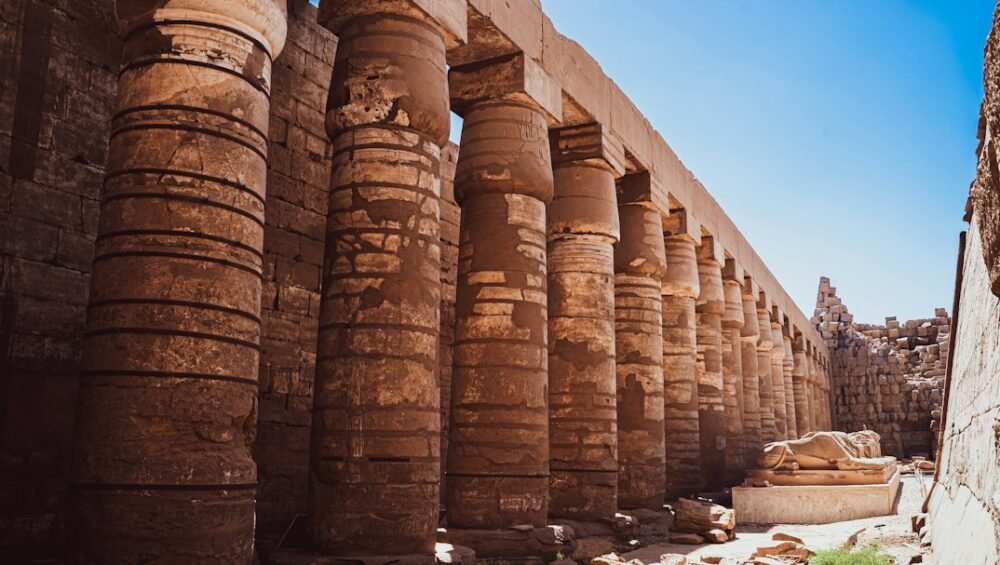
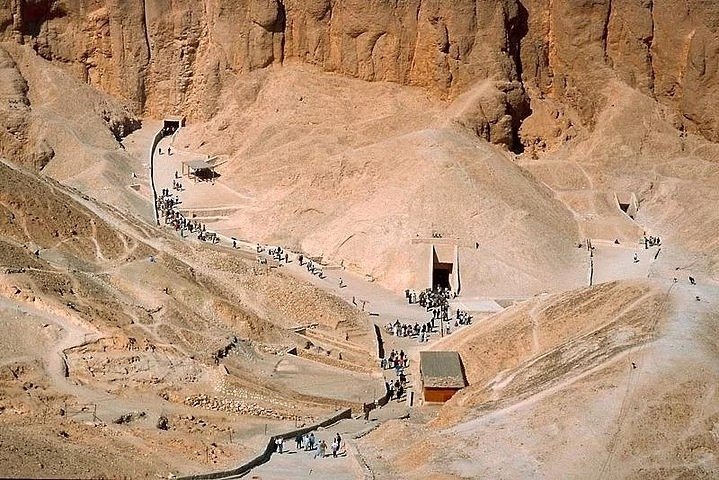
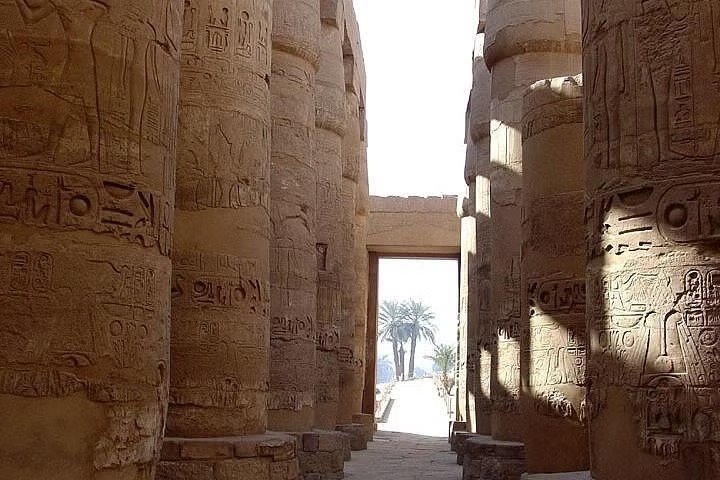
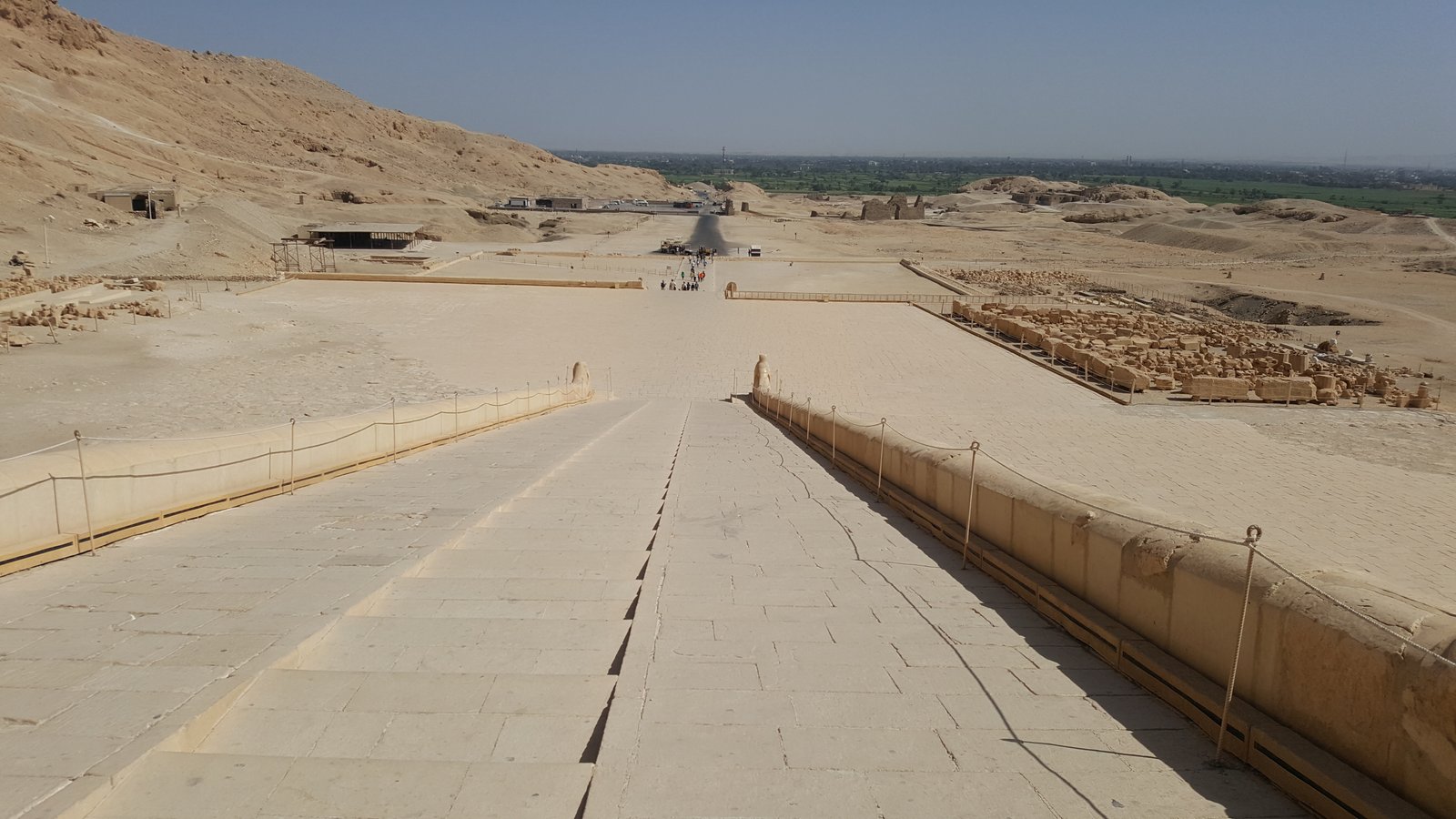
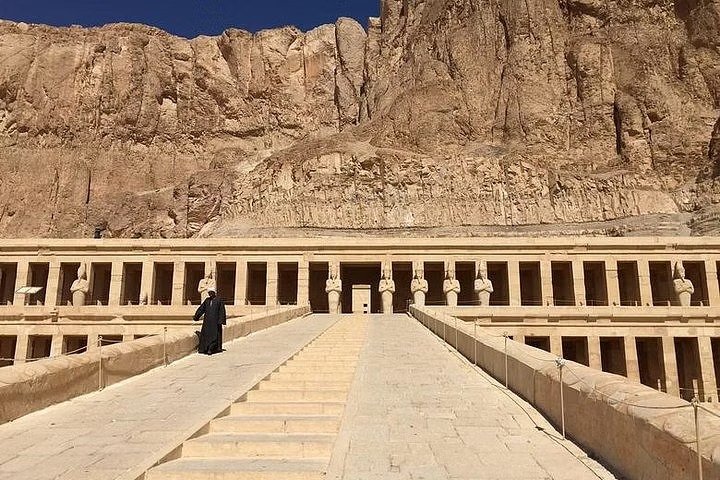
These photographs show Luxor landmarks and ballooning; they do not document particular months or promise a balloon flight. Cover credit: Photo: 2H Media / Unsplash · Unsplash License · display resized.
1. Best Time for Luxor: start with your main priority
For a visitor whose priority is outdoor walking in less intense heat, our starting recommendation is November to March. This is an editorial interpretation of the temperature pattern in the table, not a promise about every day within those months. Within that broad period, December to February deserves particular attention if avoiding the hottest afternoons matters more than having the longest daylight.
The best time for Luxor can be different for someone who only has an August school holiday available. Moving the entire family holiday may not be possible or desirable. In that case, examine the excursion itself: how long you will be away, which visits involve open ground, whether the party accepts the scheduled pace and whether a customised arrangement needs a separate quotation.
Write down your priorities before comparing dates. These might be seeing the standard tombs, travelling with fewer people, keeping the programme fare low, or adding a hotel night and balloon experience. Rank them rather than assuming one excursion optimises everything. A small group does not remove the heat, and an overnight stay does not automatically divide the main sightseeing between two mornings.
If two adults have different preferences, choose according to the person with the more restrictive requirements. This avoids paying for a programme that one traveller expects to shorten after arrival.

2. Read the monthly table without confusing climate and weather
The temperature columns below use Luxor data published by the WMO World Weather Information Service, supplied by the Egyptian Meteorological Authority. The listed reference period is 1981–2010. These historical averages provide a consistent seasonal comparison; they are not a live forecast or a claim that present-day conditions must match the older reference period.
A mean daily maximum is the average of daily high temperatures. It is not the temperature you will experience continuously from morning to evening. Likewise, the minimum column is not a predicted temperature at your hotel pickup. An individual day may be warmer or cooler, and conditions at an exposed monument can feel different from the number in a weather report.
Our daylight column is a separate calculation using NOAA solar equations for the fifteenth of each month in 2027 at Luxor’s approximate latitude. Values are rounded to ten minutes. They describe sunrise-to-sunset duration, not guaranteed sunshine, museum access or the length of your excursion.
Use the best time for Luxor table to shortlist a season. Then use the forecast for Luxor and your confirmed itinerary to decide between the actual available days. Do not substitute the Hurghada beach forecast for the destination forecast.
Best Time for Luxor: monthly temperature and daylight table
| Month | Mean daily minimum °C | Mean daily maximum °C | Approximate daylight |
|---|---|---|---|
| January | 5.9 | 23.0 | 10 h 40 min |
| February | 7.8 | 25.1 | 11 h 20 min |
| March | 11.8 | 29.5 | 12 h 00 min |
| April | 16.9 | 35.3 | 12 h 40 min |
| May | 21.2 | 39.0 | 13 h 20 min |
| June | 23.5 | 41.3 | 13 h 40 min |
| July | 24.7 | 41.4 | 13 h 40 min |
| August | 24.4 | 41.0 | 13 h 00 min |
| September | 22.2 | 39.3 | 12 h 20 min |
| October | 18.4 | 35.3 | 11 h 40 min |
| November | 12.3 | 29.0 | 10 h 50 min |
| December | 7.8 | 24.3 | 10 h 30 min |
Temperatures: WMO/EMA Luxor climate averages for 1981–2010, not a forecast. Daylight: our approximate calculation using NOAA equations at 25.67° N for the 15th of each month in 2027, rounded to the nearest 10 minutes. This is sunrise-to-sunset duration, not sunshine or attraction opening hours. Scroll sideways if needed.
3. December, January and February: plan for a changing day
Winter is a useful starting point for travellers who want to prioritise the monuments over hot-weather sightseeing. Think about the whole excursion, however, rather than packing only for a pleasant afternoon. Your departure from Hurghada can be very early, the transport has its own interior temperature, and an overnight programme introduces an additional early morning in Luxor.
Choose layers you can put away easily when the day becomes warmer. A light bag with a spare layer is more practical than assuming one outfit will suit the pickup, outdoor visits and evening return equally well. Keep ordinary sun protection available even when the air feels cool. The shorter winter day is also a reason to be realistic about optional additions.
When comparing the best time for Luxor in winter, decide how important photographs at a particular hour really are. A shared excursion follows the confirmed group programme. It does not promise that every temple will be visited at your preferred angle of light. Ask before paying if a specific visit time is essential to your plans.
For a family, place the excursion on a day that allows reasonable rest beforehand. Cooler weather does not make a roughly fifteen-hour outing a short one. Avoid using the following morning for another commitment that requires everyone to be fully rested at a fixed early hour.

4. Best Time for Luxor in March, April and May
Spring should not be treated as one uniform block. The table shows a progression towards hotter conditions, so a March holiday and a late-May holiday call for different expectations. If you can choose between those months and outdoor comfort is the main aim, compare their individual figures instead of relying on a generic description such as “spring weather”.
The best time for Luxor within your spring holiday may also depend on which days remain genuinely free. List arrival day, departure day, existing boat excursions and any appointments before selecting a date. A day with fewer competing commitments can be a better practical choice than one selected only because a long-range forecast displays a slightly lower number.
Ask how the operator expects the sightseeing to run for your departure. The shared programmes include several separate stops, lunch and travel within the Luxor area. You should not assume an early pickup means every outdoor visit will be completed before the warmest part of the day. The road journey from Hurghada is part of the schedule.
If your dates fall around a school holiday or public celebration, request actual availability and the complete price. This guide does not assign a crowd level or discount to a month. The number of visitors at one monument on a particular morning cannot be established from its average temperature.


5. June, July and August: decide honestly about outdoor heat
The summer rows make the seasonal trade-off clear: the days are longer, but the average daytime highs are much greater than in winter. A longer day is not automatically a more comfortable sightseeing day. If your party dislikes sustained time outside in hot conditions, recognise that preference before buying an itinerary with several open-air stops.
For the best time for Luxor in summer, start with the available dates and a discussion of the programme, rather than a promise that a smaller vehicle solves the problem. Ask about the transport, planned breaks and visit sequence. Confirm any specific requirement for resting between visits. A standard shared tour cannot be assumed to stop whenever one traveller wishes.
Plan simple practical items: suitable walking shoes, a hat, sun protection and water arrangements. Tell the operator about dietary or access needs in advance. If a personal health condition affects your ability to tolerate heat, get advice suited to that condition before deciding; this article does not set a safe temperature threshold for everyone.
An honest decision can be to choose another excursion during this holiday and reserve Luxor for a cooler visit. Equally, a traveller accustomed to hot outdoor conditions may still want to go after checking the actual forecast and arrangements. Neither decision should rely on an unsupported assurance that summer sites will be empty or unusually cheap.

6. September, October and November: compare the actual month
The calendar label “autumn” can hide a substantial difference between the beginning and end of the season. September should not be treated as a winter-like month simply because summer holidays have ended in some countries. October is a transition, while November moves the comparison towards the cooler part of the annual pattern shown above.
If choosing the best time for Luxor is the main reason for selecting your Egypt holiday dates, compare the month first and then the available travel days. If beach time is equally important, you are balancing two different experiences. This guide assesses the Luxor excursion; it does not promise particular sea conditions or bathing comfort at your Hurghada resort.
For an October or November booking, a removable layer can still be useful for early transport and the return. Packing for several parts of the day is more flexible than treating the entire trip as either a hot summer outing or a cold winter day. Check the destination forecast close to departure rather than using a photograph to infer the weather.
Autumn photographs in advertising also do not establish your itinerary. A balloon image, a lit temple or an empty courtyard may illustrate Luxor without being an included experience at that hour. Read the programme list and ask which extras would require a separate booking.
7. Best Time for Luxor: match daylight to the itinerary
Daylight matters most when you use it for a specific purpose. A photographer may want a particular outdoor setting; an overnight visitor may want time for an independent walk; a family may prefer to reach the hotel before everyone becomes tired. Those preferences should be connected to the confirmed schedule, not just to the number of daylight hours.
For the best time for Luxor on a shared day trip, remember that the approximate fifteen-hour duration includes travel from and back to Hurghada. It is not fifteen hours inside archaeological sites. A winter return may include travel after dark; a longer summer day does not mean the operator has sold extra monument time.
The table deliberately avoids clock times for sunrise and sunset. Those depend on the exact date and local clock arrangements, while the duration between them is a different quantity. Ask for your hotel pickup in local Egypt time and save the written confirmation. Never calculate pickup by subtracting a guessed driving time from sunrise.
If you need a visit at a particular hour, request a programme designed around that need. A shared minibus is still shared transport. The smaller passenger limit does not by itself create a private photography itinerary or allow a guaranteed later start.

8. Consider the open sections at each monument
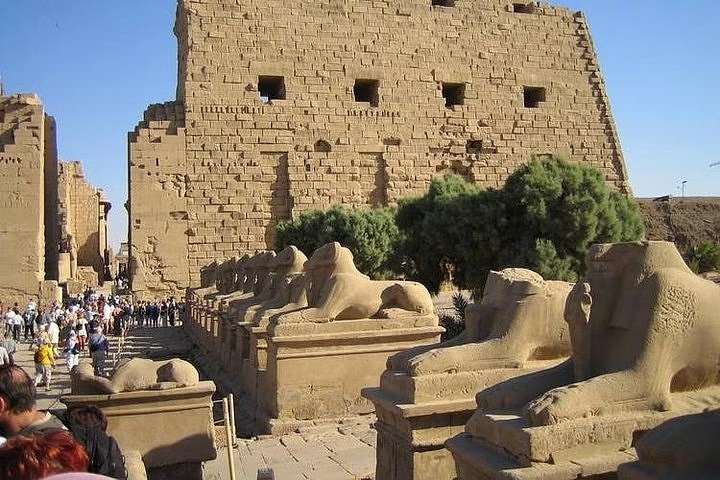
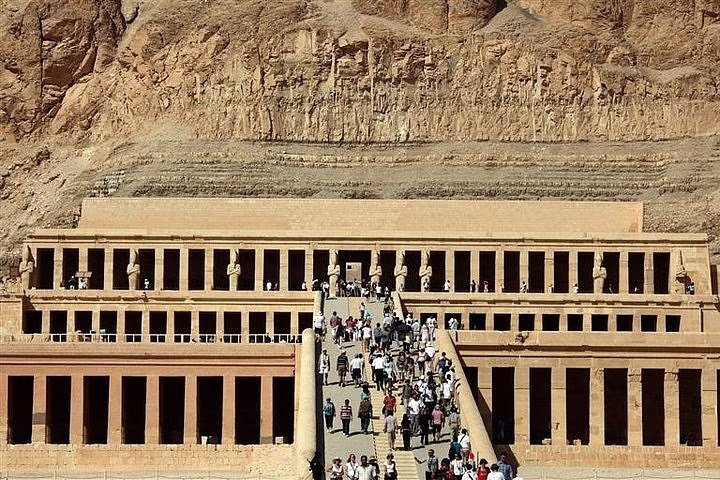
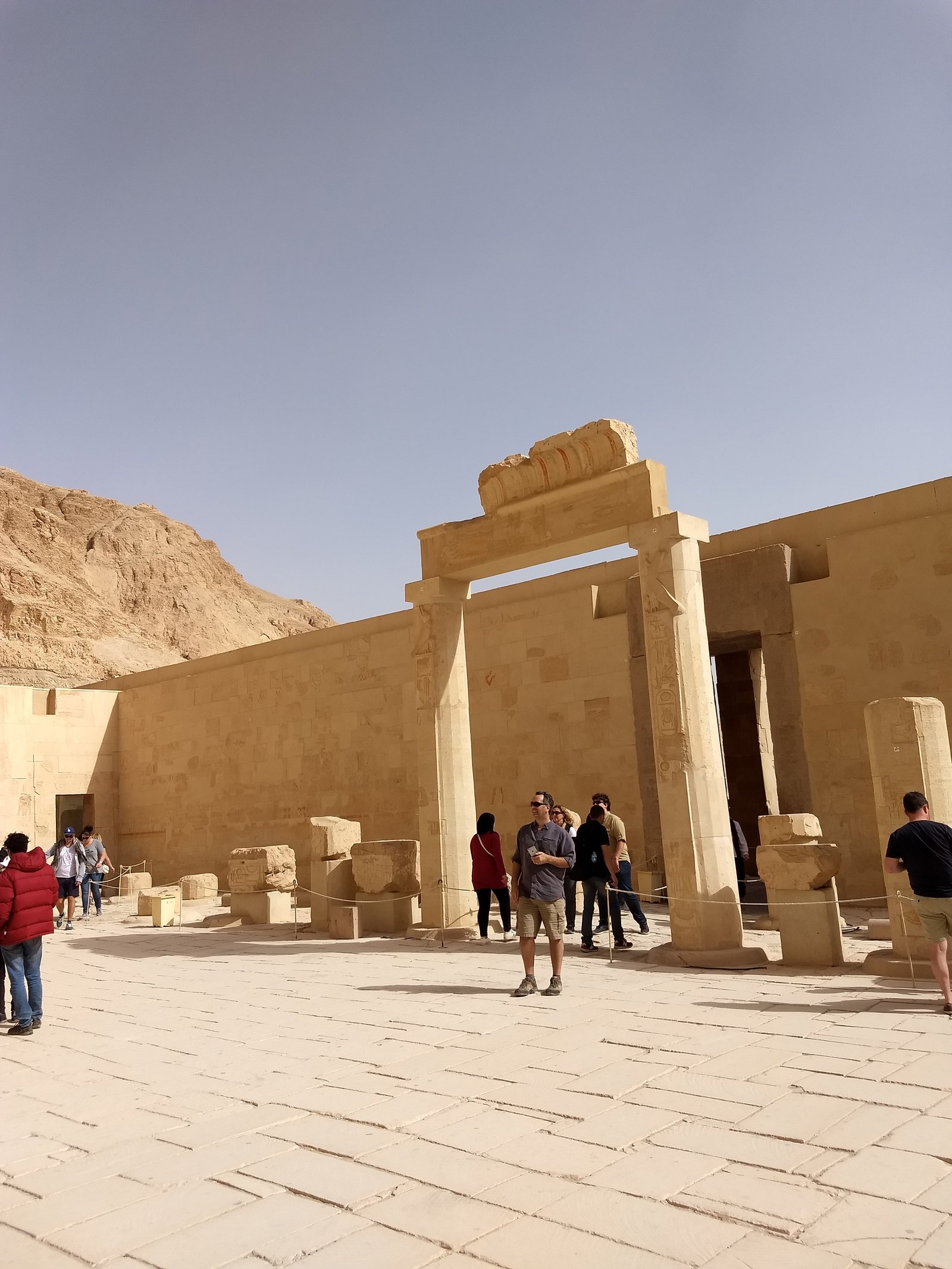
The standard day programmes combine Karnak, the Valley of the Kings with three standard tombs, Hatshepsut Temple and the Colossi of Memnon. These are different settings, so “temple visit” should not be understood as one continuous indoor activity. The photographs in this guide help show open approaches, courtyards and the scale of the sites.
At Karnak, plan for movement between architectural spaces as well as time looking at columns and carved surfaces. At Hatshepsut, consider the approach and terraces. In the Valley of the Kings, entering a tomb is only part of the visit; there are also paths and transfers between the arrival area and entrances. Do not assume a tomb is an air-conditioned resting place.
The best time for Luxor for someone concerned about walking is therefore partly a programme question. Describe practical needs precisely: difficulty with steps, needing frequent seats, or being unable to stand for long periods. Ask what can actually be arranged for the selected departure. Age alone does not tell the operator what assistance is needed.
Our guide to walking and comfort in Luxor develops these questions. Use it before choosing an excursion if the physical demands are more important to you than the season’s general reputation.
9. Families: separate seasonal comfort from ticket eligibility
A family date needs to work for the people travelling, not just for a school calendar. Think about the early start, time sitting in transport, outdoor walking and the return to your hotel. A child who enjoys short museum visits at home may have a different response to a long excursion with several sites. Allow that distinction to influence your choice.
When discussing the best time for Luxor for your family, send every child’s exact age. Day-tour adult fares start at ten, while the overnight balloon programme uses its child fare through age ten and requires every traveller to be at least six. The same family can therefore have different fare categories across programmes.
Ask about any required child restraint, luggage space and access arrangements before booking; the public fare table does not confirm those individual details. For dietary needs, request confirmation rather than assuming that an included lunch automatically provides every requested option. Take account of the time at which the hotel can supply any separately arranged breakfast.
Choose a date that leaves enough room for your wider holiday plans. Booking Luxor immediately before an important flight or a non-refundable activity can make an approximate return time more consequential. The appropriate buffer depends on your own connection, which the excursion’s published duration does not guarantee.
10. Best Time for Luxor: choose coach, minibus or overnight
The shared coach has the lowest published adult programme fare of these three options. The shared minibus reduces the maximum group size to eight, compared with thirty on the coach. Both day tours list the same core monuments, standard admissions, guide, lunch and drinks. Both are approximately fifteen hours overall, with actual timings affected by operations and travel.
The best time for Luxor will not change simply because you switch between those vehicles. What changes is the group format and price. Ask for the complete hotel-specific quotation, particularly for a hotel outside Hurghada. A resort name containing “Hurghada” is not sufficient to establish whether an additional transfer applies.
The two-day option adds a hotel night and a balloon experience, but its four main archaeological visits remain on day one. Day two includes the balloon, hotel breakfast afterwards and independent time before the return meeting. Do not choose it on the assumption that it automatically spreads the outdoor monuments over two cooler mornings.
Read the one-day versus two-day Luxor comparison if this distinction affects your choice. Confirm the hotel, room occupancy and meals before paying. The overnight offer does not make every independent evening visit, taxi or meal part of the package.

Compare the published Luxor programmes
| Programme | Adult | Child | Younger children | Duration and main difference |
|---|---|---|---|---|
| One day · shared coach | €65 · age 10+ | €35 · ages 4–9 | €20 · ages 0–3 | Up to 30 guests; about 15 hours; same-day return to Hurghada. |
| One day · shared minibus | €80 · age 10+ | €40 · ages 4–9 | €35 · ages 0–3 | Up to 8 guests; about 15 hours; shared tour and same-day return. |
| Two days · hotel and balloon | €160 · age 11+ | €125 · ages 6–10 | Under 6 not permitted | One night. Main archaeological visits on day one; balloon, breakfast and independent time on day two. |
Published programme fares checked on 5 November 2026. Confirm your exact hotel, any transfer supplement, room occupancy, extras and final payment amount. The two-day fare is not a quote for a separately purchased balloon flight. Scroll sideways on small screens.
11. Balloon plans require more than a seasonal recommendation
Someone choosing the best time for Luxor mainly for a balloon experience needs two separate answers: whether the package fits their dates and whether the flight can operate on the morning concerned. A monthly temperature table answers neither operational question. A clear-looking sky in a photograph is not a flight confirmation.
The overnight programme includes a balloon experience, subject to the arrangements and conditions for the departure. It does not guarantee an exact sunrise takeoff, route or view. The minimum age is six, and any additional participation requirements should be clarified before payment. Avoid telling a child that a particular flight scene is certain to happen.
Ask for the agreement covering a balloon-only cancellation while the hotel stay and sightseeing still operate. That situation is different from the company cancelling the entire tour. A full-package refund should not be inferred for the loss of one component unless the booking terms specifically provide it.
Our Luxor balloon cancellation guide explains the questions to put in writing. If a balloon experience is the only reason you would stay overnight, make that priority explicit. You can then judge the package based on what remains valuable to you if that morning’s flight cannot proceed.

12. Turn your preferred season into a confirmed booking
Once you have shortlisted the best time for Luxor, send two or three possible dates where your holiday allows flexibility. Include your full hotel name and location, party size, every child’s age and guiding language. Mention the reason for your timing preference, such as avoiding a late connection or checking the most suitable programme for outdoor walking.
Before payment, obtain the complete price, inclusions, extras, pickup arrangements and conditions. The day tours allow website payment by Visa or Mastercard and euro cash to the representative at pickup before departure, with no advance deposit for cash bookings. Online card payment is charged in Egyptian pounds, with the final amount shown before confirmation. The overnight page confirms Visa availability; clarify its payment arrangements separately.
Under the published booking conditions, cancellation received at least twenty-four hours before the confirmed start qualifies for a full refund; later cancellation and no-show are non-refundable. Date changes requested at least twenty-four hours ahead depend on availability and any price difference. Any disclosed exception in your confirmation matters.
Check the forecast while there is still time to act under those conditions. Do not assume a personal preference for cooler weather creates a new refund right. For a short-notice enquiry, the last-minute Luxor booking guide explains the details to have ready so the operator can check a real departure.
30 questions about the Best Time for Luxor
1. What is the best time for Luxor for outdoor sightseeing?
For travellers prioritising less intense heat, we suggest comparing November to March first, with particular attention to December to February. This is a planning recommendation based on the seasonal pattern, not a guarantee about the weather on an individual day.
2. Is January a sensible month for a Luxor day trip?
January can suit visitors who prefer cooler conditions for walking. Plan for the early departure and evening return as well as the afternoon. Removable layers are useful, and the excursion still involves a long day away from Hurghada.
3. Should I choose March or May?
If both are possible and your main aim is to avoid stronger daytime heat, compare March first. They should not be treated as equivalent simply because both are in spring. Availability and the actual forecast still need checking.
4. Is summer automatically the wrong choice?
No single answer suits every traveller. Summer requires an honest assessment of hot outdoor visits, the itinerary and individual needs. If your party finds those conditions uncomfortable, a different excursion or a cooler future visit may suit you better.
5. Does September feel like winter in Luxor?
Do not plan on that basis. September belongs towards the hotter end of this monthly comparison. Use the actual month’s data and a forecast for your date, rather than assuming that the word autumn means cool sightseeing weather.
6. Is November different from October?
The monthly table shows a move towards cooler average conditions. That makes November worth comparing for visitors prioritising outdoor comfort. It does not guarantee that every November day will be cooler than every October day.
7. Are these temperatures a forecast for 2027?
No. They are historical Luxor climate averages for 1981–2010, published through the WMO service. The year 2027 applies only to the illustrative daylight calculation. Check a separate current forecast for your actual travel date.
8. Does the minimum column show hotel pickup temperature?
No. It is the mean daily minimum for the reference period. Your pickup is at a particular time and location, often in Hurghada rather than Luxor. Neither that moment’s temperature nor the vehicle’s interior temperature is predicted by this column.
9. Why is the daylight table approximate?
It uses a solar calculation for the middle of each month and rounds the result to ten minutes. Actual dates vary, and local horizons affect observed sunrise or sunset. It is intended for seasonal planning, not precise photography scheduling.
10. Does daylight mean hours of sunshine?
No. Daylight here is the calculated interval between sunrise and sunset. It does not measure cloud-free sunshine, the hours a monument is open, or the time your group will spend sightseeing inside the sites.
11. Does a longer summer day extend my tour?
No extra visits are created by the daylight figure. The excursion follows its confirmed programme and approximate duration. Ask for any additional stop separately, including its price and whether it can fit the schedule.
12. Can I use Hurghada’s forecast for Luxor?
Use a forecast for Luxor when assessing the sightseeing day. Hurghada is your departure point, not the destination of the monument visits. You may also want the departure-area forecast for choosing what to wear at pickup.
13. Is an early pickup a guarantee of cool visits?
No. The road journey takes part of the morning, and the programme includes several sites and lunch. Ask about the expected sequence; an early departure should not be interpreted as a promise to finish every outdoor visit early.
14. Is the minibus private?
No. The published minibus programme is shared, with a maximum of eight guests. It does not automatically provide a customised departure time, private schedule or earlier return. A private arrangement needs its own explicit quotation.
15. Which shared option has the lower adult fare?
At the review date, the coach is €65 for age ten and above, compared with €80 for the minibus. Compare the final hotel-specific total, including any transfer supplement and optional purchases, before deciding solely on the headline fare.
16. Are the standard monument tickets included?
The day programmes include the listed standard admissions, including three standard Valley of the Kings tombs. A special tomb such as Tutankhamun requires an additional ticket if available. Optional extras are not made compulsory by the season.
17. Does two days mean two shorter sightseeing mornings?
Not in the published overnight programme. The four principal archaeological visits are on day one. Day two adds the balloon experience, hotel breakfast and independent time. Confirm any different distribution as a separate arrangement before booking.
18. Can a child under six take the overnight balloon tour?
No. Every traveller on that programme must be at least six. The day tours have different age categories, so send each child’s age instead of applying the overnight rule or fare bands to all Luxor excursions.
19. Is winter automatically suitable for every older traveller?
No. Cooler conditions do not remove walking, steps, early starts or a long journey. Explain any access or rest needs before booking. The operator needs specific information to check arrangements, rather than age alone.
20. What should I wear on a winter excursion?
Choose comfortable walking clothes and removable layers for the early departure and later return. Keep sun protection available for outdoor visits. Check the forecast before leaving and consider the transport as well as the monuments.
21. What should I confirm for a summer excursion?
Ask about the sightseeing sequence, transport, breaks and water arrangements, and explain any practical needs. Check the Luxor forecast and judge the programme honestly against your party’s comfort with hot outdoor conditions before committing.
22. Is a balloon flight guaranteed in a recommended month?
No. Seasonal advice is not operational approval for a particular morning. The flight depends on the conditions and arrangements for the departure. Ask what happens if the balloon cannot operate while the rest of the package continues.
23. Is takeoff guaranteed exactly at sunrise?
No exact sunrise takeoff is guaranteed by the published overnight programme. Treat the flight time, route and view as dependent on the actual arrangements and conditions. A promotional dawn photograph is not a contractual time slot.
24. Are summer trips always cheaper?
This guide does not establish a seasonal discount. Request the current complete quotation for your date and hotel. A climate table provides no evidence that a particular month offers a lower programme fare or fewer supplements.
25. Which weekday has the fewest visitors?
We do not have verified site-by-site visitor forecasts supporting a specific weekday recommendation. Choose among confirmed departures according to your holiday schedule and priorities, rather than relying on a universal claim that one day is quiet.
26. Are outside-Hurghada hotel transfers included?
Hurghada pickup and return are included in the day programmes. For hotels outside Hurghada, provide the exact property and location so arrangements and any supplement can be confirmed. The final quotation should name your hotel.
27. Can I pay by Visa or cash?
The day tours accept Visa or Mastercard online and euro cash to the representative at pickup before departure, without an advance cash deposit. Card checkout shows the final EGP amount. For the overnight package, Visa is confirmed; clarify other payment details separately.
28. Can I change date if I prefer another forecast?
Request a change at least twenty-four hours before the confirmed start under the published conditions. It depends on availability and any price difference. A requested date is not secured until confirmed, and later changes are not automatically free.
29. What if the company cancels the whole excursion?
The published conditions offer an available alternative date or a full refund for company cancellation of the entire tour. Distinguish this from your own cancellation and from a balloon-only cancellation within an otherwise operating overnight package.
30. What should I send to choose a date quickly?
Send possible dates, your hotel and map location, traveller numbers, every child’s age and preferred guiding language. Add your main priority and any access needs. Ask for availability, total price, pickup and conditions in one written confirmation.