

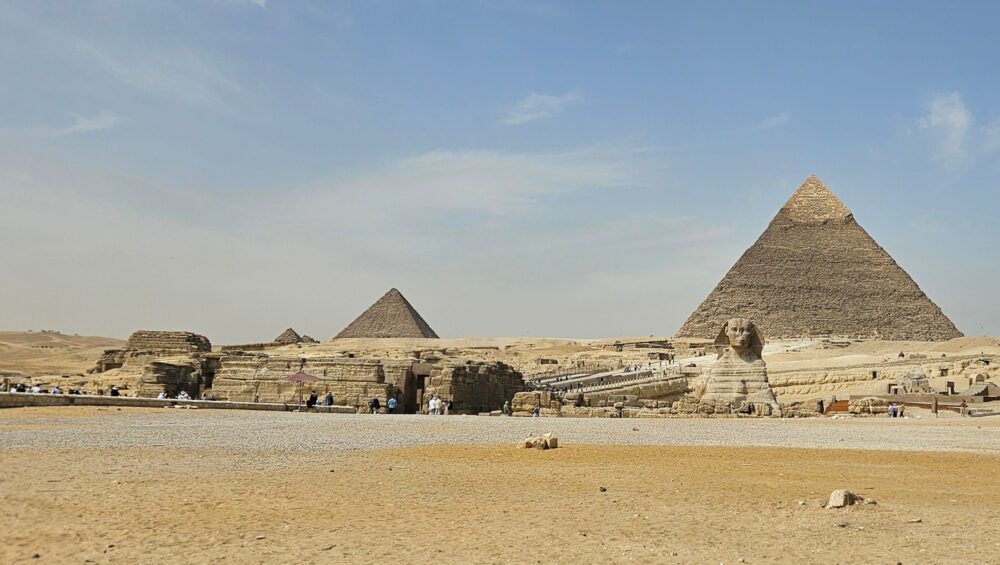
Two Cairo museums and the Giza pyramids in one day sounds like a complete introduction to ancient Egypt. From Hurghada, however, the important question is whether the visits fit your actual transport arrangements, admission times and preferred pace. A list of three attractions is not yet a workable itinerary.
The published Hurghada Travels road excursions combine one selected museum, the pyramids and the Sphinx. They do not include both the Egyptian Museum in Tahrir and the Grand Egyptian Museum, or GEM. Visiting both requires a separate, expressly confirmed arrangement. This guide explains what to ask, how to compare the existing programmes and when choosing one museum gives you a more satisfying day.
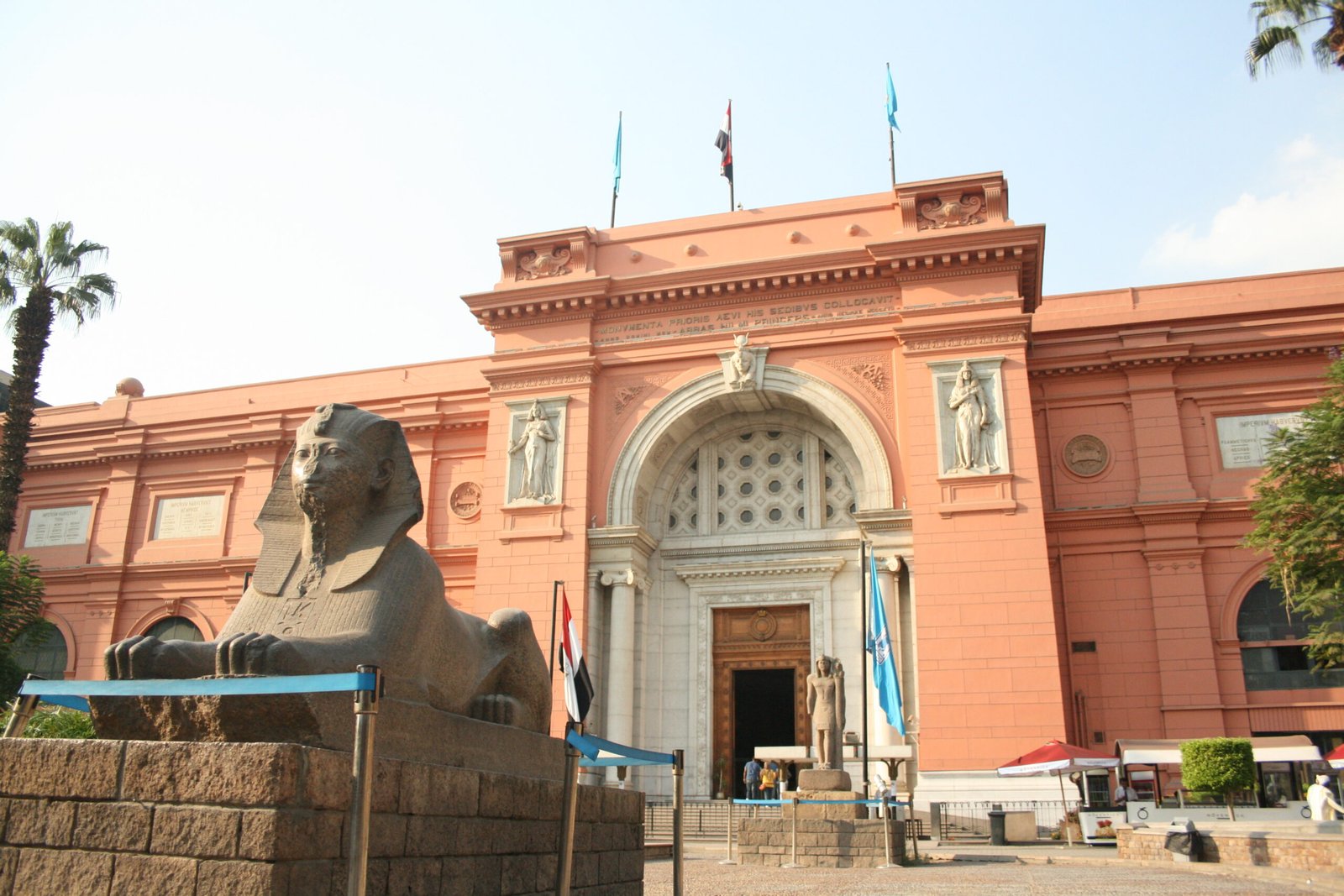
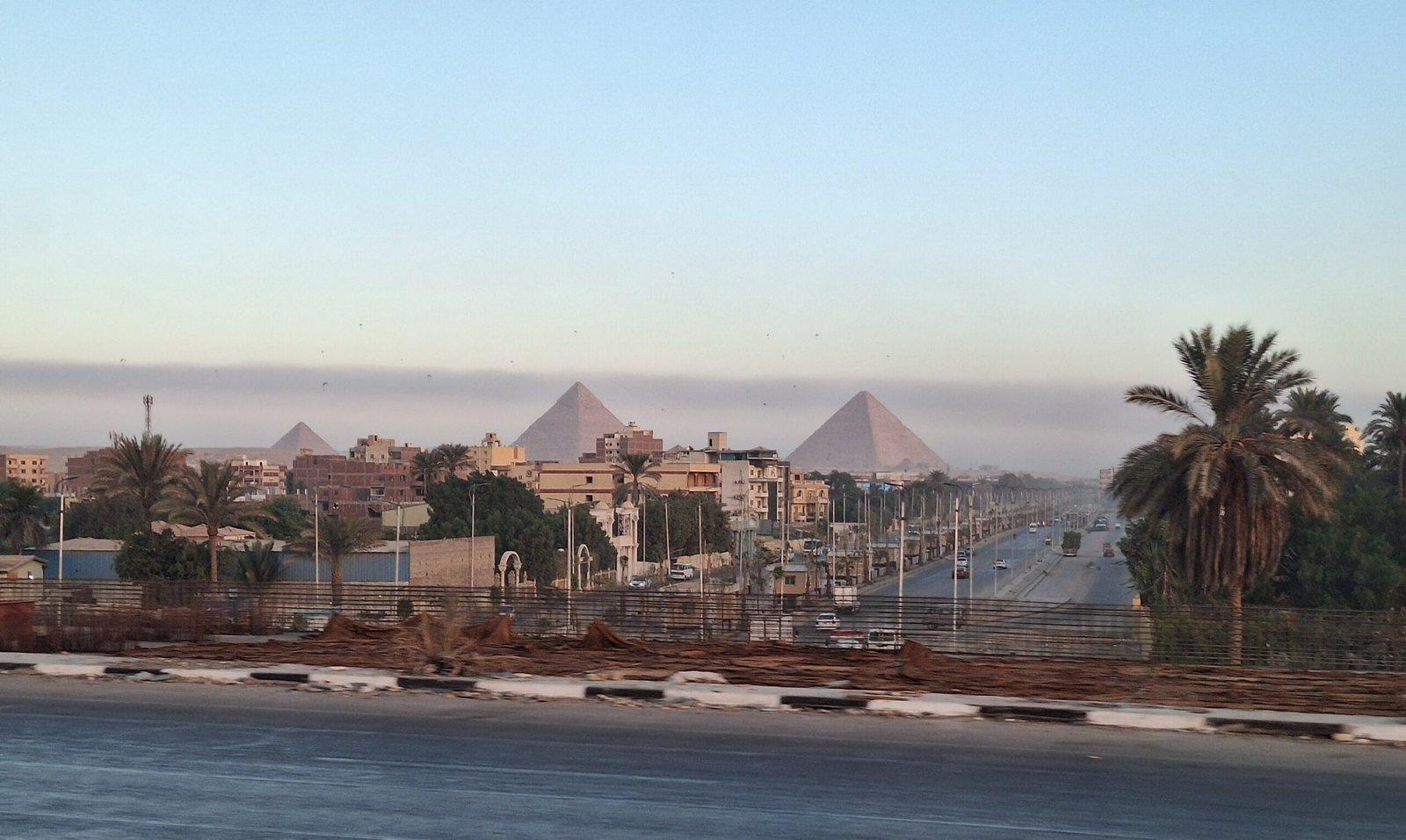
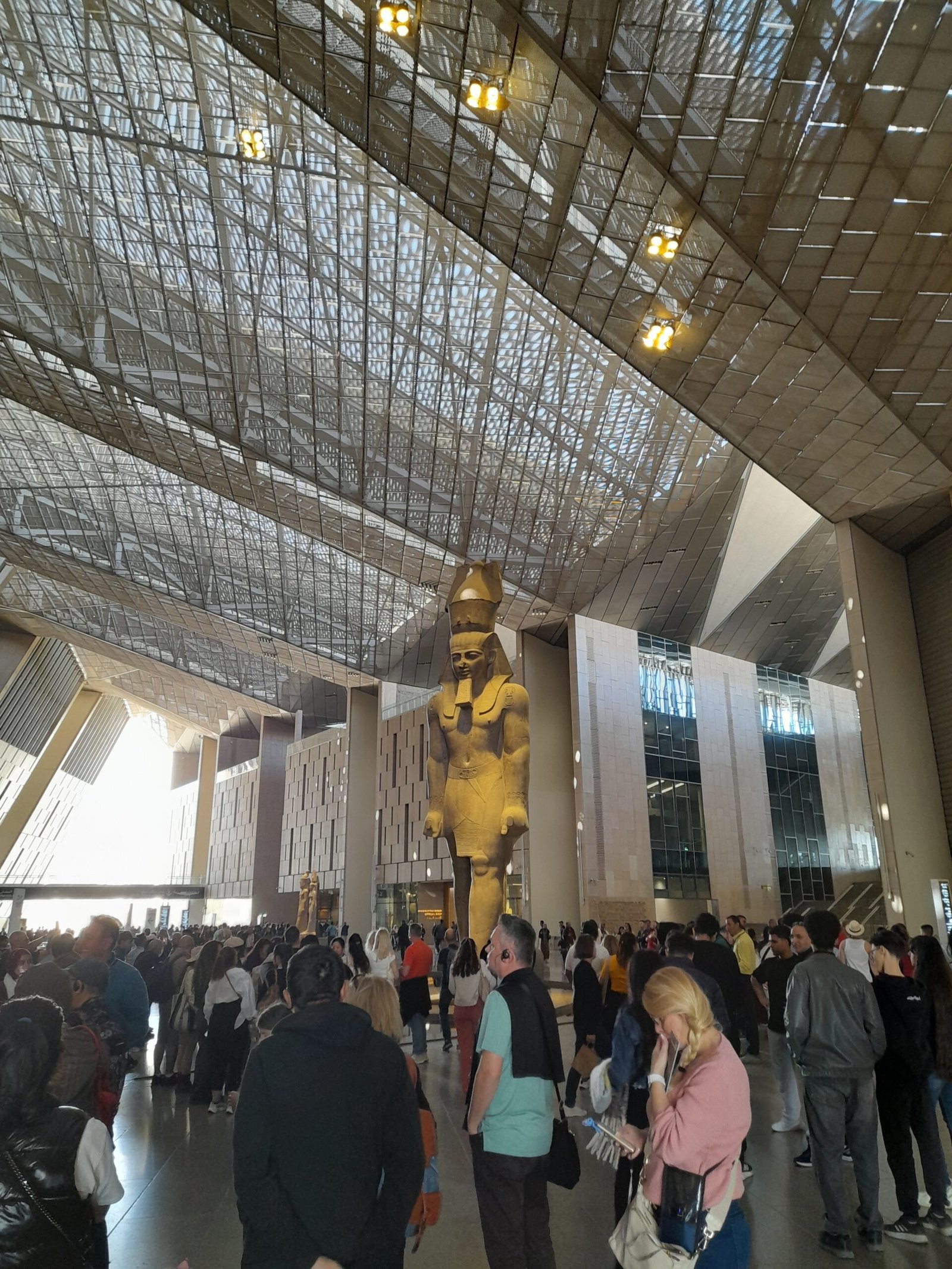
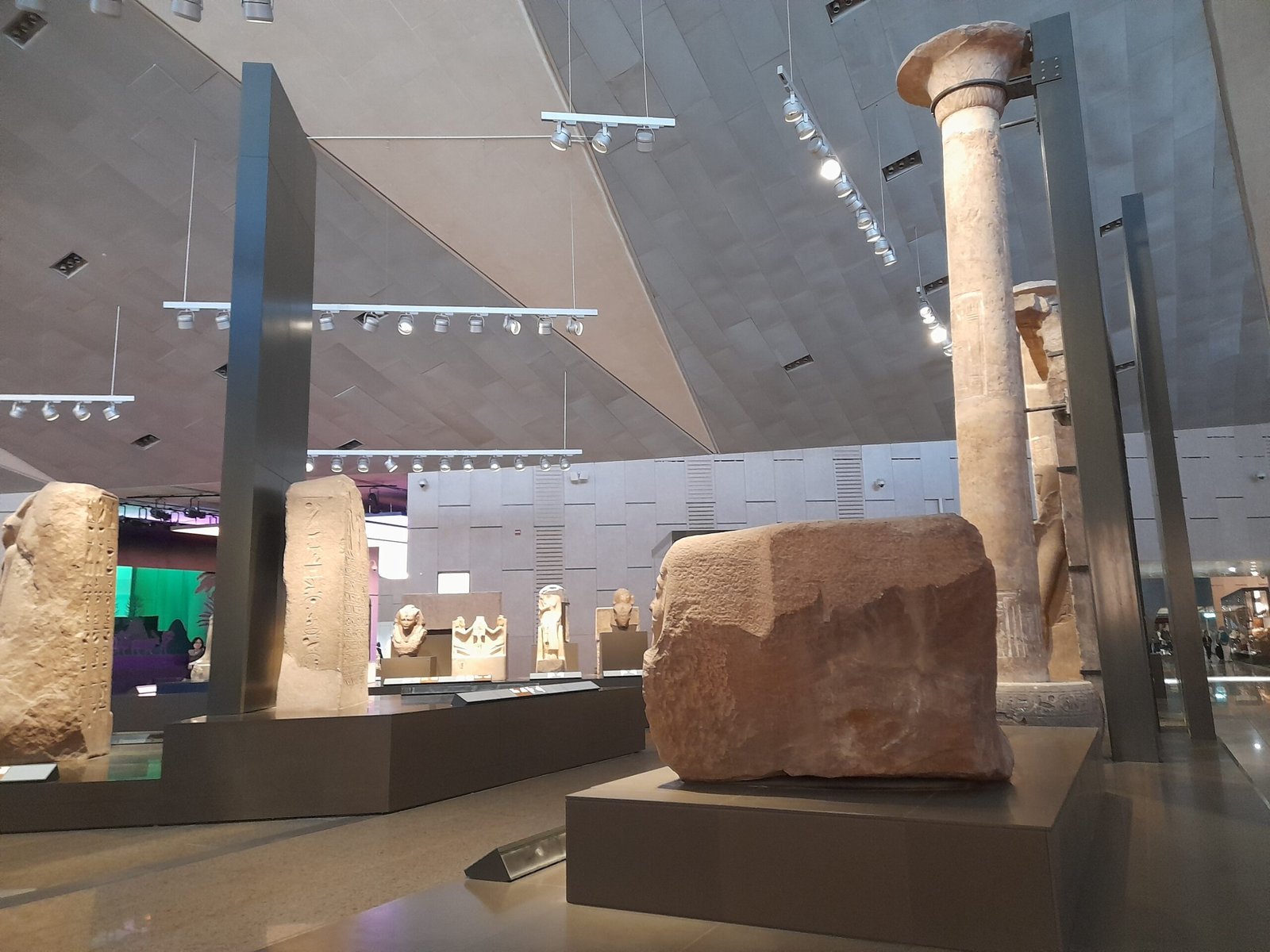
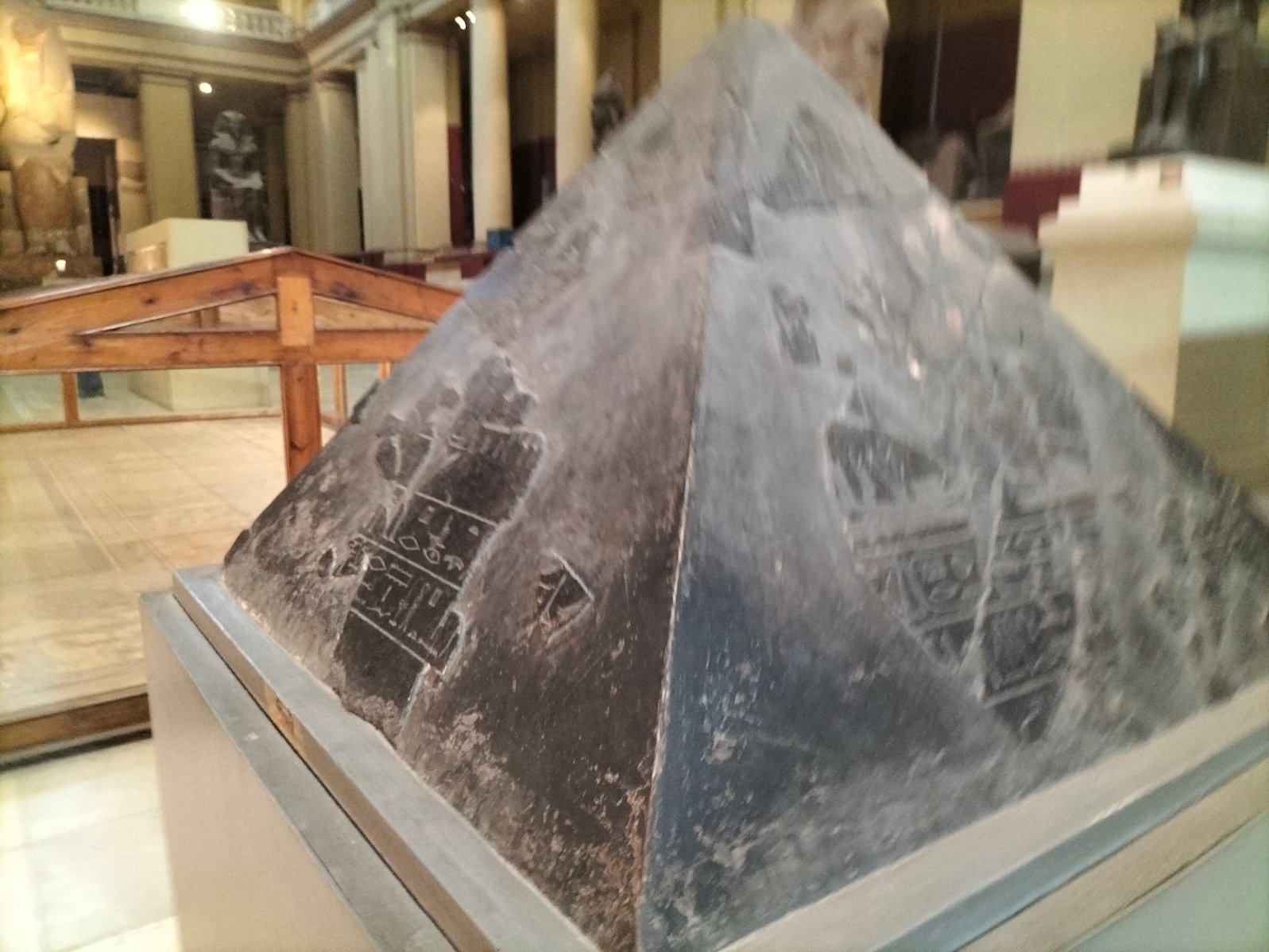
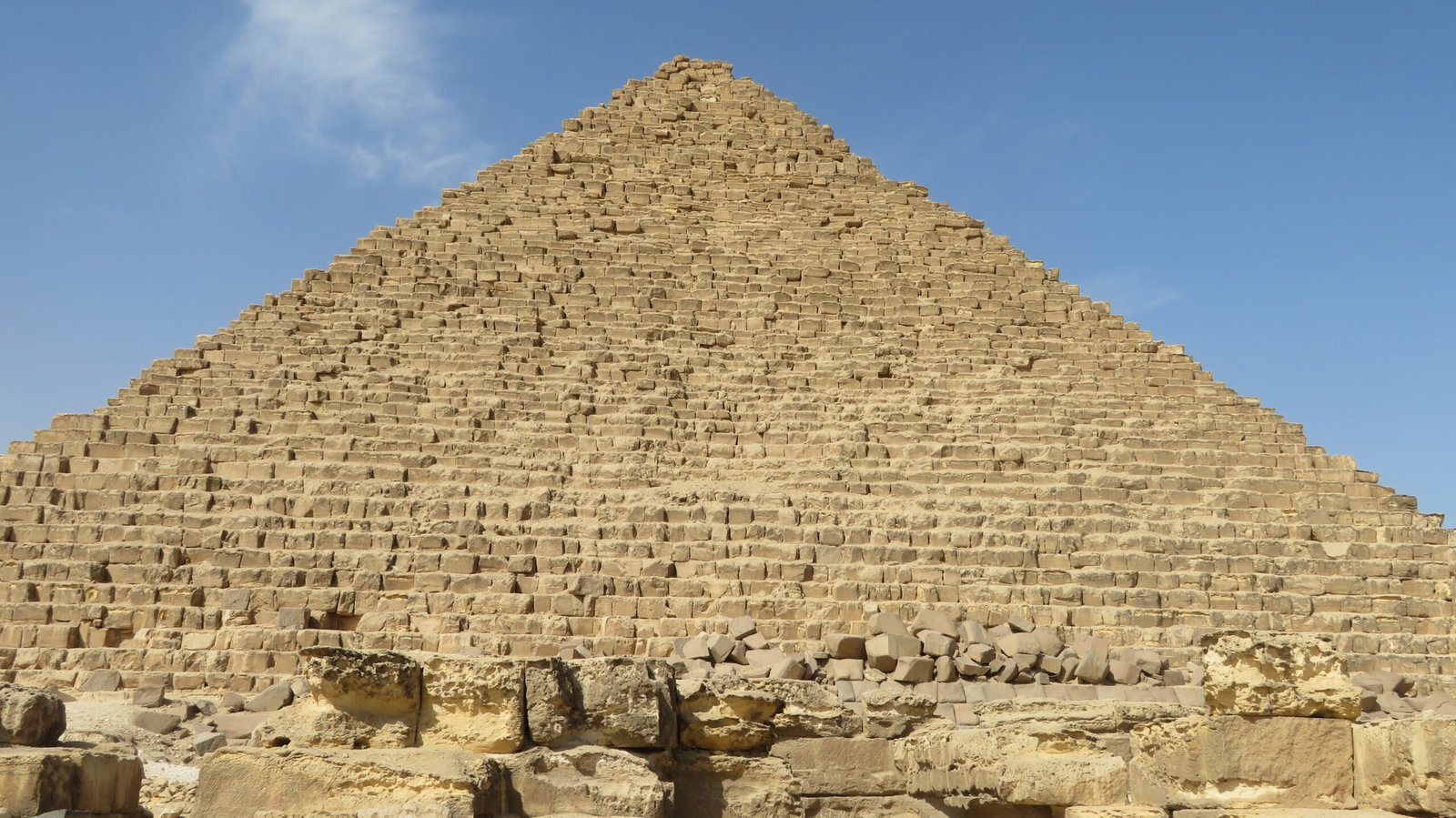
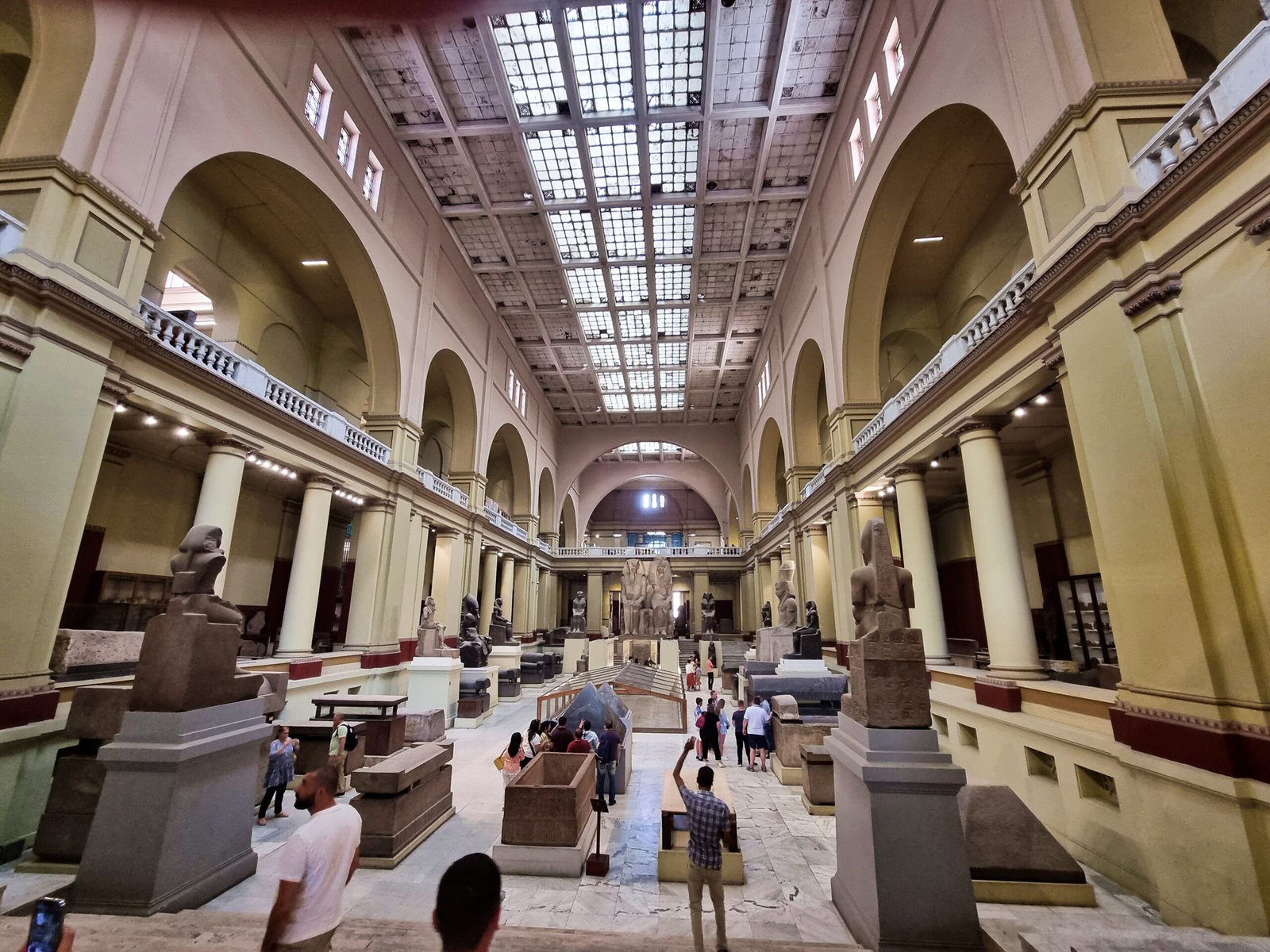
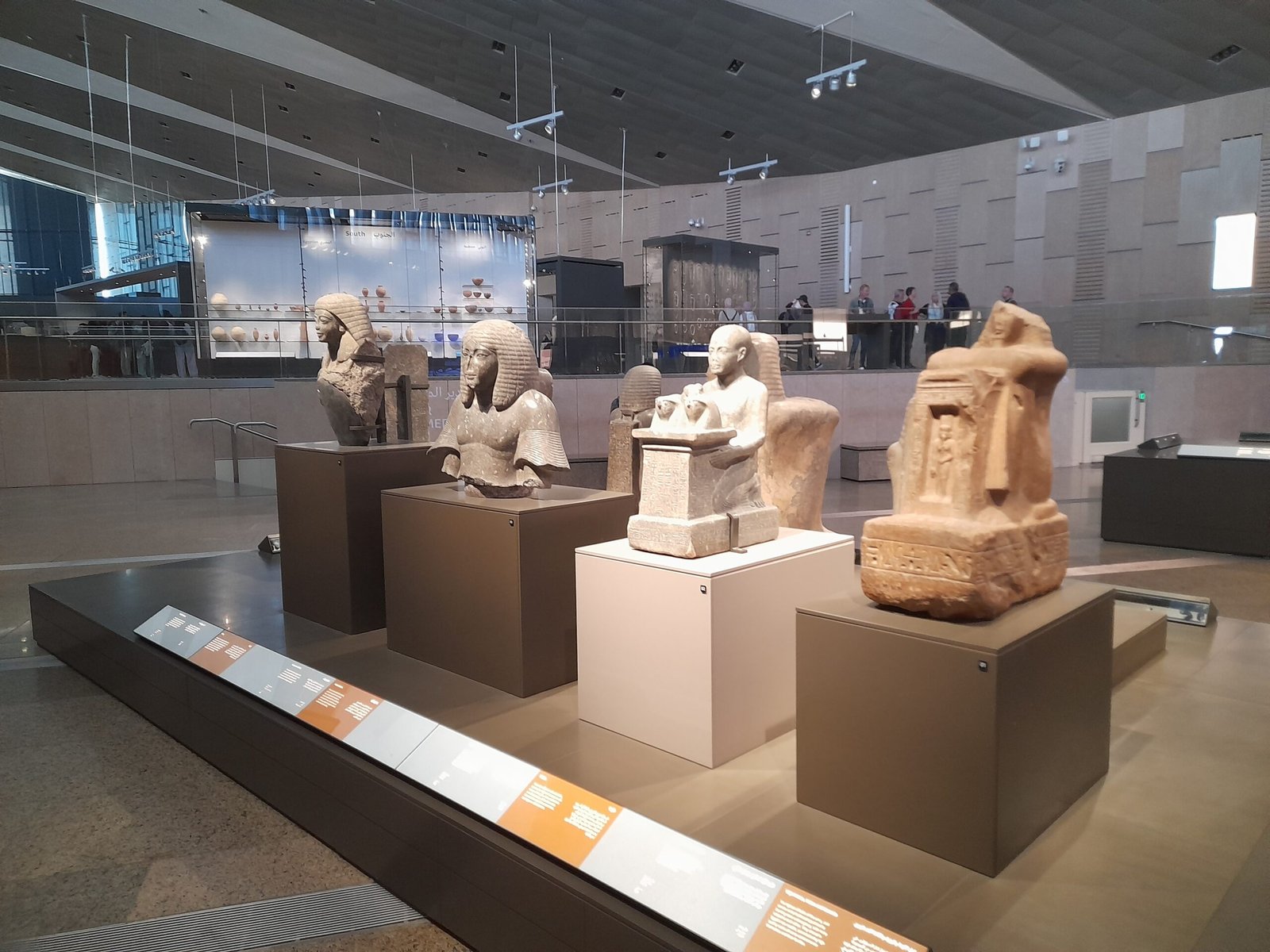
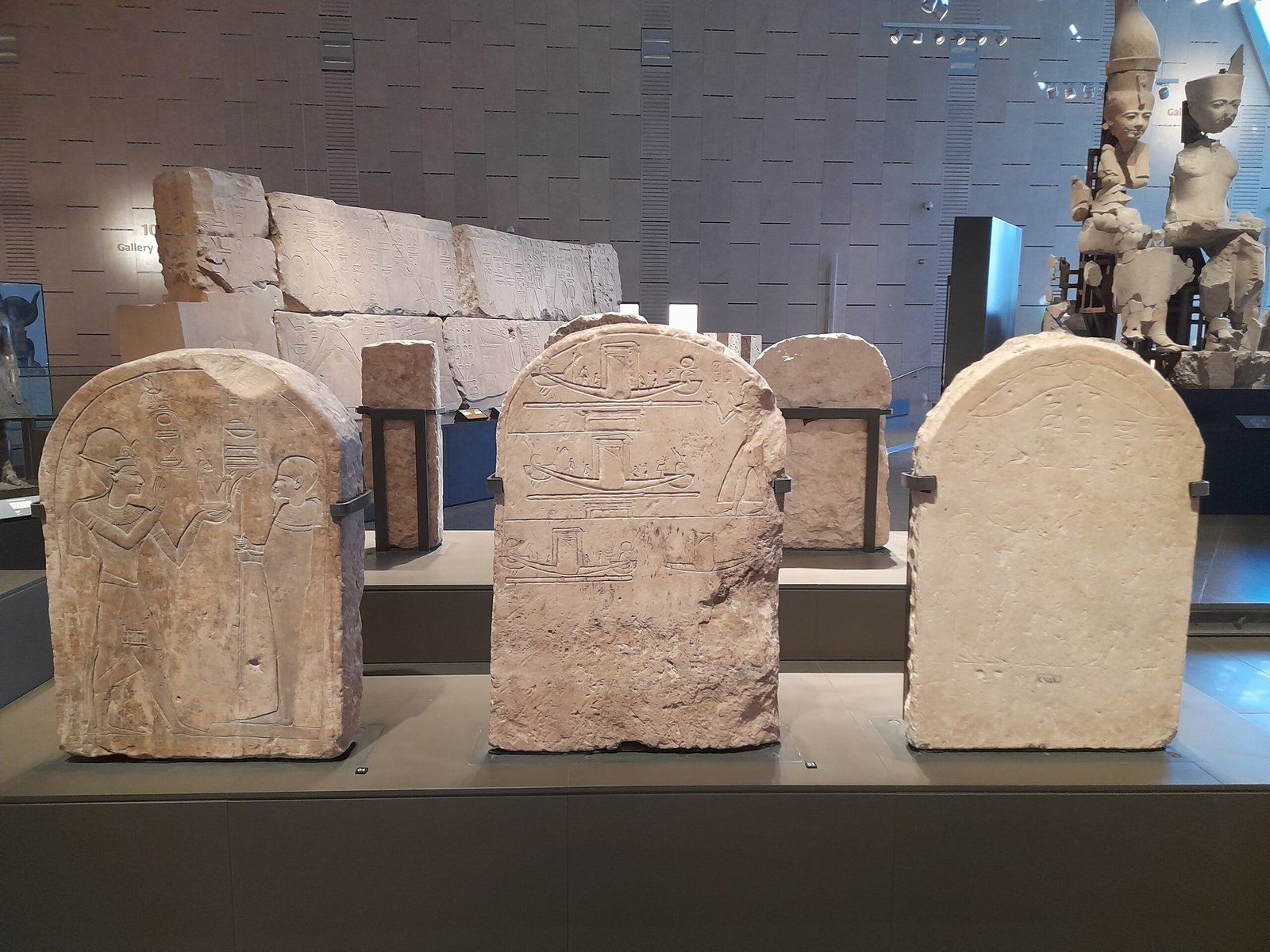
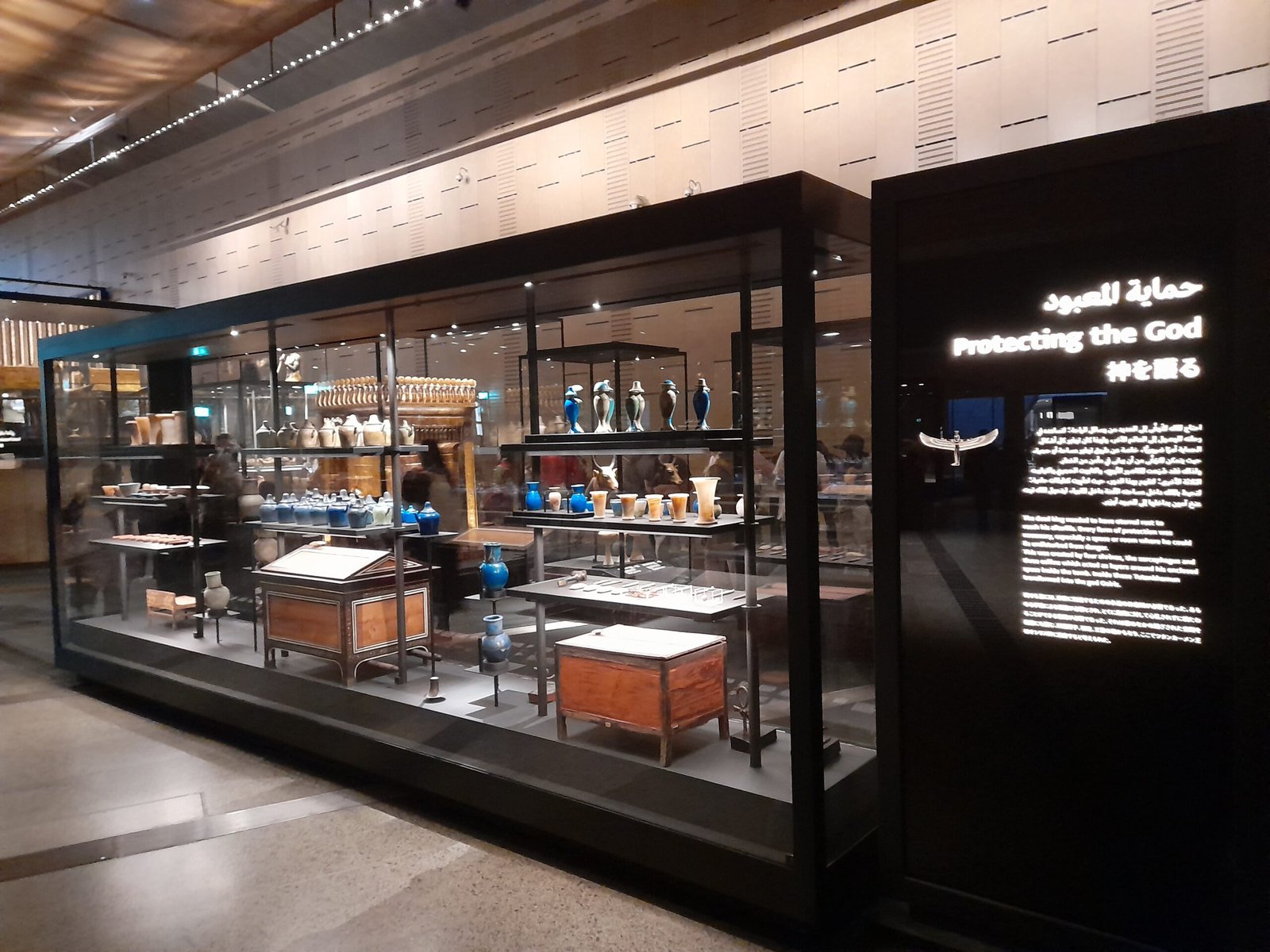
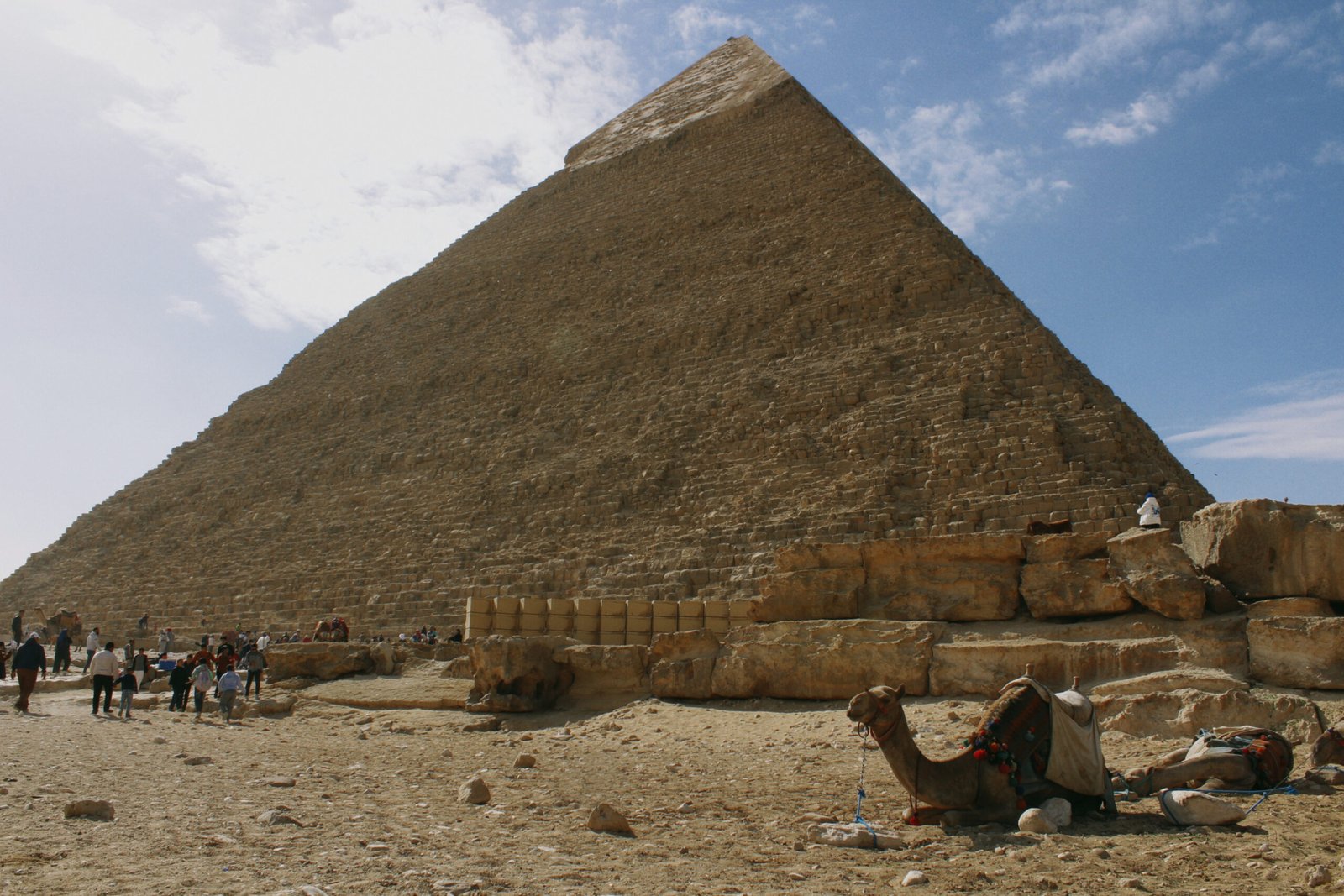
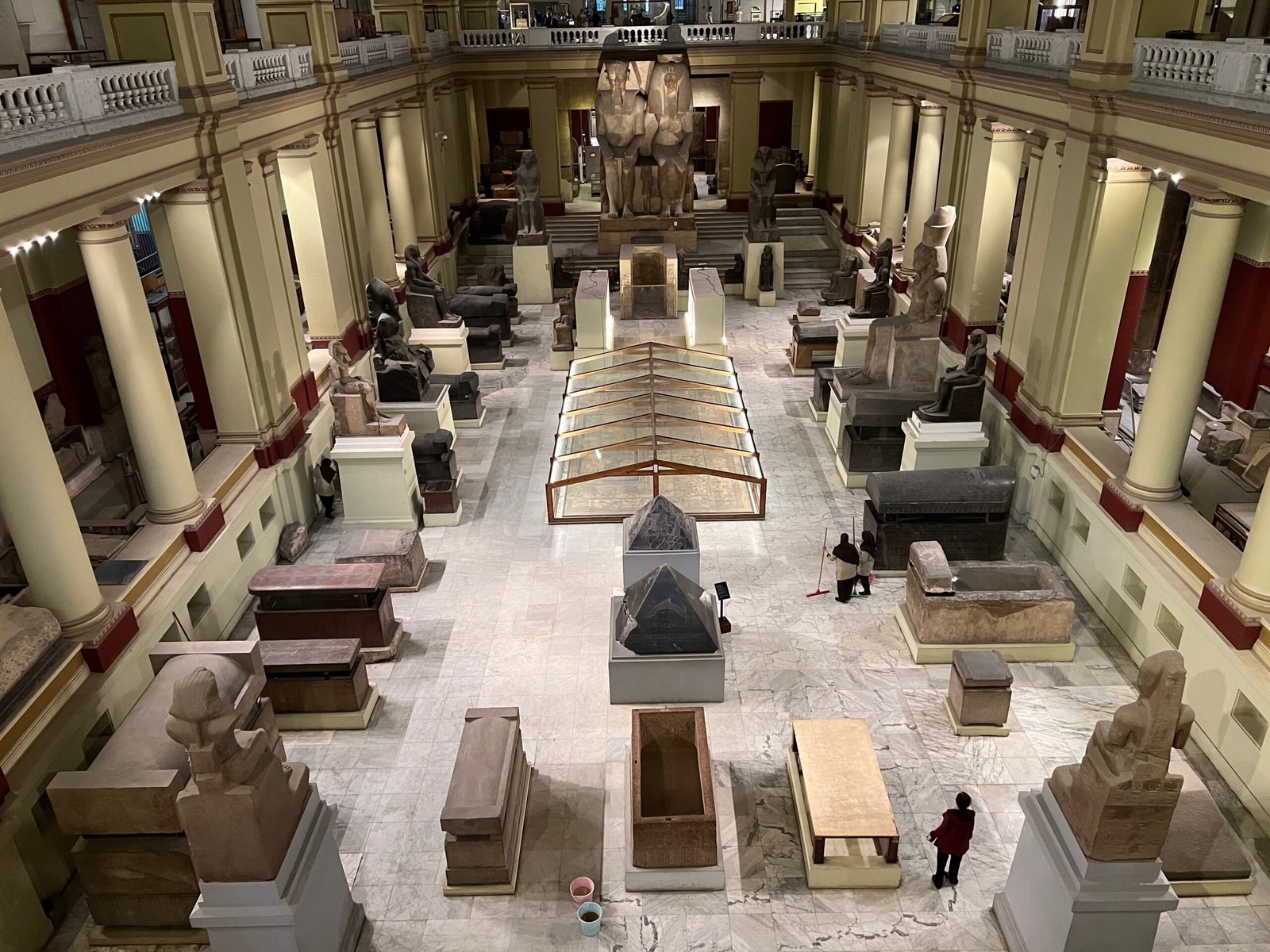
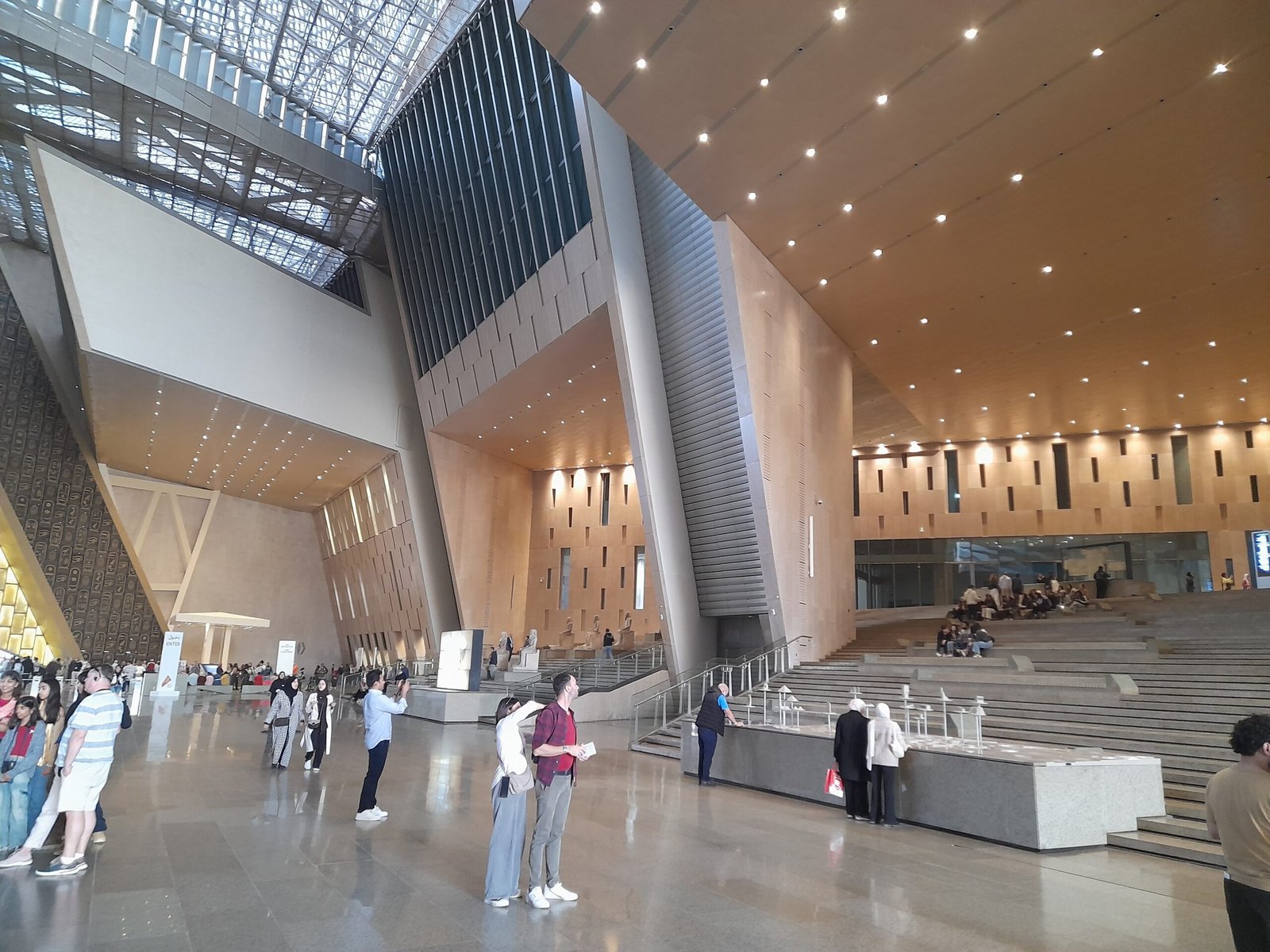
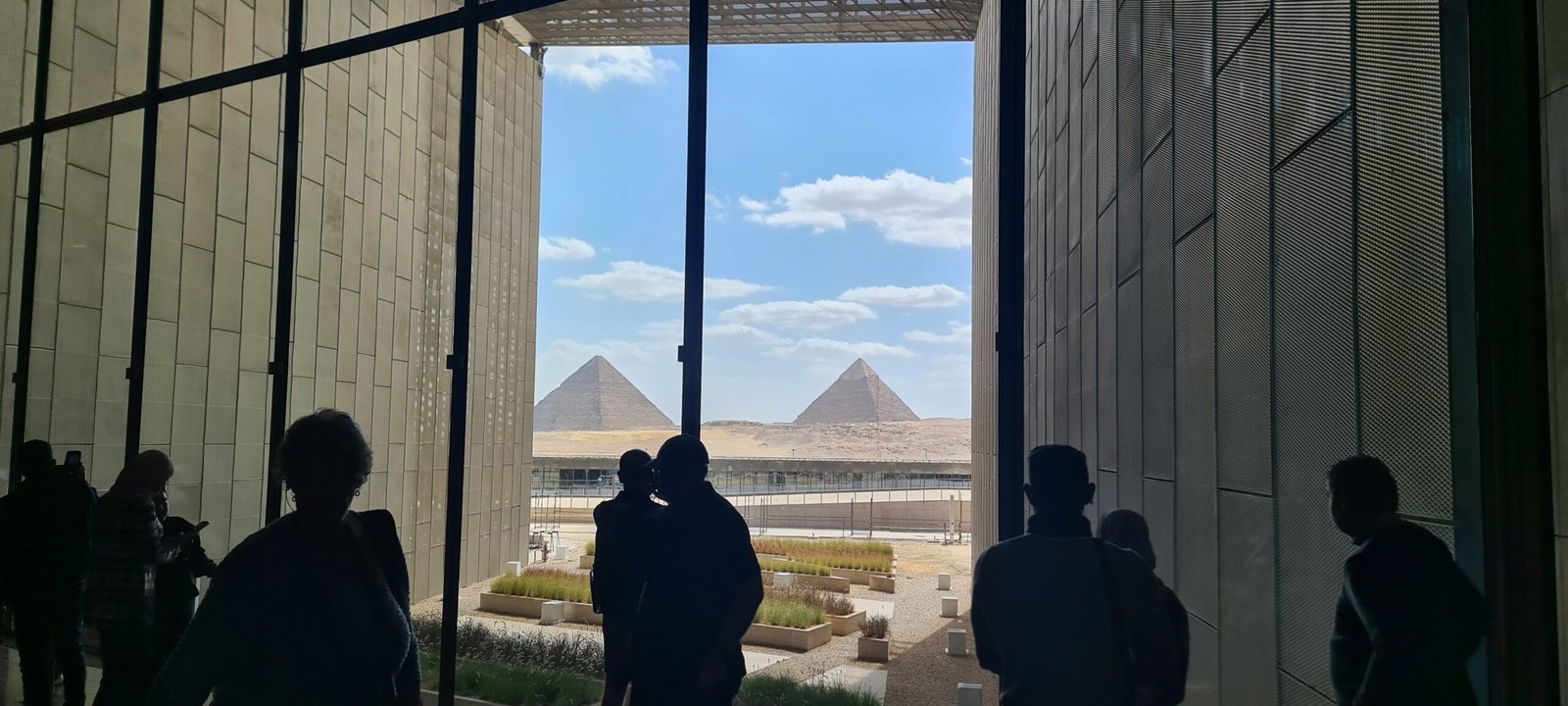
Dated photographs illustrate the two museums and Giza. They do not document one combined excursion or guarantee current displays. Photo: Luigi Rosa / Wikimedia Commons, CC BY-SA 2.0 (2024; display resized).
Published tour fares and official visitor information checked: 3 November 2026. Confirm availability, pickup and the final total for your hotel and date.
1. Two Cairo museums: establish what you want to see
Start with the reason behind your request. Do you want the historic building and collections at Tahrir, the modern galleries at the GEM, or simply the reassurance that you have not missed a famous attraction? These are different priorities. Writing down your two or three essential experiences helps an organiser assess the request honestly.
The Egyptian Museum stands in Tahrir Square in central Cairo. The GEM is in the Giza area. They are separate institutions, with separate admission arrangements, entrances and visiting conditions. Seeing photographs of both in a travel article does not mean that both are included in the excursion linked beside it. Read the programme itself, particularly the name of the museum.
Our Egyptian Museum versus GEM comparison helps with the collection choice. Here the focus is different: allocating a real day to two Cairo museums and the pyramids after travelling from the Red Sea. Decide which visit matters most before discussing the order. If time becomes limited, an agreed priority is more useful than a vague promise to see everything.
2. Understand the four published road excursions
Hurghada Travels publishes bus and minibus options for each museum. All four pair the selected museum with Giza and the Sphinx. The bus products list up to 30 guests; the shared minibus products list up to eight. A smaller shared vehicle does not automatically provide a private itinerary, an extra museum or a later departure from Cairo.
Published programmes: one museum with Giza and the Sphinx
Swipe horizontally on a small screen. Prices are for separate one-museum products, before applicable hotel supplements and optional extras; they are not a combined-tour quote.
| Published programme | Adult fare · age 10+ | Shared group |
|---|---|---|
| Tahrir + Pyramids by bus | €65 | Shared bus · up to 30 |
| Tahrir + Pyramids by minibus | €80 | Shared minibus · up to 8 |
| GEM + Pyramids by bus | €85 | Shared bus · up to 30 |
| GEM + Pyramids by minibus | €100 | Shared minibus · up to 8 |
These adult prices apply from age ten. On the Tahrir bus, children aged four to nine are €35 and infants aged zero to three are €20. On the Tahrir minibus, the corresponding prices are €40 and €35. The GEM bus lists €50 and €20; the GEM minibus lists €60 and €40. Give everyone’s age when requesting the final total, including babies.
The published road outings generally indicate approximately 17–20 hours for the complete excursion. That is not 17–20 hours inside Cairo attractions: it includes travel and the day’s organisation. Check the selected product for its current inclusions and pickup information. For two Cairo museums, request a separate assessment instead of booking one standard excursion and assuming that the second museum can be added on arrival.
3. Separate the long journey from the sightseeing budget
A useful plan has two layers: the whole door-to-door outing and the time available after reaching Cairo or Giza. Hotel collection, travel, comfort stops, city movements, admission and the return journey all belong to the first layer. Only part of it is available for exhibitions and monuments.
Here is deliberately simple arithmetic, not a tour timetable: if your wish list assigns two hours to Tahrir, three to the GEM and two to Giza, it already uses seven hours on site. It has not yet allowed for traffic, security checks, queues, getting back to the vehicle, lunch or a rest. These numbers are an illustration of your preferences, not promised durations or minimum visiting requirements.
Ask the organiser to show where each activity fits and what happens if the arrival is delayed. A plan that works only when every transition is immediate offers little room for a comfortable visit. For two Cairo museums, the acceptable trade-off might be fewer galleries or a different trip structure. Decide that before paying, especially if one person wants detailed explanations while another mainly wants photographs.
4. Two Cairo museums have different closing constraints
Official opening information checked for this guide lists Tahrir’s usual daily visiting hours as 09:00–17:00, with the last ticket at 16:00. The Ministry also lists shorter Ramadan hours separately. Use the official Egyptian Museum visitor information to check the arrangements relevant to your travel date, rather than applying a seasonal timetable throughout the year.
The GEM’s published gallery hours are ordinarily 09:00–18:00, with last entry at 17:00. Wednesday and Saturday gallery hours extend to 21:00, with last entry at 20:00. The museum complex has different opening and closing times from the galleries; an open complex is not a promise that you can enter every exhibition. Consult the official GEM opening hours and the date available through its official ticket service.
Later GEM hours can be a point to discuss when planning two Cairo museums. They do not extend Tahrir’s hours, guarantee evening access to Giza or change a shared excursion’s departure. Your transport, guide and return arrangements must support any later visit. Ask for the actual sequence, not simply confirmation that a building stays open late.
5. Choose highlights instead of promising complete collections
Two museums can look manageable on paper when each is reduced to a single line. Inside, visitors need time to move between displays, listen to explanations, read labels and enjoy the objects they came to see. A short highlights route may suit an experienced visitor; it may frustrate someone visiting Egypt for the first time.
Tell the organiser which subjects interest you: monumental sculpture, royal history, everyday objects or the architecture of the buildings. Ask whether a proposed museum visit allows a guided introduction, independent browsing or both. If a particular object is essential, request confirmation of its current display and access. Historical photographs in this guide illustrate the places; they do not certify that every photographed object remains in the same position.
Avoid giving two Cairo museums identical durations just because that makes the timetable symmetrical. Your interests may justify a longer stay in one. The Tutankhamun visit guide can help if that collection is your main reason for choosing the GEM. A clear collection priority often resolves the itinerary question before you need a more complicated booking.
6. Give Giza its own place in the plan
The pyramids are a separate visit, not the view through a museum window. Ask which Giza stops are planned and how the Sphinx fits the route. Seeing the pyramids in the distance from the GEM is an attractive visual connection, but it does not replace visiting the archaeological area.
Entering a pyramid is also a different decision from visiting the plateau. The published excursion admission should not be read as an automatic inclusion of the Great Pyramid’s interior. Check the optional ticket, availability and effect on the group’s timing. Our guide to going inside the Great Pyramid explains the practical questions, while the Sphinx guide helps distinguish that stop from the museum visits.
With two Cairo museums already on your wish list, extra activities need deliberate choices. A camel photograph, souvenir browsing or an optional Nile activity can consume time that you had mentally assigned to galleries. Ask what is included, what is optional and which activities can be omitted. Do not build a plan around an unconfirmed sunset stop or a guaranteed amount of time at every viewpoint.
7. Plan transfers, lunch and pauses as real activities
Tahrir and the Giza attractions are not one walkable museum campus. A route needs vehicle movements between them. The order should reflect confirmed admissions, the day’s operating arrangements and realistic local conditions. A map can show location; it cannot promise your journey time on a particular day.
Ask where lunch falls in the proposed programme. The standard excursions list lunch and drinks, but a separately organised combination needs its own inclusion list. Do not assume that a change of itinerary preserves every feature of the published trip. Explain dietary requirements in advance and ask what can actually be accommodated.
Allow for toilets, water and a chance to sit down without presenting these as guaranteed facilities at every stop. In a group, agree on meeting points and how the guide will explain departure times. Two Cairo museums can become tiring when the only flexible part of the day is the visitor’s rest. If every pause requires giving up a priority attraction, a one-museum plan may be a better match. Read our summer Cairo planning guide for the seasonal comfort questions to raise.
8. Two Cairo museums with children or older travellers
Assess the proposed pace against the people travelling, not just the adults who make the booking. Share children’s ages, whether someone needs frequent rests and any practical access requirements relevant to the vehicle and route. You do not need to provide unnecessary personal detail to ask clear questions about steps, walking and assistance.
A minibus group size does not establish an accessible vehicle or guarantee seating throughout the attractions. Ask separately about boarding, the walking route, lifts where relevant and the assistance actually available. The Cairo guide for seniors and Cairo with children guide offer more targeted preparation.
For two Cairo museums, identify an acceptable fallback before departure. Would everyone prefer to keep the pyramids and one full museum visit, or is the second museum the main reason for travelling? Avoid dividing the group spontaneously at an entrance without confirmed supervision, transport and meeting arrangements. A simpler itinerary is often easier to enjoy together, especially after an early hotel pickup and before the long return to Hurghada.
9. Check the full cost of the confirmed programme
The four published tour fares are useful comparisons, but none is a quoted price for two Cairo museums. Adding the prices of two standard excursions does not produce a valid private combination. A custom quote needs to state the route, vehicle arrangement, guide, admissions, meals, transfers and any other included services.
For the published programmes, Makadi Bay and Sahl Hasheesh transfers carry a listed €5 per person return supplement. El Gouna, Safaga and Soma Bay carry €10 per person return. Confirm the hotel and final total when booking. These published supplements should not be assumed to define the pricing of a separately arranged itinerary.
Ask whether quoted admissions include both museums and the Giza site, and whether any special access is extra. Keep optional pyramid interiors, a Nile activity if offered, personal purchases and other extras separate from the base total. The Cairo excursion price guide explains the existing options. For two Cairo museums, request a written total in the agreed currency and the payment conditions for that precise arrangement.
10. Keep photography expectations compatible with the visit
Decide whether you want a sightseeing day with photographs or substantial time for carefully composed pictures. They create different demands on a packed itinerary. Tell the organiser about any camera equipment and important subjects before booking. Do not assume that permission at one museum applies at the other.
Review the GEM’s official visitor FAQs and Tahrir’s current visitor guidance for equipment and photography restrictions. Follow gallery signs and staff instructions on the day. A ticket for admission is not blanket permission for every kind of photography, support equipment or professional activity.
Our Cairo photography guide covers the more detailed preparation. Here the time question is central: two Cairo museums, Giza, repeated group portraits and a long list of special viewpoints compete for the same available hours. Choose the photographs that matter most. The dated images in this article show actual places and displays; they are illustrative photographs, not a record of one combined excursion sold by Hurghada Travels.
11. Compare a simpler day with a separately arranged stay
If the combined day feels rushed, consider the existing one-museum excursion first. You still visit Giza and the Sphinx, and you can choose the museum that best matches your interests. This is often the clearest option when the holiday is based in Hurghada and the available day is fixed.
Another possibility is to ask about a separately arranged Cairo stay or a second visit. This is a planning alternative, not a published overnight package promised by this article. Availability, accommodation, transport and the complete cost would need independent confirmation. Do not assume that a hotel night, flight or extra day’s guide is included in any linked road excursion.
For friends travelling together, discuss whether everyone wants two Cairo museums or whether one person’s ambition is driving the programme. The Cairo with friends guide can help organise those decisions. For couples, the couples’ Cairo guide offers another way to discuss pace. A shared priority is more valuable than completing a checklist that leaves the group exhausted.
12. Send a request the organiser can answer clearly
Include your travel date, hotel, number of guests and ages, then state explicitly that you are asking about two Cairo museums: Tahrir and the GEM, together with Giza. List your essential visits in priority order. Add any optional pyramid interior, photography goal, access requirement or fixed commitment after the trip.
Ask for confirmation of whether the requested combination is available, whether the vehicle is shared or reserved solely for your party, the intended sequence, admission arrangements, included services and the full price. Ask what happens if the schedule changes and which priority would be preserved. A reply that only quotes a standard one-museum product does not confirm your combined request.
Finally, read the applicable payment and cancellation terms before accepting. The published tours allow cancellation at least 24 hours before the confirmed start for a full refund, with different consequences for later cancellation or no-show. A separately agreed programme needs its own confirmed conditions. Refer to the site’s terms and conditions and ask about any difference. For two Cairo museums, the best booking outcome is a precise, feasible agreement that matches the day you want.
30 questions about two Cairo museums in one day
Can I visit two Cairo museums and the pyramids in one day from Hurghada?
It requires an individual feasibility check and a confirmed arrangement. The long journey, admission cutoffs, city transfers and your desired visiting time all matter. None of the four standard road programmes listed here includes both museums.
Which two museums does this guide mean?
It means the Egyptian Museum in Tahrir Square and the Grand Egyptian Museum in the Giza area. They are separate institutions. The National Museum of Egyptian Civilization is another museum and is not part of this proposed combination.
Do the standard Cairo excursions include both museums?
No. Each published programme includes one named museum together with Giza and the Sphinx. Choose Tahrir or the GEM when comparing products. A link to another museum in an article does not add it to your booking.
Is a shared minibus a private excursion?
No. The published minibus options are shared excursions with up to eight guests. A private vehicle or a different itinerary must be explicitly agreed. Booking several seats does not by itself confirm a custom two-museum programme.
How long is the complete road excursion?
The published products indicate approximately 17–20 hours for the whole outing. This includes the journey and the day’s organisation, not just time inside attractions. Confirm the pickup and expected return for your hotel and selected date.
How many hours should I allocate to two Cairo museums?
There is no universal duration that suits every visitor. Identify your essential galleries and preferred pace, then ask how they fit. The seven-hour example in this guide is illustrative arithmetic for three site visits, not a promised schedule.
Does the seven-hour example include transfers?
No. The example adds two hours at Tahrir, three at the GEM and two at Giza. It excludes transfers, queues, security, meals and rests. Its purpose is to reveal the time still missing from an ambitious wish list.
What are the usual Tahrir opening hours?
The official Ministry information checked for this guide lists 09:00–17:00 daily, with the last ticket at 16:00. Ramadan has a separate, shorter timetable. Recheck the official information for the actual date of your visit.
Does the GEM open later on some days?
The official schedule checked here lists gallery closing at 21:00 on Wednesday and Saturday, with last entry at 20:00. Ordinary gallery closing is 18:00. Recheck your date; later hours do not automatically change your tour transport.
Can late GEM hours solve the whole itinerary?
They may help a separately planned route, but they do not extend Tahrir’s visiting hours or guarantee a later Giza visit. The vehicle, guide and return journey must also be arranged for the proposed timing.
Can I walk between Tahrir and the GEM?
Do not plan them as adjoining attractions on one walkable campus. The proposed combination requires a transport plan between central Cairo and the Giza area. Ask the organiser how the route works without treating a map estimate as a guarantee.
Does seeing the pyramids from the GEM count as visiting Giza?
No. A distant view is different from entering the archaeological area and following the planned pyramid and Sphinx stops. Make sure the written programme distinguishes the museum visit from the Giza visit and its admission arrangements.
Is entry inside the Great Pyramid included?
Do not assume so. Interior access is an optional decision with its own ticket and practical implications. Ask about availability, price and time before booking, particularly if you are already requesting both museums in the same day.
Can I add a camel ride or Nile activity?
Ask separately whether the activity is available, what it costs and how it affects the schedule. Optional activities are not automatically included. With several major visits planned, agreeing which extras to omit can be as useful as adding them.
Is the combination suitable for children?
That depends on the children’s ages, interests and ability to manage the complete journey and visiting pace. Share their ages and rest needs. A one-museum programme may be easier to enjoy than a tightly scheduled combination.
What should older travellers ask before booking?
Ask about vehicle boarding, walking, steps, opportunities to rest and the assistance actually available. Group size alone does not establish accessibility. Explain practical requirements early so that the organiser can assess the whole route rather than one attraction.
Are lunch and drinks included?
The published standard excursions list lunch and drinks. A separately arranged two-museum programme needs its own written inclusion list. Confirm meal timing and dietary requirements, and do not assume every standard inclusion carries over after an itinerary change.
What are the adult prices of the standard tours?
At the check date, Tahrir is €65 by bus or €80 by shared minibus; the GEM is €85 or €100 respectively. These are adult fares from age ten for separate one-museum products, not combined itinerary prices.
How are children and infants priced?
Rates differ by product. Tahrir bus lists €35 for ages four to nine and €20 for zero to three; Tahrir minibus €40 and €35. GEM bus lists €50 and €20; GEM minibus €60 and €40.
Are hotel supplements the same for every location?
No. Published return supplements are €5 per person for Makadi Bay and Sahl Hasheesh, and €10 for El Gouna, Safaga and Soma Bay. Confirm the hotel-specific total. A custom arrangement may have different transfer pricing.
Can I add two standard tour prices to estimate the combination?
That would not produce a valid quote. A combined itinerary has its own transport, guiding, admission and timing requirements. Request one written total for the exact arrangement, including the services and optional extras you have agreed.
Do the museums share a single admission ticket?
Treat them as separate admissions unless a specific offer explicitly states otherwise. Ask your organiser to identify each included museum and ticket. A standard excursion’s museum entry should not be interpreted as entry to any other museum.
Can I pay at pickup?
The published standard tours offer cash payment at pickup before the excursion. Online card arrangements are also described on the booking pages. Confirm the payment method, currency and any applicable charge for a separately quoted combined programme.
What cancellation conditions apply?
The standard products state a full refund for cancellation at least 24 hours before the confirmed start. Later cancellation and no-show have different consequences. Check the precise booking conditions, especially when requesting a separately arranged itinerary.
Can I choose which museum comes first?
You can state a preference, but the organiser must assess it against admissions, local movements and the day’s operating arrangements. Ask for the proposed order in writing. Your preferred sequence is not confirmed simply because you mentioned it.
What happens if arrival in Cairo is delayed?
Ask before booking how the organiser would adjust the itinerary and which priorities would be preserved. Do not assume that every visit can be shortened or moved freely. Last-entry times and the return arrangements remain practical constraints.
Can I bring the same camera equipment into both museums?
Check each institution’s current rules separately and describe your equipment in advance. Permissions, restrictions and charges can differ. Follow signs and staff instructions; admission alone does not authorise every type of equipment or photography activity.
Are the photographs proof of a combined excursion?
No. They are credited, dated photographs of the relevant sites and museum displays. They illustrate the planning guide. They do not document a single Hurghada Travels excursion or promise that every photographed display will be accessible on your date.
Would staying in Cairo make planning easier?
A separately arranged stay can offer another way to distribute visits, but it requires its own confirmed transport, accommodation, admissions and price. This article does not advertise an included overnight package. Ask for an actual proposal before relying on it.
What should I send with my enquiry?
Send the date, hotel, guest numbers and ages, both museum names, Giza priorities and any access or timing requirements. Ask for availability, the itinerary, vehicle arrangement, inclusions, full total and payment and cancellation terms for that specific request.