

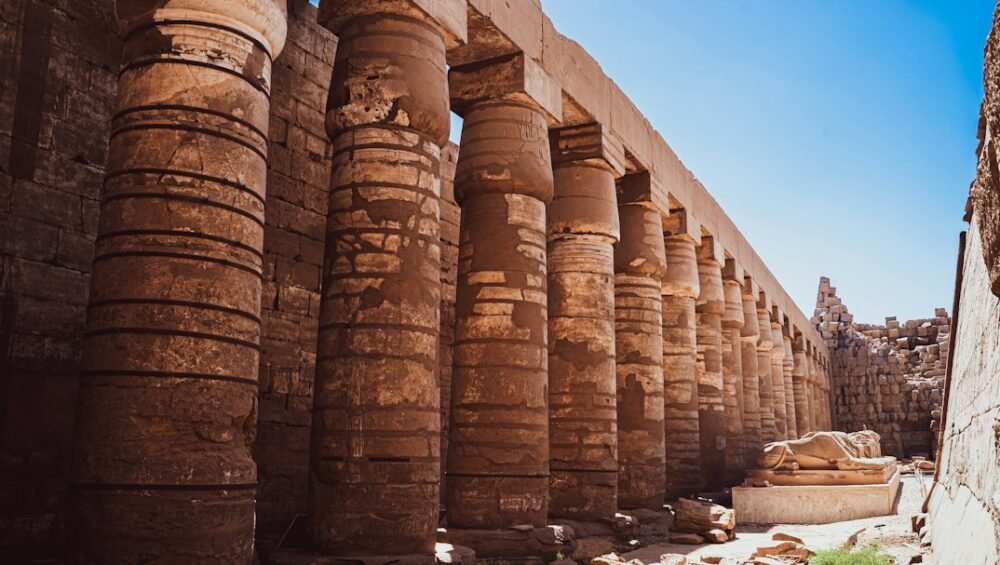
Luxor photography starts before you choose a camera setting: it starts with choosing a trip that visits the places you want to photograph. Columns at Karnak, the terraces of Hatshepsut Temple, painted tomb passages and a balloon landscape require different access and timing. A beautiful promotional image does not confirm that your excursion includes its location, viewpoint or lighting conditions.
This guide helps you compare Hurghada Travels programmes before booking. It is for travellers who want memorable personal photographs while enjoying the visits, whether they use a phone or a camera. Our listed excursions are sightseeing programmes, not photography workshops, private studio sessions or commercial filming permissions.
Begin with three picture priorities and decide which are essential. Then check the named itinerary, available visit time, group arrangement, tickets and current site instructions. A realistic Luxor photography plan gives you a useful basis for choosing between a day trip and an overnight stay without expecting one tour to deliver every photograph you have seen online.
Programmes, published fares and booking conditions reviewed on 5 November 2026. Availability, room details, guiding language and the final hotel-specific total require confirmation.
Real photographs illustrate the places discussed, not guaranteed conditions on your departure. Luxor Temple is separate from Karnak; a specific tomb, empty viewpoint, balloon route or dawn takeoff is not promised. Cover credit: Photo: 2H Media / Unsplash · Unsplash License · display resized.
1. Luxor Photography: choose three picture priorities
Write a short list of the subjects you would most regret missing. You might choose monumental columns, a temple against cliffs and a painted tomb interior. Another traveller might put an aerial landscape first and regard the other visits as supporting experiences. Neither list is wrong, but they can lead to different booking decisions.
Separate the subject from the exact image. “Visit Hatshepsut Temple” is a request about an identifiable place. “Recreate this empty terrace with identical sunlight” depends on access, other visitors, the schedule and conditions that a general tour description does not establish. Show a reference image to explain your interest, then ask which aspects can actually be planned.
Consider your companions too. Someone who enjoys taking a few phone photographs may be happy with a normal sightseeing rhythm, while a photographer expecting repeated setups may need a different arrangement. Agree on that difference before booking so that the excursion is chosen for the whole party rather than an unspoken individual plan.
The worksheet below turns picture preferences into booking questions. Use it to identify what is included, what requires a separate enquiry and what cannot be promised. Keep the list short enough that a seller can give you specific answers instead of an enthusiastic but vague assurance about “great photo opportunities”.


Match your picture priorities to the booking questions
| Picture priority | Programme connection | What to confirm before booking |
|---|---|---|
| Karnak columns | Named in our day and overnight itineraries. | Visit timing and the balance between explanations and personal photographs. |
| Hatshepsut terraces | Named in the sightseeing programmes. | Walking needs, permitted access and the time available. |
| Painted tomb interiors | Our day trips include three standard tombs. | Exact accessible tombs, special tickets and current camera instructions. |
| Memnon statues | Named stop in the standard programmes. | How the stop fits the confirmed itinerary. |
| Luxor Temple or evening scenes | Luxor Temple is not one of the four named included sites. | A separately agreed visit, opening conditions, transport and cost. |
| Balloon landscape | Included conditionally in the overnight programme. | Operating conditions and equipment guidance; no fixed view or sunrise guarantee. |
| Long photo session | Not promised by a shared sightseeing ticket. | Whether a separately quoted arrangement can meet the required time and permissions. |
This is a planning worksheet, not a promise of empty sites, a particular light, a chosen balloon route or unrestricted photography.
2. Use Karnak for architectural scale and carved detail
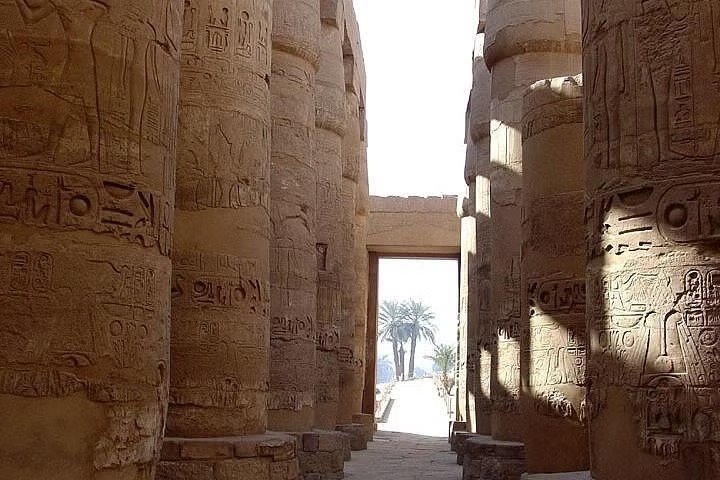
Karnak provides a clear starting point if your preferred subjects are columns, passages and carved stone surfaces. The official Karnak description identifies the temple complex and its great columned hall. Our shared coach, shared minibus and overnight itineraries all name Karnak among their sightseeing stops.
Before booking, ask how the guided explanation and personal viewing time are arranged. Listening first can help you understand what you are looking at, but it also occupies part of the visit. Do not assume that the entire time at a site is a separate photography session. If a particular architectural area is essential, mention it rather than requesting an undefined “long stop”.
For your own planning, think in three scales: an overall setting, a passage or group of columns, and a detail that interests you. This is an editorial suggestion for organising your visit, not a promise that every viewpoint will be open or empty. You can adapt the selection to the route permitted on the day.
Luxor photography does not require excluding every other visitor from every image. Decide whether people in the scene would prevent you enjoying the picture or simply form part of the experience. If you require exclusive space for a planned session, raise that separately; an ordinary admission and shared excursion do not reserve the temple for your camera.
3. Plan Hatshepsut Temple around the terraces and approach
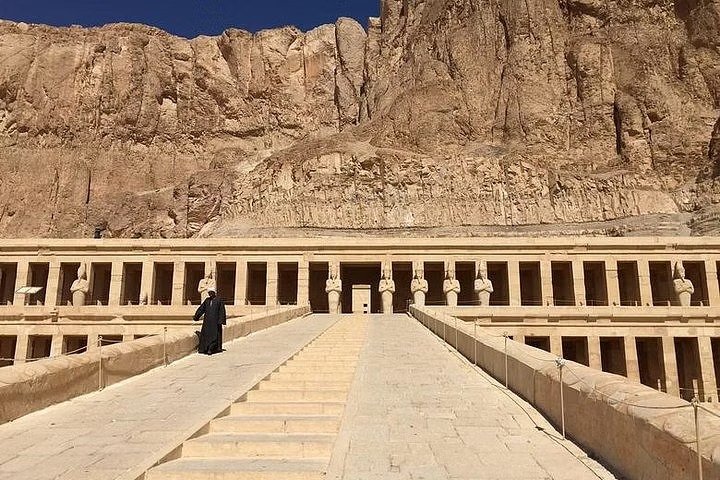
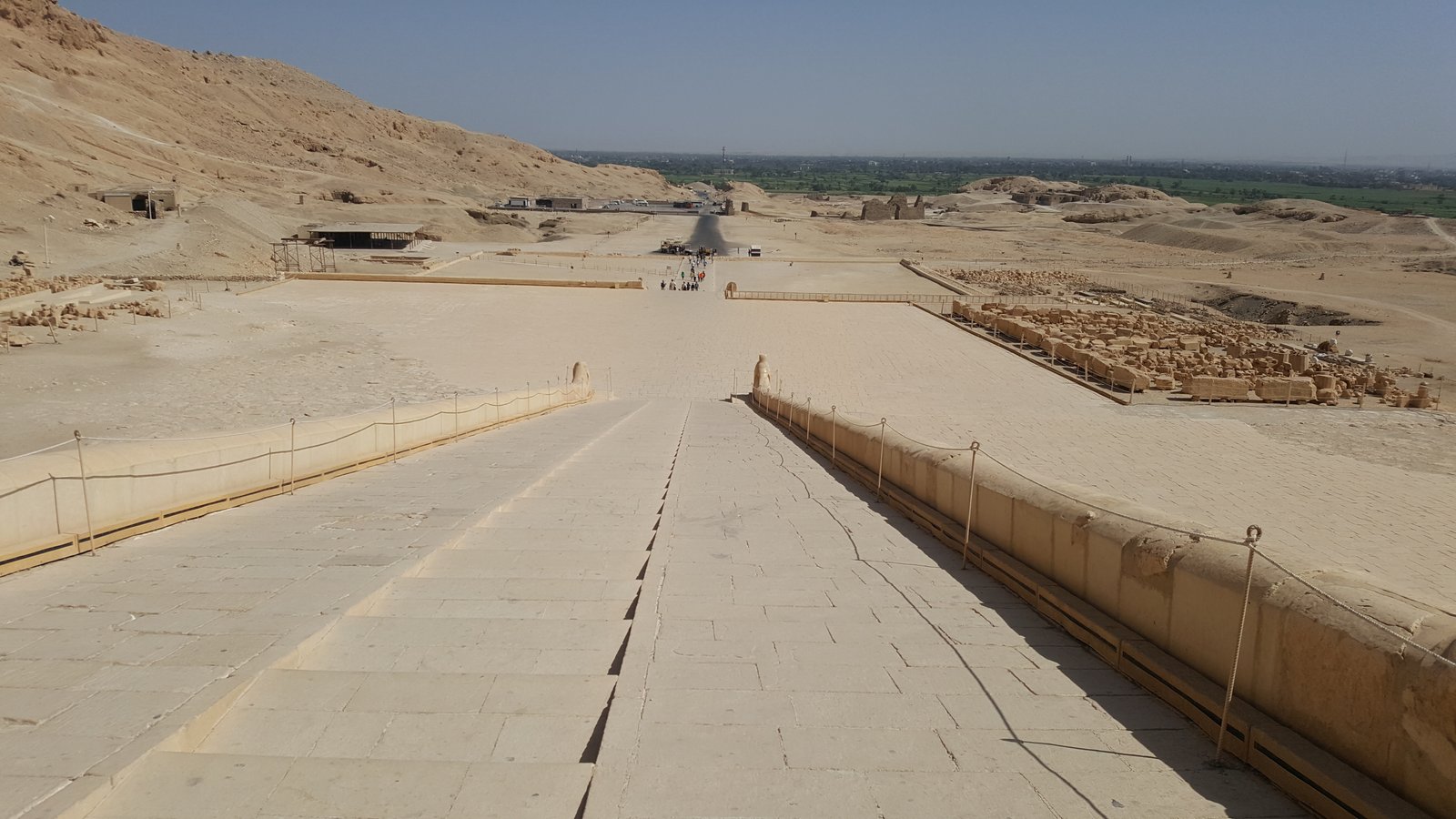
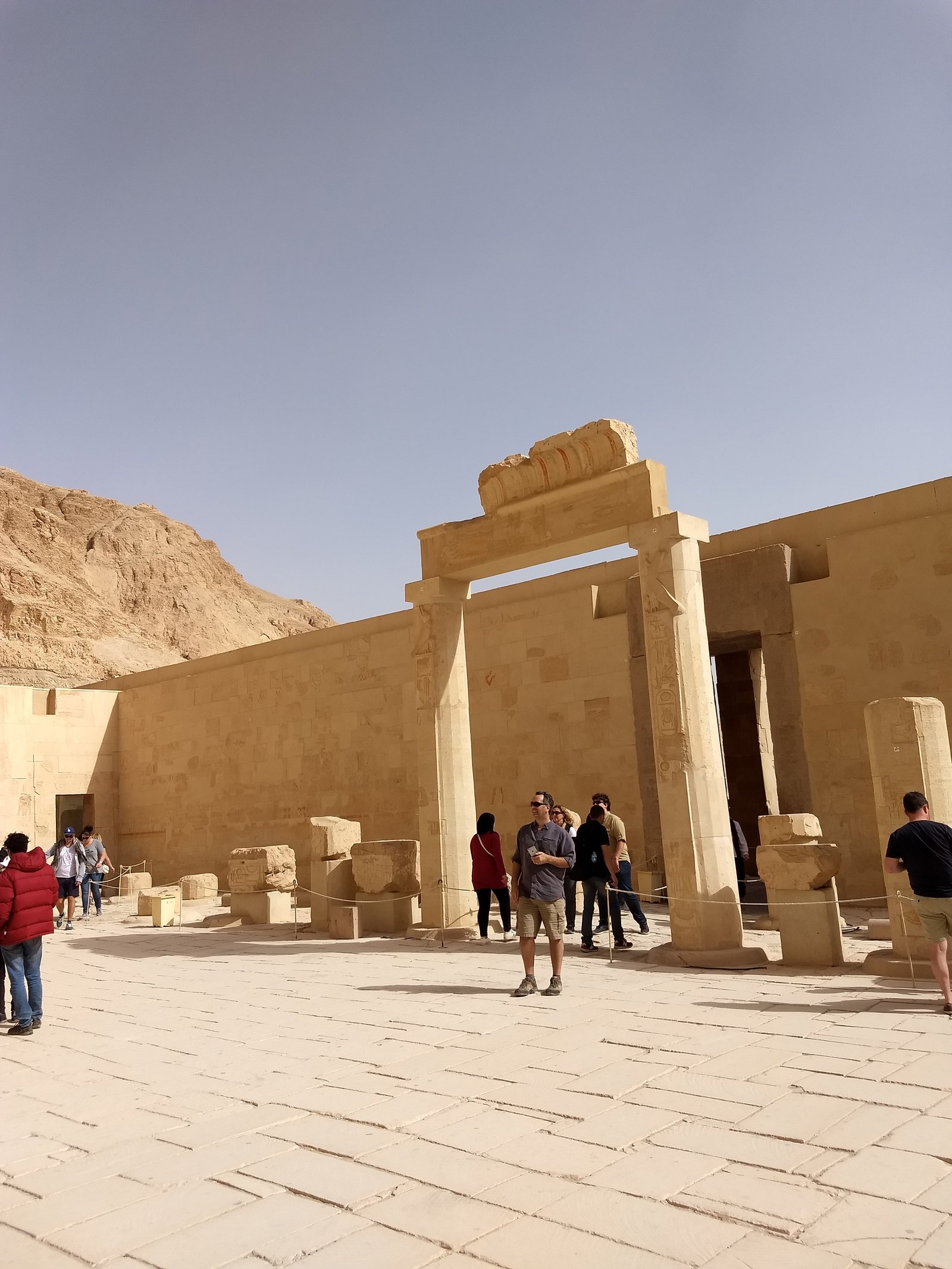
The terraces and long central approach at Hatshepsut Temple offer a different visual subject from Karnak’s columns. The photographs in this guide show the building beneath its cliffs and the view along its ramp. These are useful references for deciding whether architecture within a wider landscape belongs among your main priorities.
Ask about the route through the site and the walking involved. A viewpoint seen in a photograph may require moving along the approach or reaching a different level. If you prefer a shorter walk, say so before booking and ask what can be checked for your needs. A compact vehicle group does not remove the walking demands of the monument itself.
Think about how much of your available visit you want to spend on broad views, closer architectural details and listening to the guide. A few selected compositions may fit your preferences better than repeatedly returning to the same spot. Do not make the rest of your party responsible for an unexpectedly long portrait session.
Keep your reference photographs as examples of subjects rather than reserved positions. Follow the accessible route and local instructions, and do not plan on crossing barriers or using a closed area to match a photograph. Luxor photography planning should help you choose a suitable visit, not create an expectation of access beyond the ticket and site arrangements.
4. Luxor Photography inside tombs: check access before equipment
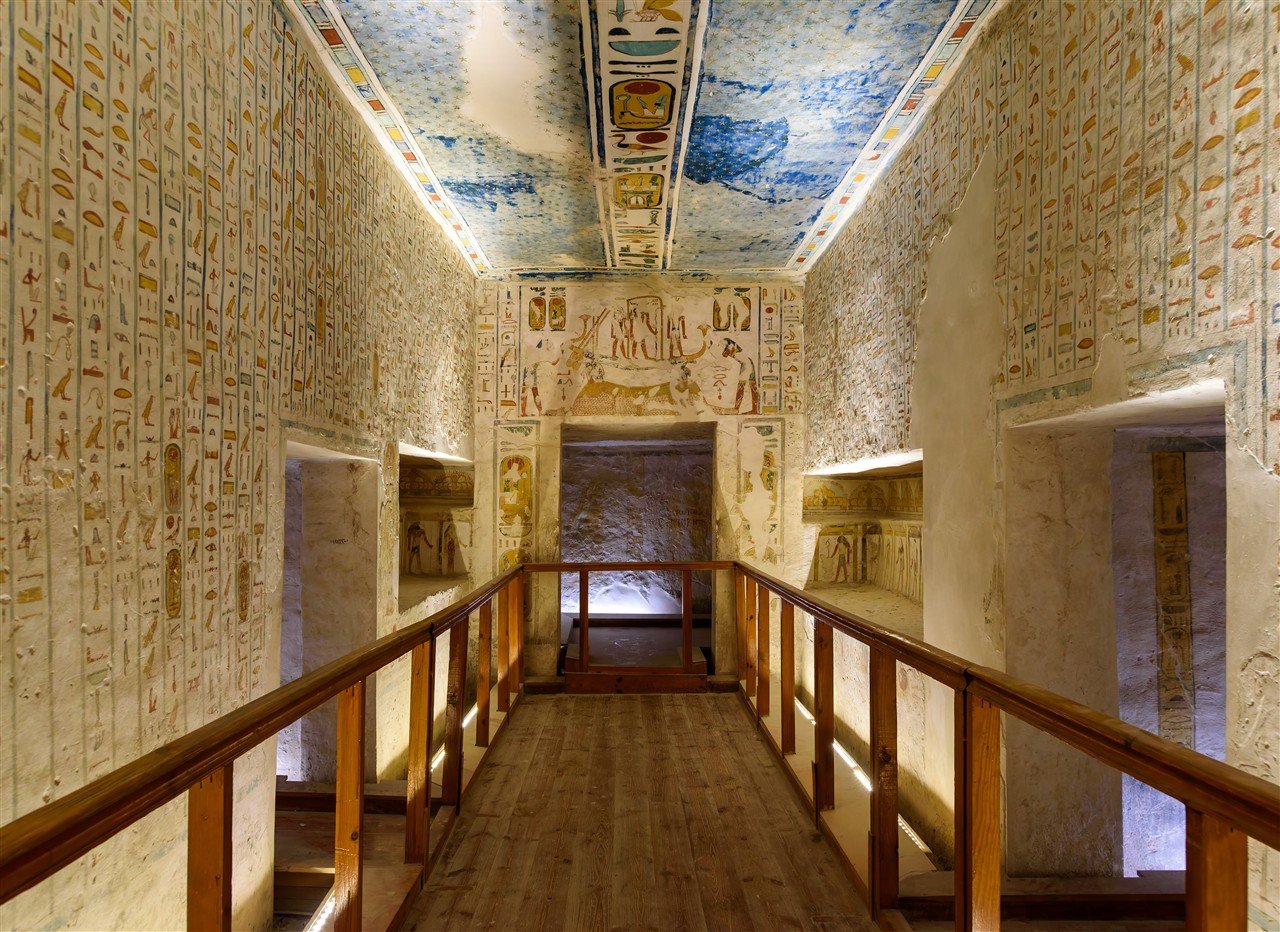
If painted interiors are your main reason for travelling, make the Valley of the Kings a named requirement. Our day-trip pages include entry to three standard tombs. That description does not guarantee a particular selection, admission to every tomb or access to any chamber shown in an online gallery. Ask about the arrangements relevant to your departure.
Special tomb tickets, including Tutankhamun where available, are additional in our standard day programmes. Ask about the ticket, the accessible areas and whether the scheduled visit allows the extra stop before making it central to your plan. The official Valley of the Kings page helps identify the site, but a general description is not your dated booking confirmation.
The illustrated painted passage is in KV2, the tomb of Ramesses IV. It is included here to show an interior subject, not to promise that your group will enter that exact tomb. Use named references when explaining your priorities, particularly if you would be disappointed by a different selection of standard visits.
Access and photography permission are separate questions. Check the instructions at the specific open tomb; the official national guidance discussed later requires flash to be disabled indoors. Decide whether you would still want the visit if a particular photograph cannot be made. That answer is valuable when choosing between a sightseeing excursion and a specialised enquiry.
5. Distinguish Memnon, Luxor Temple and evening photographs
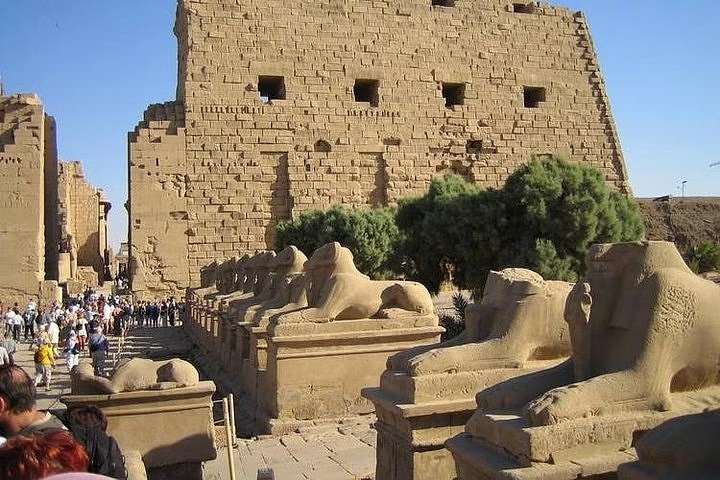
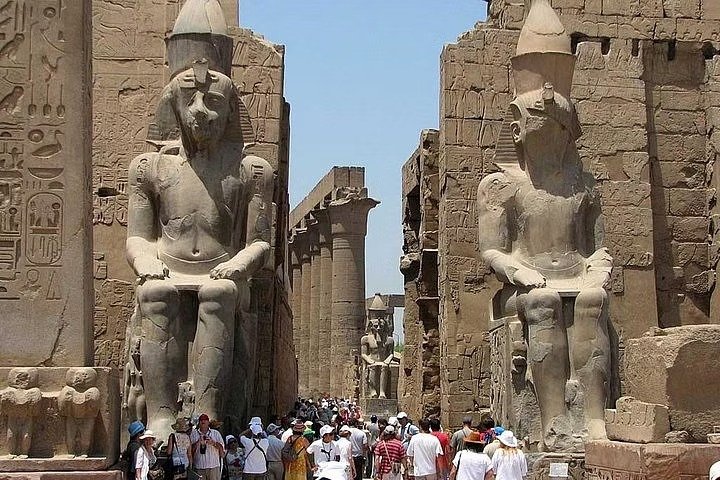
The Colossi of Memnon are a named stop in our standard programmes and provide a subject of large seated statues in an open setting. Compare that with the entrance and statues of Luxor Temple shown below. They are different locations, and their photographs should not be treated as interchangeable illustrations of the same included visit.
Luxor Temple is also separate from Karnak. It is not one of the four named included archaeological stops in the three programmes compared here. If an image of Luxor Temple is the picture you particularly want, ask about a separately agreed visit rather than assuming that “Luxor tour” includes every landmark in the city. Our Karnak and Luxor Temple comparison explains the distinction.
An evening photograph introduces another requirement: being in the right place at an appropriate time with confirmed access and transport. Our overnight programme offers independent time after hotel check-in, but it does not automatically add a guided evening temple visit. Opening arrangements, tickets, transport and your return to the hotel need their own planning.
Build your Luxor photography shortlist from the written itinerary, then place additional locations in a separate enquiry. This makes the likely cost and organisation easier to understand and prevents an attractive photograph from silently becoming a service the chosen excursion never included.
6. Luxor Photography timing: compare actual visits and light
The timing that matters for photographs is when you reach each subject, not simply when your hotel pickup begins. A very early departure from Hurghada does not prove that you will stand at a particular temple at sunrise. Ask about the expected sequence and which parts of the timetable remain estimates.
Our shared day trips are described as approximately 15 hours overall. Transport, rest stops, guiding and meals are all part of that day; they are not 15 hours of photographing monuments. Traffic and operations can affect the schedule. Use the overall duration to assess your holiday plan, then discuss individual visit priorities separately.
If a certain time of day is essential for your project, explain that before paying. Ask whether the offered arrangement can accommodate it and what remains dependent on conditions. A general sightseeing quote should not be interpreted as a guarantee of exact sunlight, an empty foreground or a particular shadow pattern.
For ordinary holiday photographs, flexibility is often the more practical planning choice: select subjects you like, allow the visit to happen within its confirmed itinerary and adapt your picture list. Our guide to choosing a time for Luxor addresses broader trip timing. Your exact photographic requirement still needs a specific answer for your own departure.

7. Luxor Photography in shared groups and private arrangements
Our shared coach programme lists a maximum of 30 travellers; the shared minibus lists a maximum of eight. Both name the same four main sightseeing stops. Choose the smaller group if that format suits you, but do not interpret the number eight as a guarantee of unrestricted photo time, a private guide or priority access to viewpoints.
Ask how personal viewing fits around the guided explanation and the group’s meeting time. Explain whether you want ordinary souvenir pictures or a longer sequence involving repeated setups. A seller cannot assess an unmentioned requirement, and the guide should not discover only on arrival that your planned session conflicts with the shared schedule.
A private arrangement also needs a precise description. Confirm whether exclusivity applies to transport, guiding or both, and whether the requested timing is actually agreed. A private vehicle does not by itself create permission for a closed area, commercial shoot or reserved space inside a public site.
If you need instruction in camera technique or someone to photograph you, ask about that service explicitly. An Egyptologist guide is not automatically a photography tutor or a hired portrait photographer. Our published sightseeing fares should not be read as including those services. Make your Luxor photography request concrete enough to receive either a suitable confirmed offer or a clear explanation of its limits.
8. Understand what an overnight stay and balloon add
Our two-day programme includes the four main archaeological visits on day one, a hotel night and a balloon experience on the second morning, subject to weather and operational conditions. It changes the type of experience available; it does not divide the four monument visits across two leisurely photography days.
For someone whose priority is an aerial landscape, the balloon is a distinct reason to consider the overnight option. However, a specific sunrise takeoff, route, height, direction of view or position relative to a monument is not guaranteed. The image of balloons beside Hatshepsut illustrates a real scene, not a flight plan you can purchase unchanged.
Ask the operating team about equipment handling and follow its instructions during the flight. Tell us about bulky equipment before booking rather than assuming it can be carried or used in the basket. Choosing a flight should not depend on being able to carry out an unconfirmed photographic setup.
Independent time after first-evening check-in and after breakfast on day two can support additional personal plans, but any extra activities, entries and transport need separate organisation and payment where applicable. Be back for the confirmed return meeting time. Our one-day or two-day comparison and balloon cancellation guide help you assess the programme before making a flight your only reason to book.

9. Build a complete Luxor Photography budget
Use the table below to compare our published programmes, then request your party’s final quote. The shared coach lists €65 from age ten, €35 for ages four to nine and €20 for ages zero to three. The shared minibus lists €80, €40 and €35 for those same bands. Both day programmes include the named standard visits, guiding, lunch and drinks.
For two adults, the listed fares total €130 by coach or €160 by minibus before any applicable outside-Hurghada hotel supplement and selected extras. These are arithmetic examples, not photography-package discounts. Paying the minibus difference does not purchase a longer reserved session at a monument.
The overnight programme lists €160 from age eleven and €125 for ages six to ten. Its minimum age is six, with younger children and infants not admitted. One hotel night, day-one lunch, day-two breakfast and the conditional balloon experience form part of that programme; room details and availability need confirmation.
Put special tomb tickets, additional independent visits and separately arranged photographic services in their own budget line. Do not confuse them with the fare table. For Luxor photography, the useful price is the complete cost of the confirmed activities that match your priorities, not the smallest number beside an unrelated picture.

Published Hurghada Travels programmes: a concrete comparison
| Programme | Adult | Child | Younger children | Duration and main difference |
|---|---|---|---|---|
| One day · shared coach | €65 · age 10+ | €35 · ages 4–9 | €20 · ages 0–3 | Up to 30 guests; about 15 hours; same-day return to Hurghada. |
| One day · shared minibus | €80 · age 10+ | €40 · ages 4–9 | €35 · ages 0–3 | Up to 8 guests; about 15 hours; shared tour and same-day return. |
| Two days · hotel and balloon | €160 · age 11+ | €125 · ages 6–10 | Under 6 not permitted | One night. Main archaeological visits on day one; balloon, breakfast and independent time on day two. |
Published programme fares checked on 5 November 2026. Confirm your exact hotel, any transfer supplement, room occupancy, extras and final payment amount. The two-day fare is not a quote for a separately purchased balloon flight. Scroll sideways on small screens.
10. Check personal photography, equipment and organised shoots
The Egyptian Tourism Authority’s photography guidance allows personal photography with phones and cameras at archaeological sites, with flash disabled indoors. Current instructions for the particular area still need checking; a general rule does not confirm access to a specific tomb or every space shown online.
The authority’s practical information distinguishes ordinary personal pictures from equipment and activities requiring permission, including special lighting and drones. Commercial work needs separate checking with the relevant authority. Do not treat an excursion booking as a filming permit.
Send an accurate equipment list if anything beyond a normal handheld setup matters to your plans. A tripod, lighting rig or organised portrait session should be raised before travel, without assuming either universal acceptance or one identical rule at every site. The Ministry also publishes a separate photography-permit service; ask for the applicable requirements for the intended activity.
Keep people out of your planned subjects unless you have the necessary consent and comply with local rules; do not photograph other people’s children. A shared excursion is not a recruitment opportunity for a staged shoot. Plan your pictures around the monuments and your own agreed travel arrangements, and follow staff directions when a situation is unclear.

11. Plan comfort, companion needs and equipment realistically
A camera bag is part of the practical choice of excursion. Consider what you can comfortably carry during the walks and standing time involved, and tell the organiser about bulky equipment or specific transport needs. Do not assume that every vehicle has a particular storage arrangement, charging point or secure place for gear left behind.
Phone photography can fit a sightseeing visit without requiring a separate session. Decide in advance whether you mainly want photographs of places, pictures of your companions or both. Share that expectation with the people travelling with you so that they can assess the walking, pace and time commitment before accepting the programme.
If mobility or fatigue affects your choice, describe the actual need before booking. Transport format alone does not confirm access throughout the sites. The photographs of Hatshepsut’s ramps and courtyard are helpful prompts for questions, not an accessibility certification. Our Luxor walking and comfort guide discusses this decision in more detail.
Check your exact hotel, guide language, meals and return arrangements alongside your picture priorities. A good Luxor photography plan still has to work as a holiday day for everyone in the party. Avoid making success depend on carrying equipment you dislike using, visiting areas you cannot comfortably reach or repeatedly delaying a shared group.

12. Turn your Luxor Photography plan into a clear enquiry
Send a short message containing your date, exact hotel, adults, children’s ages and preferred guide language. Add three picture priorities and say which one is essential. Describe your equipment and whether you mean personal holiday pictures, a prolonged session or a commercial project. These distinctions help the seller answer the right question.
Ask for the named sites, standard tickets, available visit-time information, group arrangement, relevant extras and complete party total. If a specific tomb, evening visit or photographic service is important, obtain a clear answer before paying. A request has not been accepted merely because it appears in your message.
Our day-trip pages offer online Visa or Mastercard payment and describe cash payment in euros at pickup before departure. Online card checkout shows the final EGP amount before authorisation. Confirm the payment arrangement for your selected programme, especially when discussing extras or an overnight reservation, rather than extending one product’s terms automatically to another.
Read the applicable Hurghada Travels cancellation and change conditions and retain the written confirmation. An unwanted light or a picture you did not obtain is not, by itself, a stated promise of a refund. Ask about any concern before accepting the booking. The purpose of Luxor photography planning is a trip you understand and enjoy, with realistic expectations about the images you may bring home.

30 questions about Luxor Photography before booking
1. Which tour should I choose for Luxor Photography?
Choose by your essential subjects first. Our day trips include four main sites, while the overnight programme adds a conditional balloon experience and hotel night. Confirm any specific tomb, extra location or timing requirement rather than selecting only by the cover photograph.
2. Do I need an expensive camera for this trip?
No particular camera purchase is required by this guide. Decide whether your own phone or camera suits the pictures you want and the equipment you comfortably carry. The important booking questions are access, itinerary, time and the applicable site instructions.
3. Is a dedicated photography guide included?
Our published programmes are sightseeing excursions with their stated guiding arrangements. They do not automatically include camera tuition or a hired photographer. If either service is important, ask for a separate, explicit confirmation before accepting the offer.
4. Is Karnak included in your day trips?
Yes, the coach and minibus descriptions name Karnak among their four main visits. Ask how the visit is organised and mention any particular area that interests you. Inclusion of the site does not reserve an empty viewpoint or unlimited photography time.
5. Can I photograph Hatshepsut Temple without walking far?
Explain your walking needs before booking and ask which access arrangements can be checked. The approach, ramps and different levels matter to the view you want. A photograph alone does not establish that its viewpoint is suitable for your needs.
6. Are the Colossi of Memnon on the route?
They are a named stop in our standard day and overnight sightseeing programmes. Confirm the actual schedule and treat them as a distinct location. A Memnon stop does not also include the entrance or statues at Luxor Temple.
7. Is Luxor Temple the same as Karnak?
No. They are separate sites, and Luxor Temple is not one of the four included archaeological stops named in the programmes compared here. If that location is essential for your photographs, ask about a separately confirmed arrangement.
8. Does an evening in Luxor include a temple visit?
Our overnight programme provides independent time after hotel check-in, not an automatically included guided evening visit. An additional site requires checking its opening arrangements, ticket, transport, timing and cost before you make it part of your plans.
9. Are three Valley of the Kings tombs included?
Our day-trip descriptions include three standard tombs. The exact accessible selection needs checking for the visit. This is not admission to every tomb, and the KV2 image in this guide does not guarantee that particular interior.
10. Is Tutankhamun’s tomb an included photography stop?
Our standard day programmes treat special tomb tickets such as Tutankhamun, where available, as extra. Confirm access, current photography instructions, the additional cost and available time before choosing the excursion around that one specific stop.
11. Can I use flash inside a tomb?
Official tourism guidance requires flash to be disabled indoors at archaeological sites. Follow the instructions for the particular space and do not assume your ticket overrides them. Check the conditions before making a specific interior photograph essential to your booking.
12. Are tripods accepted everywhere?
Do not assume one equipment rule applies to every site and activity. Give the organiser your equipment list and check current requirements with the relevant site or authority before travelling. An ordinary sightseeing reservation does not confirm permission for your setup.
13. Can I bring a drone for aerial pictures?
Do not plan drone use as part of an ordinary excursion. Official practical guidance identifies drones as requiring special permission. Check the relevant requirements before bringing equipment; a tour or balloon booking does not provide that authorisation.
14. Does a commercial shoot use the same booking as holiday photos?
No such equivalence should be assumed. Explain the intended commercial or organised activity and obtain the relevant authority’s requirements. Our published sightseeing fares are not a commercial filming permit, location reservation or package of production services.
15. Is the minibus a private photography tour?
No. Our minibus is shared with a maximum of eight travellers. It covers the same four main sites as the coach. A smaller group does not automatically give exclusive guiding, reserved viewpoints or a timetable controlled by one photographer.
16. Does a private vehicle guarantee more time at each site?
Only a specifically agreed itinerary can establish your requested timing. Ask what the quote includes and what remains conditional. Private transport alone does not authorise special access or guarantee that every site can accommodate an extended session.
17. How much time will I have for personal photographs?
Ask for the available information for your actual programme and distinguish total site time from guiding and movement between areas. No universal duration is promised here. Explain any non-negotiable time requirement before paying rather than assuming it from the tour length.
18. Does early pickup mean sunrise at Karnak?
No. Hotel pickup and arrival at a particular monument are different events. Travel, stops and the itinerary affect the day. If a precise photographic time matters, ask whether it can be arranged and which parts cannot be guaranteed.
19. Can you guarantee empty monuments for my pictures?
Our standard programmes do not promise exclusive access or visitor-free scenes. Choose a trip with realistic expectations of a public site. If exclusivity is necessary for a project, it requires a separate enquiry rather than an assumption about ordinary admission.
20. Are the overnight monuments split over both days?
No. The four archaeological visits are scheduled on day one. The second day includes the conditional balloon experience, breakfast and independent time before returning. The hotel night does not turn the itinerary into two guided monument-photography days.
21. Is balloon takeoff guaranteed at sunrise?
No specific sunrise takeoff is guaranteed by our programme. Operation and timing depend on conditions and the operating arrangements. Treat dawn photographs as illustrations, and decide whether the overall experience still fits you without an exact light or takeoff promise.
22. Can I choose the balloon route over a monument?
The programme does not promise a chosen route or a particular viewpoint beside a temple. The operating team determines the flight arrangements. A published image shows a scene, not a reservation of that same position for your camera.
23. What happens if the balloon cannot operate?
Ask about the agreed arrangements for the balloon component before booking. Do not assume cancellation of one element makes every delivered service refundable. Our linked balloon-cancellation guide explains the questions to clarify for the overnight package.
24. Can young children join the overnight option?
The minimum age is six. The published fare is €125 for ages six to ten and €160 from eleven, with younger children and infants not admitted. Check each traveller’s age when comparing the overnight option with the day-trip age bands.
25. What do your day trips cost for two adults?
The published fares total €130 by shared coach or €160 by shared minibus before applicable hotel-area supplements and chosen extras. These totals do not buy dedicated photo sessions. Confirm availability and the complete quote for your party and priorities.
26. Is a Nile boat ride part of the photo programme?
Our standard day trips describe it as an optional extra if offered. Ask about cost and available time if river photographs matter to you. A river image or mention of Luxor’s location does not establish an included boat activity.
27. Can I pay for the day trip with Visa or Mastercard?
Yes, our day-trip pages offer online Visa and Mastercard. Check the final EGP amount before authorisation. They also describe a euro cash option at pickup before departure; confirm which payment arrangement applies to the reservation you select.
28. Can I cancel if the photographic light is different?
Do not assume that preferred light is a guaranteed service or a separate refund condition. Read the applicable booking terms before payment. For a specific shoot, clarify in advance what is agreed and what happens if its required conditions are absent.
29. What should I tell you about equipment and comfort?
Mention bulky gear, necessary storage arrangements, walking limitations and any equipment use essential to your plan. Describe the practical need rather than relying on a vehicle photograph. The organiser can then check what the offered programme can accommodate.
30. What is the best first message for Luxor Photography?
Send your date, exact hotel, traveller ages, guide language, three picture priorities and equipment list. Identify any essential tomb, evening visit or timing. Ask for confirmed inclusions, available visit-time information and the full price before completing the reservation.
Official monument information and booking conditions
- Egyptian Tourism Authority: photography FAQ
- Egyptian Tourism Authority: practical information and equipment
- Ministry of Tourism and Antiquities: Karnak
- Ministry of Tourism and Antiquities: Valley of the Kings
- Hurghada Travels: our cancellation and date-change terms
- Ministry: photography-permit service
- Ministry: personal photography announcement