

The Khufu Boats Museum gives you a different reason to choose a Cairo day trip from Hurghada: the chance to look closely at ancient boatbuilding as well as pyramids, statues and royal treasures. If the wooden boat is the object you most want to see, make that clear before booking your transport.
The essential distinction is simple. GEM’s published admission coverage and the route followed by your excursion are two different things. A museum ticket can cover an exhibition without a particular coach itinerary allowing enough time to visit it. Ask for a clear answer about the boat museum, the available time and the meeting arrangement.
This guide helps you make that decision through seven booking checks. It compares the current GEM bus and mini bus tours, explains what to prioritise inside the museum, and answers practical questions about children, photographs, guide language and payment. Tour details were checked on 8 November 2026; confirm your own departure before paying.
Continue planning your Cairo visit
For the complete overview, see our Cairo day trip from Hurghada guide. Choose the museum and travel format there, then use the specialist advice in this article for your own plans.
1. Decide why the Khufu Boats Museum matters to you
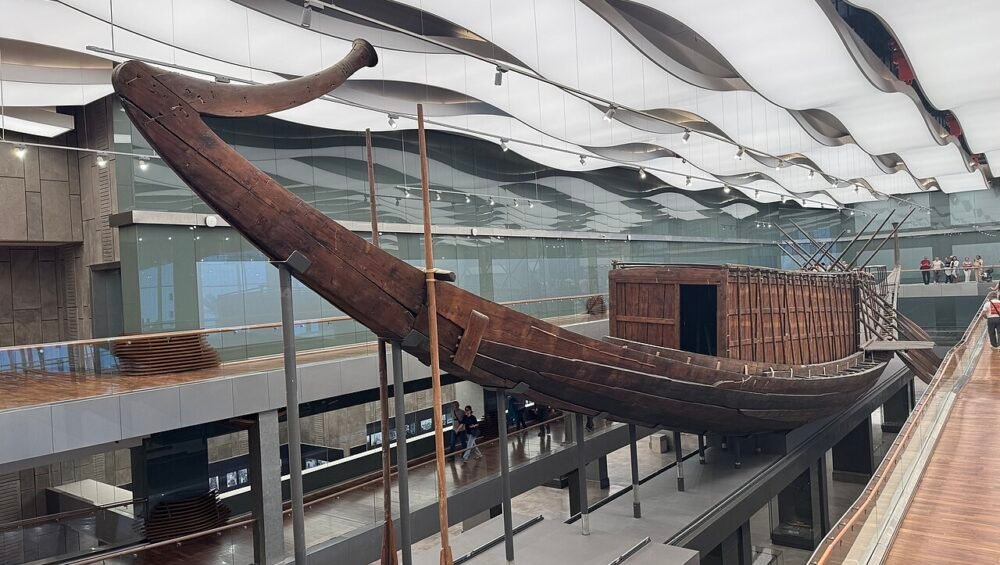
The display at the Khufu Boats Museum invites a different kind of attention from a cabinet of small objects. You can start with its overall shape, then notice how the timber, hull and projecting elements fit together. Even without a long background in Egyptian history, those visible details give you something concrete to discuss with your guide.
For someone interested in construction, sailing or conservation, the Khufu Boats Museum can therefore be a meaningful priority. For someone who mainly wants a photograph beside the pyramids, it may be an interesting addition rather than the reason for choosing the whole excursion. Both preferences are reasonable; the important step is identifying yours.
A little history makes the visit easier to understand
The museum’s official collection description connects the boats with Khufu’s pyramid complex. Two sealed boat pits were discovered in 1954. The first boat was reassembled and later moved to GEM, while the second is associated with a conservation and reconstruction project. The boats’ original purpose remains a subject of interpretation.
Think about that history as a question to explore, not a list of dates to memorise. What can a surviving structure reveal that a drawing cannot? Which parts of a restored object help you understand its original form? Asking those questions can make the stop more rewarding than rushing to collect another photograph.
Choose an interest, not just another attraction
Before booking, finish this sentence: “I would be disappointed if I returned without seeing…” If your answer is the boat, say so in your first enquiry. If your answer is Tutankhamun’s treasures, make those galleries your first priority and ask whether the boat museum can fit around them.
Couples and families can use the same exercise individually. One traveller may want the boat, another the pyramids, and another the main galleries. Sharing those preferences before departure gives the operator a realistic chance to explain what the proposed day can accommodate. It also prevents the group from discovering conflicting expectations at the museum entrance.
Our guide to a second Cairo visit is useful if you have already seen Giza. A new museum interest can give a return journey a clear purpose, but a shared tour may still include the established Giza stop. Confirm the complete route rather than assuming it will be redesigned around your earlier visit.
2. Locate the Khufu Boats Museum within the correct itinerary
Older photographs of the Khufu Boats Museum can create confusion because the first boat previously had a museum beside the Great Pyramid. The Egyptian Ministry’s record of its arrival at GEM documents the transfer in August 2021. An old photograph near the pyramid is therefore not a reliable instruction for finding the current display.
For today’s booking, name both the Khufu Boats Museum and the Grand Egyptian Museum. Saying only “the Cairo museum” leaves room for confusion with the Egyptian Museum in Tahrir. The two museum names should never be treated as interchangeable when the boat is your main objective.
| What you want to see | The relevant place | What to clarify before booking |
|---|---|---|
| Khufu’s boat display | The GEM museum campus | Whether the boat museum fits the actual group visit |
| Tutankhamun galleries | GEM | Their place in the agreed museum route |
| Pyramids and the Great Sphinx | Giza archaeological plateau | The separate sightseeing stop and its inclusions |
| Historic Egyptian Museum collections | Tahrir | Whether you are looking at a different tour altogether |
| A boat ride on the river | A separate activity | It is not a visit to the ancient boat display |
The official GEM ticket website lists Khufu’s Boats Museum within its published visit coverage. That helps establish the museum’s admission offer. It does not, by itself, establish how much time Hurghada travellers will have there during a particular excursion.
Ask about the route as well as the ticket
A useful enquiry has three parts: “Does our admission cover the boat museum? Will our actual museum itinerary include it? If the group does not enter together, what arrangements are available?” These questions are more precise than “Is everything included?” and make the answer easier to use when comparing offers.
Do not purchase an additional museum ticket merely because a tour description does not mention every exhibition. First ask the operator to explain the existing ticket and programme. An extra ticket cannot create extra sightseeing time or change the coach departure, and unnecessary purchases can complicate an otherwise straightforward booking.
If you are still deciding between museums, read our Egyptian Museum versus GEM comparison. Choose the museum that matches the objects you want to see, then choose the vehicle. Reversing that order can leave you with attractive transport attached to the wrong museum visit.
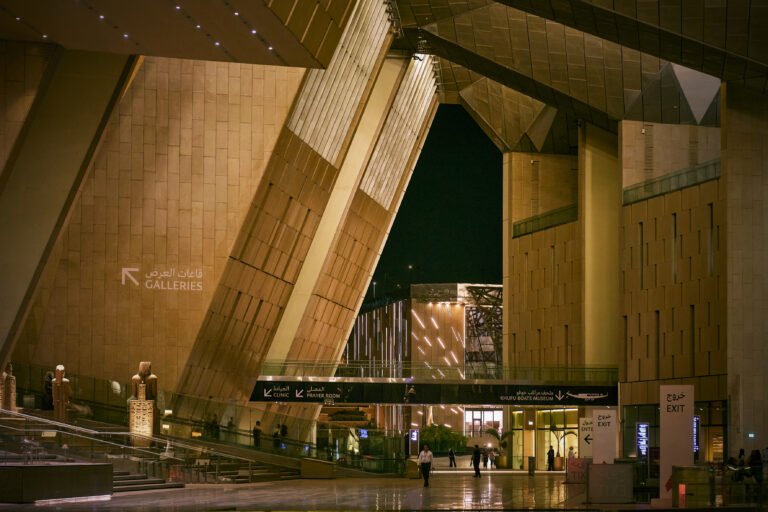
3. Compare the bus and mini bus without assuming a different museum route
Hurghada Travels currently offers a GEM and Giza excursion by shared bus and another by shared mini bus. The bus page lists a maximum group size of 30; the mini bus page lists a maximum of eight. Both are long day trips, with a published overall duration of approximately 17–20 hours.
A smaller group can be a reason to choose the mini bus. It does not automatically make the trip private, guarantee more time with the boat, or remove the long road journey. If the Khufu Boats Museum is your deciding factor, obtain the route confirmation for the specific departure you intend to book.
| Published tour price | GEM and Giza by bus | GEM and Giza by mini bus |
|---|---|---|
| Adult, age 10 and above | €85 | €100 |
| Child, age 4–9 | €50 | €60 |
| Infant, age 0–3 | €20 | €40 |
| Published maximum group size | 30 | 8 |
| Published overall duration | Approximately 17–20 hours | Approximately 17–20 hours |
These are the current prices of the excursions, not standalone museum admission prices. Check the live GEM bus tour and GEM mini bus tour for your date. The listed programmes include their standard museum and Giza admissions, guide, lunch and Hurghada hotel transfers.
Give your exact hotel, not just the resort area
Hotel location affects the quote and collection arrangements. The current tour pages list an additional €5 per person for return transfers from Makadi Bay or Sahl Hasheesh, and €10 per person from El Gouna, Safaga or Soma Bay. Send the exact hotel name so the complete family total can be confirmed.
For children and infants, provide ages rather than writing only “two children.” The museum’s own admission categories do not determine the excursion’s transport price. If an infant travels with you, ask explicitly how the full transfer quote applies to your party; do not assume a free museum category makes the whole day free.
Our bus or mini bus comparison discusses the vehicle decision in more detail. Use it alongside your museum priorities. The best fit is the combination of an acceptable road journey, a suitable group arrangement and a confirmed sightseeing programme, rather than the lowest headline figure alone.
4. Put the Khufu Boats Museum into a realistic museum plan
GEM offers enough interests to make an unplanned visit feel hurried. The practical solution is to agree a priority order before arrival. Choose one essential museum experience, one strong preference and one optional addition. This gives your guide a clearer brief than a request to “see absolutely everything.”
For a boat enthusiast, the Khufu Boats Museum belongs in the essential position. For a first-time visitor fascinated by Tutankhamun, the order might be reversed. The purpose of ranking is to explain your preferences; it is not permission to leave a shared group or alter its arrangements independently.
| Your main interest | A sensible first request | A useful follow-up question |
|---|---|---|
| Ancient construction and boats | Make the boat display a priority | Can the confirmed route allow time to look closely? |
| Tutankhamun | Prioritise the relevant galleries | Can the boat museum fit without rushing that visit? |
| First visit to Egypt | Balance museum highlights with Giza | What is realistically covered during this departure? |
| Returning visitor | Explain what you have already seen | Is the proposed programme suitable for my new interests? |
| Travellers with different interests | Agree the shared essentials | What flexibility is available within the group? |
Separate viewing time from moving time
When an operator describes a museum stop, ask whether the quoted time includes arrival formalities, walking between areas and gathering the group afterwards. An overall museum allocation is not the same as uninterrupted time in front of one object. That distinction matters when planning the boat alongside other galleries.
Avoid building your booking around a made-up promise such as “exactly 30 minutes at the boat.” A suitable visit length depends on the confirmed route, access arrangements and your interests. Ask for a realistic allocation for your departure, and explain whether you want a quick overview or a closer look at the construction.
Keep Giza and the museum as separate parts of the day
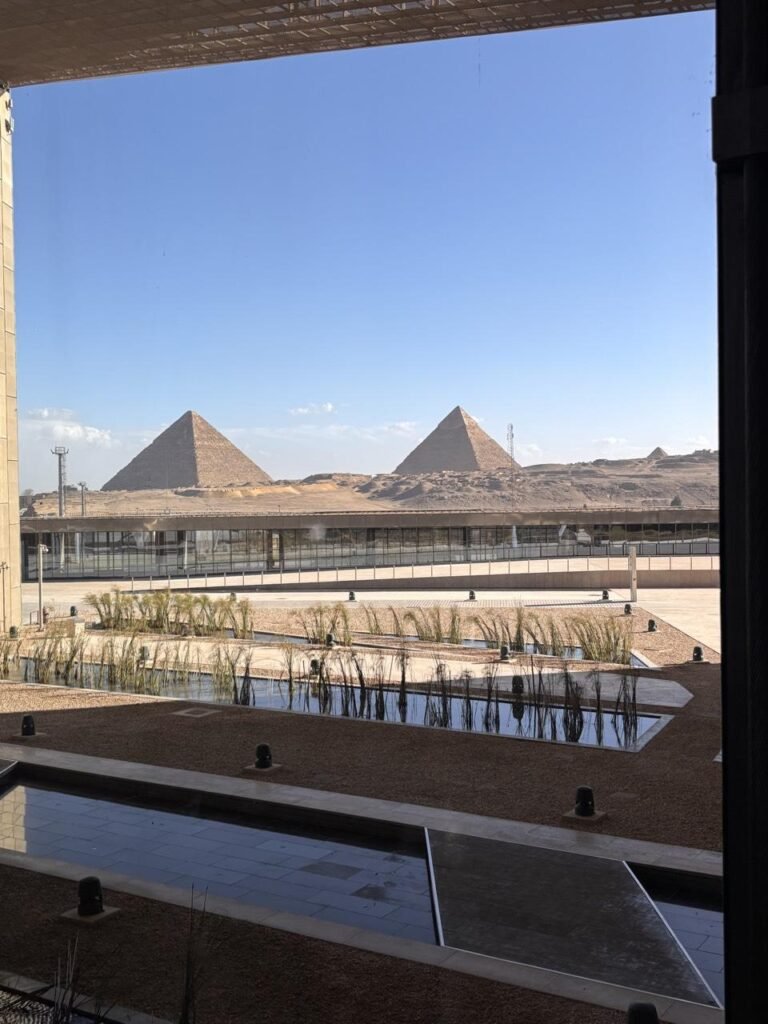
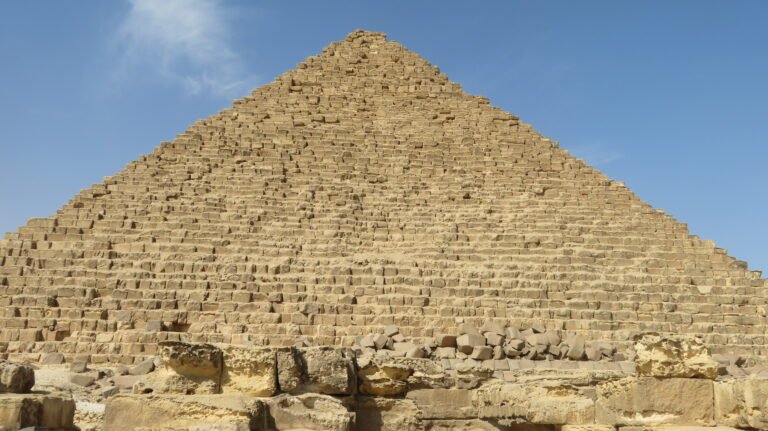
The pyramids and the museum can complement each other, but they are separate stops. A view towards Giza from a museum window does not replace visiting the plateau. Equally, standing beside the Great Pyramid does not mean you have visited the boat’s current museum display.
If you also want to enter the Great Pyramid, raise that separately. The guide to going inside the Great Pyramid helps explain that decision. Extra interests should be discussed together before booking so the answer accounts for the complete day rather than treating every request as an isolated addition.
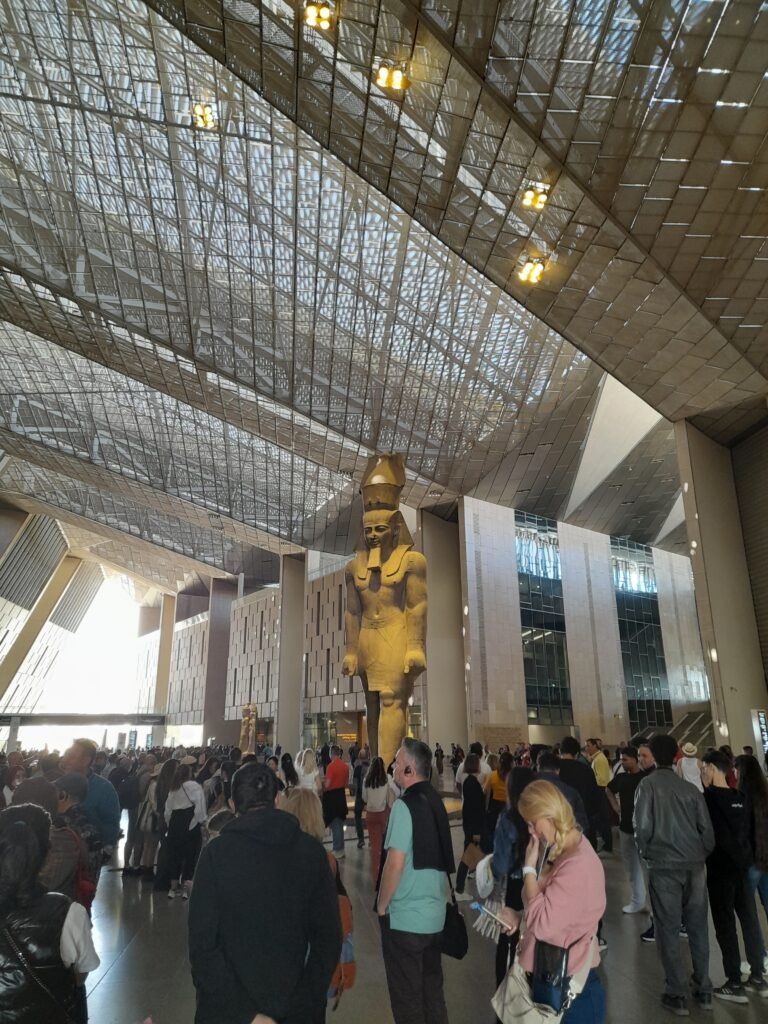
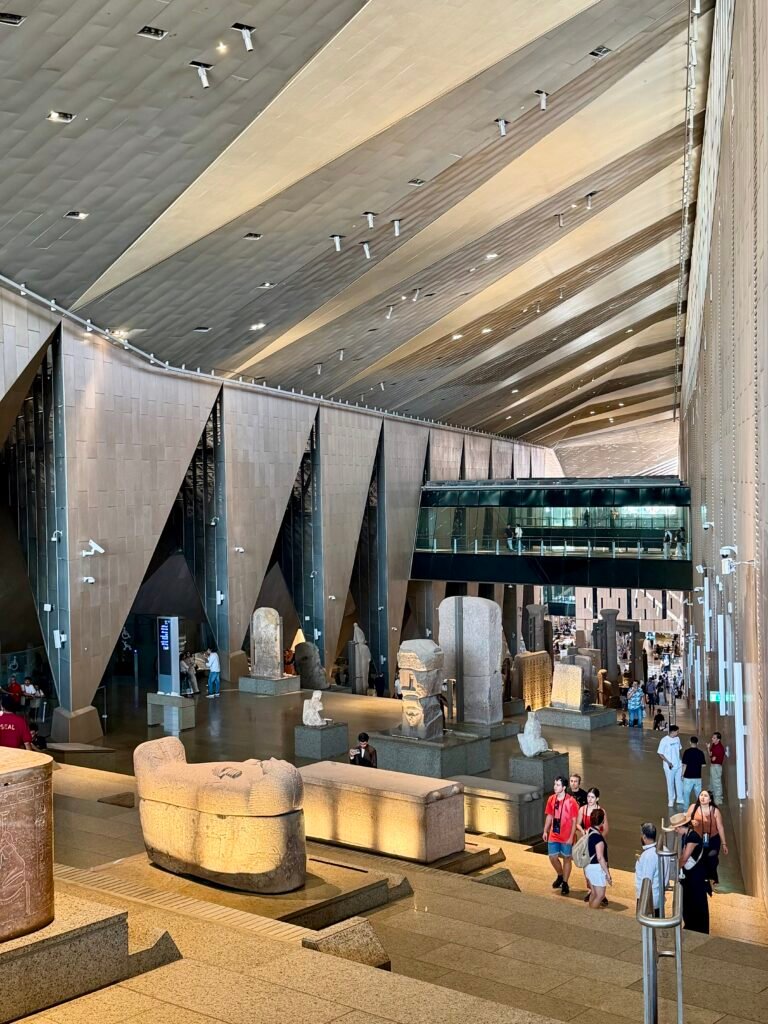
5. Match the visit to your family, pace and guide language
The Khufu Boats Museum can provide a clear visual starting point for children: look at its outline, compare its size with familiar boats, and ask how the pieces fit together. You do not need to turn the visit into a history lesson. One or two questions can be enough to give a child a reason to look carefully.
However, an interesting object does not shorten the journey from Hurghada. Consider the whole published day, the collection arrangements and your family’s usual energy levels. A child who likes boats may still find a long excursion tiring. Choose based on your family rather than an assumption that one exhibition suits everyone.
Describe practical needs before paying
If someone uses a wheelchair, walks slowly or needs frequent sitting breaks, explain that when enquiring. Ask about the route between museum areas, vehicle boarding arrangements and assistance available on your date. General statements about a modern museum are not a substitute for checking the particular excursion.
The same applies to pushchairs, luggage and equipment you intend to bring. A shared mini bus has a smaller group limit, but that does not establish storage space or guarantee a particular seating arrangement. Send the details that affect the journey and request a specific answer before selecting a departure.
Ask for the language you actually need
The Khufu Boats Museum is easier to appreciate when you can ask your own questions. Request your preferred guide language and confirm whether the guide accompanies that part of the visit. A translated website page is useful information; it is not confirmation that every departure has a guide in that language.
For a mixed-language family, tell us which language everyone can follow comfortably. Explain whether the boat is a specialist interest or a brief stop you want to understand together. This frames a useful enquiry without implying that a shared excursion includes a private specialist lecture.
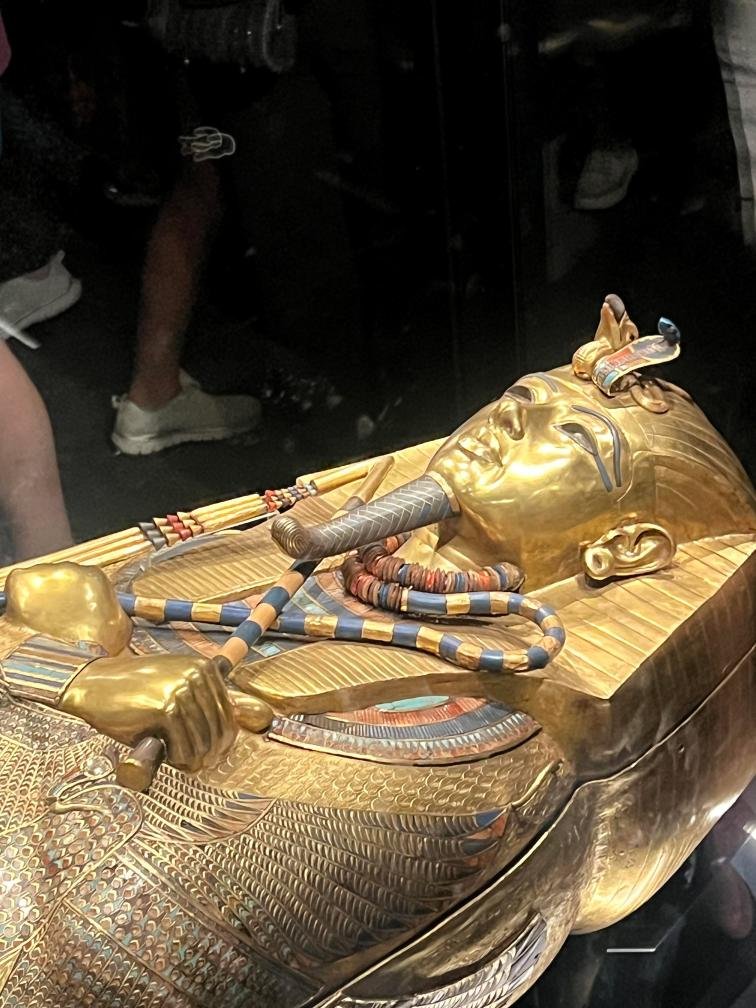
6. Plan photographs and understand what the second boat means
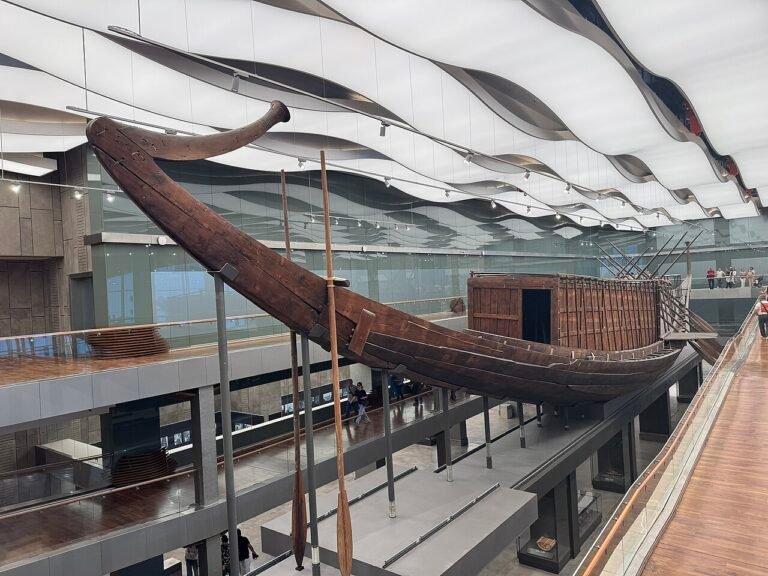
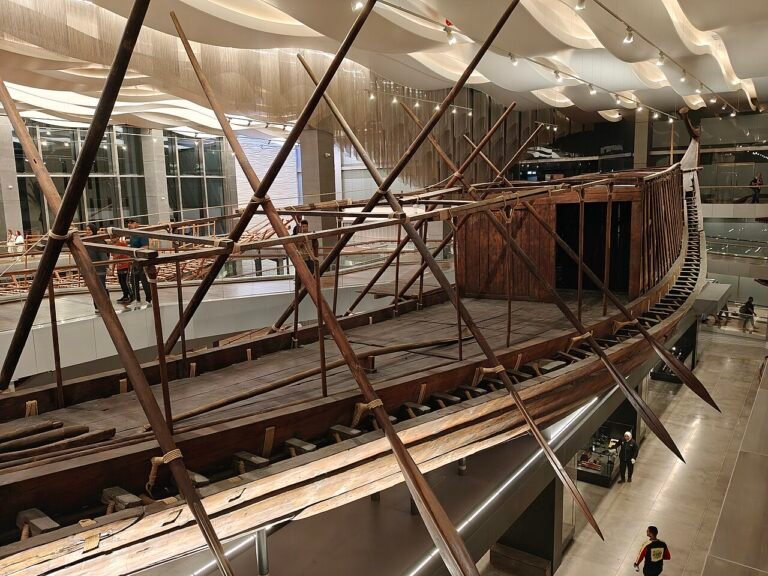
For the Khufu Boats Museum, look at the location and date of photographs when planning your visit. The two boat images near the beginning of this guide show the GEM display in November 2025 and February 2026. They show different viewpoints, not evidence that two completed boats are presented side by side.
That distinction matters when booking the Khufu Boats Museum. The second boat belongs to a conservation and reconstruction story. A project description should not be read as a guarantee of a fully assembled second vessel, an active demonstration, or conservators working during your particular visit.
The Ministry’s second-boat project announcement provides background. For the visitor experience available on your date, ask what is currently accessible. Separate a long-term project from the programme that can actually be confirmed for your excursion.
Photograph respectfully and leave time to look
Check GEM’s visitor information for current photography conditions and follow signs and staff instructions. Keep equipment simple and do not assume flash, tripods or professional filming are permitted with an ordinary visit. Photography arrangements can differ between exhibition areas.
Look at the object before reaching for the camera. Notice the overall line, choose a viewpoint that does not obstruct others and take a small number of photographs. This leaves more of your available time for understanding the boat and asking the guide questions.
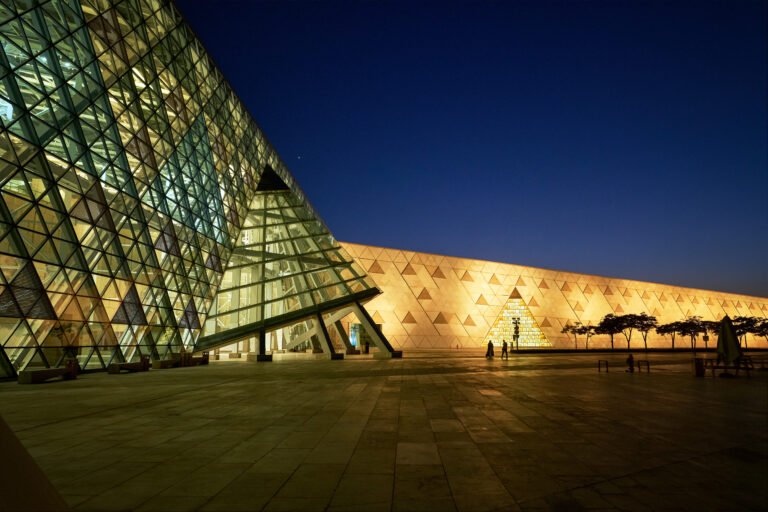
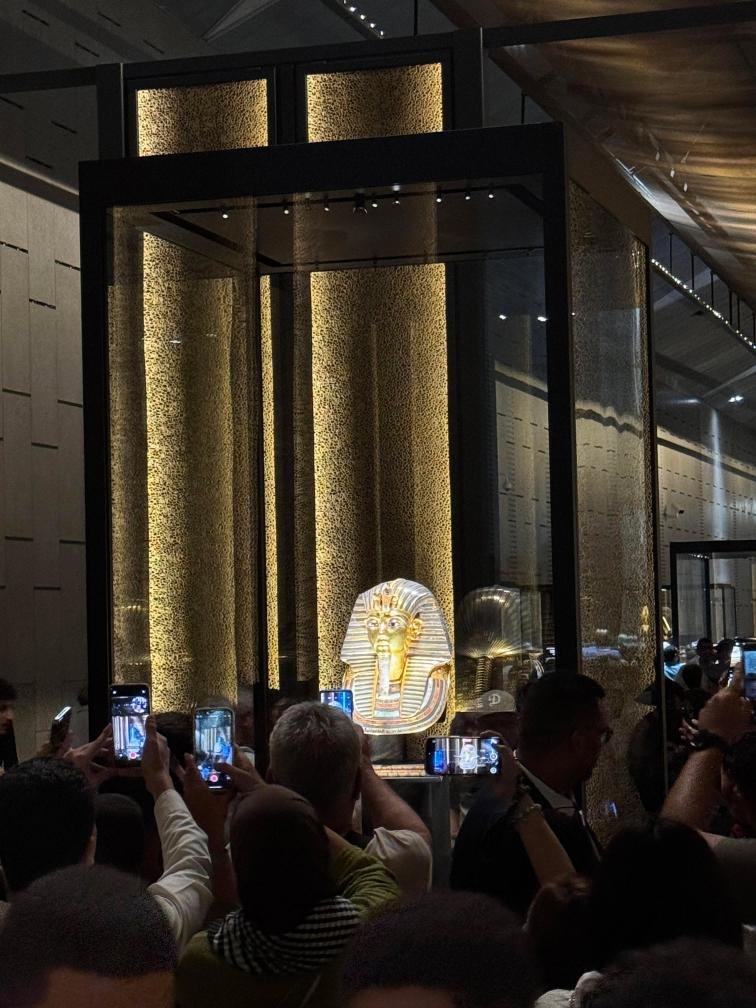
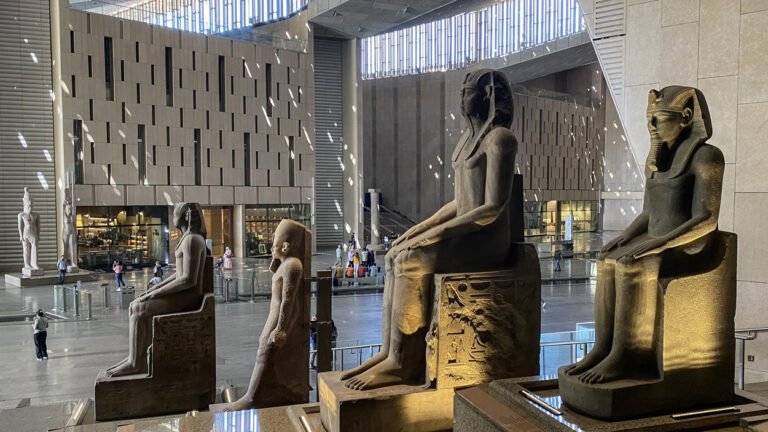
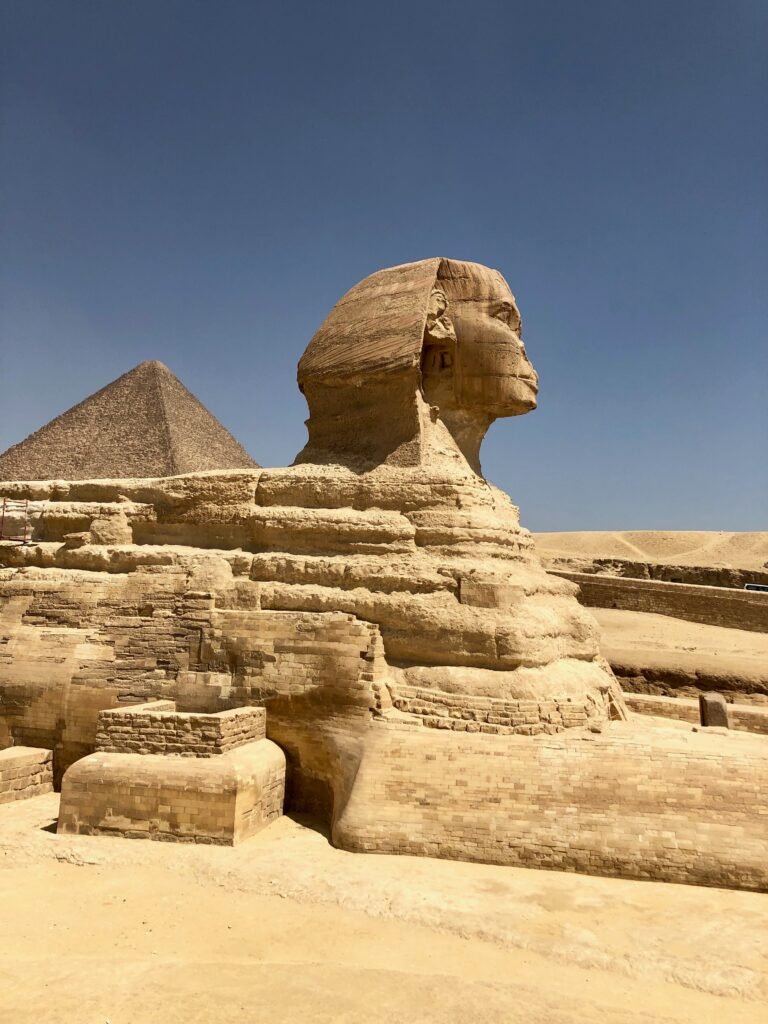
The remaining images illustrate other GEM areas and the separate Giza stop. They help you compare interests within the day; they are not presented as exhibits inside the boat museum. Captions and credits identify their subjects and sources.
7. Get a clear booking answer before choosing your departure
Make the Khufu Boats Museum a visible part of your enquiry. Include your hotel, date, party size, children’s ages, vehicle preference and guide language. Ask directly whether the display fits the itinerary, how it will be visited and what happens if access arrangements change.
The current GEM tour pages describe standard programmes but do not explicitly promise a dedicated guided boat-museum stop. Treat “GEM included” as the starting point for clarification. A useful reply connects your priority with the actual departure rather than merely repeating the museum’s name.
| Booking point | What a clear answer should establish |
|---|---|
| Museum choice | GEM is on your booked programme |
| Boat display | The visiting arrangement and time available |
| Group travel | Bus or mini bus, with shared-tour expectations understood |
| Collection | Exact hotel, return transfer total and pickup confirmation |
| Family | Ages and the complete price for your party |
| Guide | Confirmed language and accompaniment arrangements |
| Payment and changes | Final payable total and cancellation terms |
Keep payment and cancellation linked to the excursion
The current tour pages offer cash payment at pickup before the tour and online card payment. Review the final checkout amount and currency before confirming; do not calculate your payment using an assumed exchange rate. Request the complete booking total if transfers or family details need clarification.
The published excursion policy provides a full refund for cancellation at least 24 hours before the confirmed start; late cancellations and no-shows are non-refundable. Read your booking conditions. A museum ticket bought independently is a different purchase and should not be assumed to follow the excursion’s terms.
Once your essential questions are answered, choose the departure that fits your priorities. If the boat visit cannot be confirmed within the proposed programme, ask about a suitable alternative before paying. That is more useful than booking first and hoping the route can be changed on the day.
30 questions about the Khufu Boats Museum before booking
1. Is the Khufu Boats Museum worth choosing GEM for?
It can be a strong reason if ancient boats, construction or conservation interest you. Confirm that the excursion allows the visit you want. Choose GEM for your preferred exhibits, then check the route and vehicle rather than relying on the museum name alone.
2. Where is Khufu’s boat now?
The first boat is displayed at the Grand Egyptian Museum. Older photographs show its former setting beside the Great Pyramid, so check the location attached to an image or recommendation. For a current enquiry, name GEM and the boat museum together.
3. Is this the same as the Egyptian Museum in Tahrir?
No. GEM and the historic Egyptian Museum in Tahrir are different museums. Select a programme that explicitly visits GEM and ask about the boat display within it. A generic description such as “Cairo museum tour” is not precise enough for this particular interest.
4. Is a Nile boat ride the same activity?
No. This article concerns an ancient boat on museum display. A river excursion is a separate activity. Mention “Khufu’s boat at GEM” when enquiring so your request cannot be confused with an optional boat ride during a Cairo day trip.
5. Does GEM admission include the boat museum?
The official ticket website currently lists Khufu’s Boats Museum in its visit coverage. Confirm the admission attached to your excursion and the actual route. Admission coverage alone does not tell you when the group will visit or how long you will have there.
6. Does every Hurghada GEM tour visit the boats?
Do not assume so. GEM can be included while the group’s route concentrates on other galleries. Ask your operator specifically about the boat museum, the time available and whether the guide accompanies that part of the visit before you book.
7. How long should I allow for the display?
Ask for an allocation that matches your interest and the confirmed itinerary. A quick overview and a careful examination of construction are different experiences. This guide promises no fixed viewing time; the overall museum stop must also accommodate movement between areas.
8. Can I see the boat and Tutankhamun on one excursion?
Discuss both priorities when booking. Fitting them into a particular departure depends on the route and time available. Ask for an explanation of the intended programme instead of assuming that ticket coverage guarantees an unhurried visit to every museum area.
9. Can I also visit the pyramids and Sphinx?
The two Hurghada Travels GEM tours compared here include a separate Giza sightseeing stop. Confirm the complete programme for your date, especially if the boat is your main museum priority. Museum time, road travel and the plateau visit share the same day.
10. Is going inside the Great Pyramid automatically included?
Do not treat access to the Giza site as a promise of entry inside the Great Pyramid. Ask separately about the interior visit and how it would fit the day. Discuss that decision alongside the museum request so both priorities are understood.
11. Which tour should I book from Hurghada?
Start with a GEM programme, then choose between shared bus and shared mini bus according to your preference and confirmed arrangements. If the Khufu Boats Museum is essential, obtain a direct answer about the visit before choosing the final departure.
12. How much are the GEM tours?
Current published adult excursion prices are €85 by bus and €100 by mini bus, for ages 10 and above. These are tour prices, not museum-only admission. Confirm the date, hotel transfer requirements and complete party total on the live booking pages.
13. What are the child prices?
Current GEM excursion prices for ages 4–9 are €50 by bus and €60 by mini bus. Send each child’s age with your enquiry. The tour’s age bands govern this booking and should not be replaced with a museum-only ticket category.
14. Are infants free on the Cairo excursion?
No. The current tour pages list €20 by bus and €40 by mini bus for ages 0–3. Museum admission rules do not remove the excursion charge. Request the full family total, including hotel transfer requirements, before confirming your booking.
15. Is the mini bus a private tour?
No. This is a shared mini bus excursion with a published maximum of eight travellers. For exclusive transport or a substantially different route, request a separate proposal. A smaller shared group is not the same service as a private itinerary.
16. Does a mini bus guarantee extra time with the boat?
No automatic guarantee follows from vehicle size. Ask about the museum allocation and route on your intended departure. Choose the mini bus for its confirmed group arrangement, and assess the boat visit using the specific programme information you receive.
17. How long is the complete day from Hurghada?
Both current tour pages describe approximately 17–20 hours overall. This is a long day with road travel and several stops. Your collection time is confirmed separately; consider it alongside your family’s comfort and other holiday plans before selecting a date.
18. Are hotel transfers included?
The programmes include Hurghada hotel transfers. Other resort areas can carry additional return transfer charges, so send the exact hotel and party details. Confirm the complete total rather than assuming every Red Sea hotel falls within the included collection area.
19. Can I request a guide in my language?
Yes. State your preferred language and obtain confirmation for your date. Ask whether the guide accompanies the boat-museum visit as well. A translated article helps you plan; it does not establish guide availability in that language on every departure.
20. Is the visit suitable for children?
The boat’s shape and construction can give children a concrete subject to explore. Suitability still depends on the child, the journey and the family’s preferred pace. Plan around the entire excursion rather than treating one interesting display as a guarantee of comfort.
21. What if someone has limited mobility?
Describe their needs before booking and ask about vehicle access, walking between areas, rest opportunities and assistance. A general museum description cannot confirm the suitability of a particular group itinerary. Request an answer based on your departure and the equipment involved.
22. Can I photograph the boat?
Check GEM’s current visitor rules and follow signs and staff instructions. Keep personal photography separate from professional filming requests. Do not assume flash or additional equipment is permitted simply because other visitors have shared photographs of the display online.
23. Do the photographs show two completed boats?
No. The two boat photographs in this guide show different views of the GEM display. The second boat is associated with reconstruction and conservation. Do not infer a complete second exhibit from multiple photographs of the first display.
24. Will I see conservators working?
That is not guaranteed here. A conservation project and the visitor experience on a particular day are different things. Ask what is currently accessible if that work is a major interest, and do not treat an old project announcement as a daily schedule.
25. Can I leave my group to stay longer?
For more time at the Khufu Boats Museum, use only arrangements agreed with the guide and operator. Confirm the meeting point, return time and any available flexibility beforehand. Do not assume the coach can wait or that independent movement is appropriate because museum admission covers several different areas.
26. Can I visit only the boat museum from Hurghada?
The two excursions compared here are broader GEM and Giza programmes. For a substantially different day, request a separate proposal and confirm what is possible. Booking a shared programme does not automatically allow its other stops to be removed for your party.
27. Is it worth returning if I already visited Cairo?
It may be, especially if GEM or its boat display is new to you. Explain your previous visit and current priorities when enquiring. Check whether the shared itinerary still suits you, because a returning traveller’s interests do not automatically change the route.
28. Can I pay by Visa or Mastercard?
The tour pages offer online card payment as well as cash payment at pickup before the excursion. Check the final checkout currency, amount and conditions before confirming. Request clarification if the hotel transfer or family total has not yet been established.
29. What if I need to cancel?
Published tour terms provide a full refund for cancellation at least 24 hours before the confirmed start; late cancellations and no-shows are non-refundable. Review your booking conditions and keep any separately purchased museum ticket distinct from the excursion purchase.
30. What should I send to confirm the right tour?
Send your date, exact hotel, adults, children’s ages, vehicle preference and guide language. Say explicitly that the Khufu Boats Museum matters to you. Request confirmation of the visiting arrangement, time available and complete excursion total before paying.
Photo credits
Images illustrate the destinations. Vehicles, crowds, routes and museum displays may differ on your travel date.
Photo: Matthäus Wander / Wikimedia Commons, CC0; für das Web verkleinert.
Photo: Amr F.Nagy / Wikimedia Commons, CC BY-SA 4.0 (2025; display resized).
Photo: Slyronit / Wikimedia Commons, CC BY-SA 4.0 (2026; display resized).
Photo: Mohamed abdelzaher / Wikimedia Commons, CC BY-SA 4.0 (2026; resized).
Photo: Mohamed abdelzaher / Wikimedia Commons, CC BY-SA 4.0 (2026; resized).
Photo: Egyptiankeng / Wikimedia Commons, CC BY-SA 4.0 (2025; display resized).
Photo: Egyptiankeng / Wikimedia Commons, CC BY-SA 4.0 (2025; display resized).
Photo: NileReference / Wikimedia Commons, CC BY-SA 4.0 (2026; display resized).
Photo: Egyptiankeng / Wikimedia Commons, CC BY-SA 4.0 (2025; display resized).
Photo: Luigi Rosa / Wikimedia Commons, CC BY-SA 2.0 (2024; display resized).
Photo: Warren LeMay / Wikimedia Commons, CC0 1.0 (2019; display resized).
Photo: Alena Belova / Exhibo, 9 February 2026. CC BY-SA 4.0. Resized for display.