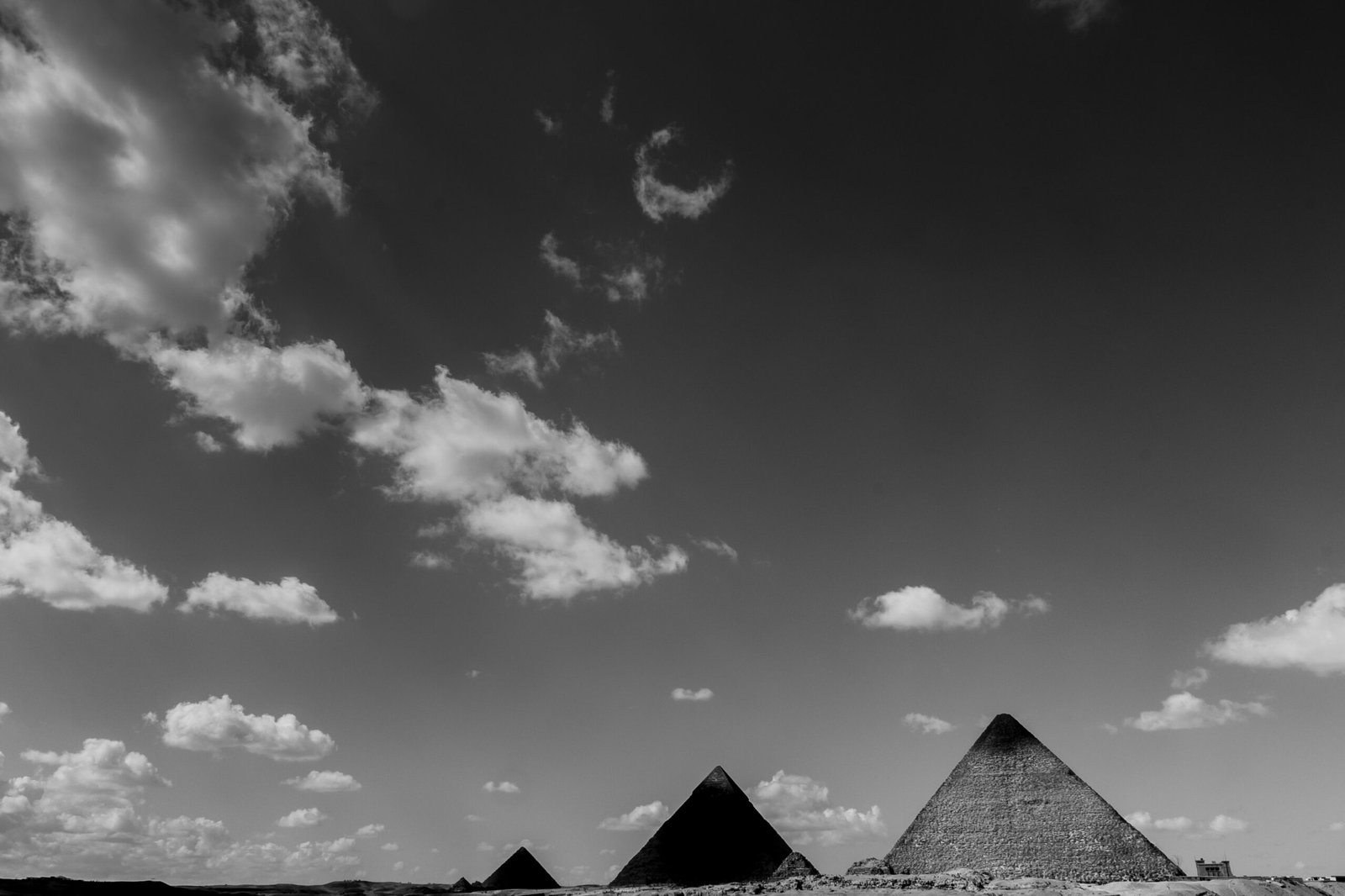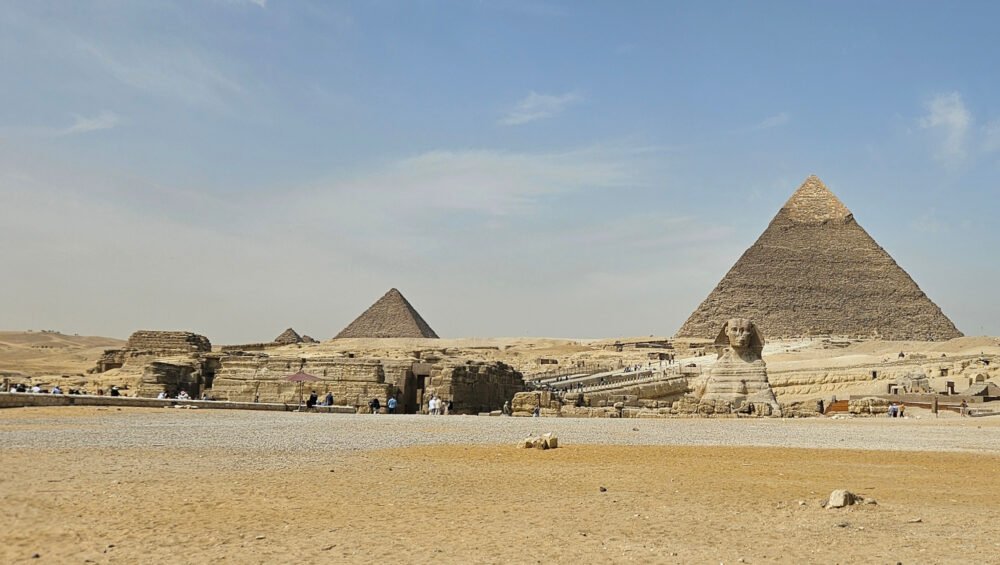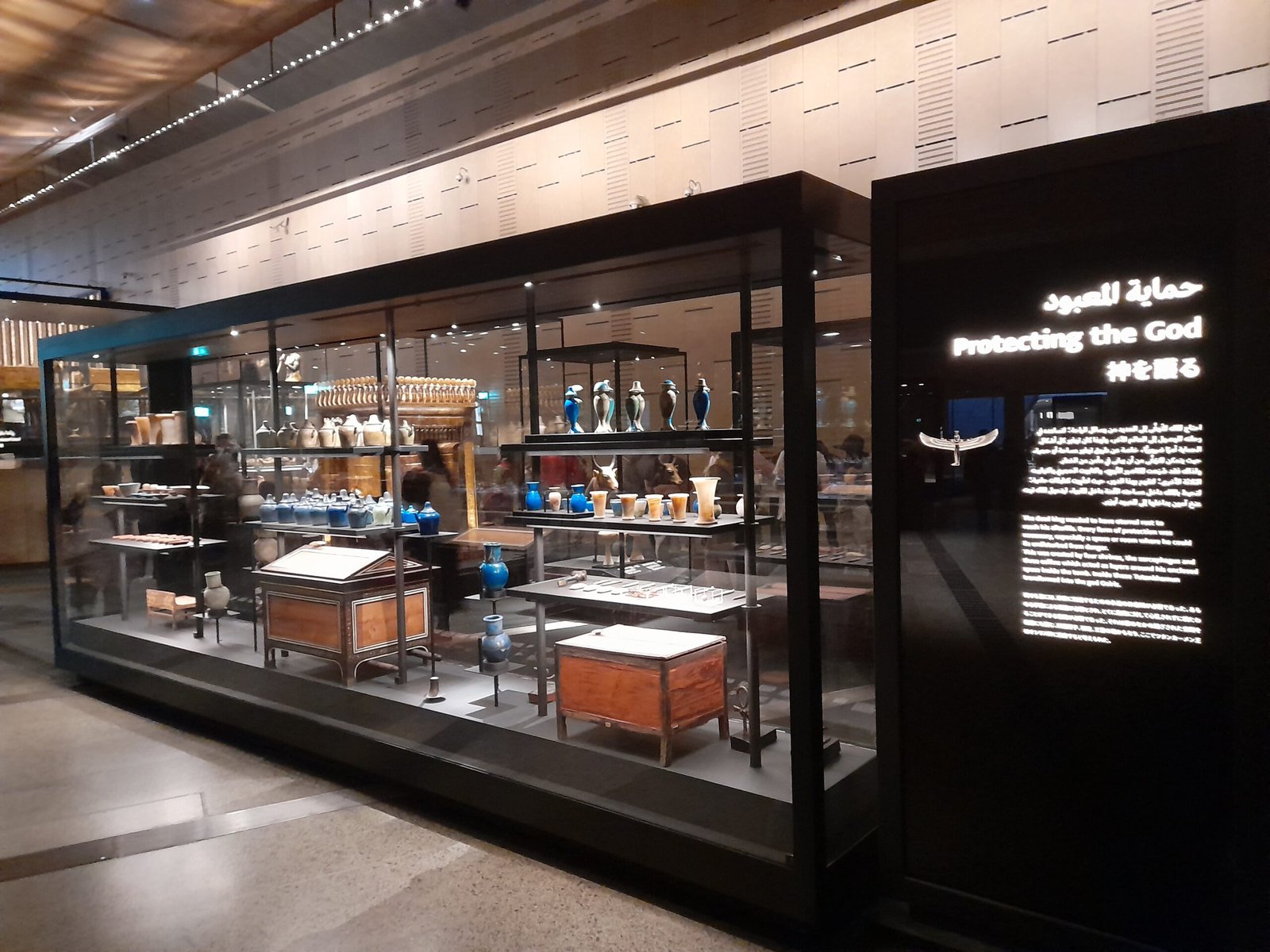
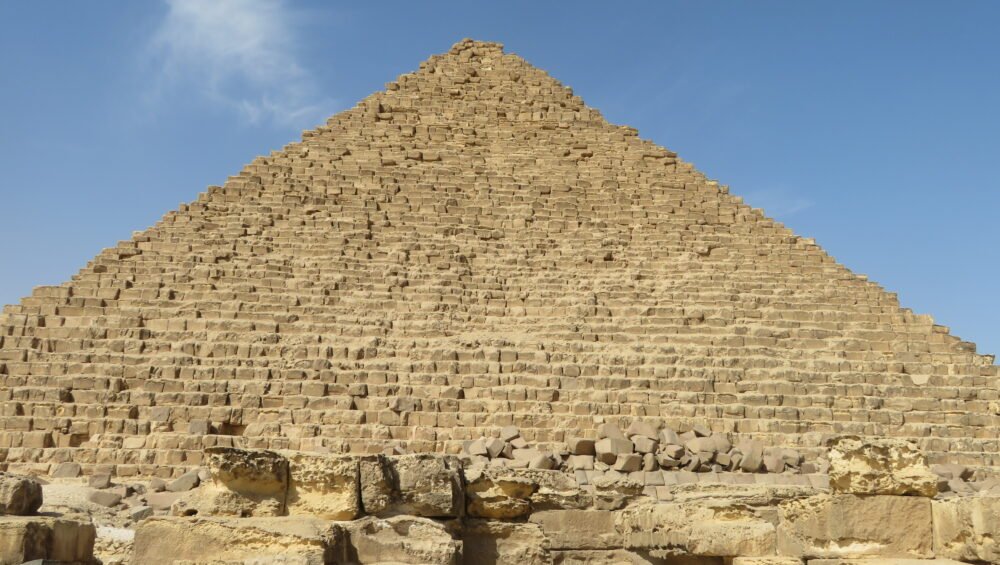
Giza pyramids landscape

Pyramids Only from Hurghada: 12 Super Booking Tips

Pyramids only from Hurghada sounds like a simple plan: travel to Giza, spend your visit around the pyramids and Sphinx, and return without a museum stop. The important booking question is whether the transport and sightseeing programme actually match that request. A ticket for a shared Cairo excursion does not become a different itinerary just because one passenger prefers to skip a visit.

Hurghada Travels currently publishes four shared road programmes combining Giza with either the Egyptian Museum in Tahrir or the Grand Egyptian Museum. A separate Giza-focused private programme must be requested, priced and confirmed for your group. This guide helps you decide which arrangement to investigate before paying, using twelve practical checks and thirty booking questions.

Start with your priorities: outdoor views, the Sphinx, photographs, a guided explanation or an optional pyramid interior. Then compare the written arrangements. Choosing pyramids only should make your request clearer; it should not leave tickets, waiting time or the return journey open to assumptions.

Tour descriptions, prices and cited official guidance checked on 4 November 2026. Reconfirm the arrangements for your dates.

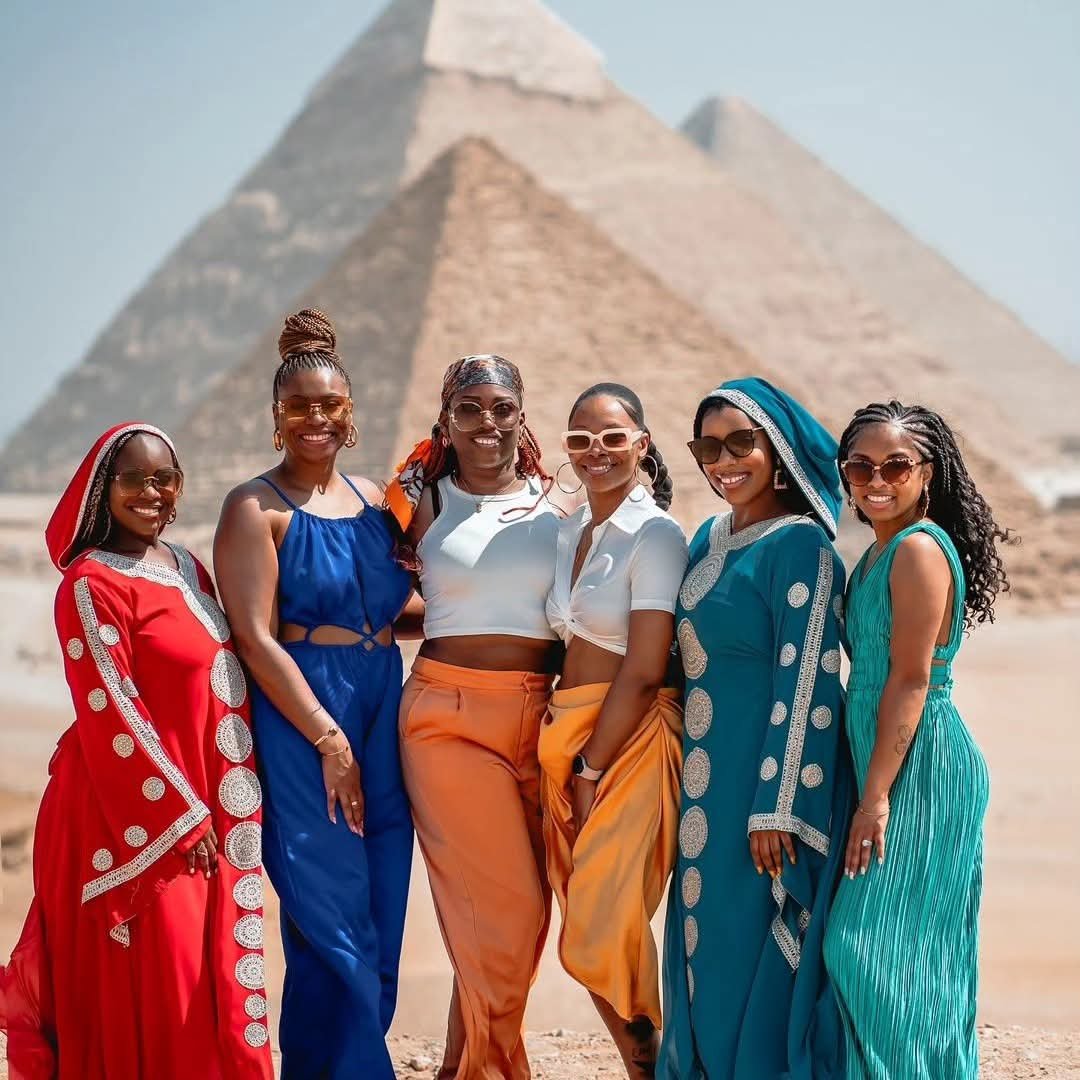
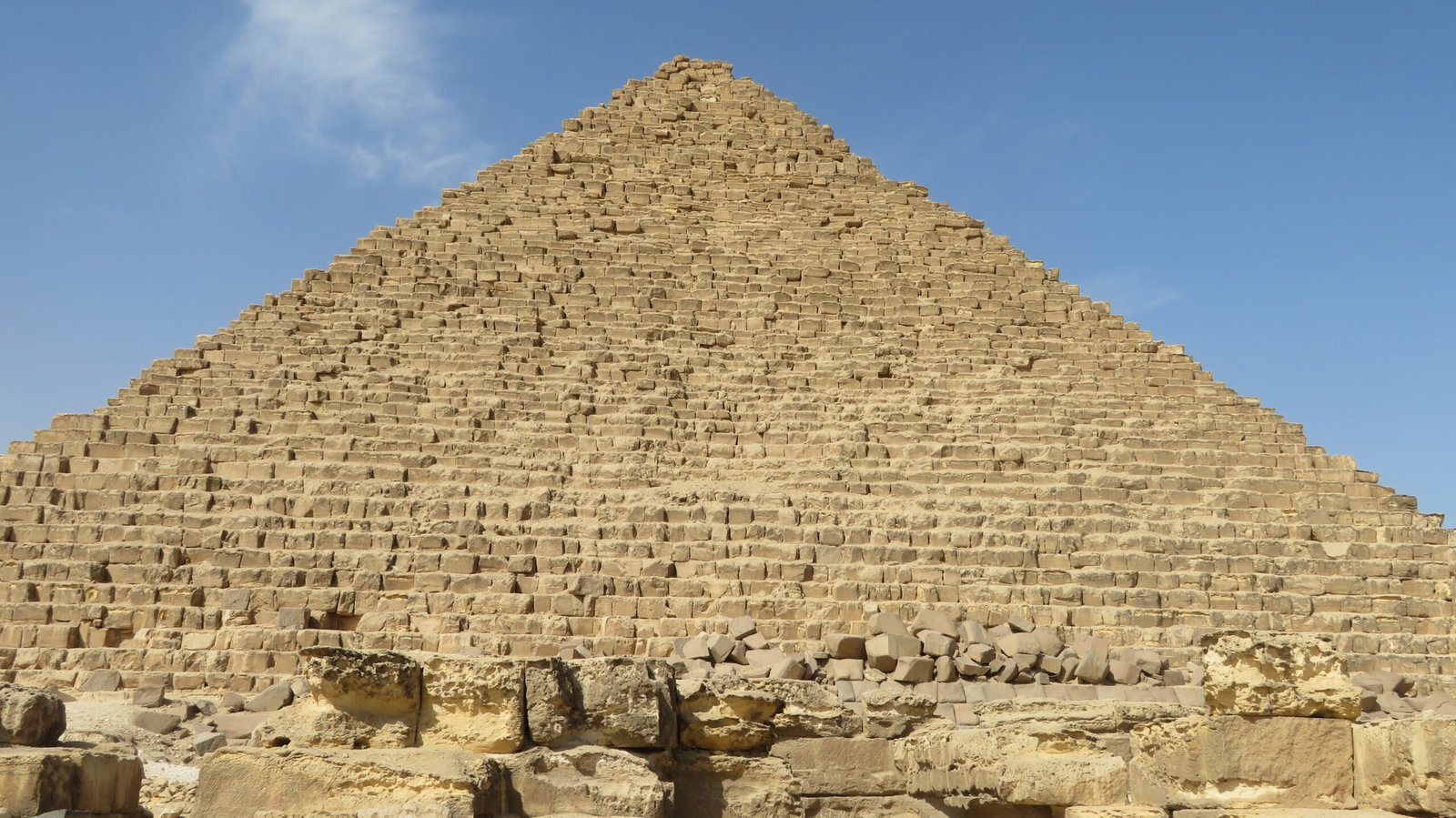
Photos illustrate Giza and retain their dates and credits. They do not promise a viewpoint, current vehicle arrangement, animal ride or identical conditions, and are not presented as Hurghada Travels customer testimonials. Photo: Luigi Rosa / Wikimedia Commons · CC BY-SA 2.0 · 2024 · display resized.

1. Decide what you mean by pyramids only

Some visitors mean that they want no museum at all. Others would enjoy a museum but mainly want enough time at Giza. A third group wants to enter the Great Pyramid and assumes this is included whenever a tour mentions the pyramids. These are different requests, and describing yours precisely helps the booking team propose a suitable option.

Write down three priorities in order. For example: views of the main pyramids, the Sphinx, then photographs together. Add any optional interior visit separately. If a museum is acceptable but less important, say so; a published shared programme may still suit you. If avoiding every museum stop is essential, make that a condition of the quotation rather than a preference to discuss on the bus.

Also explain what you do not want to spend time doing, such as shopping visits or an optional boat ride. Ask what the proposed day includes instead. Removing a stop does not itself create a reserved photography session, a longer guided visit or exclusive access. The useful outcome is a written outline that connects your priorities with the actual stops, transport and ticket arrangements.
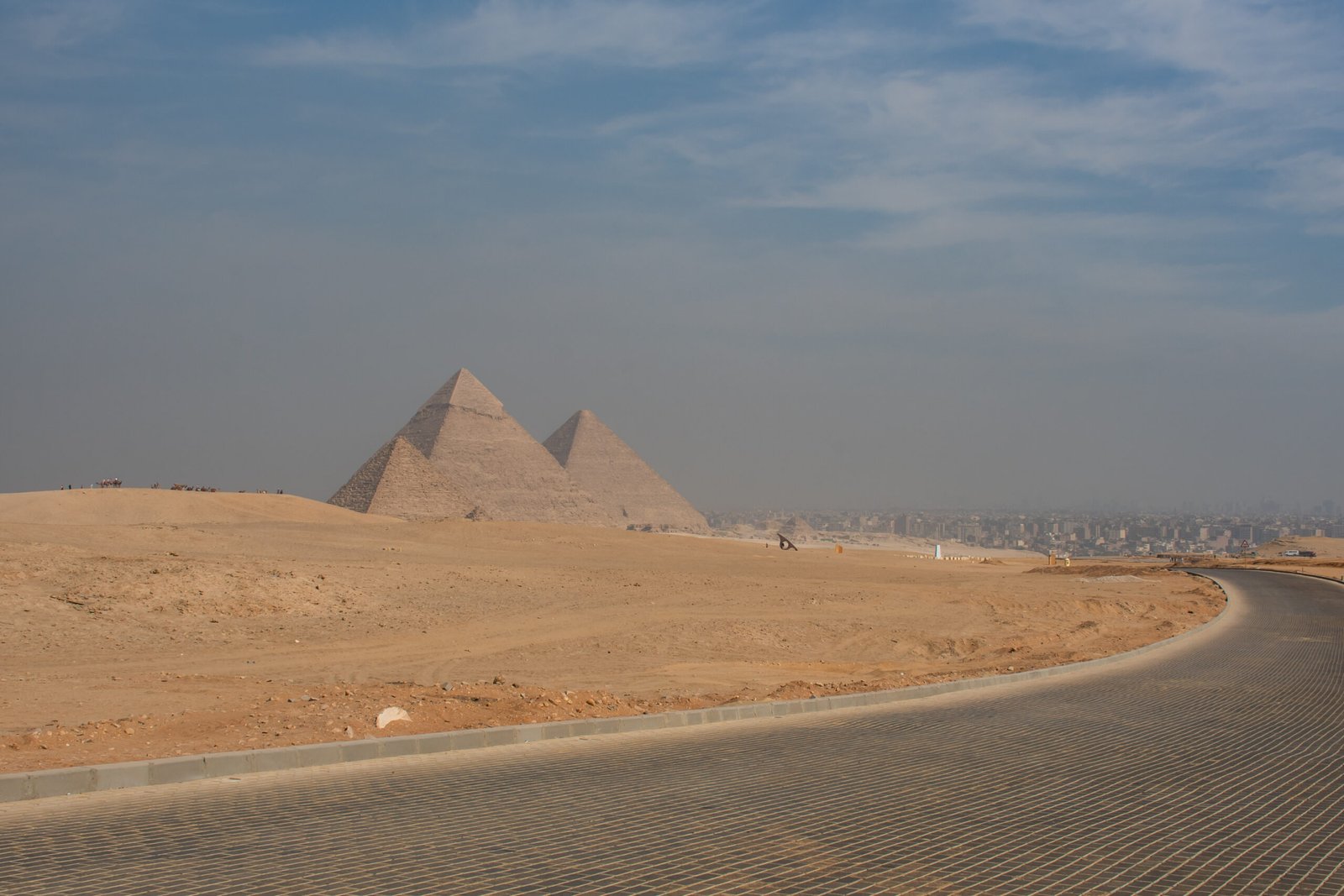
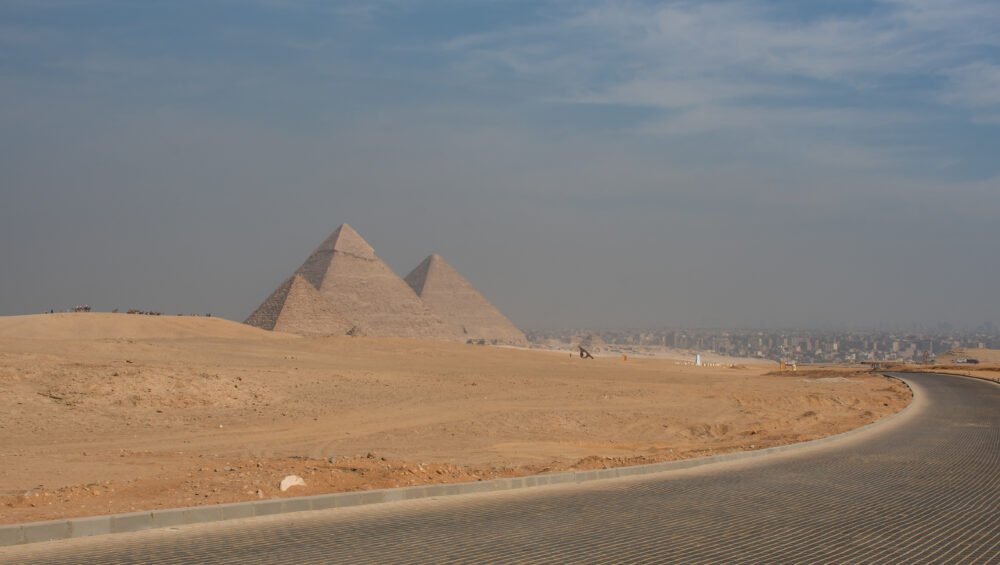
Pyramids only: Road approaching the Giza pyramids
Road approaching the Giza pyramids. Photo: Eman abdelkader12 / Wikimedia Commons · CC BY-SA 4.0 · 2025 · display resized.

2. Understand the shared bus and minibus options

The four published road tours are museum-and-Giza combinations. The Tahrir bus programme is listed for up to thirty guests, while the Tahrir minibus programme is a smaller shared group of up to eight. The two GEM programmes use the same published group-size limits. A smaller vehicle changes the group format; it does not automatically give each passenger control of the route.

If you join one of these departures, the other guests have booked its advertised visits. Choosing not to enter the museum does not guarantee that the vehicle or guide will take you elsewhere. It also does not establish where you could wait, whether leaving the group is possible, or who would accompany you. Those questions need an explicit answer before booking.

Do not buy a standard seat on the assumption that the guide can convert it on the day. Explain the restriction first. If the operator confirms an alternative arrangement, keep its practical details with your reservation. If no suitable arrangement is confirmed, compare the regular itinerary as sold with a separately requested private quote. Our Giza booking guide explains the wider choice of published excursions.

Giza pyramids and Sphinx beyond archaeological remains
Giza pyramids and Sphinx beyond archaeological remains. Photo: Luigi Rosa / Wikimedia Commons · CC BY-SA 2.0 · 2024 · display resized.

3. Request a clear quote for pyramids only

For pyramids only, send the date, exact hotel, number of adults, children’s ages and preferred guide language. State clearly that you are asking about a private vehicle and a Giza-focused visit without a museum. Hurghada Travels does not publish a fixed standalone price for this custom road programme; availability and the complete service need to be checked before confirmation.

Ask whether the vehicle is exclusively for your party, which guide services are included, and whether pickup and return cover your hotel. A private transfer with a driver and a privately guided excursion are different descriptions. If guiding matters, the quotation should identify it rather than leaving you to infer it from the vehicle’s privacy.

List the proposed Giza stops and any optional interior request. Ask the team to explain the expected order, meal arrangements, rest stops and return estimate. A quote should also say what happens if a requested extra cannot be arranged. You can use our private Cairo booking guide to prepare these questions. Sending a request starts a discussion; it does not reserve a vehicle or confirm a bespoke departure by itself.
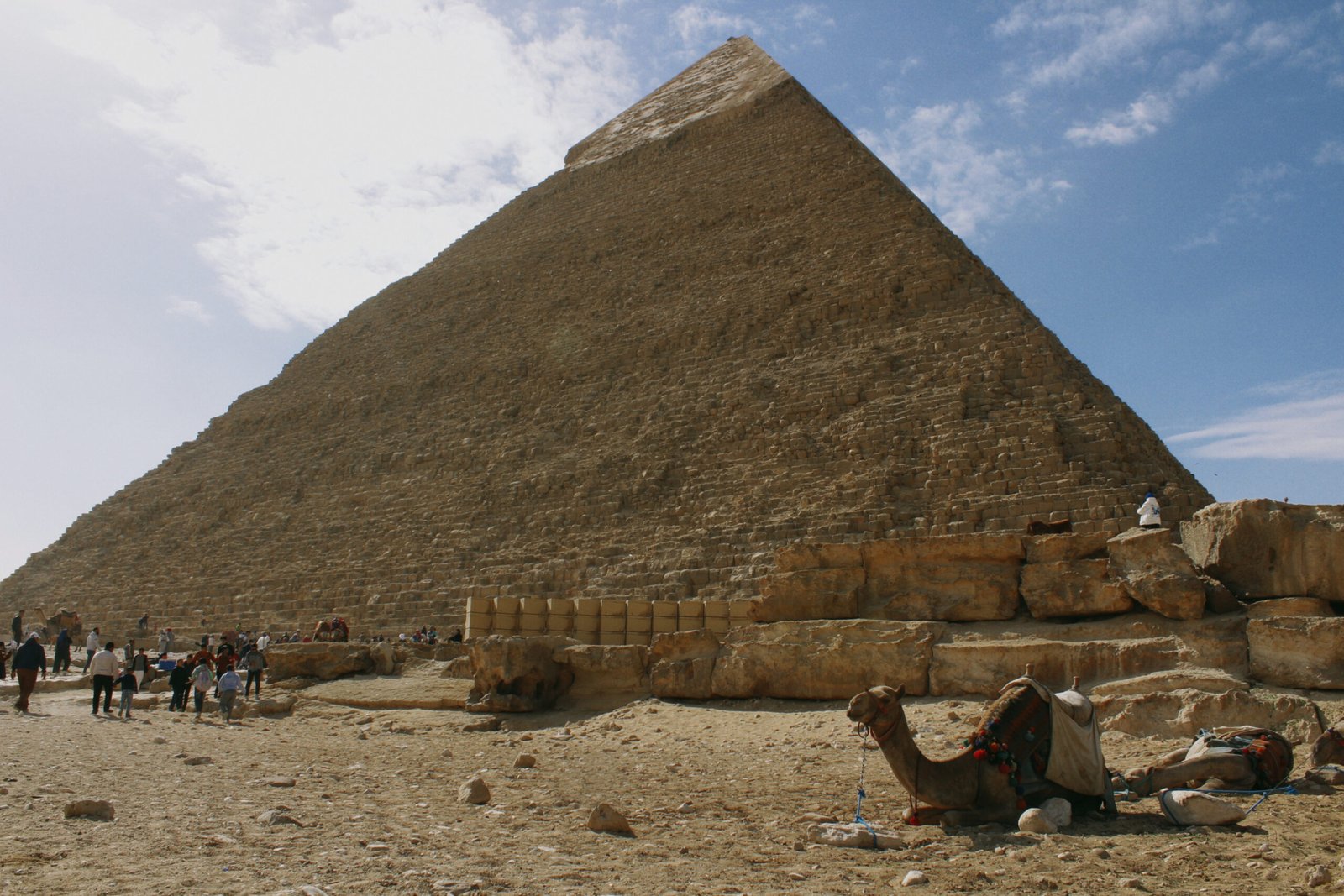
A camel resting near the Great Pyramid at Giza
A camel resting near the Great Pyramid at Giza. Photo: Sphotography13 / Wikimedia Commons · CC BY-SA 4.0 · 2024 · display resized.

4. Check tickets for pyramids only

Seeing the pyramids from outside and entering an interior are separate experiences. The official Giza Plateau information distinguishes general area admission from additional monument tickets. The Great Pyramid visitor page also identifies an interior ticket and the requirement for area entry. Check current access and prices for your date rather than treating an old screenshot as a booking confirmation.

The four published shared programmes include standard Giza admission, but their base prices exclude entry inside the Great Pyramid. A custom quotation must state its own inclusions. Ask for the named ticket, who purchases it and whether sufficient time is planned for the option. A ticket and the practical ability to fit the visit into your day are two separate checks.

Discuss different preferences within your party before purchasing extras. One person may want an interior visit while another prefers outdoor photographs. Ask how meeting up would work and what supervision or guidance is available. Do not assume that everyone must buy the same optional ticket. Our guide to the Great Pyramid interior helps you decide whether to request that experience.
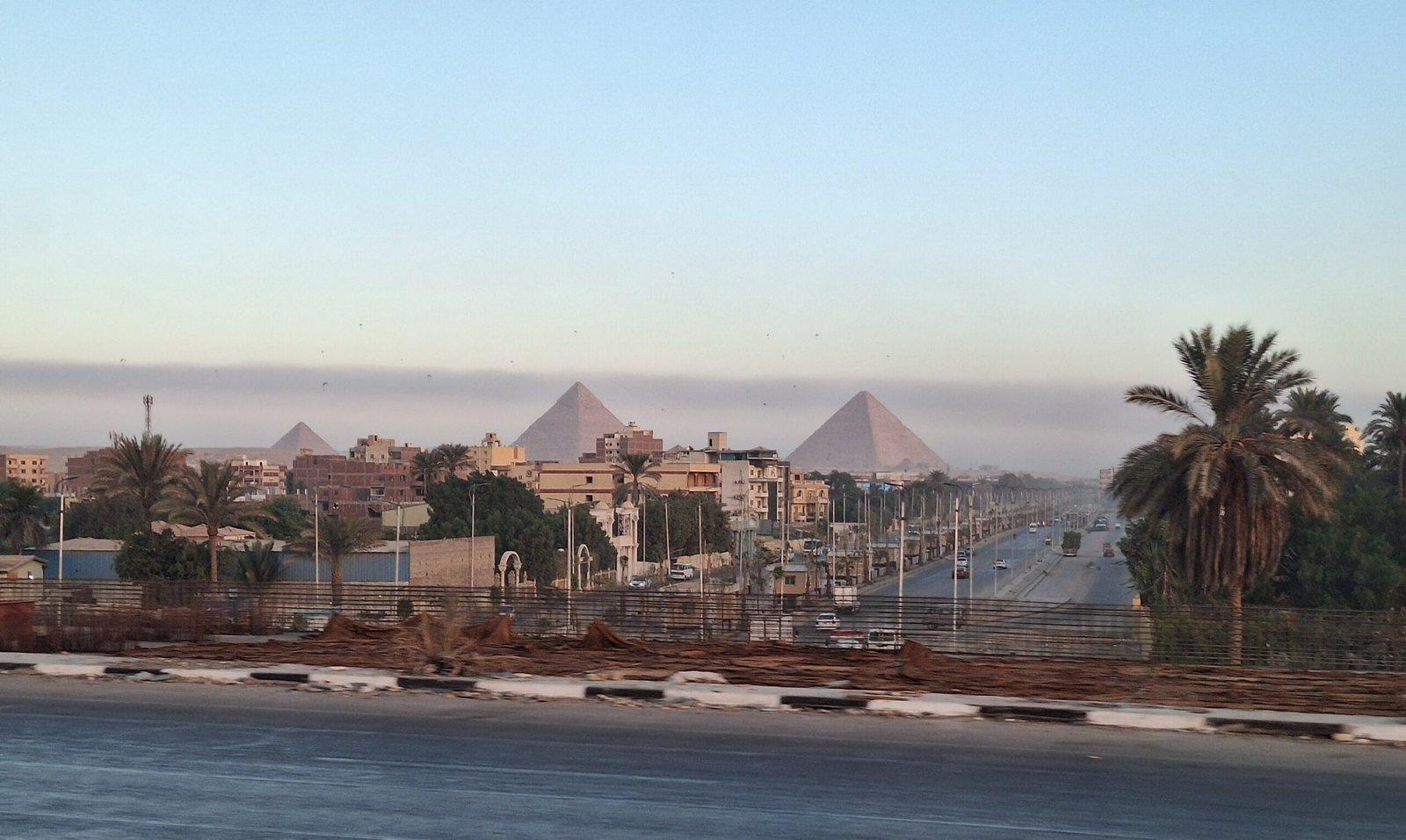
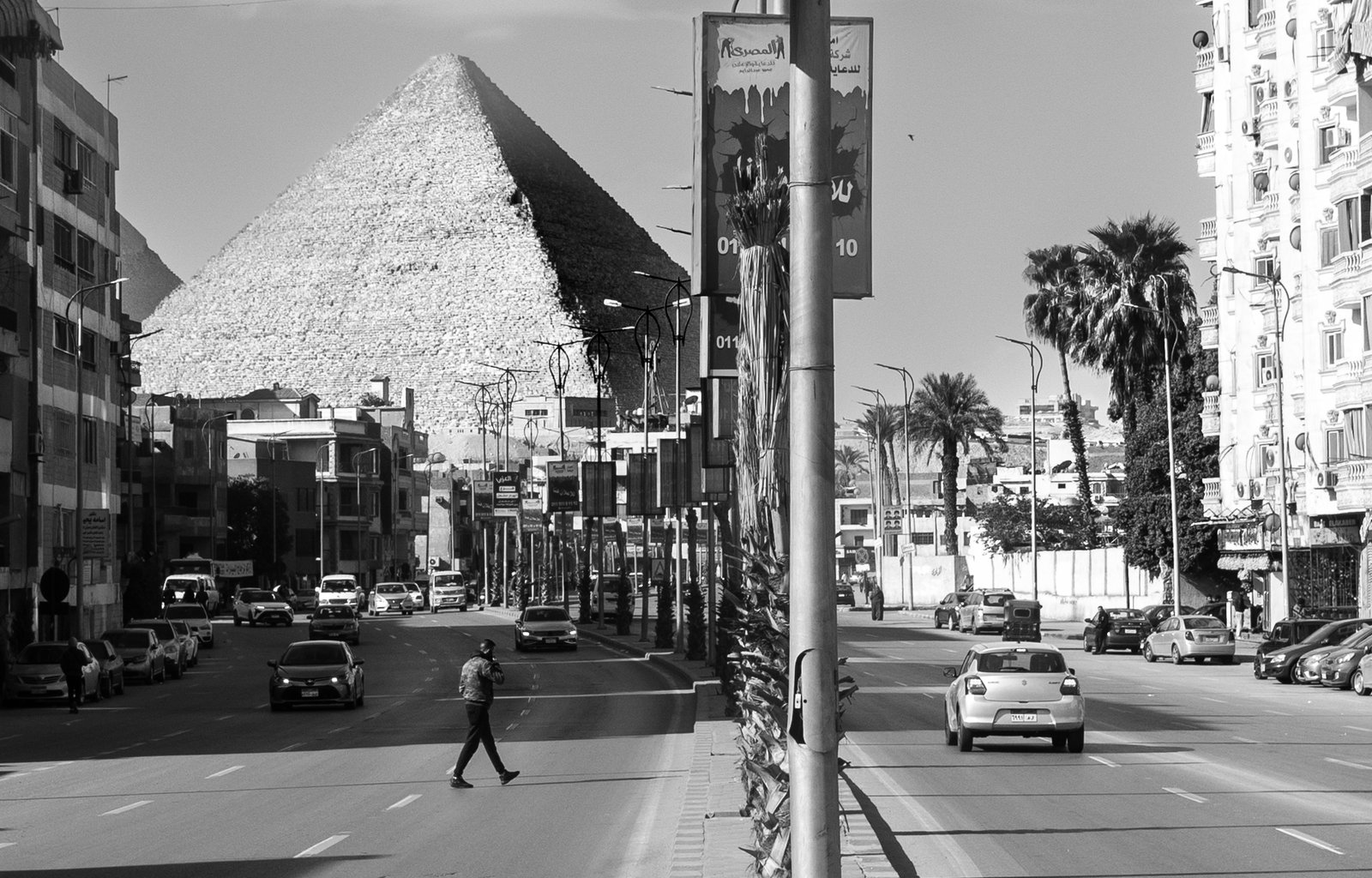
The Giza pyramids seen beyond buildings and a city street
The Giza pyramids seen beyond buildings and a city street. Photo: Thesixthscallywag / Wikimedia Commons · CC BY-SA 4.0 · 2024 · display resized.

5. Plan a Giza visit around priorities, not a checklist

A useful outline might include an introduction to the plateau, agreed outdoor viewpoints, the Sphinx and a meal or refreshment break. This is a discussion framework, not a promised route or timetable. The confirmed programme needs to account for access arrangements, movement around the site and the interests of the people travelling together.

Ask how the guide proposes to divide explanation, walking and photographs. Someone who enjoys architecture may want a detailed introduction near one monument. A family may prefer shorter explanations and more pauses. A photographer may care about a particular composition. These preferences help the team assess what is realistic without pretending that every interesting location can be added to one excursion.

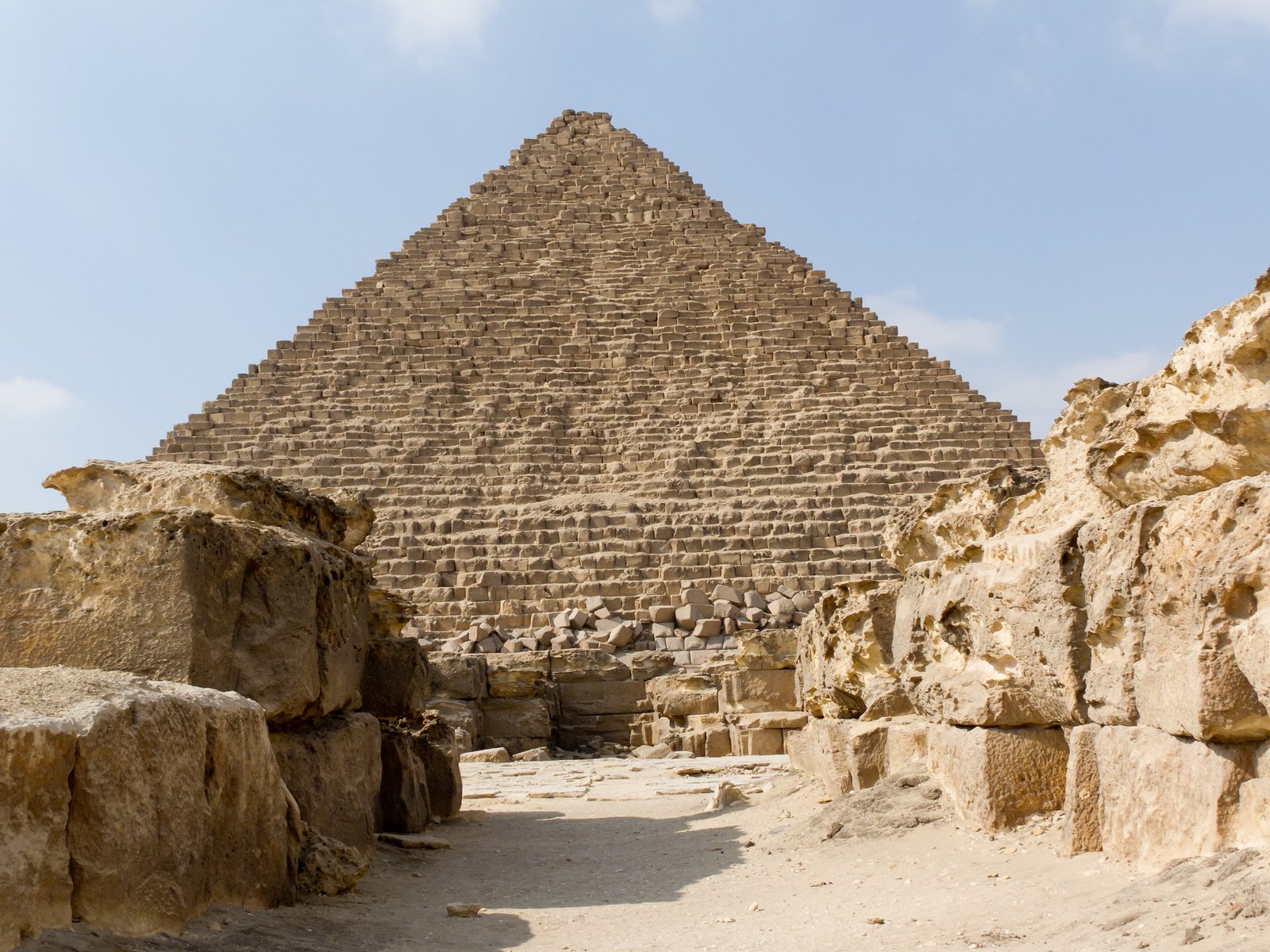
When requesting pyramids only, avoid replacing the museum with a long list of other destinations. Adding Saqqara, Dahshur, a market or a city tour changes the scope again and needs a fresh assessment. Likewise, a picture taken from a hotel roof or a distant city street does not establish that the viewpoint belongs to the archaeological site or your proposed route. Choose a manageable set of priorities and ask which ones the written plan can actually include.
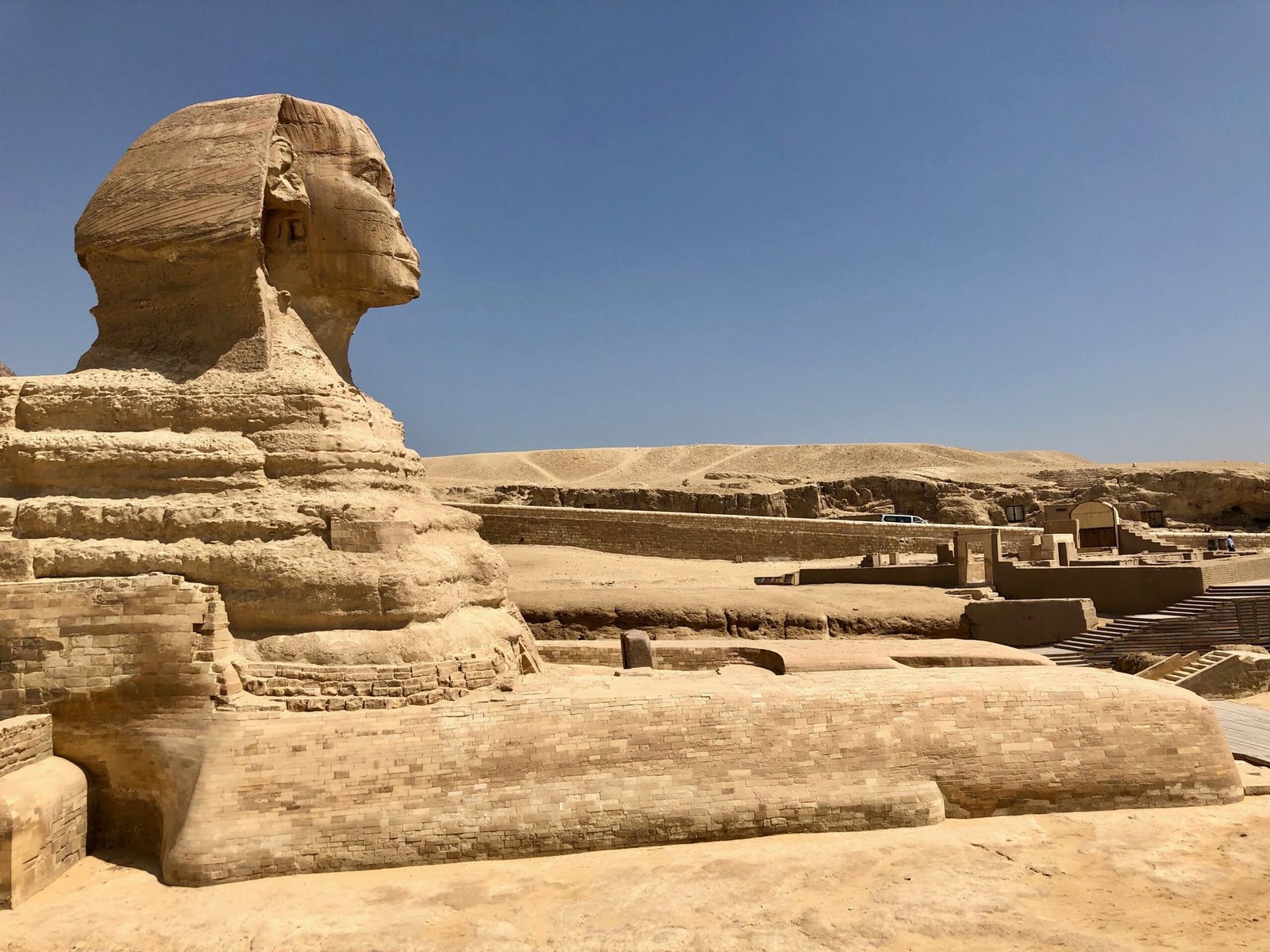
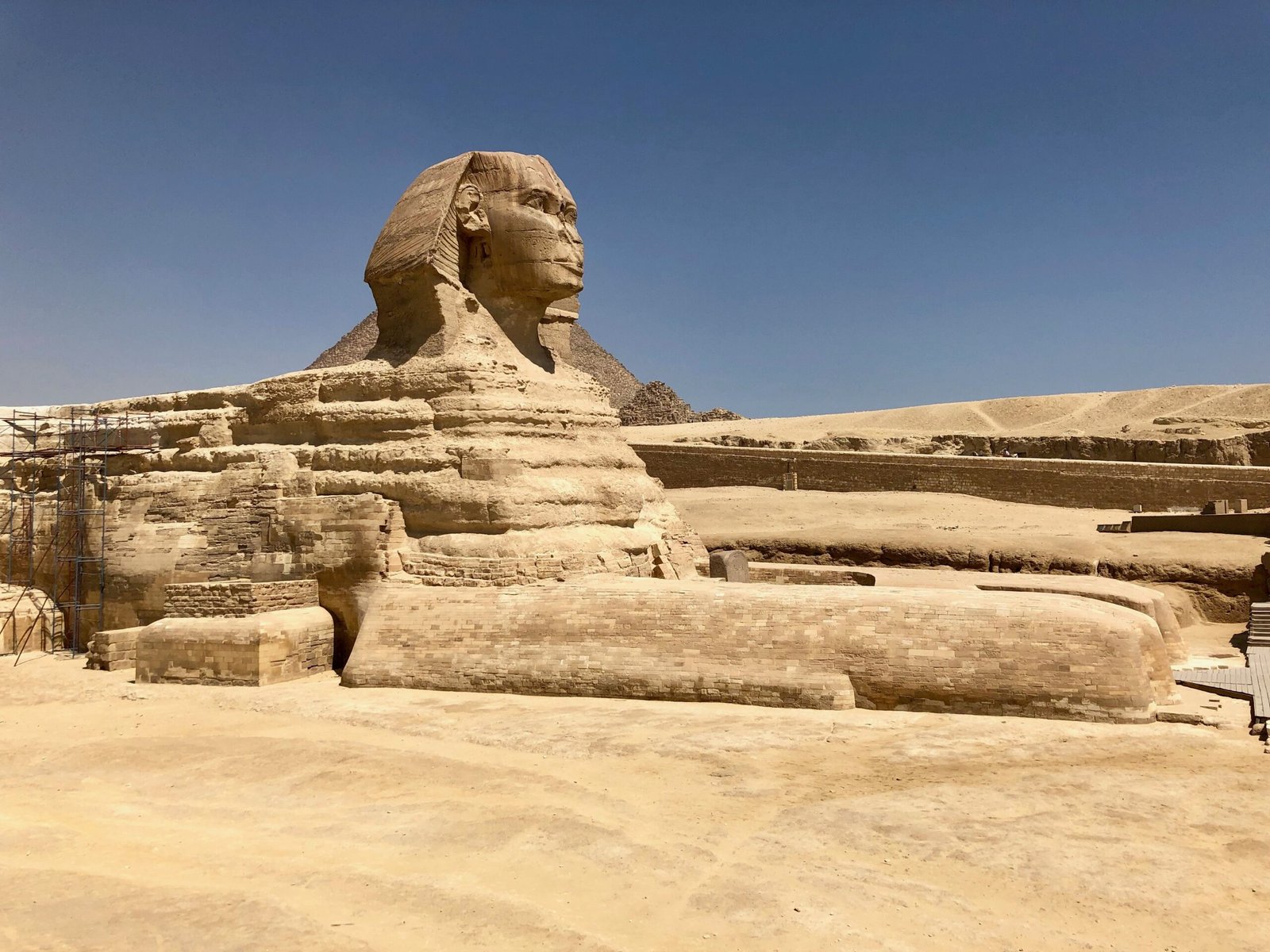
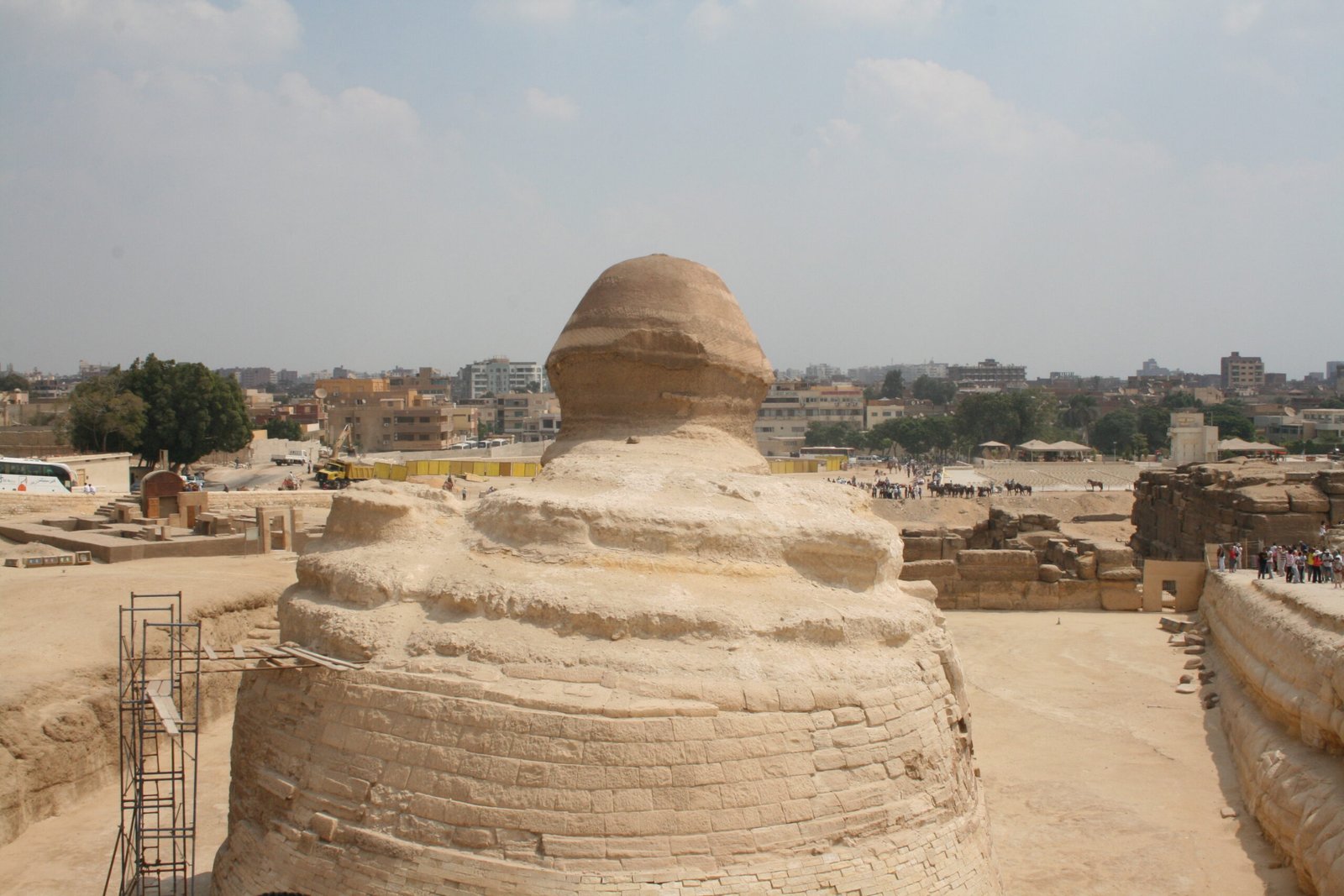
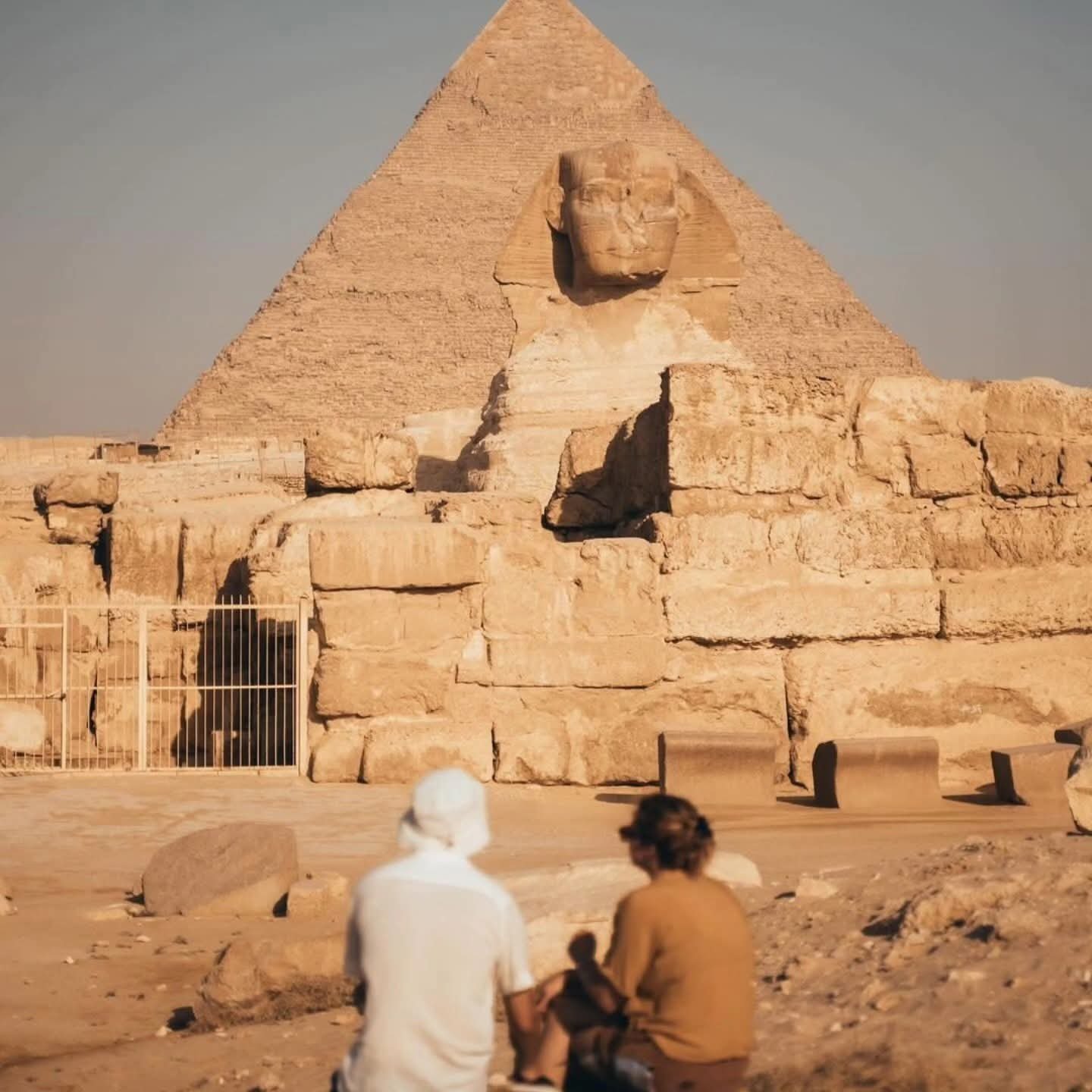
The Great Sphinx and its limestone enclosure
The Great Sphinx and its limestone enclosure. Photo: Warren LeMay from Chicago, IL, United States / Wikimedia Commons · CC0 1.0 · 2019 · display resized.

6. Plan the journey for pyramids only

Removing a museum does not remove the journey between Hurghada and Giza. The published shared road excursions allow approximately seventeen to twenty hours overall, depending on the hotel, traffic and stops. That range describes those particular combined programmes. It should not be copied as an exact promise for a custom visit or reduced by subtracting a guessed museum duration.

A private proposal needs its own pickup time, expected sightseeing period and return estimate. Ask how breaks and the meal fit into that outline. If you are hoping for a shorter day, say so before requesting a price. The team can then explain whether the proposed arrangements meet your priorities, rather than discovering after payment that an early hotel return was essential.

Pyramids only is not a guarantee of arriving back at a fixed hour. Avoid building a flight connection or another inflexible commitment around an estimated road return. For a resort holiday, choose a day that leaves practical room for the long excursion and your other plans. Our Cairo trip timing guide covers how to compare excursion days with arrival and departure dates.
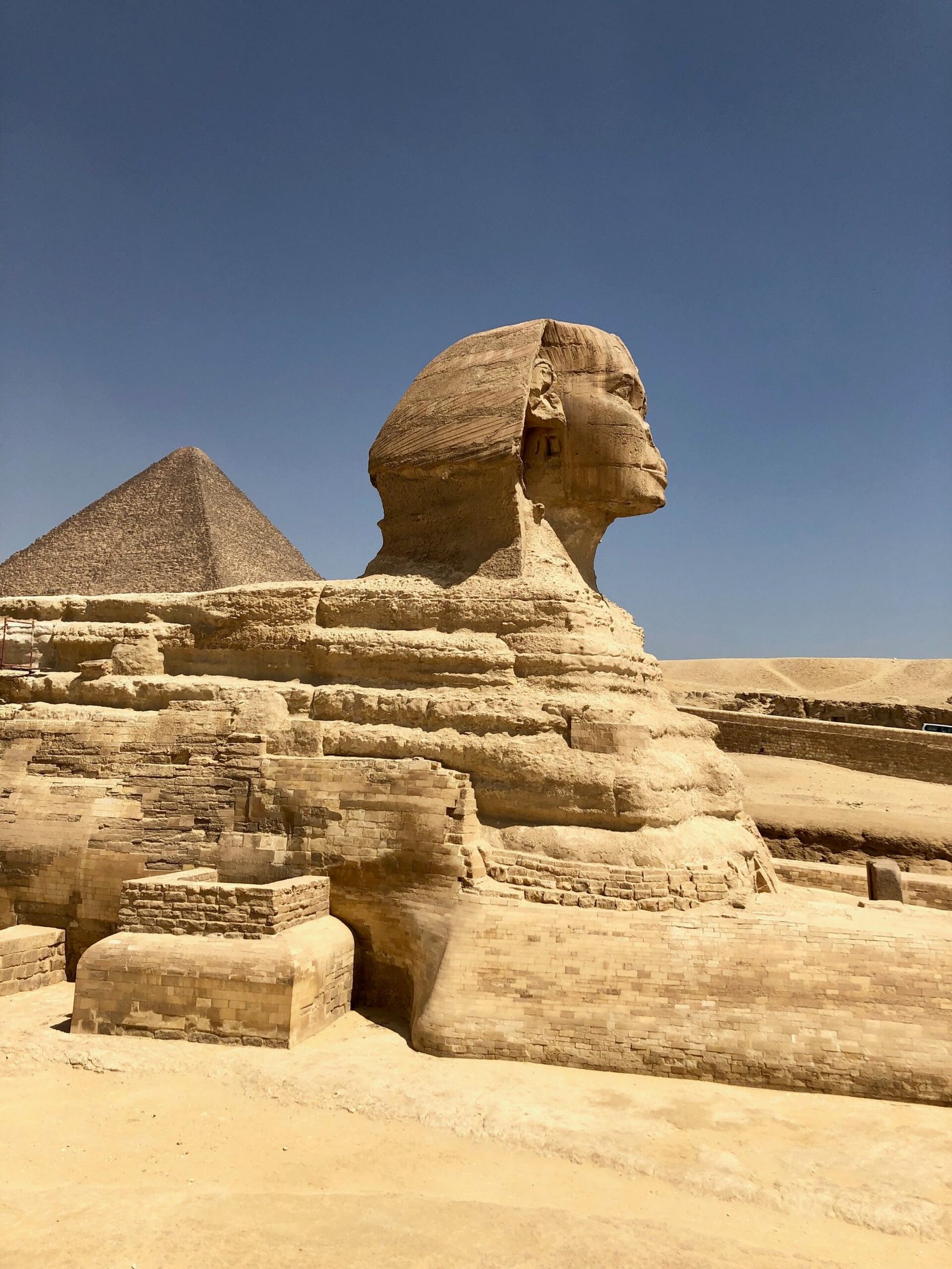
Side view of the Sphinx with a pyramid behind it
Side view of the Sphinx with a pyramid behind it. Photo: Warren LeMay / Wikimedia Commons · CC0 1.0 · 2019 · display resized.

7. Compare the full cost of pyramids only

A shared seat and an exclusive vehicle are different cost structures. With a shared departure, several bookings contribute to the transport and guiding arrangements. A private quotation spreads its costs across your own party. Fewer attractions therefore do not automatically mean a lower total, and the price of a public museum ticket is not a reliable discount to subtract from a packaged tour.

Compare the total for the same people, hotel and date. Ask whether the quoted amount includes hotel transfers, guiding, standard Giza tickets, meals and any requested interior. Establish whether the price is per person or for the whole party. For a group quote, dividing the total by the number of travellers can help you compare options, but keep any different child or infant terms visible.

The table below lists the four published shared alternatives, each with a museum, and identifies the custom option as a quotation request. Published transfer supplements are five euros per person for Makadi Bay or Sahl Hasheesh and ten euros for El Gouna, Safaga or Soma Bay on the shared Cairo tours. A private quote should state its own hotel coverage and total. Recheck prices and any payment fee before making the final choice.
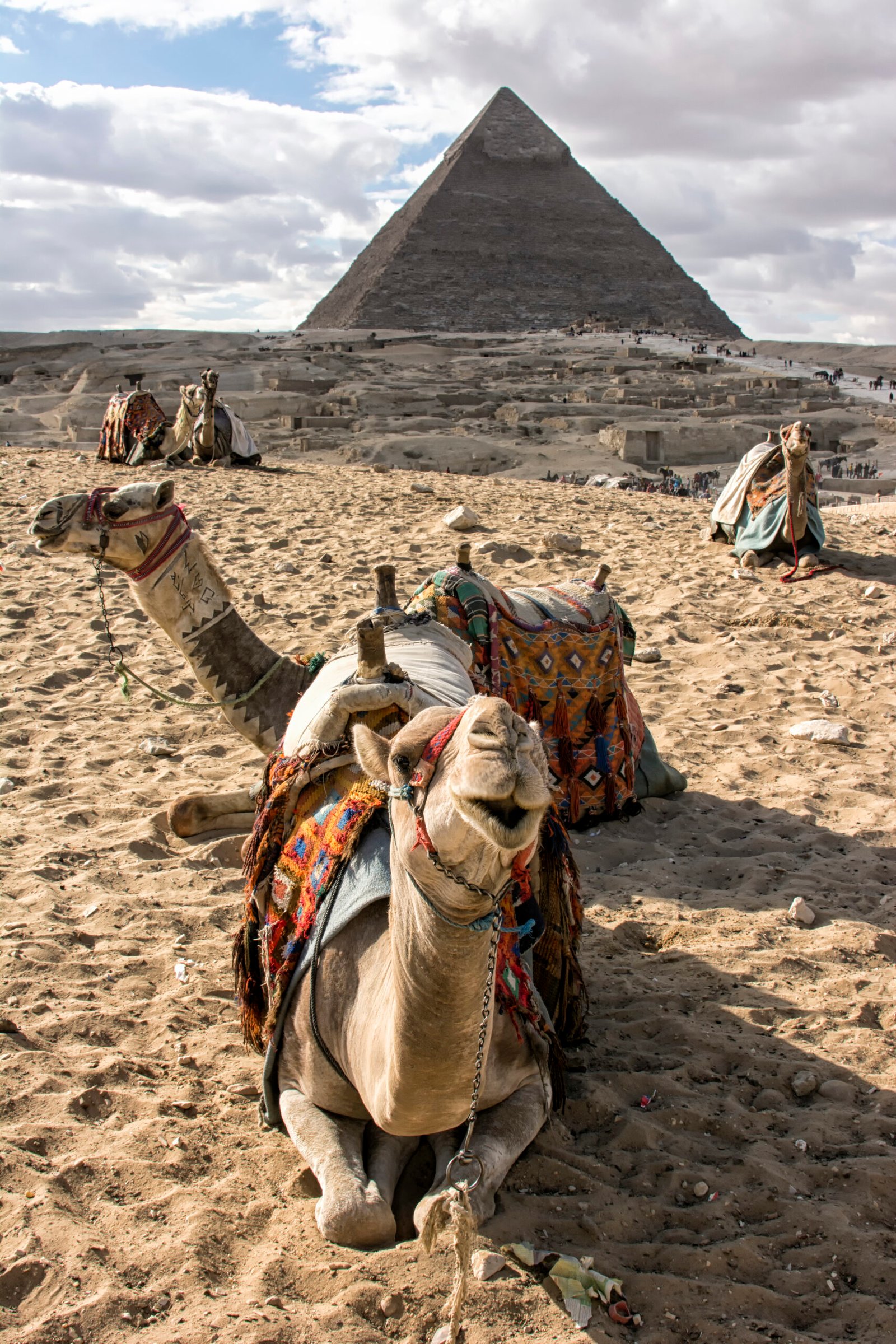
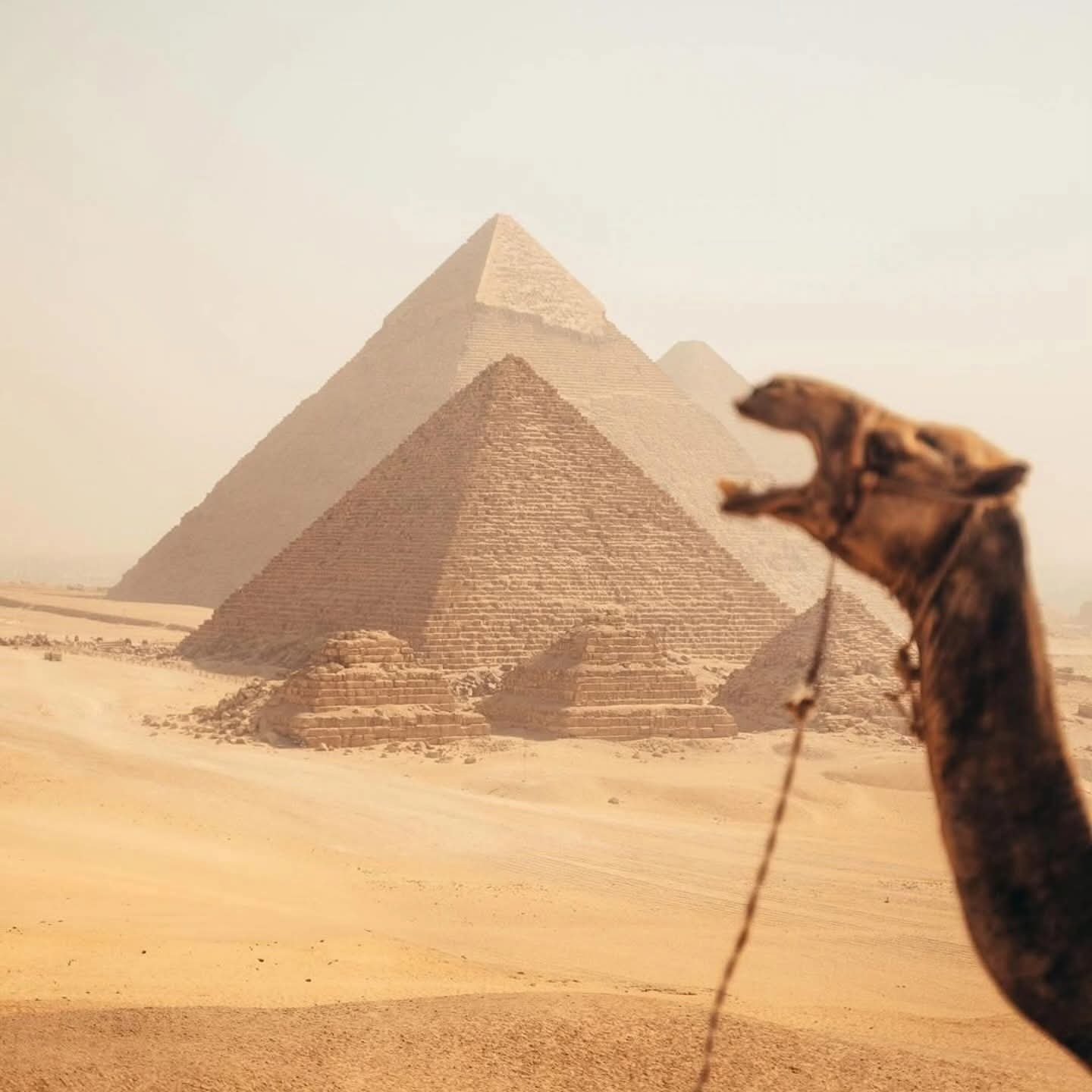
Camel in the foreground of a pyramid at Giza
Camel in the foreground of a pyramid at Giza. Photo: Myousry6666 / Wikimedia Commons · CC BY-SA 4.0 · 2015 · display resized.

Published shared alternatives and the custom Giza request

Programme Adult 10+ Child 4–9 Infant 0–3 Shared group
Tahrir + Pyramids by bus €65 €35 €20 Up to 30
Tahrir + Pyramids by minibus €80 €40 €35 Up to 8
GEM + Pyramids by bus €85 €50 €20 Up to 30
GEM + Pyramids by minibus €100 €60 €40 Up to 8
Pyramids only: private quotation request Quote required Private only if confirmed

Swipe the table on a narrow screen. Listed fares exclude applicable hotel supplements, optional purchases and any card fee. Confirm availability and your complete total.

8. Match walking and comfort to your group

An outdoor-focused visit can still involve walking, uneven ground, sunshine and time away from the vehicle. Skipping indoor galleries does not by itself make the day easier for every traveller. Tell the team about the practical needs of your party, including vehicle access, walking tolerance, pauses, younger children’s routines or any equipment that must travel with you.

Ask specific questions rather than relying on labels such as comfortable or suitable for everyone. How will you enter the vehicle? Where can the proposed route include a seated pause? What can the group do if one person decides against an optional interior? If you need a child seat or another item, request confirmation of the actual arrangement rather than assuming it comes with private transport.

For children, provide exact ages at the time of travel. The published shared fare bands are age ten and above, four to nine, and zero to three; those are tour fares covering more than monument admission. A site’s child admission policy does not automatically remove transport or other tour charges. For a private programme, ask for the total based on the real party and any needs that affect the vehicle or service.
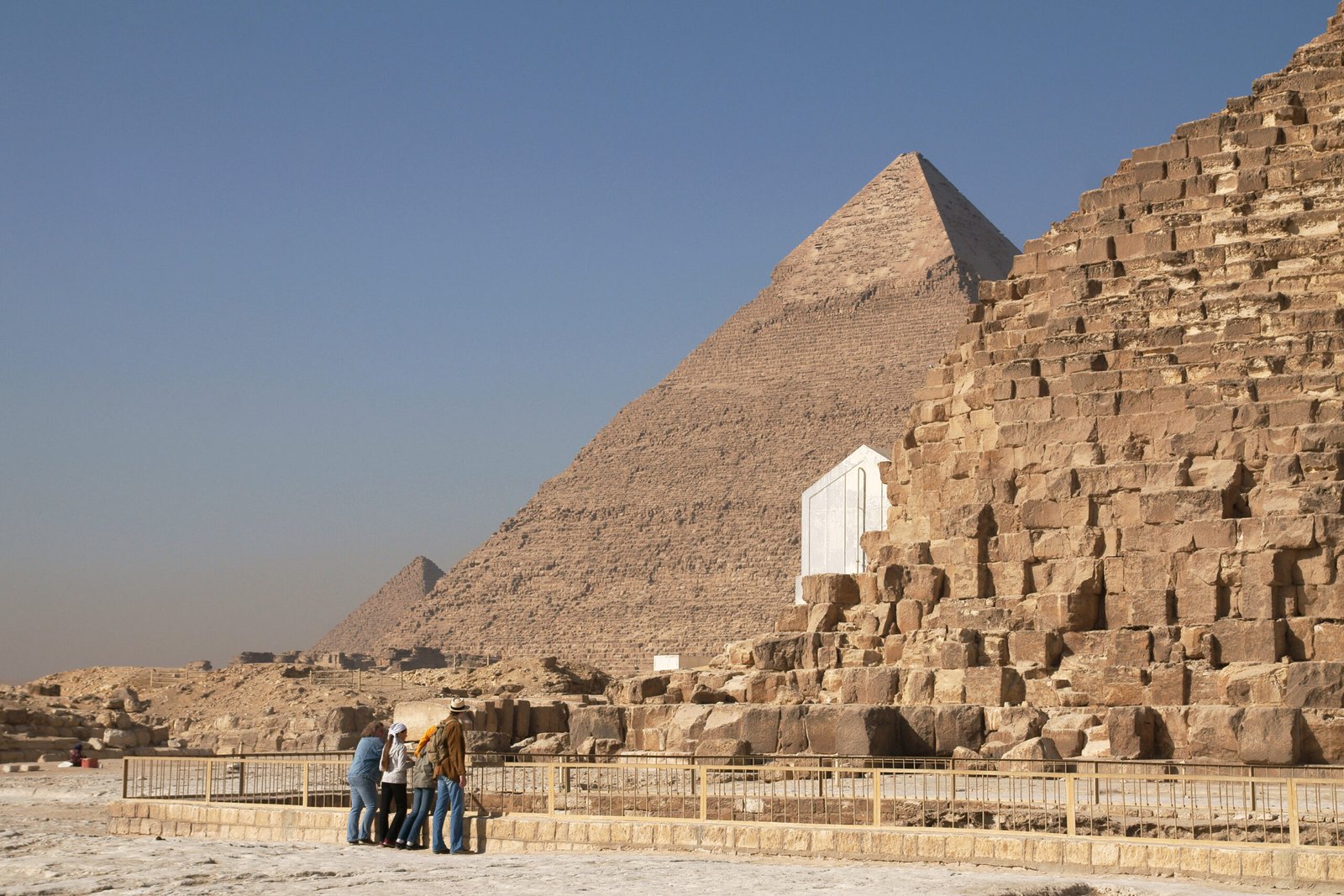
Visitors beside large pyramid stone blocks at Giza
Visitors beside large pyramid stone blocks at Giza. Photo: kallerna / Wikimedia Commons · CC BY-SA 3.0 · 2010 · display resized.

9. Discuss photographs and optional activities separately

If photographs are the main reason for choosing pyramids only, describe the pictures you hope to take. Wide pyramid views, the Sphinx and family portraits involve different priorities. Ask which viewpoints are part of the proposed route and how picture stops fit around the rest of the visit. Neither a private vehicle nor a promotional image guarantees an empty background, particular light or a specific weather condition.

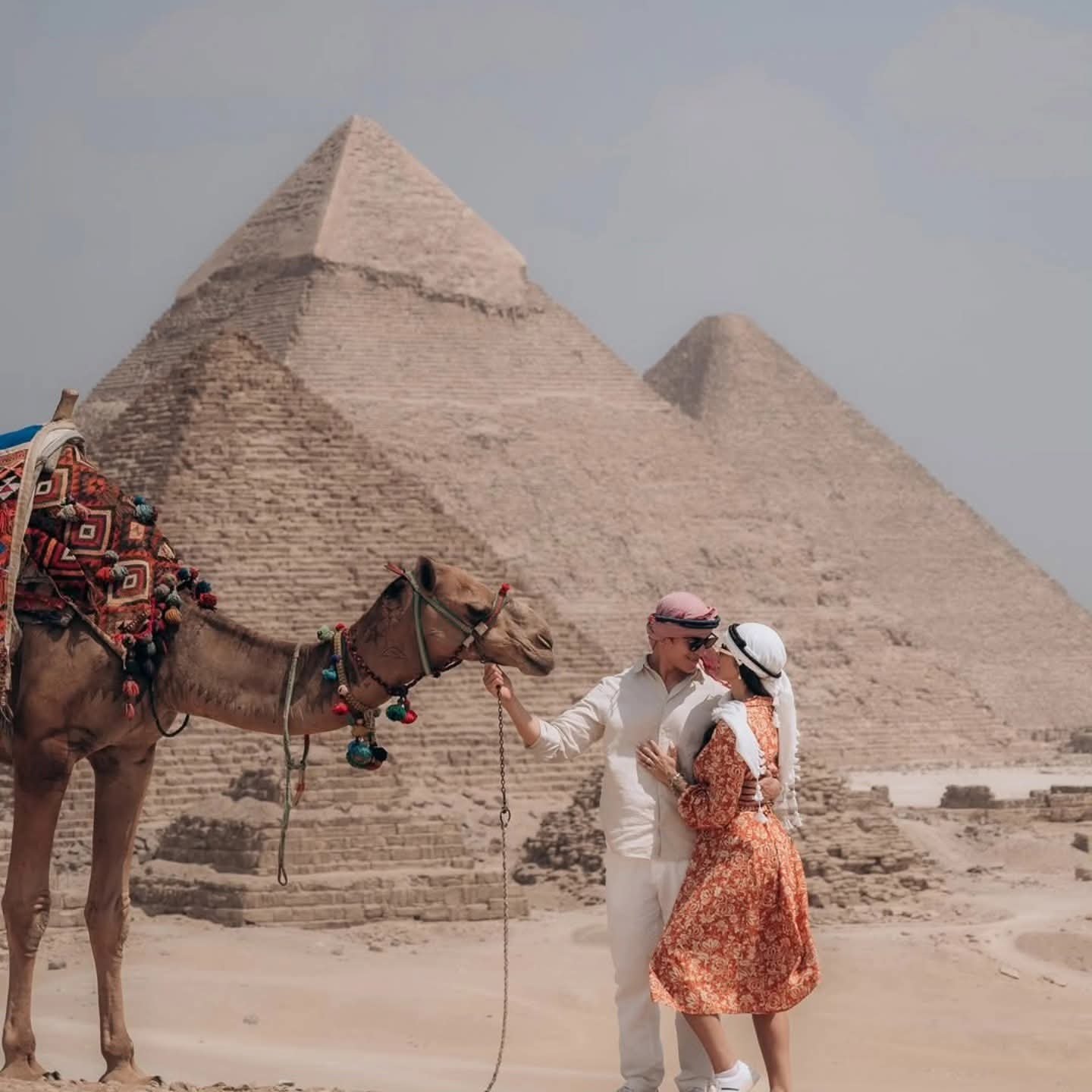
Do not treat a camel in a photograph as proof that a ride is included or required. Ask whether an activity is offered, who operates it, its full price and how much time it would use. The same principle applies to an optional Nile boat trip, purchases or other additions. You can request an itinerary without animal rides or shopping stops and ask for that preference to be addressed in the confirmation.

Keep the booking focused on your priorities rather than adding extras from a picture gallery. The photographs in this guide illustrate Giza; their dates and credits are shown, and they do not document a guaranteed current route. For equipment and picture planning, see our Cairo photography guide. Follow the site’s current photography instructions during the actual visit.
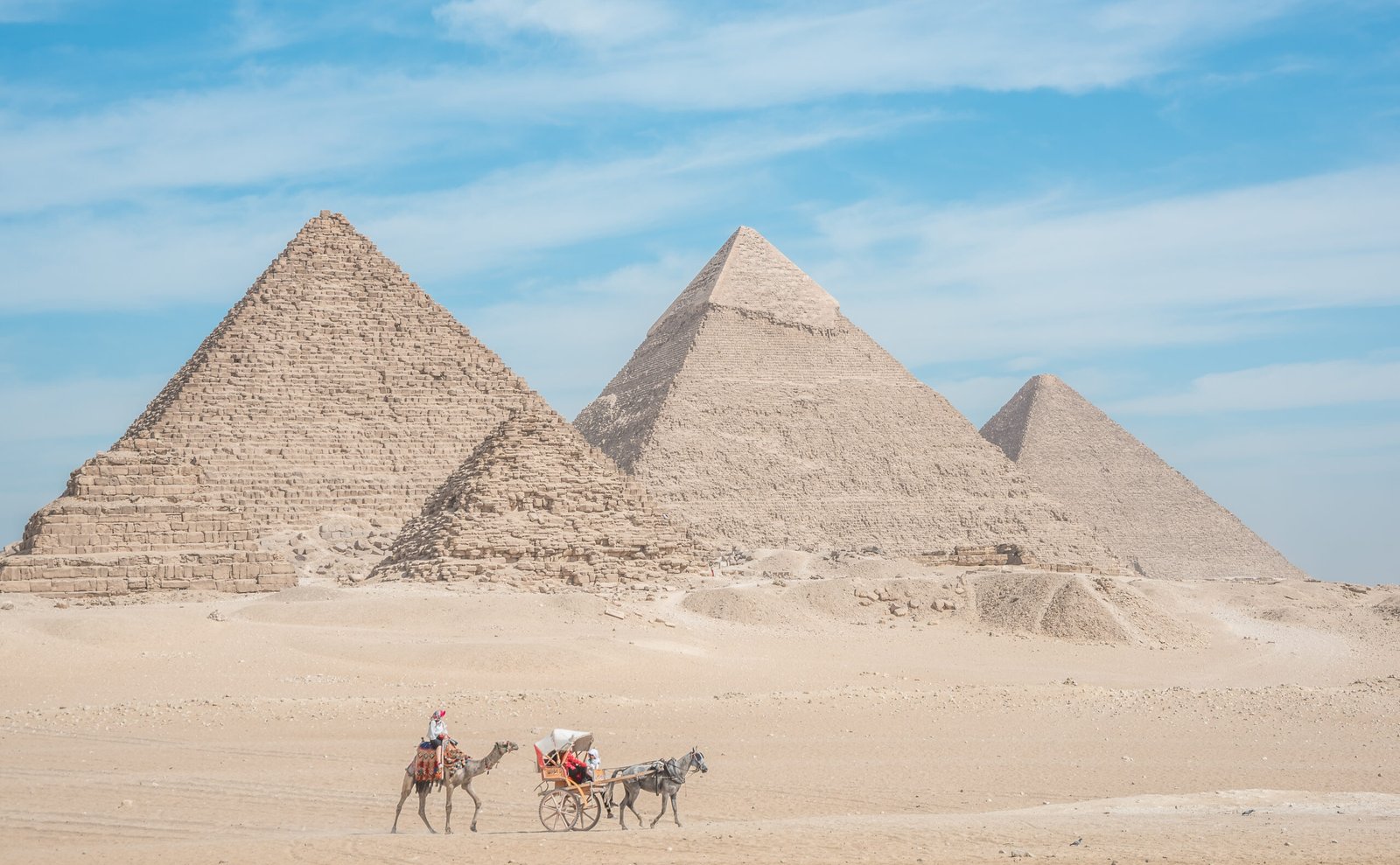
Wide view of the Giza pyramids with camels in the foreground
Wide view of the Giza pyramids with camels in the foreground. Photo: Ahmed Emad H / Wikimedia Commons · CC BY-SA 4.0 · 2020 · display resized.

10. Confirm the guide language and who is accompanying you

A driver, a tour representative and a sightseeing guide perform different roles. Before choosing a custom arrangement, ask who will explain the monuments, which language will be used and whether the guiding service is dedicated to your party. If different travellers need different languages, explain that before the team checks availability and prepares the price.

For a shared trip, confirm the language arrangements for the specific departure. A website written in your language does not itself guarantee that language throughout the day. If you are requesting pyramids only partly to enjoy a quieter explanation, say what matters: fewer participants, time for questions or the ability to set a particular pace. These are details to agree, not automatic consequences of a smaller vehicle.

Also establish how the guide, driver and meeting points will work if some travellers buy an optional interior ticket. Ask whom to contact if you cannot find the agreed meeting place, and keep the booking contact available on your phone. Clear responsibility and a simple meeting plan are more useful than a vague promise of flexibility, particularly when the group has different interests or walking preferences.
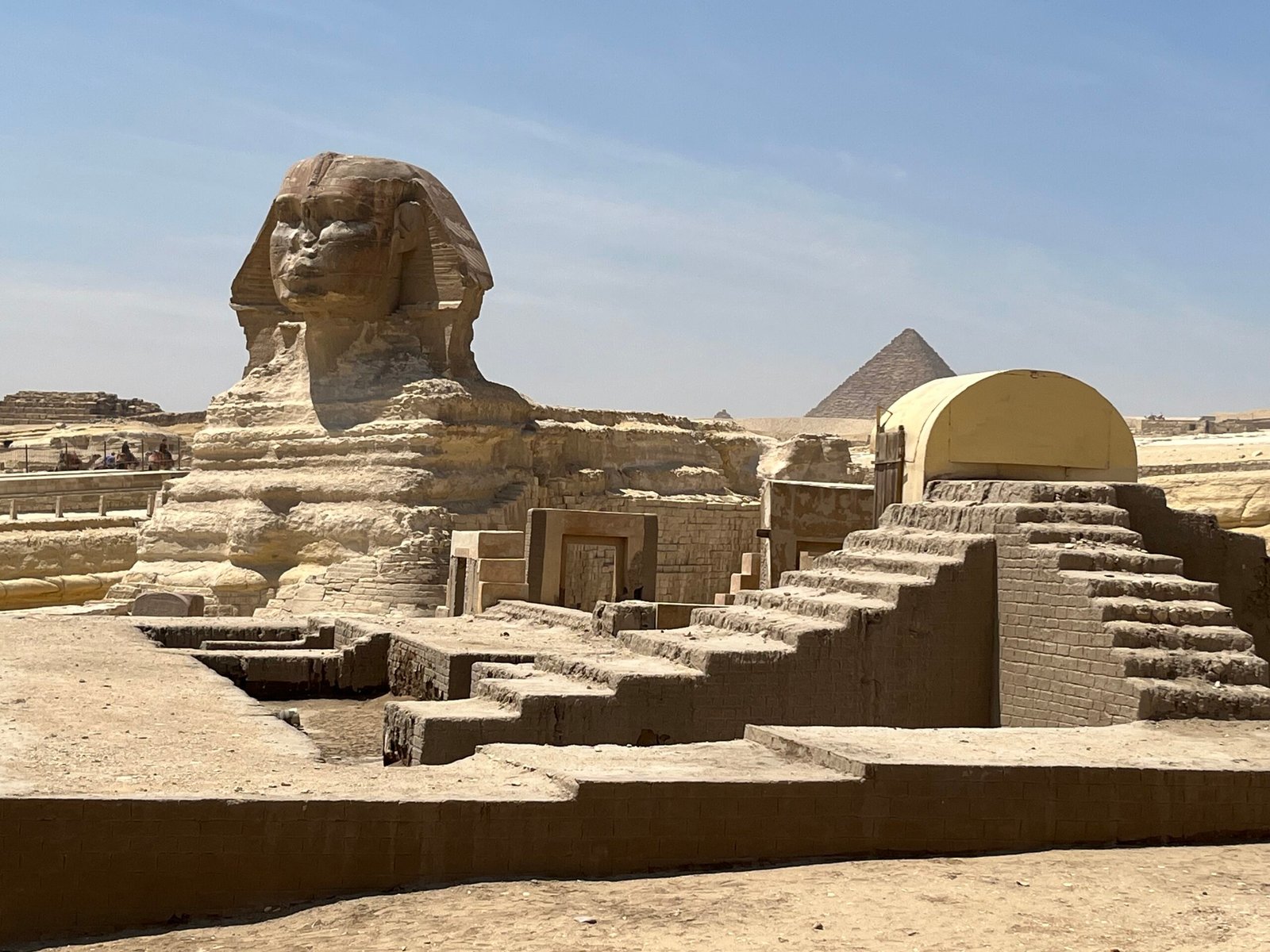
The Sphinx beside archaeological remains and steps
The Sphinx beside archaeological remains and steps. Photo: CivArmy / Wikimedia Commons · CC BY 4.0 · 2024 · display resized.

11. Check meals, payment and cancellation before paying

Read the exact meal description in the selected programme or quotation. Clarify whether lunch is included, which drinks are covered, and whether any dietary request has been confirmed. Removing a museum does not automatically remove lunch, add a special restaurant or change the meal price. A custom offer should describe the arrangement you are actually purchasing.

The published shared products offer online Visa or Mastercard payment and cash at pickup before the excursion, with no advance deposit for the advertised cash option. Website fares are displayed in euros and online cards are charged in Egyptian pounds. Review the checkout total and any applicable fee. A separately quoted private programme needs its own confirmed payment method and any deposit arrangements; do not transfer every shared-tour term to it without checking.

The published cancellation and date-change policy provides a full refund for cancellation at least twenty-four hours before the confirmed start, unless a specific exception is disclosed before payment and included in the confirmation. Later cancellations and no-shows are not refundable under the standard policy. Ask for any ticket-related exception in writing before accepting a custom quote, and use local Egyptian time when checking deadlines.
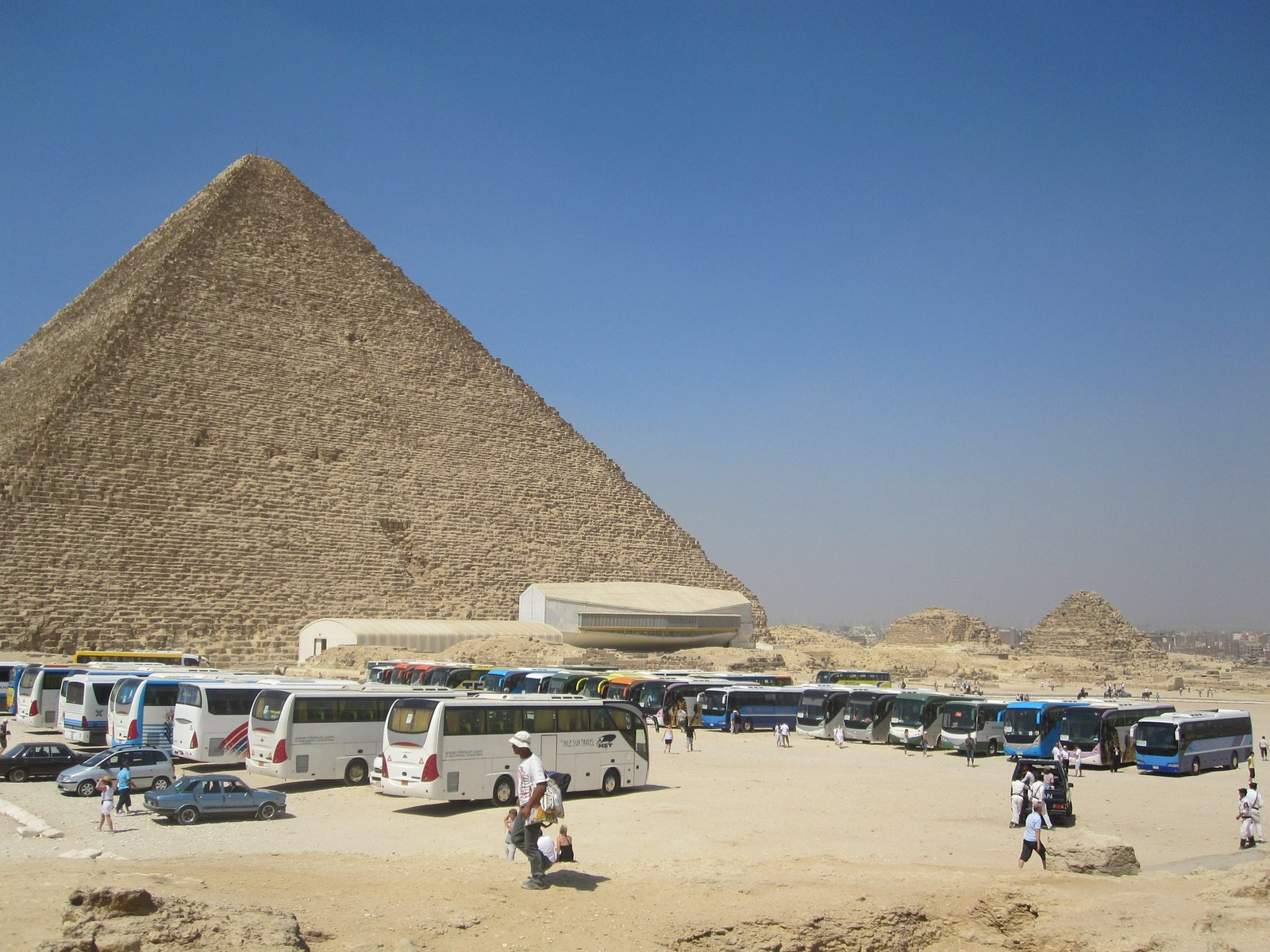
Historical 2018 photograph of coaches and visitors near a Giza pyramid
Historical 2018 photograph of coaches and visitors near a Giza pyramid. Photo: Vincent Brown / Wikimedia Commons · CC BY 2.0 · 2018 · display resized.

12. Make your choice and send a useful booking request

Choose a published museum-and-Giza tour if its full programme matches your interests and budget. Request a private Giza-focused quote if avoiding the museum is essential or you need a different arrangement checked. If price is the main concern, compare the complete shared options first. If a particular return time is essential, explain it before the team suggests any itinerary.

A useful message is: “We would like to discuss pyramids only from Hurghada on [date]. Our hotel is [full name]. We are [adults and children’s ages]. We want [Giza priorities], do not want a museum stop, and prefer a guide speaking [language]. Please confirm whether a private programme is available and quote the complete total, tickets, meals, pickup, expected return and cancellation terms.”

Add an optional interior request separately and mention any walking, vehicle or dietary needs. Ask the team to distinguish confirmed inclusions from choices still awaiting availability. Once you receive the proposal, check it against your original priorities and keep the final written confirmation. The best booking is the one whose actual programme suits your group, with a clear price and arrangements everyone understands before the holiday day begins.

Visitors riding camels near Giza in an illustrative photograph from 2015
Visitors riding camels near Giza in an illustrative photograph from 2015. Photo: Cyprien MacCamley / Wikimedia Commons · CC BY-SA 4.0 · 2015 · display resized.

30 questions about pyramids only

Can I book pyramids only from Hurghada?

You can request a custom Giza-focused private quotation. Availability, transport, guiding, tickets and the total must be checked and confirmed. The four published shared road tours include a museum, so this request should not be treated as a standard seat booking with the museum automatically removed.

Is there a fixed price for the custom Giza-only programme?

Hurghada Travels does not currently publish a fixed standalone price for that custom road programme. Send your date, hotel, party size, children’s ages and required services. Compare the complete written quotation with the published shared alternatives before deciding which arrangement suits you.

Can I skip the museum on a shared Cairo bus?

Ask before booking whether any suitable arrangement is possible. Not entering a museum does not guarantee separate transport, supervision, a different activity or a refund. The other passengers retain their booked programme, and the vehicle cannot be assumed to follow your personal preference.

Does the shared minibus allow a different route?

The published minibus trips are smaller shared groups, with a maximum of eight guests. They still include their named museum and Giza itinerary. A smaller group is not the same as an exclusive vehicle, and route changes need explicit agreement rather than an assumption based on size.

Does buying all available seats make a tour private?

Do not assume that it does. Ask whether the booking will explicitly provide exclusive transport, dedicated guiding and an agreed route. Paying for a number of seats is not a substitute for written confirmation of the service and any permitted itinerary changes.

Is pyramids only always cheaper than a museum tour?

No automatic saving can be promised. A custom private service and a shared seat have different transport and guiding costs. Compare totals for the same travellers, hotel and date, with tickets, meals, extras and payment fees identified, instead of simply subtracting a museum ticket.

Will removing the museum guarantee an earlier return?

No. A custom itinerary needs its own expected timing, and traffic, transfers, breaks and site operations still affect the day. The published shared duration cannot be shortened reliably by subtracting an assumed museum visit. Discuss any important return constraint before accepting the proposal.

How long are the published shared Cairo road tours?

The four programmes indicate approximately seventeen to twenty hours overall, depending on hotel pickup, traffic and other arrangements. This includes travel and the combined sightseeing day. It is an estimate for those products, not a fixed duration for a separately requested private visit.

Are the Great Sphinx and viewpoints automatically included in a private quote?

Ask for them to be named in the proposed itinerary. Giza-focused wording alone is not a detailed list of stops or access arrangements. Confirm your priorities, the planned route and any limitations before paying, especially if one particular photograph or viewpoint is essential to you.

Does Giza admission include entry inside the Great Pyramid?

General area admission and the Great Pyramid interior are separate ticket considerations. The published shared tours exclude the interior from their base price. For a private request, confirm the named ticket and its cost, along with the practical time available for the visit.

Should I buy an interior ticket before agreeing the itinerary?

Coordinate with the booking team first so the date, ticket and proposed schedule match. Ask who should purchase it and review the ticket conditions before payment. Buying an optional admission independently does not make it part of the guide’s route or guarantee time for it.

Can only some people in our party enter a pyramid?

Describe the split preference when requesting the programme. Ask where the others would wait, what guidance is included and how everyone would meet again. Do not assume separate accompaniment or supervision. The plan should work for the actual travellers rather than requiring identical interests.

Does the programme have to include a camel ride?

A camel ride is not established as an inclusion merely by a photograph or the word pyramids. Tell the team if you want no animal activities. If an optional ride is offered and interests you, clarify its operator, price and timing before agreeing to it.

Can I ask for no shopping stops or boat trip?

Yes, explain those preferences in the quotation request and check how the proposed programme addresses them. Do not assume they have been accepted until confirmed. Removing optional activities also does not automatically replace them with extra guided time, a different stop or a price reduction.

Can Saqqara or Dahshur replace the museum?

You can ask whether a separate itinerary can accommodate those places, but they are additional destinations requiring their own feasibility, timing and ticket assessment. They are not automatic substitutions within the four published shared Cairo programmes or an unspecified Giza-focused quotation.

Are there guaranteed sunset photographs on a day trip?

No such guarantee is made here. Site access, the agreed programme, travel time and conditions must all be considered. Send any photography priority before booking and ask what is realistic; a sunset picture in an article is not evidence of a confirmed sunset visit.

Is a museum-free visit automatically easier for seniors?

Not necessarily. An outdoor-focused day can still involve a long drive, walking and uneven ground. Describe the practical needs of your party and ask about vehicle access, pauses and the planned route. Suitability should be checked individually rather than inferred from removing one attraction.

What should families with children confirm?

Provide exact ages and discuss the journey, walking, breaks, meal arrangements and any requested child seat. Confirm actual availability of the equipment or arrangements you need. Tour fare bands and monument admission rules are different, so request a total for the complete family.

Do young children travel free because monument admission may be free?

Do not make that assumption. A tour price also covers transport and other services, and the published shared programmes have their own infant and child fares. For a private quote, provide each child’s age and ask how the total and any equipment requirements are calculated.

Can I request a guide in my language?

State the language before availability and price are checked, and keep it in the final confirmation. Clarify whether the service includes a sightseeing guide and whether that person is dedicated to your party. The language of a webpage is not itself a guarantee of guiding arrangements.

Is lunch included when booking pyramids only?

Only the actual quotation can confirm that. Ask for the meal arrangement, included drinks and any dietary request to be specified. Do not assume a museum-free programme includes the same lunch as a published shared tour or automatically allows a restaurant of your choosing.

What about pickup outside central Hurghada?

Send the full hotel name, not only the resort area. The published shared tours list supplements for several surrounding resorts. A custom private quote should state whether your hotel transfers are included in its total and confirm the precise pickup arrangements separately.

What are the published shared-tour transfer supplements?

The Cairo shared programmes list five euros per person from Makadi Bay or Sahl Hasheesh and ten euros from El Gouna, Safaga or Soma Bay for additional round-trip transfers. Confirm the hotel zone and total. A private quotation must state its own arrangements.

Can I pay by Visa or Mastercard?

The published shared tour pages offer online Visa or Mastercard checkout, with euro display prices and card charging in Egyptian pounds. Review the final total and applicable fees. For a bespoke private booking, confirm the available payment method and any deposit separately with the quotation.

Can I pay cash at hotel pickup?

The published shared programmes offer cash payment at pickup before the excursion, without an advance deposit. A custom private service needs its own payment confirmation. Ask about the amount, currency and any advance requirement instead of assuming that every published payment option applies unchanged.

What cancellation deadline should I check?

The standard published policy gives a full refund for cancellation received at least twenty-four hours before the confirmed start, using Egyptian local time. Later cancellation and no-show rules differ. Any specific non-refundable exception must be disclosed before payment and included in your booking confirmation.

Can I change the date after booking?

The published policy allows a request at least twenty-four hours before the confirmed start, subject to availability and any price difference. A new date is confirmed only after the team’s reply. Check any clearly disclosed exception for the particular booking and retain the written change confirmation.

Should I book this on my flight departure day?

An estimated road return should not be treated as a guaranteed connection to a flight. Choose a date that fits your complete travel schedule and explain fixed commitments before booking. A shorter attraction list does not remove transport uncertainty or the airline’s check-in and boarding requirements.

Which standard tour suits me if a museum is acceptable?

Compare the named museum and transport first: Tahrir or GEM, each by shared bus or smaller shared minibus. Check the current total, inclusions, guide language and hotel transfer. All four combine a museum with Giza, so choose the complete programme you actually want to join.

What should I send to request pyramids only?

Send the date, full hotel name, adults and children’s ages, guide language and Giza priorities. State no museum clearly, list optional interiors separately, and mention practical needs. Request written confirmation of availability, vehicle privacy, tickets, meals, pickup, return estimate, total and cancellation terms.
Official information and booking conditions

Giza pyramids landscape

Pyramiden ohne Museum: 12 super Tipps ab Hurghada

Pyramiden ohne Museum ab Hurghada: Dieser Wunsch klingt zunächst einfach. Sie möchten nach Gizeh fahren, die Pyramiden und die Sphinx erleben und anschließend ohne Museumsbesuch zurückkehren. Entscheidend ist jedoch, ob Fahrzeug, Reiseleitung und gebuchter Ablauf diesen Wunsch tatsächlich abdecken. Ein Platz in einer gemeinsamen Kairo-Tour wird nicht automatisch zu einem anderen Programm, wenn ein Gast einen Besuch auslassen möchte.

Hurghada Travels veröffentlicht derzeit vier gemeinsame Straßenausflüge, die Gizeh mit dem Ägyptischen Museum am Tahrir-Platz oder dem Grand Egyptian Museum verbinden. Für ein privates Programm mit Schwerpunkt Gizeh benötigen Sie eine individuelle Anfrage, ein Angebot und eine ausdrückliche Bestätigung. Dieser Ratgeber hilft Ihnen mit zwölf praktischen Punkten und dreißig Fragen, die passende Möglichkeit vor der Zahlung zu prüfen.

Überlegen Sie zuerst, was Ihnen wichtig ist: Außenansichten, die Sphinx, Fotos, Erklärungen oder ein zusätzlicher Besuch im Inneren einer Pyramide. Pyramiden ohne Museum soll Ihre Anfrage präziser machen. Tickets, Wartezeiten und die Rückfahrt sollten dabei nicht von unausgesprochenen Erwartungen abhängen.

Tourbeschreibungen, Preise und zitierte offizielle Hinweise geprüft am 4. November 2026. Vereinbarungen für Ihre Reisedaten erneut bestätigen lassen.

Die Fotos zeigen Gizeh mit Quellen- und Datumsangaben. Sie garantieren weder einen Standort noch heutige Fahrzeugabläufe, Tierreiten oder identische Bedingungen und werden nicht als Kundenbewertungen von Hurghada Travels dargestellt. Foto: Luigi Rosa / Wikimedia Commons · CC BY-SA 2.0 · 2024 · Darstellung skaliert.

1. Klären Sie Ihren Wunsch nach Pyramiden ohne Museum

Manche Gäste möchten grundsätzlich kein Museum besuchen. Andere interessieren sich durchaus für Ausstellungen, wollen aber ausreichend Zeit in Gizeh haben. Wieder andere möchten vor allem in die Cheops-Pyramide hinein und nehmen an, dass dies bei jedem Pyramiden-Ausflug enthalten ist. Das sind unterschiedliche Wünsche, die schon bei der Anfrage getrennt beschrieben werden sollten.

Notieren Sie Ihre drei wichtigsten Prioritäten in einer Reihenfolge. Ein Beispiel wäre: Außenansichten der großen Pyramiden, die Sphinx und gemeinsame Fotos. Ein gewünschter Innenbesuch kommt als eigener Punkt hinzu. Falls ein Museum für Sie akzeptabel, aber weniger wichtig ist, sagen Sie das offen. Vielleicht passt dann eines der veröffentlichten Gruppenprogramme. Ist der Verzicht auf jeden Museumsstopp entscheidend, sollte dies eine ausdrückliche Bedingung des Angebots sein.

Beschreiben Sie außerdem, wofür Sie keine Zeit einplanen möchten, etwa Einkaufshalte oder eine optionale Bootsfahrt. Fragen Sie, wie der angebotene Ablauf stattdessen aussieht. Ein gestrichener Programmpunkt schafft nicht automatisch zusätzliche Führungszeit, einen reservierten Fototermin oder besonderen Zugang. Hilfreich ist ein schriftlicher Plan, der Ihre Interessen mit konkreten Stopps, Beförderung und Eintrittsleistungen verbindet. So können alle Mitreisenden vor der Buchung einschätzen, ob sie sich auf denselben Ausflug freuen.

Pyramiden ohne Museum: Straße zu den Pyramiden von Gizeh
Straße zu den Pyramiden von Gizeh. Foto: Eman abdelkader12 / Wikimedia Commons · CC BY-SA 4.0 · 2025 · Darstellung skaliert.

2. Bus und Minibus bleiben gemeinsame Ausflüge

Die vier veröffentlichten Straßentouren kombinieren ein Museum mit Gizeh. Beim Tahrir-Programm nennt die Busvariante maximal dreißig Gäste, die Minibusvariante maximal acht. Für die beiden GEM-Programme gelten dieselben veröffentlichten Gruppengrößen. Ein kleineres Fahrzeug verändert die Größe der gemeinsamen Gruppe, bedeutet aber nicht, dass jeder Teilnehmer einen eigenen Ablauf bestimmen kann.

Die anderen Gäste haben die beschriebenen Besichtigungen ebenfalls gebucht. Wenn Sie nicht ins Museum gehen möchten, steht deshalb nicht automatisch ein Fahrzeug für eine andere Unternehmung bereit. Auch ein geeigneter Wartebereich, eine Begleitung oder die Möglichkeit, sich von der Gruppe zu trennen, sind damit nicht bestätigt. Diese praktischen Fragen müssen vor der Buchung beantwortet werden, statt erst beim Museumseingang zu entstehen.

Buchen Sie keinen gewöhnlichen Sitzplatz in der Erwartung, dass der Reiseleiter den gesamten Tagesplan vor Ort umstellt. Teilen Sie Ihre Einschränkung zuerst mit. Wird eine Alternative ausdrücklich angeboten, bewahren Sie deren Einzelheiten zusammen mit der Reservierung auf. Ohne passende Bestätigung vergleichen Sie das reguläre Programm als Ganzes mit einem separat angefragten Privatangebot. Unser Ratgeber zu den Pyramiden von Gizeh ab Hurghada ergänzt diese Auswahl um weitere Buchungsfragen.

Pyramiden und Sphinx von Gizeh hinter archäologischen Überresten
Pyramiden und Sphinx von Gizeh hinter archäologischen Überresten. Foto: Luigi Rosa / Wikimedia Commons · CC BY-SA 2.0 · 2024 · Darstellung skaliert.

3. Ein privates Angebot für Pyramiden ohne Museum anfragen

Für Pyramiden ohne Museum nennen Sie Datum, vollständigen Hotelnamen, Anzahl der Erwachsenen, das Alter der Kinder und die gewünschte Sprache der Reiseleitung. Schreiben Sie ausdrücklich, dass Sie ein privates Fahrzeug und ein auf Gizeh konzentriertes Programm ohne Museumsstopp prüfen lassen möchten. Für dieses individuelle Straßenprogramm veröffentlicht Hurghada Travels derzeit keinen festen Einzelpreis; Leistungen und Verfügbarkeit müssen zuerst geklärt werden.

Fragen Sie, ob das Fahrzeug ausschließlich Ihrer Reisegruppe zur Verfügung steht und welche Reiseleitung enthalten ist. Lassen Sie auch bestätigen, dass Abholung und Rückfahrt Ihr konkretes Hotel einschließen. Ein privater Transfer mit Fahrer ist eine andere Leistung als ein privat geführter Ausflug. Wenn Erklärungen zu den Monumenten wichtig sind, muss die Führung ausdrücklich im Angebot stehen.

Listen Sie gewünschte Stopps und einen eventuellen Innenbesuch getrennt auf. Bitten Sie um eine Beschreibung von Reihenfolge, Pausen, Mahlzeit und erwarteter Rückkehr. Fragen Sie auch, was geschieht, wenn ein gewünschtes Extra nicht organisiert werden kann. Eine Anfrage allein reserviert weder Fahrzeug noch Reiseleitung. Erst das konkrete Angebot zeigt, welche Punkte bestätigt werden können und ob der Gesamtpreis für Ihre tatsächliche Gruppe sinnvoll ist. Vergleichen Sie dabei Leistungen und Umfang, nicht nur die Bezeichnung privat.

Ein ruhendes Kamel nahe der Großen Pyramide in Gizeh
Ein ruhendes Kamel nahe der Großen Pyramide in Gizeh. Foto: Sphotography13 / Wikimedia Commons · CC BY-SA 4.0 · 2024 · Darstellung skaliert.

4. Trennen Sie Geländeeintritt und Innenbesichtigung

Die Außenansicht der Pyramiden und ein Besuch im Inneren sind unterschiedliche Erlebnisse. Die offizielle Information zum Gizeh-Plateau unterscheidet den allgemeinen Geländeeintritt von zusätzlichen Monumenttickets. Auch die Besucherinformation zur Cheops-Pyramide nennt den gesonderten Eintritt und das zusätzlich erforderliche Geländeticket. Prüfen Sie aktuelle Bedingungen für Ihren Termin, statt sich auf einen älteren Preisbildschirm zu verlassen.

Bei den vier veröffentlichten gemeinsamen Touren ist der reguläre Eintritt zum Gizeh-Gelände enthalten; der Innenbesuch der Cheops-Pyramide gehört nicht zum Grundpreis. Ein individuelles Angebot muss seine eigenen enthaltenen Tickets nennen. Fragen Sie, welches Ticket genau gemeint ist, wer es kauft und ob dafür Zeit eingeplant wird. Eine Eintrittskarte und die organisatorische Möglichkeit, den Besuch einzubauen, sind zwei verschiedene Dinge.

Besprechen Sie unterschiedliche Wünsche innerhalb Ihrer Reisegruppe vor dem Kauf. Eine Person interessiert sich vielleicht für das Innere, eine andere lieber für Außenaufnahmen. Klären Sie, wo die übrigen Teilnehmer warten und wie das Wiedersehen organisiert wird. Eine separate Begleitung ist nicht automatisch eingeschlossen. Unser Ratgeber zur Cheops-Pyramide von innen hilft dabei, diesen optionalen Wunsch bewusst zu formulieren.

Die Pyramiden von Gizeh hinter Gebäuden und einer Stadtstraße
Die Pyramiden von Gizeh hinter Gebäuden und einer Stadtstraße. Foto: Thesixthscallywag / Wikimedia Commons · CC BY-SA 4.0 · 2024 · Darstellung skaliert.

5. Planen Sie Gizeh nach Interessen statt nach einer langen Liste

Ein sinnvoller Vorschlag könnte eine Einführung zum Gelände, vereinbarte Außenansichten, die Sphinx und eine Pause zum Essen oder Trinken umfassen. Das ist eine Grundlage für die Anfrage, kein zugesagter Rundgang oder Stundenplan. Der bestätigte Ablauf muss die örtlichen Zugangsbedingungen, die Wege und die Interessen Ihrer Mitreisenden berücksichtigen.

Fragen Sie, wie Erklärungen, Bewegung und Fotos verteilt werden sollen. Wer Architektur besonders interessant findet, möchte vielleicht an einem Monument länger zuhören. Familien bevorzugen möglicherweise kürzere Erklärungen mit Pausen. Für Fotoaufnahmen kann eine bestimmte Perspektive wichtiger sein als möglichst viele Stopps. Solche Angaben ermöglichen eine realistische Planung, ohne zu behaupten, jede denkbare Sehenswürdigkeit passe in einen Tagesausflug.

Wenn Sie Pyramiden ohne Museum anfragen, ersetzen Sie den gestrichenen Besuch nicht automatisch durch zahlreiche andere Ziele. Saqqara, Dahschur, ein Markt oder eine Stadtrundfahrt verändern den Umfang und benötigen eine neue Prüfung. Auch ein Foto von einer Dachterrasse oder aus einer entfernten Straße belegt nicht, dass dieser Standort zum archäologischen Gelände oder Ihrer Route gehört. Wählen Sie wenige klare Prioritäten und lassen Sie bestätigen, welche davon im angebotenen Programm tatsächlich berücksichtigt werden können.

Die Große Sphinx und ihre Kalksteinumfassung
Die Große Sphinx und ihre Kalksteinumfassung. Foto: Warren LeMay from Chicago, IL, United States / Wikimedia Commons · CC0 1.0 · 2019 · Darstellung skaliert.

6. Die Fahrzeit für Pyramiden ohne Museum einplanen

Ohne Museumsbesuch bleibt die Fahrt zwischen Hurghada und Gizeh bestehen. Für die veröffentlichten gemeinsamen Straßenausflüge werden ungefähr siebzehn bis zwanzig Stunden insgesamt angegeben, abhängig von Hotelabholung, Verkehr und Stopps. Diese Spanne beschreibt die jeweiligen kombinierten Programme. Sie ist keine feste Zusage für einen individuellen Ausflug und lässt sich nicht zuverlässig um eine vermutete Museumsdauer verkürzen.

Ein privater Vorschlag braucht eine eigene Abholzeit, eine erwartete Besichtigungsphase und eine geschätzte Rückkehr. Fragen Sie, wie Fahrpausen und die Mahlzeit darin eingeplant werden. Wenn Sie auf einen kürzeren Tag hoffen, sagen Sie das schon vor der Preisberechnung. So kann das Team beurteilen, ob der Vorschlag Ihre Erwartungen erfüllt, bevor eine frühe Rückkehr nachträglich zur wichtigsten Bedingung wird.

Pyramiden ohne Museum bedeutet keine garantierte Ankunft im Hotel zu einer bestimmten Uhrzeit. Verknüpfen Sie eine geschätzte Rückfahrt nicht mit einer knapp geplanten Flugverbindung oder einem unverrückbaren Folgetermin. Wählen Sie einen Urlaubstag, der zu Ihrer gesamten Reise passt und genügend organisatorischen Spielraum lässt. Unser Artikel Kairo richtig planen erklärt, wie Sie einen Ausflugstermin mit Ankunft, Abreise und weiteren Urlaubsvorhaben vergleichen können.

Seitenansicht der Sphinx mit einer Pyramide im Hintergrund
Seitenansicht der Sphinx mit einer Pyramide im Hintergrund. Foto: Warren LeMay / Wikimedia Commons · CC0 1.0 · 2019 · Darstellung skaliert.

7. Den Gesamtpreis für Pyramiden ohne Museum vergleichen

Ein Sitzplatz in einer Gruppe und ein exklusives Fahrzeug haben unterschiedliche Kostenstrukturen. Bei einem gemeinsamen Ausflug tragen mehrere Buchungen die Beförderung und Reiseleitung mit. Bei einem privaten Angebot verteilen sich die vereinbarten Kosten auf Ihre eigene Reisegruppe. Weniger Sehenswürdigkeiten müssen deshalb nicht zu einem niedrigeren Gesamtpreis führen. Der öffentliche Museumseintritt ist auch kein verlässlicher Betrag, den man einfach vom Reisepreis abziehen kann.

Vergleichen Sie Angebote für dieselben Personen, dasselbe Hotel und denselben Termin. Lassen Sie Transfers, Reiseleitung, reguläre Gizeh-Tickets, Essen und gewünschte Innenbesuche einzeln benennen. Klären Sie, ob die Summe pro Person oder für die gesamte Gruppe gilt. Den Gesamtpreis durch die Teilnehmerzahl zu teilen kann die Orientierung erleichtern; unterschiedliche Kinderbedingungen und zusätzliche Wünsche dürfen dabei aber nicht verschwinden.

Die folgende Tabelle zeigt vier veröffentlichte Gruppenalternativen mit Museum sowie die individuelle Möglichkeit als Angebotsanfrage. Für die gemeinsamen Kairo-Touren betragen die veröffentlichten zusätzlichen Hin- und Rücktransfergebühren fünf Euro pro Person ab Makadi Bay oder Sahl Hasheesh und zehn Euro ab El Gouna, Safaga oder Soma Bay. Beim privaten Angebot muss die Abdeckung Ihres Hotels ausdrücklich im Gesamtpreis stehen. Prüfen Sie aktuelle Preise und mögliche Zahlungsgebühren vor der Entscheidung erneut.

Kamel im Vordergrund einer Pyramide in Gizeh
Kamel im Vordergrund einer Pyramide in Gizeh. Foto: Myousry6666 / Wikimedia Commons · CC BY-SA 4.0 · 2015 · Darstellung skaliert.

Veröffentlichte Gruppenalternativen und die private Gizeh-Anfrage

Programm Ab 10 Jahren 4–9 Jahre 0–3 Jahre Gemeinsame Gruppe
Tahrir + Pyramiden im Bus €65 €35 €20 Bis 30
Tahrir + Pyramiden im Minibus €80 €40 €35 Bis 8
GEM + Pyramiden im Bus €85 €50 €20 Bis 30
GEM + Pyramiden im Minibus €100 €60 €40 Bis 8
Pyramiden ohne Museum: Privatangebot anfragen Individuelles Angebot Privat nur nach Bestätigung

Auf schmalen Bildschirmen die Tabelle seitlich bewegen. Hotelzuschläge, gewählte Extras und mögliche Kartengebühren kommen gegebenenfalls hinzu. Verfügbarkeit und Gesamtpreis bestätigen lassen.

8. Passen Sie Wege und Komfort an Ihre Mitreisenden an

Ein Ausflug mit Schwerpunkt auf Außenbereichen kann weiterhin Fußwege, unebenen Boden, Sonne und Zeit außerhalb des Fahrzeugs bedeuten. Der Verzicht auf Museumssäle macht den Tag nicht automatisch für jede Person leichter. Beschreiben Sie die praktischen Bedürfnisse Ihrer Gruppe: Einstieg ins Fahrzeug, gewünschte Pausen, Belastbarkeit beim Gehen, Tagesrhythmus kleiner Kinder oder Ausrüstung, die mitgenommen werden muss.

Stellen Sie konkrete Fragen, statt sich allein auf Begriffe wie komfortabel oder für alle geeignet zu verlassen. Wie funktioniert der Einstieg? Wo sieht der vorgeschlagene Ablauf eine Sitzpause vor? Was machen die übrigen Gäste, wenn eine Person einen Innenbesuch unternimmt? Falls Sie einen Kindersitz oder andere Ausstattung benötigen, lassen Sie die tatsächliche Verfügbarkeit bestätigen. Private Beförderung ist keine automatische Zusage bestimmter Einrichtungen.

Nennen Sie bei Kindern das genaue Alter zum Reisezeitpunkt. Für die veröffentlichten gemeinsamen Touren gelten die Preisgruppen ab zehn Jahren, vier bis neun Jahre und null bis drei Jahre. Diese Ausflugspreise umfassen mehr als den Monumenteintritt. Eine örtliche Ermäßigung bedeutet deshalb nicht zwangsläufig eine kostenlose Beförderung. Bitten Sie beim privaten Programm um einen Gesamtpreis für Ihre echte Gruppenzusammensetzung einschließlich der Anforderungen, die Fahrzeug oder Leistung beeinflussen können.

Besucher neben großen Steinblöcken einer Pyramide in Gizeh
Besucher neben großen Steinblöcken einer Pyramide in Gizeh. Foto: kallerna / Wikimedia Commons · CC BY-SA 3.0 · 2010 · Darstellung skaliert.

9. Klären Sie Fotowünsche und Extras getrennt

Wenn Fotos Ihr Hauptgrund für Pyramiden ohne Museum sind, beschreiben Sie die gewünschten Motive. Weite Ansichten, die Sphinx und Familienfotos setzen unterschiedliche Prioritäten. Fragen Sie, welche Perspektiven zum vorgeschlagenen Ablauf gehören und wie Fotopausen mit der Besichtigung zusammenpassen. Weder ein Privatfahrzeug noch ein Werbefoto garantiert einen leeren Hintergrund, eine bestimmte Lichtstimmung oder passendes Wetter.

Ein Kamel auf einem Bild bedeutet nicht, dass ein Ritt enthalten oder notwendig ist. Wenn Sie sich für eine angebotene Zusatzaktivität interessieren, klären Sie Anbieter, vollständigen Preis und Zeitbedarf. Dasselbe gilt für eine optionale Nilfahrt, Einkäufe oder weitere Ergänzungen. Sie können ausdrücklich einen Ablauf ohne Tierreiten oder Einkaufshalte anfragen und prüfen, wie dies in der Bestätigung berücksichtigt wird.

Lassen Sie eine Bildergalerie nicht unbemerkt zur Leistungsliste werden. Die Fotos dieses Ratgebers zeigen Gizeh, tragen Datums- und Quellenangaben und belegen keinen garantierten heutigen Routenverlauf. Unser Beitrag zum Fotografieren in Kairo hilft bei Motiv- und Ausrüstungsfragen. Während des tatsächlichen Besuchs gelten die aktuellen Hinweise vor Ort. Sinnvoll ist ein Plan, der Ihre wichtigsten Bilder ermöglicht, ohne andere Gäste oder örtliche Abläufe als frei veränderbar zu behandeln.

Weite Ansicht der Pyramiden von Gizeh mit Kamelen im Vordergrund
Weite Ansicht der Pyramiden von Gizeh mit Kamelen im Vordergrund. Foto: Ahmed Emad H / Wikimedia Commons · CC BY-SA 4.0 · 2020 · Darstellung skaliert.

10. Bestätigen Sie Sprache und Aufgaben der Begleitung

Fahrer, Reisebetreuung und Besichtigungsführer übernehmen unterschiedliche Aufgaben. Fragen Sie vor der Annahme eines individuellen Angebots, wer die Monumente erklärt, in welcher Sprache dies geschieht und ob die Führung ausschließlich Ihrer Gruppe gewidmet ist. Wenn Ihre Mitreisenden unterschiedliche Sprachen benötigen, gehört diese Information bereits in die erste Anfrage zur Verfügbarkeitsprüfung.

Auch bei einer gemeinsamen Tour sollten die Sprachbedingungen für den konkreten Termin bestätigt werden. Eine deutschsprachige Website allein garantiert keine deutschsprachige Begleitung während des gesamten Tages. Wenn Sie Pyramiden ohne Museum auch wegen einer ruhigeren Führung erwägen, erklären Sie Ihre Erwartungen: weniger Teilnehmer, Zeit für Fragen oder ein bestimmtes Tempo. Diese Wünsche müssen vereinbart werden und ergeben sich nicht automatisch aus der Fahrzeuggröße.

Klären Sie außerdem, wie Fahrer, Reiseleiter und Treffpunkte organisiert sind, wenn nur ein Teil der Gruppe ein zusätzliches Innenticket nutzt. Fragen Sie nach einer erreichbaren Kontaktperson und speichern Sie die Buchungskontaktdaten auf dem Telefon. Eine verständliche Aufteilung der Aufgaben und ein klarer Treffpunkt sind hilfreicher als ein allgemeines Versprechen von Flexibilität. Gerade bei unterschiedlichen Interessen oder Gehbedürfnissen sollte jeder wissen, welcher Teil des Programms gemeinsam stattfindet und welche Vereinbarungen zusätzlich gelten.

Die Sphinx neben archäologischen Überresten und Stufen
Die Sphinx neben archäologischen Überresten und Stufen. Foto: CivArmy / Wikimedia Commons · CC BY 4.0 · 2024 · Darstellung skaliert.

11. Prüfen Sie Essen, Zahlung und Stornierung

Lesen Sie die genaue Beschreibung der Mahlzeit im ausgewählten Programm oder Angebot. Klären Sie, ob Mittagessen enthalten ist, welche Getränke abgedeckt sind und ob ein Ernährungswunsch bestätigt wurde. Ein gestrichener Museumsbesuch entfernt nicht automatisch das Mittagessen und ergänzt auch kein Wunschrestaurant. Ein individuelles Angebot muss die tatsächliche Leistung beschreiben, einschließlich möglicher Zusatzkosten.

Die veröffentlichten gemeinsamen Programme bieten Onlinezahlung mit Visa oder Mastercard sowie Barzahlung bei der Abholung vor Ausflugsbeginn an; bei der beschriebenen Barzahlungsoption ist keine Anzahlung vorgesehen. Websitepreise werden in Euro angezeigt, Kartenzahlungen in ägyptischen Pfund belastet. Prüfen Sie Endbetrag und mögliche Gebühren im Zahlungsschritt. Für einen separat vereinbarten Privatausflug müssen Zahlungsart und eine eventuelle Anzahlung eigens bestätigt werden. Übertragen Sie die Gruppenbedingungen nicht ungeprüft auf ein individuelles Angebot.

Die veröffentlichte Storno- und Änderungsregelung sieht eine vollständige Erstattung bei einer mindestens vierundzwanzig Stunden vor dem bestätigten Beginn eingehenden Stornierung vor, sofern keine spezielle Ausnahme vor Zahlung offengelegt und in der Bestätigung festgehalten wurde. Spätere Stornierungen und Nichterscheinen sind nach der Standardregel nicht erstattbar. Lassen Sie eine mögliche Ausnahme für bereits verbindliche Tickets vor Annahme des Angebots schriftlich erklären. Fristen werden nach ägyptischer Ortszeit berechnet.

Historisches Foto von 2018 mit Reisebussen und Besuchern bei einer Pyramide in Gizeh
Historisches Foto von 2018 mit Reisebussen und Besuchern bei einer Pyramide in Gizeh. Foto: Vincent Brown / Wikimedia Commons · CC BY 2.0 · 2018 · Darstellung skaliert.

12. Entscheiden Sie sich anhand des bestätigten Programms

Wählen Sie eine veröffentlichte Kombination aus Museum und Gizeh, wenn der gesamte Ablauf zu Interessen und Budget passt. Fragen Sie ein privates Gizeh-Programm an, wenn der Verzicht auf das Museum entscheidend ist oder besondere Wünsche geprüft werden sollen. Steht der Preis im Vordergrund, vergleichen Sie zunächst die vollständigen Gruppenangebote. Einen wichtigen Rückkehrtermin nennen Sie, bevor ein Programm vorgeschlagen wird.

Eine hilfreiche Nachricht lautet: „Wir interessieren uns für Pyramiden ohne Museum ab Hurghada am [Datum]. Unser Hotel heißt [vollständiger Name]. Wir sind [Erwachsene und Kinder mit Alter]. Wichtig sind uns [Gizeh-Prioritäten]. Wir wünschen keinen Museumsstopp und eine Reiseleitung auf [Sprache]. Bitte prüfen Sie ein privates Programm und nennen Sie Gesamtpreis, Tickets, Mahlzeit, Abholung, erwartete Rückkehr und Stornobedingungen.“

Ergänzen Sie einen gewünschten Innenbesuch separat sowie praktische Anforderungen an Wege, Fahrzeug oder Essen. Lassen Sie bestätigte Leistungen von noch offenen Wünschen unterscheiden. Prüfen Sie den Vorschlag anschließend gegen Ihre ursprünglichen Prioritäten und bewahren Sie die endgültige schriftliche Bestätigung auf. Eine gute Buchung ist nicht allein die mit dem kürzesten Namen oder der längsten Liste, sondern diejenige, deren tatsächliche Leistungen Ihre Reisegruppe versteht und bewusst auswählt.

Besucher auf Kamelen bei Gizeh auf einem Beispielfoto von 2015
Besucher auf Kamelen bei Gizeh auf einem Beispielfoto von 2015. Foto: Cyprien MacCamley / Wikimedia Commons · CC BY-SA 4.0 · 2015 · Darstellung skaliert.

30 Fragen zu Pyramiden ohne Museum

Kann ich Pyramiden ohne Museum ab Hurghada buchen?

Sie können ein individuelles Privatangebot mit Schwerpunkt Gizeh anfragen. Verfügbarkeit, Fahrzeug, Reiseleitung, Tickets und Gesamtpreis müssen geprüft und bestätigt werden. Die vier veröffentlichten gemeinsamen Straßentouren enthalten jeweils ein Museum. Eine Anfrage ist deshalb nicht einfach eine normale Sitzplatzbuchung mit automatisch gestrichenem Museumsbesuch.

Gibt es dafür einen veröffentlichten Festpreis?

Für dieses individuelle Straßenprogramm veröffentlicht Hurghada Travels derzeit keinen festen Einzelpreis. Nennen Sie Datum, Hotel, Teilnehmerzahl, Kinderalter und gewünschte Leistungen. Vergleichen Sie anschließend das vollständige schriftliche Angebot mit den regulären Gruppenalternativen. Erst dadurch wird deutlich, welche Variante zu Ihrer tatsächlichen Reisegruppe passt.

Darf ich bei einer gemeinsamen Bustour das Museum auslassen?

Fragen Sie vor der Buchung, ob eine passende Vereinbarung möglich ist. Nicht hineinzugehen bestätigt weder separate Beförderung noch Begleitung, Alternativaktivität oder Erstattung. Die anderen Gäste behalten ihren gebuchten Ablauf. Auch der Ort, an dem Sie warten könnten, muss ausdrücklich geklärt werden.

Kann der gemeinsame Minibus eine andere Route fahren?

Die veröffentlichten Minibustouren haben höchstens acht Teilnehmer, bleiben aber gemeinsame Ausflüge mit dem genannten Museum und Gizeh. Eine kleinere Gruppe ist kein exklusives Fahrzeug. Änderungen müssen konkret vereinbart werden; die Fahrzeuggröße allein gibt Ihnen keine Kontrolle über den gesamten Tagesplan.

Wird die Tour privat, wenn wir alle freien Plätze kaufen?

Das sollten Sie nicht voraussetzen. Lassen Sie bestätigen, ob tatsächlich exklusive Beförderung, eine eigene Reiseleitung und ein vereinbarter Ablauf gebucht werden. Eine bestimmte Zahl bezahlter Sitzplätze ersetzt keine schriftliche Vereinbarung über Privatleistungen oder darüber, welche Programmänderungen überhaupt möglich sind.

Ist Pyramiden ohne Museum grundsätzlich günstiger?

Eine automatische Ersparnis lässt sich nicht zusagen. Ein individuelles Privatprogramm und ein Gruppenplatz verteilen Fahrzeug- und Führungskosten unterschiedlich. Vergleichen Sie Gesamtbeträge für dieselben Personen, denselben Termin und dasselbe Hotel. Tickets, Mahlzeit, Extras und Zahlungsgebühren sollten dabei ausdrücklich berücksichtigt werden.

Kommen wir ohne Museum garantiert früher zurück?

Nein. Ein individueller Ablauf benötigt eine eigene Zeitschätzung; Verkehr, Transfers, Pausen und örtliche Bedingungen beeinflussen die Rückfahrt weiterhin. Von der veröffentlichten Gruppendauer einfach eine angenommene Museumszeit abzuziehen ist nicht zuverlässig. Nennen Sie feste zeitliche Wünsche vor Annahme des Angebots.

Wie lange dauern die veröffentlichten gemeinsamen Straßentouren?

Die vier Programme geben insgesamt ungefähr siebzehn bis zwanzig Stunden an, abhängig von Abholung, Verkehr und weiteren Abläufen. Darin sind die Fahrten und das kombinierte Besichtigungsprogramm enthalten. Diese Schätzung gilt nicht automatisch als feste Dauer für einen gesondert geplanten Privatausflug.

Sind Sphinx und Aussichtspunkte in einem Privatangebot automatisch enthalten?

Lassen Sie die gewünschten Stopps im Angebot ausdrücklich benennen. Die Beschreibung mit Schwerpunkt Gizeh ist noch keine vollständige Aufstellung von Besichtigungen und Zugangsleistungen. Prüfen Sie Route und Einschränkungen vor Zahlung, insbesondere wenn eine bestimmte Perspektive oder ein bestimmtes Fotomotiv ausschlaggebend ist.

Beinhaltet das Gizeh-Ticket den Zugang in die Cheops-Pyramide?

Allgemeiner Geländeeintritt und Innenbesichtigung sind getrennte Ticketfragen. Die veröffentlichten gemeinsamen Touren schließen den Innenbesuch vom Grundpreis aus. Bei einem Privatangebot müssen das konkrete zusätzliche Ticket, sein Preis und die eingeplante Zeit bestätigt werden. Der Begriff Pyramiden allein beantwortet das nicht.

Soll ich ein Innenticket vor der Programmabsprache kaufen?

Stimmen Sie den Kauf zuerst mit dem Buchungsteam ab, damit Besuchsdatum, Ticket und geplanter Ablauf zusammenpassen. Klären Sie Zuständigkeit und Ticketbedingungen vor Zahlung. Eine selbst gekaufte Eintrittskarte erweitert die gebuchte Führung nicht automatisch und garantiert keine Zeit für eine zusätzliche Besichtigung.

Können nur einige Mitreisende ins Innere gehen?

Teilen Sie diese unterschiedlichen Wünsche bereits bei der Anfrage mit. Fragen Sie nach Warteort, vereinbarter Begleitung und Treffpunkt. Eine getrennte Betreuung ist nicht automatisch enthalten. Der vorgeschlagene Ablauf sollte zur realen Reisegruppe passen, ohne vorauszusetzen, dass alle dieselben optionalen Tickets kaufen möchten.

Muss ein Kamelritt Teil des Ausflugs sein?

Ein Foto mit Kamel und die Bezeichnung Pyramiden bestätigen keinen enthaltenen oder verpflichtenden Ritt. Sagen Sie, wenn Sie keine Tieraktivitäten wünschen. Interessiert Sie ein angebotenes Extra, klären Sie vorher den Betreiber, den vollständigen Preis und den vorgesehenen Zeitbedarf innerhalb Ihres Programms.

Kann ich Einkaufshalte und eine Nilfahrt ausschließen lassen?

Sie können diese Wünsche ausdrücklich in die Anfrage aufnehmen und prüfen, wie der vorgeschlagene Ablauf sie berücksichtigt. Verlassen Sie sich erst auf eine konkrete Bestätigung. Wegfallende Extras werden außerdem nicht automatisch durch zusätzliche Führungszeit, einen anderen Besuch oder einen Preisnachlass ersetzt.

Können Saqqara oder Dahschur anstelle des Museums besucht werden?

Fragen Sie nach einem gesonderten Vorschlag. Diese zusätzlichen Ziele brauchen eine eigene Prüfung von Fahrzeit, Tickets und Gesamtumfang. Sie sind keine automatische Ersatzleistung innerhalb der vier veröffentlichten gemeinsamen Kairo-Touren oder eines noch nicht genau beschriebenen Programms mit Schwerpunkt auf Gizeh.

Sind Fotos bei Sonnenuntergang garantiert?

Dieser Ratgeber gibt keine solche Zusage. Zugangszeiten, Fahrt, vereinbarte Besichtigung und tatsächliche Bedingungen müssen zusammenpassen. Nennen Sie Fotowünsche vor der Buchung und fragen Sie nach realistischen Möglichkeiten. Eine Aufnahme bei Sonnenuntergang in einem Artikel bestätigt keinen entsprechenden Besuch Ihrer Reisegruppe.

Ist ein Besuch ohne Museum automatisch leichter für Senioren?

Nicht unbedingt. Auch ein überwiegend draußen stattfindender Ausflug kann lange Fahrten, Fußwege und unebenen Untergrund umfassen. Beschreiben Sie praktische Bedürfnisse und fragen Sie nach Fahrzeugeinstieg, Pausen und Route. Die Eignung muss anhand der tatsächlichen Anforderungen statt allein anhand des gestrichenen Museums beurteilt werden.

Was sollten Familien mit Kindern vorher klären?

Nennen Sie genaue Altersangaben und besprechen Sie Fahrt, Wege, Pausen, Mahlzeit sowie einen gegebenenfalls gewünschten Kindersitz. Benötigte Ausstattung muss konkret bestätigt werden. Ausflugspreise und örtliche Eintrittsregeln sind unterschiedliche Dinge; lassen Sie deshalb einen vollständigen Betrag für die gesamte Familie berechnen.

Reisen kleine Kinder wegen möglicher freier Eintrittskarten kostenlos?

Das lässt sich daraus nicht ableiten. Ein Ausflug umfasst auch Beförderung und weitere Leistungen, und die veröffentlichten Gruppentouren haben eigene Kinder- und Kleinkindpreise. Geben Sie beim Privatangebot jedes Kinderalter an und fragen Sie nach der Berechnung des Gesamtpreises sowie benötigter Ausstattung.

Kann ich eine deutschsprachige Reiseleitung anfragen?

Ja, nennen Sie Deutsch als gewünschte Sprache vor der Verfügbarkeits- und Preisprüfung. Lassen Sie die tatsächliche Führungsleistung und eine gegebenenfalls exklusive Betreuung schriftlich bestätigen. Eine deutschsprachige Website oder Buchungskommunikation allein garantiert nicht, dass jede Begleitperson während des gesamten Tages Deutsch spricht.

Ist Mittagessen bei Pyramiden ohne Museum enthalten?

Das bestätigt nur das konkrete Angebot. Fragen Sie nach Mahlzeit, Getränken und bestätigten Ernährungswünschen. Nehmen Sie nicht an, dass ein Programm ohne Museum automatisch dieselbe Verpflegung wie eine Gruppentour enthält oder die freie Wahl eines beliebigen Restaurants ohne Aufpreis erlaubt.

Was gilt für Hotels außerhalb des Zentrums von Hurghada?

Senden Sie den vollständigen Hotelnamen und nicht nur die Ferienregion. Die veröffentlichten Gruppentouren nennen Zuschläge für mehrere umliegende Orte. Beim individuellen Privatangebot müssen Hotelabholung und Rücktransfer im Preis beschrieben sowie Treffpunkt und konkrete Abholzeit gesondert bestätigt werden. Die Aktivitätszeit ist nicht automatisch Ihre Hotelabholzeit.

Welche Transferzuschläge nennen die gemeinsamen Kairo-Touren?

Veröffentlicht sind fünf Euro pro Person ab Makadi Bay oder Sahl Hasheesh und zehn Euro ab El Gouna, Safaga oder Soma Bay für zusätzliche Hin- und Rücktransfers. Lassen Sie Hotelzone und Gesamtbetrag bestätigen. Ein privates Angebot muss seine eigenen Transferleistungen und Preise nennen.

Kann ich mit Visa oder Mastercard zahlen?

Die veröffentlichten gemeinsamen Touren bieten Onlinezahlung mit Visa oder Mastercard an. Die angezeigten Europreise werden bei Kartenzahlung in ägyptischen Pfund belastet; prüfen Sie Endbetrag und mögliche Gebühren. Für ein individuelles Privatprogramm sind Zahlungsart und etwaige Anzahlung ausdrücklich mit dem Angebot zu bestätigen.

Ist Barzahlung für Pyramiden ohne Museum möglich?

Die veröffentlichten Gruppenprogramme bieten Barzahlung bei der Abholung vor Ausflugsbeginn ohne Anzahlung an. Für einen individuellen Privatausflug müssen die Zahlungsbedingungen eigens geklärt werden. Fragen Sie nach Betrag, Währung und möglicher Vorauszahlung, statt jede Gruppenbedingung automatisch auf das private Angebot zu übertragen.

Welche Stornofrist muss ich beachten?

Nach der veröffentlichten Standardregel ist eine mindestens vierundzwanzig Stunden vor dem bestätigten Beginn eingehende Stornierung vollständig erstattbar; es gilt ägyptische Ortszeit. Spätere Stornierungen und Nichterscheinen folgen anderen Bedingungen. Jede spezielle nicht erstattbare Ausnahme muss vor Zahlung offengelegt und in der Buchungsbestätigung enthalten sein.

Kann ich den Termin nach der Buchung ändern?

Die veröffentlichte Regelung sieht eine Anfrage mindestens vierundzwanzig Stunden vor Beginn vor, abhängig von Verfügbarkeit und möglichem Preisunterschied. Erst die Antwort des Teams bestätigt den neuen Termin. Prüfen Sie klar mitgeteilte Ausnahmen Ihrer Buchung und bewahren Sie die schriftliche Änderungsbestätigung auf.

Ist der Tag meines Rückflugs eine gute Wahl?

Eine geschätzte Rückkehr mit dem Fahrzeug darf nicht als garantierte Flugverbindung behandelt werden. Wählen Sie einen Termin, der zum gesamten Reiseplan passt, und nennen Sie feste Verpflichtungen vorher. Weniger Besichtigungsstopps beseitigen weder Verkehrsunsicherheit noch die Check-in- und Boardinganforderungen Ihrer Fluggesellschaft.

Welche reguläre Tour passt, wenn ein Museum akzeptabel ist?

Vergleichen Sie zuerst das genannte Museum und die Beförderung: Tahrir oder GEM, jeweils im gemeinsamen Bus oder kleineren gemeinsamen Minibus. Prüfen Sie Gesamtpreis, Leistungen, Sprache und Hoteltransfer. Alle vier Programme verbinden ein Museum mit Gizeh; entscheiden Sie sich für den gesamten gewünschten Ablauf.

Welche Angaben braucht eine Anfrage für Pyramiden ohne Museum?

Senden Sie Datum, vollständigen Hotelnamen, Erwachsene, Kinderalter, gewünschte Sprache und Ihre Gizeh-Prioritäten. Schreiben Sie ausdrücklich, dass Sie keinen Museumsstopp wünschen, ergänzen Sie Innenbesuche separat und beschreiben Sie praktische Bedürfnisse. Bitten Sie um Verfügbarkeit, Fahrzeugexklusivität, Tickets, Mahlzeit, Abholung, Rückkehrschätzung, Gesamtpreis und Stornobedingungen in schriftlicher Form.

Offizielle Informationen und Buchungsbedingungen

Giza pyramids landscape

Pyramides sans musée : 12 super conseils de réservation

Pyramides sans musée depuis Hurghada : l’idée paraît simple. Vous souhaitez rejoindre Gizeh, profiter des pyramides et du Sphinx, puis rentrer sans passer par un musée. La question essentielle est de savoir si le transport et le programme réservé correspondent réellement à cette demande. Une place dans une excursion collective au Caire ne devient pas un autre itinéraire parce qu’un participant préfère éviter une visite.

Hurghada Travels publie actuellement quatre excursions routières partagées associant Gizeh au musée égyptien de Tahrir ou au Grand Egyptian Museum. Un programme privé centré sur Gizeh demande une étude, un devis et une confirmation pour votre groupe. Ce guide vous aide à choisir la formule à examiner avant de payer, avec douze points pratiques et trente questions de réservation.

Commencez par vos priorités : vues extérieures, Sphinx, photographies, explications ou éventuelle visite intérieure d’une pyramide. Choisir les pyramides sans musée doit rendre votre demande plus précise. Cela ne doit pas laisser les billets, les attentes ou le trajet retour dépendre de suppositions.

Descriptions des excursions, tarifs et sources officielles cités vérifiés le 4 novembre 2026. Reconfirmez les modalités pour vos dates.

Les photographies illustrent Gizeh avec leurs dates et crédits. Elles ne garantissent ni point de vue, ni organisation actuelle des véhicules, ni promenade à dos d’animal, ni conditions identiques et ne sont pas présentées comme des témoignages de clients de Hurghada Travels. Photo: Luigi Rosa / Wikimedia Commons · CC BY-SA 2.0 · 2024 · affichage redimensionné.

1. Définir ce que vous attendez des pyramides sans musée

Certains visiteurs ne souhaitent aucun musée. D’autres apprécieraient une collection, mais veulent surtout disposer d’un temps satisfaisant à Gizeh. Un troisième groupe veut entrer dans la Grande Pyramide et suppose que cette expérience accompagne toutes les excursions mentionnant les pyramides. Ces demandes sont différentes : les expliquer clairement dès le départ aide l’équipe à examiner une proposition adaptée.

Notez trois priorités dans l’ordre. Par exemple : les vues sur les grandes pyramides, le Sphinx, puis des photos ensemble. Ajoutez séparément tout souhait de visite intérieure. Si un musée reste acceptable, dites-le ; un programme collectif publié pourrait vous convenir. Si l’absence de musée est indispensable, faites-en une condition explicite du devis plutôt qu’une préférence à discuter une fois dans l’autocar.

Précisez également les activités auxquelles vous ne souhaitez pas consacrer de temps, comme des arrêts shopping ou une sortie en bateau optionnelle. Demandez ce que le programme proposé prévoit à la place. Supprimer un arrêt ne crée pas automatiquement une séance photo réservée, davantage de visite guidée ou un accès exclusif. Le résultat utile est un descriptif écrit reliant vos priorités aux étapes, au transport et aux billets réellement prévus.

Pyramides sans musée: Route menant aux pyramides de Gizeh
Route menant aux pyramides de Gizeh. Photo: Eman abdelkader12 / Wikimedia Commons · CC BY-SA 4.0 · 2025 · affichage redimensionné.

2. Comprendre les excursions partagées en autocar et minibus

Les quatre excursions routières publiées combinent un musée et Gizeh. La formule Tahrir en autocar annonce au maximum trente participants ; la version en minibus correspond à un groupe partagé de huit personnes au maximum. Les deux programmes GEM présentent les mêmes limites de groupe. Un véhicule plus petit modifie la taille du groupe, sans donner à chaque voyageur le contrôle de l’itinéraire.

Les autres participants ont eux aussi réservé les visites annoncées. Décider de ne pas entrer au musée ne garantit donc pas que le véhicule ou le guide vous conduira ailleurs. Cela ne précise pas non plus où vous pourriez attendre, si vous pouvez quitter le groupe ou si quelqu’un vous accompagnerait. Ces éléments pratiques demandent une réponse avant la réservation, et non au moment d’arriver sur place.

N’achetez pas une place standard en supposant que le guide transformera la journée à votre demande. Expliquez d’abord votre contrainte. Si une solution particulière est confirmée, conservez ses détails avec votre réservation. Sans accord adapté, comparez le programme collectif tel qu’il est vendu avec une demande privée distincte. Notre guide du Caire depuis Hurghada complète la comparaison des formules publiées et de leurs prestations.

Pyramides et Sphinx de Gizeh au-delà des vestiges archéologiques
Pyramides et Sphinx de Gizeh au-delà des vestiges archéologiques. Photo: Luigi Rosa / Wikimedia Commons · CC BY-SA 2.0 · 2024 · affichage redimensionné.

3. Demander un devis pour les pyramides sans musée

Pour les pyramides sans musée, indiquez la date, le nom complet de l’hôtel, le nombre d’adultes, l’âge des enfants et la langue souhaitée pour le guide. Écrivez clairement que vous recherchez un véhicule privé et un programme centré sur Gizeh sans arrêt au musée. Hurghada Travels ne publie pas actuellement de tarif fixe distinct pour cette demande routière personnalisée ; disponibilité et prestations doivent être examinées.

Demandez si le véhicule sera réservé exclusivement à votre groupe, quelle prestation de guide est comprise et si les transferts couvrent votre hôtel. Un transport privé avec chauffeur et une excursion privée accompagnée par un guide ne décrivent pas la même prestation. Si les explications sont importantes, elles doivent apparaître dans le devis plutôt que d’être déduites du caractère privé du véhicule.

Énumérez les étapes souhaitées à Gizeh et toute demande de billet intérieur séparément. Faites préciser l’ordre envisagé, les pauses, le repas et le retour estimé. Le devis doit aussi expliquer ce qui reste à confirmer si un supplément ne peut pas être organisé. Envoyer une demande ouvre une discussion ; cela ne réserve pas un véhicule ou un guide à lui seul. Comparez ensuite les services réellement proposés, pas seulement le mot privé.

Un chameau au repos près de la Grande Pyramide de Gizeh
Un chameau au repos près de la Grande Pyramide de Gizeh. Photo: Sphotography13 / Wikimedia Commons · CC BY-SA 4.0 · 2024 · affichage redimensionné.

4. Vérifier les billets des pyramides sans musée

Observer les pyramides depuis l’extérieur et entrer dans l’une d’elles sont deux expériences distinctes. Les informations officielles du plateau de Gizeh distinguent l’admission générale de certains billets supplémentaires. La page officielle de la Grande Pyramide présente également un billet intérieur avec entrée du site requise. Vérifiez les conditions et tarifs applicables à votre date au lieu de vous fier à une ancienne capture d’écran.

Les quatre programmes collectifs publiés comprennent l’entrée standard à Gizeh, mais excluent l’intérieur de la Grande Pyramide de leur prix de base. Le devis personnalisé doit préciser ses propres billets inclus. Demandez quel billet est prévu, qui l’achète et si le programme réserve du temps pour cette option. Posséder une entrée et pouvoir intégrer la visite à la journée restent deux vérifications différentes.

Discutez des préférences de chaque participant avant d’acheter des suppléments. Une personne peut souhaiter l’intérieur tandis qu’une autre préfère les photos extérieures. Faites préciser l’attente, l’accompagnement disponible et le point de retrouvailles. Rien n’oblige à supposer que tous souhaitent le même billet optionnel. Notre guide de l’intérieur de la pyramide de Khéops aide à décider si cette expérience fait partie de votre demande.

Les pyramides de Gizeh au-delà des bâtiments et d’une rue
Les pyramides de Gizeh au-delà des bâtiments et d’une rue. Photo: Thesixthscallywag / Wikimedia Commons · CC BY-SA 4.0 · 2024 · affichage redimensionné.

5. Organiser les pyramides sans musée autour de vos priorités

Une proposition peut envisager une introduction au plateau, des points de vue convenus, le Sphinx et une pause pour manger ou boire. Il s’agit d’une base de discussion, pas d’un itinéraire ou d’un horaire promis. Le programme confirmé doit tenir compte des conditions d’accès, des déplacements sur place et des intérêts des voyageurs qui participent ensemble.

Demandez comment le guide propose de répartir explications, marche et photographies. Une personne intéressée par l’architecture préférera peut-être une présentation détaillée près d’un monument. Une famille pourra souhaiter des explications plus courtes et davantage de pauses. Un photographe attachera de l’importance à une composition particulière. Ces précisions aident à évaluer ce qui est réaliste sans prétendre pouvoir ajouter chaque lieu intéressant à une seule journée.

Évitez de remplacer le musée supprimé par une longue liste de nouvelles destinations. Saqqarah, Dahchour, un marché ou une visite de la ville changent à nouveau le périmètre et exigent une autre étude. De même, une photo prise depuis un toit ou une rue éloignée ne prouve pas que ce point de vue appartient au site archéologique ou à votre circuit. Choisissez quelques priorités et demandez lesquelles peuvent réellement figurer dans le programme écrit.

Le Grand Sphinx et son enceinte de calcaire
Le Grand Sphinx et son enceinte de calcaire. Photo: Warren LeMay from Chicago, IL, United States / Wikimedia Commons · CC0 1.0 · 2019 · affichage redimensionné.

6. Garder le trajet routier dans votre réflexion

Retirer le musée ne retire pas la route entre Hurghada et Gizeh. Les excursions routières collectives publiées annoncent environ dix-sept à vingt heures au total, selon l’hôtel, la circulation et les arrêts. Cette durée concerne ces programmes combinés. Elle ne doit pas devenir une promesse exacte pour une visite personnalisée, ni être raccourcie en soustrayant une durée de musée supposée.

Une proposition privée demande sa propre heure de prise en charge, une période de visite envisagée et une estimation du retour. Demandez où les pauses routières et le repas prennent place. Si vous espérez une journée plus courte, précisez-le avant de demander un prix. L’équipe peut alors examiner votre objectif, plutôt que découvrir après paiement qu’un retour tôt à l’hôtel était indispensable.

Pyramides sans musée ne signifie pas arrivée garantie à une heure fixe. N’organisez pas une correspondance aérienne ou un autre engagement impératif sur la seule base d’un retour routier estimé. Choisissez une journée compatible avec l’ensemble de votre séjour et ses contraintes. Notre article quand visiter Le Caire explique comment comparer les dates d’excursion avec l’arrivée, le départ et les autres activités de vacances.

Vue latérale du Sphinx avec une pyramide en arrière-plan
Vue latérale du Sphinx avec une pyramide en arrière-plan. Photo: Warren LeMay / Wikimedia Commons · CC0 1.0 · 2019 · affichage redimensionné.

7. Comparer le coût total des pyramides sans musée

Une place partagée et un véhicule exclusif reposent sur des coûts différents. Sur un départ collectif, plusieurs réservations contribuent au transport et à l’accompagnement. Dans un devis privé, les coûts convenus se répartissent au sein de votre propre groupe. Moins de monuments ne signifie donc pas automatiquement une facture plus basse. Le prix public d’un musée n’est pas non plus une remise fiable à déduire d’un forfait.

Comparez les totaux pour les mêmes voyageurs, le même hôtel et la même date. Faites préciser transferts, guide, billets standard de Gizeh, repas et intérieur éventuellement demandé. Vérifiez si le montant est par personne ou pour tout le groupe. Diviser un total privé par le nombre de participants peut aider à comparer, mais ne doit pas masquer des conditions différentes pour les enfants ou des suppléments individuels.

Le tableau ci-dessous présente les quatre alternatives collectives publiées, chacune avec un musée, et identifie la formule personnalisée comme une demande de devis. Pour les excursions partagées au Caire, les suppléments aller-retour publiés sont de cinq euros par personne depuis Makadi Bay ou Sahl Hasheesh et de dix euros depuis El Gouna, Safaga ou Soma Bay. Le devis privé doit préciser sa propre couverture hôtelière. Revérifiez le total et les éventuels frais de paiement avant de choisir.

Chameau au premier plan devant une pyramide à Gizeh
Chameau au premier plan devant une pyramide à Gizeh. Photo: Myousry6666 / Wikimedia Commons · CC BY-SA 4.0 · 2015 · affichage redimensionné.

Alternatives collectives publiées et demande privée pour Gizeh

Programme Dès 10 ans 4–9 ans 0–3 ans Groupe partagé
Tahrir + pyramides en autocar €65 €35 €20 Jusqu’à 30
Tahrir + pyramides en minibus €80 €40 €35 Jusqu’à 8
GEM + pyramides en autocar €85 €50 €20 Jusqu’à 30
GEM + pyramides en minibus €100 €60 €40 Jusqu’à 8
Pyramides sans musée : demande de devis privé Sur devis Privé si confirmé

Sur un écran étroit, faites défiler le tableau horizontalement. Suppléments hôteliers, achats optionnels et éventuels frais de carte ne sont pas compris dans ces tarifs. Confirmez disponibilité et total.

8. Adapter marche et confort aux participants

Une visite tournée vers l’extérieur peut toujours comprendre de la marche, des sols irréguliers, du soleil et du temps hors du véhicule. Éviter les galeries ne rend pas automatiquement la journée plus facile pour tout le monde. Expliquez les besoins pratiques du groupe : accès au véhicule, pauses, tolérance à la marche, rythme des jeunes enfants ou équipement à transporter.

Posez des questions concrètes plutôt que de vous fier à des mots comme confortable ou adapté à tous. Comment se fait la montée dans le véhicule ? Où le programme prévoit-il une pause assise ? Que feront les autres si une personne choisit un intérieur optionnel ? Pour un siège enfant ou un équipement particulier, demandez confirmation de la disponibilité réelle. Le transport privé n’implique pas automatiquement toutes les installations souhaitées.

Indiquez l’âge exact des enfants à la date de l’excursion. Les tranches tarifaires publiées pour les tours partagés sont dix ans et plus, quatre à neuf ans et zéro à trois ans. Ces prix couvrent davantage que l’entrée d’un monument. Une politique d’admission gratuite sur un site ne supprime donc pas automatiquement les frais du voyage. Pour un devis privé, demandez un total correspondant aux vrais participants et aux besoins pouvant influencer le véhicule ou les services.

Visiteurs près de grands blocs de pierre d’une pyramide à Gizeh
Visiteurs près de grands blocs de pierre d’une pyramide à Gizeh. Photo: kallerna / Wikimedia Commons · CC BY-SA 3.0 · 2010 · affichage redimensionné.

9. Traiter les photos et activités optionnelles séparément

Si les photographies motivent surtout votre choix des pyramides sans musée, décrivez les images que vous souhaitez réaliser. Une vue large, le Sphinx et un portrait familial ne répondent pas aux mêmes priorités. Demandez quels points de vue figurent dans la proposition et comment les arrêts photo s’intègrent à la visite. Un véhicule privé ou une image promotionnelle ne garantit ni arrière-plan vide, ni lumière précise, ni météo particulière.

Un chameau sur une photo ne prouve pas qu’une promenade est incluse ou nécessaire. Si une activité vous intéresse, vérifiez son organisateur, son prix complet et le temps qu’elle utiliserait. Appliquez la même méthode à une sortie en bateau sur le Nil, à des achats ou à d’autres ajouts. Vous pouvez demander un programme sans promenade à dos d’animal ou sans arrêt shopping et faire préciser comment cette préférence est prise en compte.

Ne laissez pas une galerie d’images devenir involontairement une liste de prestations. Les photos de ce guide illustrent Gizeh, avec leurs dates et crédits ; elles ne documentent pas un circuit actuel garanti. Notre guide des photos au Caire aide à préparer vos priorités et votre matériel. Pendant la visite, suivez les instructions photographiques en vigueur sur le site.

Vue large des pyramides de Gizeh avec des chameaux au premier plan
Vue large des pyramides de Gizeh avec des chameaux au premier plan. Photo: Ahmed Emad H / Wikimedia Commons · CC BY-SA 4.0 · 2020 · affichage redimensionné.

10. Confirmer la langue et le rôle de l’accompagnement

Un chauffeur, un représentant et un guide de visite remplissent des fonctions différentes. Avant de retenir une proposition personnalisée, demandez qui expliquera les monuments, dans quelle langue et si cette prestation sera dédiée à votre groupe. Si les participants ont besoin de langues différentes, indiquez-le avant que l’équipe vérifie les disponibilités et prépare le tarif.

Pour une excursion collective, confirmez également les dispositions linguistiques du départ choisi. Une page rédigée en français ne garantit pas à elle seule un accompagnement francophone pendant toute la journée. Si vous envisagez les pyramides sans musée afin de profiter d’explications plus tranquilles, précisez ce qui compte : moins de participants, du temps pour les questions ou un rythme particulier. Ces détails s’accordent à l’avance ; ils ne découlent pas automatiquement d’un véhicule plus petit.

Clarifiez aussi l’organisation entre guide, chauffeur et points de rendez-vous lorsque certains voyageurs choisissent un intérieur optionnel. Demandez qui contacter si vous ne retrouvez pas le lieu convenu et gardez le contact de réservation sur votre téléphone. Des responsabilités claires et un rendez-vous simple sont plus utiles qu’une promesse générale de souplesse, surtout avec des intérêts ou des capacités de marche différents au sein du groupe.

Le Sphinx près de vestiges archéologiques et de marches
Le Sphinx près de vestiges archéologiques et de marches. Photo: CivArmy / Wikimedia Commons · CC BY 4.0 · 2024 · affichage redimensionné.

11. Vérifier repas, paiement et annulation avant de payer

Lisez la description exacte du repas dans le programme ou le devis choisi. Faites préciser si le déjeuner est compris, quelles boissons sont incluses et si une demande alimentaire particulière a été confirmée. Supprimer un musée ne retire pas automatiquement le déjeuner, n’ajoute pas un restaurant spécial et ne change pas nécessairement son prix. L’offre personnalisée doit décrire la prestation achetée.

Les produits collectifs publiés proposent Visa ou Mastercard en ligne et le paiement en espèces à la prise en charge avant le départ, sans acompte pour l’option espèces annoncée. Les tarifs du site sont affichés en euros et les cartes débitées en livres égyptiennes. Vérifiez montant final et frais éventuels au paiement. Un programme privé établi sur devis doit avoir son mode de règlement et ses éventuelles conditions d’acompte confirmés séparément ; ne transposez pas tous les termes d’un tour partagé sans vérification.

La politique publiée d’annulation et de modification prévoit un remboursement complet pour une annulation reçue au moins vingt-quatre heures avant le début confirmé, sauf exception spécifique annoncée avant paiement et inscrite dans la confirmation. Les annulations tardives et absences ne sont pas remboursables dans les conditions standards. Demandez toute exception liée à des billets par écrit avant d’accepter le devis et utilisez l’heure locale égyptienne pour vérifier les délais.

Photographie historique de 2018 montrant autocars et visiteurs près d’une pyramide de Gizeh
Photographie historique de 2018 montrant autocars et visiteurs près d’une pyramide de Gizeh. Photo: Vincent Brown / Wikimedia Commons · CC BY 2.0 · 2018 · affichage redimensionné.

12. Choisir et envoyer une demande exploitable

Choisissez un programme collectif associant musée et Gizeh si son ensemble correspond à vos intérêts et à votre budget. Demandez un devis privé centré sur Gizeh si l’absence de musée est indispensable ou si une organisation différente doit être étudiée. Si le prix constitue votre priorité, comparez d’abord les offres partagées complètes. Précisez tout impératif de retour avant qu’un programme soit proposé.

Un message utile serait : « Nous souhaitons étudier les pyramides sans musée depuis Hurghada le [date]. Notre hôtel est [nom complet]. Nous sommes [adultes et enfants avec âges]. Nos priorités sont [visites à Gizeh]. Nous ne souhaitons pas d’arrêt au musée et préférons un guide parlant [langue]. Merci de confirmer si un programme privé est disponible et d’indiquer le total, les billets, le repas, la prise en charge, le retour estimé et les conditions d’annulation. »

Ajoutez séparément toute demande d’intérieur et les besoins concernant marche, véhicule ou alimentation. Faites distinguer les prestations confirmées des choix encore soumis à disponibilité. Comparez ensuite la proposition à vos priorités initiales et conservez la confirmation écrite définitive. Une réservation adaptée repose sur un programme compris par tous, un prix clair et des dispositions concrètes convenues avant le jour de l’excursion.

Visiteurs à dos de chameau près de Gizeh sur une photographie illustrative de 2015
Visiteurs à dos de chameau près de Gizeh sur une photographie illustrative de 2015. Photo: Cyprien MacCamley / Wikimedia Commons · CC BY-SA 4.0 · 2015 · affichage redimensionné.

30 questions sur les pyramides sans musée

Peut-on réserver les pyramides sans musée depuis Hurghada ?

Vous pouvez demander un devis privé personnalisé centré sur Gizeh. Disponibilité, transport, guide, billets et total doivent être vérifiés et confirmés. Les quatre excursions routières partagées publiées comprennent un musée ; cette demande n’équivaut donc pas à une place standard dont le musée serait automatiquement retiré.

Existe-t-il un prix fixe pour ce programme personnalisé ?

Hurghada Travels ne publie pas actuellement de tarif fixe distinct pour ce programme routier personnalisé. Envoyez date, hôtel, composition du groupe, âge des enfants et prestations souhaitées. Comparez ensuite le devis écrit complet avec les alternatives collectives publiées avant de décider ce qui vous convient.

Puis-je éviter le musée pendant une excursion collective ?

Demandez avant de réserver si une disposition adaptée est possible. Ne pas entrer ne garantit ni transport séparé, ni accompagnement, ni activité alternative, ni remboursement. Les autres voyageurs conservent leur programme réservé, et le véhicule ne peut pas être supposé suivre votre préférence personnelle.

Le minibus partagé permet-il de changer l’itinéraire ?

Les minibus publiés accueillent des groupes partagés de huit personnes au maximum. Ils conservent le musée nommé et le programme de Gizeh. Un groupe réduit n’est pas un véhicule exclusif ; une modification exige un accord explicite et ne découle pas simplement de la taille du véhicule.

Acheter toutes les places restantes rend-il l’excursion privée ?

Ne le supposez pas. Demandez si votre réservation comprendra explicitement transport exclusif, guide dédié et itinéraire convenu. Payer un certain nombre de places ne remplace pas une confirmation écrite des services privés et des changements de programme effectivement acceptés pour votre groupe.

Les pyramides sans musée coûtent-elles toujours moins cher ?

Aucune économie automatique ne peut être promise. Une prestation privée et une place partagée ont des coûts de transport et d’accompagnement différents. Comparez les totaux pour les mêmes voyageurs, hôtel et date, avec billets, repas, suppléments et frais de paiement clairement identifiés.

Supprimer le musée garantit-il un retour plus tôt ?

Non. Un programme personnalisé a besoin de sa propre estimation, et circulation, transferts, pauses et fonctionnement des sites influencent toujours la journée. La durée collective ne se réduit pas fiablement en soustrayant une visite supposée. Signalez toute contrainte de retour avant d’accepter l’offre.

Quelle durée annoncent les excursions routières collectives ?

Les quatre programmes indiquent environ dix-sept à vingt heures au total, selon la prise en charge, la circulation et l’organisation. Cela comprend les trajets et les visites combinées. Cette estimation concerne ces produits et ne fixe pas la durée d’un programme privé demandé séparément.

Le Sphinx et les points de vue sont-ils automatiquement inclus dans un devis privé ?

Demandez qu’ils soient nommés dans l’itinéraire proposé. Une formule centrée sur Gizeh ne constitue pas à elle seule une liste détaillée d’étapes ou d’accès. Confirmez priorités, parcours et limites avant paiement, surtout lorsqu’une photographie ou une perspective précise est essentielle pour vous.

L’entrée de Gizeh comprend-elle l’intérieur de la Grande Pyramide ?

L’admission générale et l’intérieur de la Grande Pyramide sont des questions de billets distinctes. Les tours partagés publiés excluent cet intérieur de leur prix de base. Pour une demande privée, confirmez le billet précis, son coût et le temps prévu pour cette visite optionnelle.

Faut-il acheter un billet intérieur avant de convenir du programme ?

Coordonnez d’abord avec l’équipe pour faire correspondre date, billet et organisation. Demandez qui doit l’acheter et examinez ses conditions avant paiement. Une entrée optionnelle achetée indépendamment ne l’intègre pas automatiquement au parcours du guide et ne garantit pas que la journée permette de l’utiliser.

Une partie du groupe peut-elle entrer pendant que les autres restent dehors ?

Présentez cette différence de préférence dans votre demande. Faites préciser l’attente, l’accompagnement prévu et le lieu de retrouvailles. Une supervision séparée n’est pas automatique. Le programme doit fonctionner pour les vrais participants sans exiger que tout le monde partage les mêmes intérêts ou billets optionnels.

Une promenade à dos de chameau est-elle obligatoire ?

Un chameau sur une image ou le mot pyramides ne confirme aucune promenade comprise ou imposée. Dites si vous ne souhaitez pas d’activité avec des animaux. Si une option vous intéresse, vérifiez son organisateur, son prix complet et le temps qu’elle prendra avant de l’accepter.

Puis-je demander une journée sans shopping ni bateau ?

Oui, indiquez ces préférences dans la demande et vérifiez comment la proposition y répond. Ne considérez pas qu’elles sont acceptées avant confirmation. Retirer des activités optionnelles ne les remplace pas automatiquement par davantage de guidage, une autre étape ou une réduction de prix.

Saqqarah ou Dahchour peuvent-elles remplacer le musée ?

Vous pouvez demander l’étude d’un autre itinéraire, mais ces destinations ajoutent leurs propres contraintes de temps, de transport et de billets. Elles ne constituent pas des remplacements automatiques dans les quatre programmes collectifs publiés ou dans un devis centré sur Gizeh encore imprécis.

Peut-on garantir des photos au coucher du soleil ?

Ce guide ne donne pas cette garantie. Accès au site, programme convenu, temps de route et conditions réelles doivent être pris en compte. Exposez vos priorités photographiques avant réservation et demandez ce qui est réaliste ; une image au coucher du soleil ne confirme pas une telle visite.

Une excursion sans musée est-elle automatiquement plus facile pour les seniors ?

Pas nécessairement. Une journée surtout extérieure peut encore comprendre un long trajet, de la marche et des sols irréguliers. Décrivez les besoins pratiques et demandez des précisions sur le véhicule, les pauses et le parcours. L’adaptation doit être vérifiée individuellement, pas déduite d’une visite supprimée.

Que doivent confirmer les familles avec enfants ?

Communiquez les âges exacts et discutez du trajet, de la marche, des pauses, du repas et d’un éventuel siège enfant. Faites confirmer la disponibilité réelle du matériel ou des dispositions nécessaires. Les tranches du tour et les règles d’entrée des monuments diffèrent : demandez un total familial complet.

Les petits enfants voyagent-ils gratuitement si l’entrée d’un monument est gratuite ?

Il ne faut pas le supposer. Le prix d’une excursion couvre aussi le transport et d’autres services ; les programmes partagés ont leurs propres tarifs pour enfants et très jeunes enfants. Pour un devis privé, donnez chaque âge et demandez le calcul du total avec les équipements nécessaires.

Puis-je demander un guide francophone ?

Précisez le français avant la vérification de disponibilité et du tarif, puis conservez cette langue dans la confirmation finale. Clarifiez la prestation de guide et son éventuel caractère dédié au groupe. La langue d’une page ou des échanges de réservation ne garantit pas tout l’accompagnement.

Le déjeuner est-il inclus pour les pyramides sans musée ?

Seul le devis concret peut le confirmer. Faites préciser le repas, les boissons comprises et toute demande alimentaire acceptée. Ne supposez pas qu’un programme sans musée reprend automatiquement le déjeuner d’une excursion collective ou permet de choisir librement n’importe quel restaurant sans coût supplémentaire.

Comment fonctionne la prise en charge hors du centre de Hurghada ?

Envoyez le nom complet de l’hôtel plutôt que le seul secteur de vacances. Les programmes partagés annoncent des suppléments pour plusieurs zones voisines. Le devis privé doit préciser si vos transferts sont inclus dans son total et confirmer séparément le rendez-vous et l’heure exacte de prise en charge.

Quels suppléments de transfert les tours collectifs publient-ils ?

Les programmes du Caire indiquent cinq euros par personne depuis Makadi Bay ou Sahl Hasheesh, et dix euros depuis El Gouna, Safaga ou Soma Bay pour le transfert aller-retour supplémentaire. Confirmez le secteur de l’hôtel et le total. Le devis privé doit définir ses propres prestations.

Puis-je payer les pyramides sans musée avec Visa ou Mastercard ?

Les pages des excursions partagées proposent Visa ou Mastercard en ligne, avec prix affichés en euros et débit en livres égyptiennes. Vérifiez le montant final et les frais éventuels. Pour une réservation privée sur mesure, confirmez séparément le moyen de paiement et tout acompte demandé.

Puis-je payer en espèces à l’hôtel ?

Les programmes collectifs publiés proposent les espèces à la prise en charge avant l’excursion, sans acompte. Une prestation privée personnalisée exige ses propres conditions de règlement confirmées. Demandez montant, devise et éventuelle avance plutôt que de supposer que chaque option collective s’applique sans changement.

Quel délai d’annulation dois-je vérifier ?

La politique standard publiée prévoit un remboursement complet pour une annulation reçue au moins vingt-quatre heures avant le début confirmé, selon l’heure locale égyptienne. Les annulations tardives et absences suivent d’autres conditions. Toute exception non remboursable doit être annoncée avant paiement et figurer dans la confirmation.

Peut-on changer la date après réservation ?

La politique publiée permet une demande au moins vingt-quatre heures avant le début confirmé, sous réserve de disponibilité et d’une éventuelle différence de prix. Seule la réponse de l’équipe confirme le nouveau jour. Vérifiez toute exception clairement annoncée et gardez une confirmation écrite du changement.

Est-il conseillé de réserver le jour du vol retour ?

Un retour routier estimé ne doit pas être traité comme une correspondance aérienne garantie. Choisissez une date compatible avec tout votre voyage et signalez les engagements fixes avant réservation. Une liste de visites raccourcie ne supprime ni les incertitudes du trajet ni les exigences de la compagnie aérienne.

Quelle excursion standard choisir si un musée me convient ?

Comparez d’abord le musée nommé et le transport : Tahrir ou GEM, chacun en autocar partagé ou minibus partagé plus petit. Vérifiez total actuel, prestations, langue du guide et transfert hôtelier. Les quatre associent musée et Gizeh : choisissez le programme complet auquel vous souhaitez participer.

Que faut-il envoyer pour demander les pyramides sans musée ?

Envoyez date, hôtel exact, adultes et âges des enfants, langue du guide et priorités à Gizeh. Précisez clairement aucun musée, indiquez les intérieurs séparément et mentionnez les besoins pratiques. Demandez disponibilité, véhicule exclusif, billets, repas, prise en charge, retour estimé, total et conditions d’annulation par écrit.

Informations officielles et conditions de réservation

Road towards the Giza pyramids in 2025

Kairo richtig planen: 12 super Tipps für den Urlaubstag

Kairo richtig planen beginnt mit dem eigenen Urlaubskalender. Für einen Tagesausflug ab Hurghada reicht es nicht, irgendeinen freien Wochentag auszuwählen. Die Fahrt beginnt früh, verbindet Gizeh mit einem ausgewählten Museum und endet mit einer späten Rückkehr. Wer den Termin passend legt, kann die Besichtigungen besser in den Aufenthalt einordnen und muss unterwegs nicht ständig an den nächsten festen Termin denken.

Ein früher oder mittlerer Urlaubstag nach einer angemessenen Gelegenheit zum Ankommen ist häufig ein sinnvoller Ausgangspunkt. Dann bleiben möglicherweise weitere Tage für eine bestätigte Änderung. Das ist eine Planungsempfehlung und keine Zusage für freie Plätze, eine automatische Umbuchung oder eine garantierte Rückkehrzeit. Entscheidend bleiben Ihre Flüge, Ihr Hotel, die gewählte Tour und die Bedürfnisse aller Mitreisenden.

Dieser Ratgeber vergleicht Urlaubsbeginn, Mitte und Ende, erklärt die Datumsfrage bei Abholungen nach Mitternacht und zeigt zwei beispielhafte Ferienpläne. Die vier verlinkten Programme helfen bei der Auswahl von Museum und Fahrzeug. Grundlegende Informationen bietet außerdem unser Ratgeber zum Kairo-Ausflug ab Hurghada. Wenn Sie Kairo richtig planen möchten, schicken Sie anschließend konkrete Reisedaten statt nur die Angabe „am zweiten Tag“.

Tourbeschreibungen, Preise und zitierte offizielle Hinweise geprüft am 4. November 2026. Vereinbarungen für Ihre Reisedaten erneut bestätigen lassen.

Die Fotos zeigen Gizeh und die beiden Museumsoptionen. Jedes Standardprogramm enthält ein ausgewähltes Museum. Tageszeit, Wetter, Zugang und Besucherzahl werden durch die Bilder nicht zugesagt. Foto: Eman abdelkader12 / Wikimedia Commons · CC BY-SA 4.0 · 2025 · Darstellung skaliert.

1. Kairo richtig planen: zuerst die festen Termine eintragen

Notieren Sie das örtliche Ankunftsdatum Ihres Fluges, die geplante Landung, die voraussichtliche Ankunft im Hotel und die Rückflugdetails. Ergänzen Sie den Flughafentransfer und gegebenenfalls einen Hotelwechsel. Diese Zeiten beschreiben unterschiedliche Schritte. Eine Landung bedeutet noch nicht, dass Gepäckabholung, Transfer, Anmeldung und Zimmerbezug bereits erledigt sind. Ebenso ist die Abflugzeit nicht der Zeitpunkt, an dem Sie das Hotel verlassen sollten.

Markieren Sie danach die tatsächlich nutzbaren Urlaubstage. Vier Übernachtungen ergeben nicht automatisch vier frei verfügbare Ausflugstage. Bei später Anreise und früher Abreise kann der Spielraum deutlich kleiner sein. Wenn Sie mit Freunden reisen, vergleichen Sie die Flugzeiten aller Beteiligten: Der passende Termin muss zu jedem passen, der dieselbe Tour buchen soll.

Prüfen Sie auch kleine Verpflichtungen, etwa einen bereits bestellten Transfer oder eine andere fest gebuchte Aktivität. Es geht nicht darum, für jeden Schritt eine erfundene Minutenzahl festzulegen. Entscheidend ist, ob der Plan nur funktioniert, wenn alles ohne Verzögerung abläuft. Wer Kairo richtig planen möchte, wählt möglichst einen Tag mit wenigen solchen Abhängigkeiten und klärt offene Punkte vor der Buchung.

Kairo richtig planen: Die Große Pyramide hinter einer Straße in Gizeh, Schwarzweißfoto
Die Große Pyramide hinter einer Straße in Gizeh, Schwarzweißfoto. Foto: Ireneusz Jerzy Borysiewicz / Wikimedia Commons · CC BY-SA 4.0 · 2024 · Darstellung skaliert.

2. Gleich nach der Anreise: früh im Urlaub ist nicht sofort nach der Landung

Eine Tour am Anfang des Aufenthalts kann sinnvoll sein. Sie erleben ein wichtiges Reiseziel früh und haben danach Zeit für Strand, Hotel oder weitere Ausflüge. Voraussetzung ist, dass zwischen Ankunft und Abholung ein für Ihre Gruppe vernünftiger Ablauf möglich ist. Eine Anreise am Nachmittag unterscheidet sich deutlich von einer Landung spät am Abend mit Abholung kurz nach Mitternacht.

Gehen Sie nicht davon aus, dass Schlaf im Fahrzeug jede fehlende Ruhe ersetzt. Sitzkomfort, Unterbrechungen und persönliche Gewohnheiten sind verschieden. Besprechen Sie den frühen Start besonders dann offen, wenn jemand lange Nachtfahrten anstrengend findet. Hier wird keine medizinische Ruhefrist festgelegt; es geht um einen realistischen Urlaubstag und die Erwartungen der Reisenden.

Sie können Kairo richtig planen und trotzdem einen frühen Termin wählen: Lassen Sie zunächst Zeit zum Ankommen und fragen Sie nach dem nächsten passenden verfügbaren Tag. Ändert die Fluggesellschaft die Ankunft, informieren Sie den Veranstalter sofort mit den neuen örtlichen Zeiten. Die Tour verschiebt sich nicht automatisch mit dem Flug. Eine vorab bestätigte Abholung bleibt eine eigene Vereinbarung, bis eine Änderung ausdrücklich bestätigt wurde.

Die Große Sphinx und ihre Kalksteinumfassung in Gizeh
Die Große Sphinx und ihre Kalksteinumfassung in Gizeh. Foto: Warren LeMay from Chicago, IL, United States / Wikimedia Commons · CC0 1.0 · 2019 · Darstellung skaliert.

3. Die Urlaubsmitte als möglicher Ausflugstermin

Ein Tag in der Mitte des Aufenthalts kann Vorbereitung und verbleibende Flexibilität gut verbinden. Sie kennen inzwischen den Hoteleingang, können Fragen zur Abholung beantworten und haben sich mit den Mitreisenden auf ein Museum geeinigt. Danach lässt sich möglicherweise ein ruhiger Vormittag einplanen, anstatt direkt zum nächsten langen Ausflug aufzubrechen.

Dieser Vorteil ist organisatorisch. Er bedeutet nicht, dass Straßen oder Sehenswürdigkeiten in Ihrer persönlichen Urlaubsmitte grundsätzlich leerer sind. Für das konkrete Datum müssen Fahrzeug, Reiseleitersprache und Programm weiterhin verfügbar sein. Wählen Sie zuerst zwischen dem historischen Museum am Tahrir-Platz und dem Grand Egyptian Museum. Ein besonders günstiger freier Termin hilft wenig, wenn er nicht zum gewünschten Museum passt.

Legen Sie einen Wunschtermin und nach Möglichkeit eine echte Alternative fest. Ein Ausweichtag ist nur hilfreich, wenn alle Beteiligten ihn frei halten und der Veranstalter eine passende Änderung anbieten kann. Wer jeden anderen Tag bereits verbindlich belegt hat, besitzt keine praktische Reserve. Kairo richtig planen heißt deshalb auch, einen freien Tag nicht sofort mit einer weiteren Buchung zu füllen und eine Alternative nicht mit einer zweiten bestätigten Reservierung zu verwechseln.

Die Pyramiden von Gizeh unter Wolken, Schwarzweißfoto
Die Pyramiden von Gizeh unter Wolken, Schwarzweißfoto. Foto: Ireneusz Jerzy Borysiewicz / Wikimedia Commons · CC BY-SA 4.0 · 2024 · Darstellung skaliert.

4. Kairo richtig planen gegen Ende des Urlaubs

Manche Reisende möchten zunächst mehrere Tage am Meer verbringen oder finden erst später einen passenden Termin. Ein Ausflug gegen Ende ist deshalb nicht automatisch falsch. Allerdings bleiben weniger Möglichkeiten, falls sich etwas ändert. Außerdem kann der folgende Tag bereits durch Packen, Hotelabrechnung, Zimmerabgabe oder Flughafentransfer bestimmt sein.

Unterscheiden Sie den letzten vollständigen Besichtigungstag vom tatsächlichen Abreisetag. Eine späte Rückkehr und ein Flug kurz nach Mitternacht können auf unterschiedlichen Datumszeilen stehen und trotzdem zeitlich dicht beieinanderliegen. Vergleichen Sie deshalb die Uhrzeiten samt Datum. Der Satz „Wir fliegen erst morgen“ reicht nicht aus, um die Verbindung zwischen beiden Reisen zu beurteilen.

Unsere Planungsempfehlung lautet, einen regulären gemeinsamen Straßenausflug nach Kairo nicht auf den Rückflugtag zu legen. Bauen Sie keinen Fluganschluss auf eine geschätzte Rückkehrzeit. Auch der Vortag muss anhand des tatsächlichen Flug- und Transferplans geprüft werden. Ein früherer Termin bietet normalerweise mehr Möglichkeiten für eine Lösung, garantiert aber weder eine Umbuchung noch störungsfreie Fahrten. Entscheidend ist ein Kalender, der zu Ihrer Reise passt, ohne auf die bestmögliche Rückkehrzeit angewiesen zu sein.

Blick vom Balkon des Grand Egyptian Museum zu den Pyramiden von Gizeh
Blick vom Balkon des Grand Egyptian Museum zu den Pyramiden von Gizeh. Foto: Egyptiankeng / Wikimedia Commons · CC BY-SA 4.0 · 2025 · Darstellung skaliert.

5. Vom Flug rückwärts rechnen und den Transfer getrennt betrachten

Zwischen Ausflugsende und Abflug liegen mehrere Aufgaben. Vielleicht müssen Sie Gepäck im Hotel abholen, auschecken, zum richtigen Terminal fahren und die Vorgaben der Fluggesellschaft erfüllen. Die angegebene Ausflugsdauer enthält diese Schritte nicht. Ein erledigter Online-Check-in beseitigt ebenfalls nicht sämtliche Abläufe am Flughafen. Maßgeblich sind Ihre Fluggesellschaft, die konkrete Verbindung und die zuletzt bestätigten Reiseinformationen.

Als Beispiel einer einzelnen Fluggesellschaft empfiehlt EGYPTAIR in den offiziellen Check-in-Hinweisen für internationale Abflüge die Ankunft drei Stunden vorher. Diese Angabe gilt nicht automatisch für andere Anbieter. Sie ist außerdem kein ausreichender Zeitabstand zwischen einer Kairo-Tour und einem Flug, weil Rückfahrt und Hoteltransfer getrennt berücksichtigt werden müssen.

Wer Kairo richtig planen möchte, vermeidet einen engen Anschluss an die lange Rückfahrt. Ein Aufpreis für den Minibus macht aus der Rückkehr keine garantierte Frist. Auch eine Bitte an den Fahrer kann keine verlässliche Flugverbindung herstellen. Wenn Sie eine individuell vereinbarte Reise am Flughafen beenden oder in Kairo bleiben möchten, benötigen Sie ein eigenes bestätigtes Angebot. Eine solche Änderung gehört nicht automatisch zu einer gemeinsamen Tagestour mit Hotelrückfahrt.

Monumentale Statuen im Eingangs- und Treppenbereich des Grand Egyptian Museum
Monumentale Statuen im Eingangs- und Treppenbereich des Grand Egyptian Museum. Foto: NileReference / Wikimedia Commons · CC BY-SA 4.0 · 2026 · Darstellung skaliert.

6. Abholdatum, Besichtigungstag und Rückkehr richtig lesen

Bei einer Abholung nach Mitternacht werden umgangssprachliche Angaben schnell unklar. „Heute Nacht“ kann für verschiedene Personen unterschiedliche Daten bedeuten. Lassen Sie deshalb Datum und örtliche Uhrzeit zusammen bestätigen, ergänzt um Hotelname und Eingang. Fragen Sie nach, wenn das Datum im Buchungssystem und die Formulierung der Nachricht nicht eindeutig zusammenpassen.

Eine Abholung um 00:30 Uhr am 12. November findet beispielsweise in der Nacht vom 11. auf den 12. November statt. Das Beispiel erklärt die Datumslogik und ist keine Abholzeit für Ihr Hotel. Auch die Rückkehr kann gegebenenfalls ein Datum überschreiten. Aus der Bezeichnung Tagesausflug folgt nicht automatisch, dass jeder Abschnitt vor Mitternacht abgeschlossen sein muss.

Teilen Sie die endgültige Nachricht mit allen Mitreisenden. Halten Sie bei ähnlich benannten Hotels auch die genaue Lage bereit. Die vier verglichenen Straßenprogramme nennen ungefähr siebzehn bis zwanzig Stunden für den gesamten Ausflug, abhängig von Abholung, Verkehr und Stopps. Fragen Sie die erwartete Rückkehr separat ab. Kairo richtig planen bedeutet hier, einen bestätigten Start von einer voraussichtlichen Ankunft zu unterscheiden und beides nicht als garantierten Anschluss an einen Flug zu behandeln.

Blick von oben in den Innenraum des Grand Egyptian Museum
Blick von oben in den Innenraum des Grand Egyptian Museum. Foto: Slyronit / Wikimedia Commons · CC BY-SA 4.0 · 2026 · Darstellung skaliert.

7. Museum, Gruppengröße und Termin gemeinsam auswählen

Die vier Programme verbinden die Pyramiden von Gizeh und die Sphinx mit einem ausgewählten Museum. Sie entscheiden sich für Tahrir oder GEM sowie für gemeinsamen Bus oder gemeinsamen Minibus. Die veröffentlichten Gruppengrenzen liegen bei bis zu dreißig beziehungsweise acht Gästen. Ein kleines Fahrzeug ist damit noch keine private Tour mit frei veränderbarer Route oder beliebiger Rückkehrzeit.

Öffnungszeiten können für eine individuell geplante Besichtigung wichtig sein. Die offiziellen GEM-Öffnungszeiten enthalten an bestimmten Tagen längere Abendzeiten. Daraus folgt aber nicht, dass ein gemeinsamer Ausflug später bleibt oder zusätzliche Galerien besucht. Fragen Sie nach dem Ablauf Ihrer tatsächlichen Buchung und nicht nur nach der Schließzeit des Museums.

Verlassen Sie sich nicht auf unbelegte Behauptungen, ein bestimmter Wochentag garantiere leere Ausstellungen oder freie Straßen. Um Kairo richtig planen zu können, vergleichen Sie zuerst das alte Museum und GEM. Wenn beide Museen unverzichtbar sind, hilft der Ratgeber zu zwei Museen in Kairo. Ein zusätzlicher Wunsch braucht eine gesonderte Machbarkeitsprüfung; eine andere Datumswahl allein verändert das gebuchte Programm nicht.

Historische zentrale Galerie des Ägyptischen Museums am Tahrir-Platz
Historische zentrale Galerie des Ägyptischen Museums am Tahrir-Platz. Foto: NourhanhMmahfouz / Wikimedia Commons · CC BY-SA 4.0 · 2024 · Darstellung skaliert.

Vier Kairo-Straßentouren: veröffentlichte Preise und Gruppen

Programm Ab 10 Jahren 4–9 Jahre 0–3 Jahre Gemeinsame Gruppe
Tahrir + Pyramiden im Bus €65 €35 €20 Bis 30
Tahrir + Pyramiden im Minibus €80 €40 €35 Bis 8
GEM + Pyramiden im Bus €85 €50 €20 Bis 30
GEM + Pyramiden im Minibus €100 €60 €40 Bis 8

Auf schmalen Bildschirmen die Tabelle seitlich bewegen. Hotelzuschläge, gewählte Extras und mögliche Kartengebühren kommen gegebenenfalls hinzu. Verfügbarkeit und Gesamtpreis bestätigen lassen.

8. Andere Ausflüge und die Bedürfnisse der Gruppe berücksichtigen

Betrachten Sie die Tage vor und nach Kairo zusammen. Ein voller Bootstag mit anschließendem sehr frühem Aufbruch kann sich anders anfühlen als dieselbe Tour nach einem ruhigen Hoteltag. Auch ein zweiter langer Straßenausflug direkt danach lässt wenig Raum für Erholung oder die Nutzung des Hotels. Welche Reihenfolge angenehm ist, hängt von Ihrer Gruppe ab und nicht von einer allgemeinen Pflichtregel.

Besprechen Sie Schlaf, Gehstrecken, Einsteigen und Pausen offen. Bei Kindern nennen Sie das genaue Alter am Reisetag und konkrete praktische Bedürfnisse. Bei älteren Gästen oder Unterstützungsbedarf prüfen Sie die gesamte Strecke. Eine kleinere Gruppe garantiert weder Barrierefreiheit noch eine kürzere Fahrt. Ergänzende Hinweise finden Sie im Ratgeber Kairo für Senioren und bei den Minibus-Optionen ab Hurghada.

Ein freier Alternativtag ist nützlich, ersetzt aber keine bestätigte Änderung. Für Bootstour, Hoteltransfer und Kairo können unterschiedliche Verfügbarkeiten gelten. Informieren Sie jeden betroffenen Anbieter, bevor Sie die Reihenfolge verbindlich ändern. Das Ziel ist ein gemeinsam tragbarer Ferienplan. Eine möglichst lange Liste unmittelbar aufeinanderfolgender Aktivitäten ist dafür nicht automatisch die beste Lösung, selbst wenn jede einzelne Tour attraktiv klingt.

Altägyptische Skulpturen im Ägyptischen Museum in Kairo
Altägyptische Skulpturen im Ägyptischen Museum in Kairo. Foto: Amr F.Nagy / Wikimedia Commons · CC BY-SA 4.0 · 2023 · Darstellung skaliert.

9. Kairo richtig planen bei vier Übernachtungen

Stellen Sie sich einen Aufenthalt mit Ankunft am ersten Abend und Abreise am fünften Morgen vor. Eine mögliche Aufteilung wäre: Ankommen am ersten Tag, ruhiger zweiter Tag, Kairo am dritten Tag, flexibler Hoteltag am vierten und Abreise am fünften. So liegen Anreise, lange Besichtigung und Flughafenfahrt nicht unmittelbar aufeinander. Das ist ein Rechenbeispiel, kein veröffentlichter Fahrplan und keine Verfügbarkeitszusage.

Tag vier kann nur dann als Alternative dienen, wenn eine Änderung angeboten und bestätigt wird und die tatsächlichen Rückflugzeiten dazu passen. Bei einem sehr frühen Abflug am fünften Tag kann die späte Rückkehr einer verschobenen Tour problematisch sein. Prüfen Sie deshalb den kompletten Ablauf erneut, anstatt einen freien Kalendertag automatisch als geeignete Reserve zu bezeichnen.

Bei einer kurzen Reise hilft eine klare Priorität. Wenn kein vernünftig passender Termin bleibt, überlegen Sie, welche lange Aktivität Ihnen am wichtigsten ist. Ein Minibus macht die Straßenreise nicht zu einem Halbtagesausflug. Wer Kairo richtig planen möchte, fragt zunächst nach möglichen Terminen und bucht erst danach weitere feste Verpflichtungen um diesen Tag herum. So wird aus einem knapp wirkenden Kalender kein Plan, der nur mit einer besonders optimistischen Rückkehrannahme funktioniert.

Zwei Statuen im Grand Egyptian Museum
Zwei Statuen im Grand Egyptian Museum. Foto: John.GGVV / Wikimedia Commons · CC BY-SA 4.0 · 2023 · Darstellung skaliert.

10. Ein Beispiel für eine Woche am Roten Meer

Bei sieben Übernachtungen könnte der Ankunftstag dem Einleben dienen, gefolgt von einem entspannten Tag und Kairo am dritten oder vierten Tag. Danach lässt sich ein leichter Vormittag vorsehen. Weitere größere Ausflüge verteilen Sie anhand der bestätigten Zeiten und der Wünsche Ihrer Gruppe. Der letzte Tag sollte sich an den tatsächlichen Abreiseaufgaben orientieren und nicht alles aufnehmen müssen, was vorher nicht mehr gepasst hat.

Ein freier Hoteltag ist kein verlorener Urlaubstag. Er kann Platz für geänderte Pläne, ein späteres Frühstück oder einfach die Nutzung des gebuchten Resorts bieten. Bei Freunden müssen alle Kalender zusammenpassen: Was für eine Person ein freier Tag ist, kann für eine andere bereits eine feste Buchung sein. Sammeln Sie deshalb die Zusagen, bevor Sie einen gemeinsamen Termin anfragen.

Sie können Kairo richtig planen, ohne mehrere überlappende Touren vorsorglich zu reservieren. Bestätigen Sie eine Buchung, verstehen Sie deren Bedingungen und halten Sie gegebenenfalls einen anderen Tag frei. Der Ratgeber Kairo mit Freunden hilft bei der gemeinsamen Abstimmung. Ein vorgeschlagener Alternativtermin wird erst verbindlich, wenn der Veranstalter die Änderung ausdrücklich bestätigt hat; bis dahin besteht die ursprüngliche Vereinbarung weiter.

Eine Pyramide in Gizeh unter bewölktem Himmel
Eine Pyramide in Gizeh unter bewölktem Himmel. Foto: Mogad14 / Wikimedia Commons · CC BY-SA 4.0 · 2025 · Darstellung skaliert.

11. Preise, Zahlung und Bedingungen für eine Terminänderung

Die geprüften Erwachsenenpreise betragen 65 Euro für Tahrir im Bus, 80 Euro für Tahrir im Minibus, 85 Euro für GEM im Bus und 100 Euro für GEM im Minibus. Erwachsene werden ab zehn Jahren berechnet. Für Kinder von vier bis neun Jahren gelten entsprechend 35, 40, 50 und 60 Euro. Für null bis drei Jahre sind es 20, 35, 20 und 40 Euro. Übertragen Sie die Altersgebühr einer Tour nicht ungeprüft auf eine andere.

Die veröffentlichten Zuschläge für Hin- und Rücktransfer betragen pro Person 5 Euro ab Makadi Bay oder Sahl Hasheesh und 10 Euro ab El Gouna, Safaga oder Soma Bay. Lassen Sie den Gesamtpreis für das konkrete Hotel einschließlich gewählter Extras und möglicher Zahlungsgebühren bestätigen. Barzahlung bei Abholung sowie Visa und Mastercard online werden angeboten. Karten werden in ägyptischen Pfund belastet; prüfen Sie den Endbetrag im Checkout.

Die Storno- und Umbuchungsbedingungen beziehen sich auf die bestätigte Startzeit in ägyptischer Ortszeit. Eine Änderung benötigt Verfügbarkeit und Bestätigung; Preisunterschiede können anfallen. Kairo richtig planen heißt deshalb auch, Fristen rechtzeitig zu prüfen und nicht anzunehmen, dass eine Flugänderung automatisch eine kostenlose neue Tourreservierung erzeugt.

Ein Obelisk im Grand Egyptian Museum
Ein Obelisk im Grand Egyptian Museum. Foto: John.GGVV / Wikimedia Commons · CC BY-SA 4.0 · 2023 · Darstellung skaliert.

12. Mit einer vollständigen Anfrage Kairo richtig planen

Schicken Sie Ankunftsdatum und örtliche Landezeit, Rückflugdatum und Uhrzeit, den vollständigen Hotelnamen, Personenzahl und Kinderalter. Nennen Sie Tahrir oder GEM, Bus oder Minibus, gewünschte Reiseleitersprache und bevorzugten Ausflugstag. Ergänzen Sie eine mögliche Alternative und feste Verpflichtungen danach. Beschreiben Sie außerdem praktische Anforderungen an frühen Start, Gehstrecken oder Fahrzeugzugang, damit die Anfrage konkret geprüft werden kann.

Bitten Sie um Programm, Endpreis und eindeutige Abholangaben. „Nach Mitternacht“, ein unvollständiger Hotelname oder „das neue Museum“ sind weniger klar als Datum, Hotelbereich und GEM als ausdrückliche Auswahl. Bewahren Sie die endgültige Bestätigung an einem gemeinsamen Ort auf. Bei einer Flugänderung schicken Sie die aktualisierten Informationen und warten auf eine Antwort, bevor Sie weitere Termine verschieben.

Kairo richtig planen braucht keinen scheinbar perfekten Kalender. Sie brauchen einen realistischen Termin, ein bewusst gewähltes Museum und verständliche Bedingungen. Wenn rund um die lange Fahrt genügend organisatorischer Spielraum bleibt, können Sie Pyramiden, Sphinx und Museum als Teil Ihres Urlaubs erleben. Die Tour sollte nicht davon abhängen, dass eine geschätzte Rückkehr exakt eintritt, damit unmittelbar danach eine andere Reise noch erreicht wird.

Seitenansicht der Großen Sphinx von Gizeh
Seitenansicht der Großen Sphinx von Gizeh. Foto: Warren LeMay / Wikimedia Commons · CC0 1.0 · 2019 · Darstellung skaliert.

30 Fragen: Kairo richtig planen vor der Buchung

Sollte Kairo am Anfang oder am Ende des Urlaubs liegen?

Ein früher oder mittlerer Termin nach einer Gelegenheit zum Ankommen ist häufig praktisch, weil weitere mögliche Tage bleiben. Entscheidend sind jedoch Ihre tatsächlichen Flüge, das Hotel und die bestätigte Verfügbarkeit. Gegen Ende des Aufenthalts gibt es meist weniger Möglichkeiten, auf Änderungen zu reagieren.

Kann ich am Morgen nach der Landung nach Kairo fahren?

Lassen Sie die konkrete Landezeit und die erwartete Hotelankunft mit der Abholung vergleichen. Zwischen später Ankunft und einem Start kurz nach Mitternacht kann wenig Ruhe bleiben. Die Bezeichnung erster voller Urlaubstag allein sagt noch nichts darüber aus, ob der Ablauf für Ihre Gruppe passt.

Muss ich einen ganzen Ruhetag einplanen, um Kairo richtig planen zu können?

Hier wird keine allgemeine Pflicht zu einem bestimmten Ruhetag festgelegt. Beurteilen Sie Anreise und Bedürfnisse Ihrer Gruppe und lassen Sie Zeit zum Einleben. Wenn der Ausflug nur bei völlig ungestörter Ankunft und sofortigem Weiterfahren funktioniert, ist ein anderer verfügbarer Termin sinnvoller.

Kann ich am Rückflugtag den regulären Straßenausflug buchen?

Unsere Planungsempfehlung ist, diese Kombination zu vermeiden. Die Rückkehr der gemeinsamen Tour ist geschätzt, während die Fluggesellschaft feste Abläufe und Fristen vorgibt. Eine veröffentlichte Dauer oder eine frühere pünktliche Fahrt garantiert keinen Anschluss an Ihren eigenen Rückflug.

Ist der Vortag des Rückflugs grundsätzlich geeignet?

Nein. Vergleichen Sie die erwartete späte Rückkehr mit dem tatsächlichen Flughafentransfer und Abflug. Besonders ein Flug kurz nach Mitternacht oder früh am Morgen kann zeitlich sehr nah liegen. Unterschiedliche Kalenderdaten schaffen nicht automatisch ausreichend praktischen Spielraum zwischen zwei Reisen.

Welcher Stundenabstand zum Flug ist sicher?

Dieser Ratgeber verspricht keinen allgemein sicheren Abstand. Vorgaben der Fluggesellschaft, Hotellage, Transfer und mögliche Verzögerungen müssen zusammen betrachtet werden. Legen Sie die lange Besichtigung besser auf einen passend getrennten Urlaubstag, statt eine einzelne Zahl als Garantie für den Fluganschluss zu verwenden.

Hilft Online-Check-in bei einer knappen Verbindung nach der Tour?

Ein Online-Check-in beseitigt nicht alle Flughafenabläufe und Ankunftsvorgaben. Gepäck, Sicherheitskontrolle und Boarding bleiben relevant. Er beeinflusst auch die Rückfahrt aus Kairo nicht. Nutzen Sie ihn deshalb nicht als Begründung dafür, einen eng aufeinanderfolgenden Ausflug und Rückflug zu planen.

Wie lange dauern die verglichenen Straßenprogramme?

Die vier Programme nennen ungefähr siebzehn bis zwanzig Stunden insgesamt, abhängig von Hotelabholung, Verkehr und Stopps. Dazu gehören Anreise, Rückfahrt und Organisation des Tages. Fragen Sie die erwartete Rückkehr für Ihr Hotel ab; die Gesamtzeit ist nicht ausschließlich Besichtigungszeit.

Kommt ein Minibus garantiert früher zurück?

Nein. Die kleinere gemeinsame Gruppe bedeutet keine zugesagte frühere Hotelankunft oder feste Endzeit. Entscheiden Sie anhand des bestätigten Reiseformats und der Gruppengröße. Prüfen Sie die zeitliche Eignung für Ihre Reise unabhängig davon und behandeln Sie den Minibus nicht als garantierten Flugzubringer.

Welche Zeitangabe ist besonders wichtig, wenn ich Kairo richtig planen möchte?

Lassen Sie örtliches Abholdatum und Uhrzeit zusammen mit dem richtigen Hoteleingang bestätigen. Besprechen Sie die erwartete Rückkehr getrennt und nennen Sie feste Verpflichtungen danach. Eine konkrete Datumsangabe ist zuverlässiger verständlich als Formulierungen wie morgen Nacht oder nach dem Abendessen.

Zu welchem Datum gehört eine Abholung um 00:30 Uhr?

Sie gehört zum gerade begonnenen Kalendertag. 00:30 Uhr am 12. November liegt beispielsweise in der Nacht vom 11. zum 12. November. Dieses Beispiel erklärt die Datumsfrage und nennt keine tatsächliche Abholzeit für Ihr Hotel oder Ihre gewünschte Tour.

Welcher Wochentag ist garantiert am ruhigsten?

Dieser Ratgeber stellt keinen allgemein ruhigsten Wochentag fest. Besucherzahlen, Verkehr, Betriebsabläufe und verfügbare Abfahrten können sich ändern. Wählen Sie einen passenden Termin mit bestätigtem Museum und Programm, statt auf die Behauptung zu vertrauen, ein bestimmter Tag garantiere leere Sehenswürdigkeiten.

Verlängern spätere GEM-Öffnungszeiten auch meinen Gruppenausflug?

Nein. Museumsöffnungszeiten und der Ablauf Ihrer gebuchten Tour sind getrennte Dinge. Eine spätere Schließzeit kann für eine individuell vereinbarte Besichtigung interessant sein. Sie fügt aber einer regulären gemeinsamen Buchung nicht automatisch zusätzliche Galerien, einen Abendbesuch oder eine spätere Abfahrt hinzu.

Kann ich durch einen anderen Termin beide Museen besuchen?

Eine Datumsänderung macht aus den vier Standardprogrammen keine Tour mit zwei Museen. Enthalten ist jeweils ein benanntes Museum zusammen mit Gizeh und der Sphinx. Wenn beide Häuser wichtig sind, benötigen Sie vor der Reservierung eine gesonderte Prüfung und ein ausdrücklich bestätigtes Programm.

Wie kann ich Kairo richtig planen, wenn ich nur vier Nächte bleibe?

Zählen Sie zunächst die nutzbaren Tage zwischen Ankunft und Abreise. Ein möglicher Ablauf enthält einen Tag zum Ankommen, Kairo in der Mitte und einen ruhigeren Tag danach. Verfügbarkeit und genaue Flugzeiten müssen dazu passen; das Beispiel ist kein garantierter Abfahrtsplan.

Ist der dritte Urlaubstag bei einer Woche immer ideal?

Nein. Der dritte oder vierte Tag kann in einem passenden Kalender gut liegen, aber ein anderes Datum kann für Ihre Reise besser sein. Museum, Sprache, Hotel, bestehende Buchungen und Gruppenwünsche bestimmen die Auswahl. Eine beispielhafte Tagesnummer ersetzt diese Prüfung nicht.

Sollte eine Bootstour direkt vor Kairo liegen?

Berücksichtigen Sie die gemeinsame Belastung und die frühe Abfahrt. Manche Gruppen bevorzugen davor einen ruhigen Hoteltag, andere haben andere Prioritäten. Prüfen Sie die Zeiten und Änderungsbedingungen beider Aktivitäten, bevor Sie die Reihenfolge festlegen. Es gibt keine für alle gleich angenehme Kombination.

Ist ein weiterer langer Ausflug direkt danach sinnvoll?

Beziehen Sie die späte Rückkehr und den gewünschten Urlaubsrhythmus ein, bevor Sie erneut einen sehr frühen Start buchen. Ein leichter nächster Vormittag kann angenehm sein. Das ist eine praktische Empfehlung und keine vorgeschriebene Erholungsfrist, die für jeden Reisenden gleich wäre.

Worauf müssen Familien bei der Terminwahl achten?

Berücksichtigen Sie Alter, Schlafgewohnheiten und praktische Bedürfnisse der Kinder zusammen mit den Plänen der Erwachsenen. Nennen Sie konkrete Anforderungen vor der Buchung. Eine kleinere Gruppe allein verkürzt die lange Straßenfahrt nicht und garantiert auch keine bestimmten Einrichtungen für Kinder während des gesamten Tages.

Was sollten ältere Gäste vor der Buchung klären?

Fragen Sie nach frühem Start, Einsteigen, Gehstrecken, Pausen und tatsächlich verfügbarer Unterstützung. Denken Sie auch an die Tage davor und danach. Aus der Bezeichnung Minibus lassen sich weder Barrierefreiheit noch kürzere Dauer ableiten. Entscheidend ist die konkrete Durchführung des gewählten Programms.

Kann ein Hotel in Makadi Bay die Abholzeit beeinflussen?

Ja, die genaue Abholung hängt vom Hotel und der vorgesehenen Route ab. Schicken Sie den vollständigen Namen und den Bereich und warten Sie auf Bestätigung. Transferzuschlag und Abholzeit sind unterschiedliche Fragen; ein Zuschlag bedeutet keinen individuell frei gewählten Abfahrtstermin.

Sollte ich vorsorglich zwei Termine reservieren?

Behandeln Sie zwei überlappende Reservierungen nicht als unverbindliche Absicherung. Bestätigen Sie eine Buchung und halten Sie gegebenenfalls einen anderen Tag frei. Eine Verschiebung benötigt weiterhin verfügbare Plätze und Bestätigung. Für die ursprüngliche Reservierung gelten bis dahin ihre vereinbarten Bedingungen.

Was passiert bei einer Verspätung meines Anreisefluges?

Kontaktieren Sie das Team schnell mit Buchungsreferenz und aktualisierter örtlicher Ankunftszeit. Fragen Sie nach den Möglichkeiten innerhalb der bestätigten Bedingungen. Eine Verspätung verschiebt die Tour nicht automatisch, garantiert keinen Ersatzplatz und begründet nicht unabhängig von den geltenden Bedingungen eine Erstattung.

Bis wann sollte ich eine Terminänderung anfragen?

Die veröffentlichten Bedingungen nennen mindestens vierundzwanzig Stunden vor dem bestätigten Tourstart. Verfügbarkeit und mögliche Preisunterschiede gelten weiterhin. Der neue Termin wird erst durch die Bestätigung des Teams verbindlich. Rechnen Sie die Frist mit ägyptischer Ortszeit und prüfen Sie die genaue Startangabe.

Werden kurzfristige Absagen oder Nichterscheinen erstattet?

Die regulären veröffentlichten Bedingungen sehen bei Absagen innerhalb von vierundzwanzig Stunden und bei Nichterscheinen keine Erstattung vor. Prüfen Sie Ihre Buchungsbestätigung auf ausdrücklich erklärte Ausnahmen. Informieren Sie das Team rechtzeitig; einfach nicht mitzufahren ersetzt keine ordnungsgemäße Änderungs- oder Stornoanfrage.

Was gilt, wenn Hurghada Travels die Tour absagt?

Die veröffentlichten Bedingungen bieten dann einen verfügbaren Ersatztermin oder eine vollständige Erstattung. Ein freier Urlaubstag kann bei der Auswahl einer Alternative helfen, garantiert aber keinen Platz. Sie müssen weder einen anderen Termin noch ein Guthaben akzeptieren, wenn Sie die Erstattung wählen.

Kann ich mit Visa oder Mastercard bezahlen?

Die veröffentlichten Touren bieten Visa und Mastercard online an. Preise werden in Euro angezeigt, Kartenbeträge jedoch in ägyptischen Pfund verarbeitet. Kontrollieren Sie den endgültigen Checkout-Betrag und mögliche Gebühren. Bewahren Sie die Zahlungsinformation zusammen mit Museumsauswahl, Termin und bestätigten Abholdetails auf.

Ist Barzahlung bei der Abholung möglich?

Die veröffentlichte Barzahlungsoption sieht Zahlung bei Abholung vor Beginn der Tour ohne Vorauszahlung vor. Bestätigen Sie Betrag und Währung vorher. Auch bei Barzahlung benötigen Sie eine feste Reservierung, das richtige Datum und eindeutige Anweisungen für den Treffpunkt an Ihrem Hotel.

Ändert sich bei einer Umbuchung automatisch das Museum?

Nein. Prüfen Sie Museum und Fahrzeug erneut, wenn Ihnen ein anderer verfügbarer Termin angeboten wird. Tahrir und GEM sind unterschiedliche Programme mit unterschiedlichen Preisen. Akzeptieren Sie keine unklare Museumsbezeichnung und lassen Sie eine tatsächliche Programmänderung ausdrücklich bestätigen, bevor Sie darauf vertrauen.

Welche Angaben braucht das Team, um Kairo richtig planen zu können?

Schicken Sie Flugdaten mit örtlichen Zeiten, Hotel, Gästezahl und Alter, Museum, Fahrzeug, Sprache und Wunschdatum. Ergänzen Sie einen möglichen Alternativtag sowie feste Verpflichtungen danach. Bitten Sie um das schriftliche Programm, die vollständigen Abholangaben und einen klaren Endpreis für Ihre Gruppe.

Offizielle Informationen und Buchungsbedingungen

Road towards the Giza pyramids in 2025

Cairo Trip Timing: 12 Smart Tips for a Perfect Holiday

Cairo trip timing starts with your holiday calendar, not a claim that one weekday is always perfect. A road excursion from Hurghada occupies a long day, with an early departure, sightseeing in Giza and one selected museum, and a late return. Choosing the date well helps you enjoy the experience without squeezing it between a difficult arrival and a flight home.

For many visitors, an early or middle holiday day after a reasonable opportunity to rest is a practical starting point. It leaves later days available if a change can be arranged. That is planning advice, not a promise of availability, an automatic free rebooking or a guaranteed return time. Your hotel, travel dates, family needs and chosen programme still determine the workable options.

This guide compares the beginning, middle and end of a stay, explains the midnight pickup problem and offers two illustrative holiday calendars. Start with the four booking options below, then send your arrival and departure details. For the broader museum and transport comparison, read our Cairo day-trip booking guide.

Tour descriptions, prices and cited official guidance checked on 4 November 2026. Reconfirm the arrangements for your dates.

Photographs illustrate Giza and the two museum choices; one selected museum is included in each standard programme. They do not promise a particular time of day, weather, access or crowd level. Photo: Eman abdelkader12 / Wikimedia Commons · CC BY-SA 4.0 · 2025 · display resized.

1. Cairo trip timing: start with fixed travel commitments

Write down the local date and time of your arrival flight, your expected hotel arrival, the return flight and the airport-transfer arrangement. These are different appointments. Landing in Hurghada does not mean that you are already checked into your room, and the flight departure time is not the time to leave the hotel. Add any hotel move or separately booked excursion that cannot easily change.

Next, mark the genuinely available days between those commitments. Count usable days rather than nights: a four-night stay with a late arrival and an early departure can provide less flexibility than its name suggests. Share the actual dates with the team instead of asking whether “day two” is suitable without explaining your arrival.

Good Cairo trip timing includes ordinary tasks that are easy to forget: obtaining the room, eating, preparing a small bag and receiving the pickup confirmation. None needs an invented fixed allowance here. The useful question is whether your plan depends on every step going perfectly. If it does, move the excursion to a day with fewer dependencies before paying for extra activities around it.

Cairo trip timing: The Great Pyramid seen beyond a street in Giza, black-and-white photograph
The Great Pyramid seen beyond a street in Giza, black-and-white photograph. Photo: Ireneusz Jerzy Borysiewicz / Wikimedia Commons · CC BY-SA 4.0 · 2024 · display resized.

2. Why the first full holiday day is not always the best

An early holiday excursion can be a good choice when you arrive with enough time to settle in and rest. You see a major attraction before the week fills with other plans, and you retain more possible dates afterwards. However, an arrival late in the evening followed by pickup shortly after midnight creates a very different day from a rested morning at the hotel.

Do not assume that a short sleep in the vehicle will replace the rest your party needs. Seats, interruptions and individual comfort vary. Discuss the early start honestly with everyone travelling, especially someone who already finds overnight journeys difficult. This is a practical scheduling decision, not a rule that every guest must wait a particular number of days.

For better Cairo trip timing, separate “early in the holiday” from “immediately after landing”. You can reserve an early available date while allowing a settling-in day first. If your arrival flight changes, contact the team promptly and ask whether the new arrival still works with the booked pickup; a later flight arrival does not automatically move the excursion reservation.

The Great Sphinx and its limestone enclosure in Giza
The Great Sphinx and its limestone enclosure in Giza. Photo: Warren LeMay from Chicago, IL, United States / Wikimedia Commons · CC0 1.0 · 2019 · display resized.

3. The middle of the stay: flexibility without postponing everything

A middle holiday day can balance preparation and remaining flexibility. You have had time to understand the hotel entrance, communicate with the team and decide which museum matters most. You can also leave a quieter morning afterwards instead of waking up for another long transfer. This arrangement is especially useful when several people have different expectations about the pace of the holiday.

The benefit is organisational, not a claim that the roads or monuments are quieter in the middle of your stay. Availability, guide language and the selected vehicle still require confirmation for that particular date. If the museum is your main reason for travelling, choose it before selecting the cheapest available transport option; the Tahrir and GEM programmes are separate products.

Treat Cairo trip timing as a decision with a preferred date and one possible alternative. Keep the alternative genuinely free until you know whether you need it. Filling every other day with non-changeable bookings removes the flexibility you thought you had created. A spare date is useful only when the supplier can offer it and your party can actually take it.

The Giza pyramids beneath clouds, black-and-white photograph
The Giza pyramids beneath clouds, black-and-white photograph. Photo: Ireneusz Jerzy Borysiewicz / Wikimedia Commons · CC BY-SA 4.0 · 2024 · display resized.

4. Cairo trip timing near the end of the holiday

Leaving Cairo until the end may suit travellers who want several resort days first or who can only find a suitable departure later in their stay. It is not automatically a mistake. The drawback is that there are fewer remaining options if your plans change, and the day after the excursion may already involve packing, checkout or an airport transfer.

Distinguish the last full sightseeing day from the flight-departure day. A tour ending late and a flight just after midnight can fall on different written dates while remaining very close together in practice. Compare actual times, not simply the date labels in two booking messages. Tell the organiser about any fixed onward commitment before deciding that the calendar looks clear.

Our practical recommendation is to avoid making a standard shared road excursion on your flight-departure day. Do not build a flight connection around the estimated tour return. Even travelling the day before needs a realistic review of your actual schedule. Booking Cairo earlier normally gives more room to resolve changes, although it never guarantees a replacement date or eliminates delays.

View towards the Giza pyramids from a balcony at the Grand Egyptian Museum
View towards the Giza pyramids from a balcony at the Grand Egyptian Museum. Photo: Egyptiankeng / Wikimedia Commons · CC BY-SA 4.0 · 2025 · display resized.

5. Work backwards from the flight, not forwards from a hopeful return

An airport plan contains several stages: collecting luggage, checking out, travelling to the correct terminal, completing the airline’s procedures and reaching the gate. A tour’s advertised duration does not cover those stages. Online check-in also does not remove every airport requirement. Follow the instructions for your airline and itinerary, including any changed departure time, rather than applying a generic rule to all flights.

As one carrier-specific example, EGYPTAIR’s official check-in guidance recommends arriving three hours before international departures. Other carriers and journeys can have different requirements. That recommendation is not a sufficient buffer between a Cairo tour and a flight: the return journey and hotel-to-airport arrangements are separate uncertainties.

Sound Cairo trip timing keeps the long excursion away from a tight onward connection. Neither paying more for a minibus nor asking the driver to hurry creates a guaranteed arrival deadline. If you want to end a specially arranged itinerary at an airport or stay in Cairo, request a separate written arrangement; it is not included simply because a shared excursion passes through the same region.

Monumental statues in the Grand Egyptian Museum entrance and staircase area
Monumental statues in the Grand Egyptian Museum entrance and staircase area. Photo: NileReference / Wikimedia Commons · CC BY-SA 4.0 · 2026 · display resized.

6. Understand the pickup date, the museum visit and the return date

An early pickup can be described casually as “tonight” even though its clock time belongs to the next calendar day. Avoid that language in the final confirmation. Ask for the date and local time together, your exact hotel and the meeting entrance. Check that the tour date you selected online refers to the intended sightseeing day and that the team has explained the pickup clearly.

For example, a pickup at 00:30 on 12 November means the night between 11 and 12 November. This is an illustration of date reading, not a promised pickup time. An excursion returning after midnight would also cross into another calendar day. Do not infer that a displayed one-day tour guarantees that every part finishes before midnight.

Cairo trip timing becomes easier when one person shares the final confirmation with everyone in the booking. Keep the hotel’s name and map location together, particularly where two resorts have similar names. Ask about the expected return separately from the confirmed pickup. The published road programmes allow around seventeen to twenty hours overall, depending on pickup, traffic and stops; that remains an estimate rather than a flight-connection promise.

Elevated view of the Grand Egyptian Museum interior
Elevated view of the Grand Egyptian Museum interior. Photo: Slyronit / Wikimedia Commons · CC BY-SA 4.0 · 2026 · display resized.

7. Choose the museum and transport before fixing the date

The four programmes compared here combine Giza and the Sphinx with one selected museum: the historic Egyptian Museum in Tahrir or the Grand Egyptian Museum. Shared buses and shared minibuses are different travel formats, but neither is a private, freely adjustable day. The published limits are up to thirty guests by bus and eight by minibus. Check the chosen product and guide language for the date you want.

Museum opening arrangements can influence a separately planned visit, but they do not automatically change a group itinerary. The GEM’s official opening-hours page lists longer evening hours on some days. A later museum closing time does not mean that a shared excursion stays later, visits extra galleries or returns at a different time. Ask what the actual booked programme includes.

Do not select a weekday based on unsupported promises of empty galleries or clear roads. For Cairo trip timing, a confirmed suitable programme matters more than a supposed universally quiet day. Compare Tahrir and GEM first. If both museums are essential, read the two-museum planning guide and request a separate feasibility assessment.

Historic central gallery of the Egyptian Museum in Tahrir
Historic central gallery of the Egyptian Museum in Tahrir. Photo: NourhanhMmahfouz / Wikimedia Commons · CC BY-SA 4.0 · 2024 · display resized.

Four Cairo road tours: published fares and shared groups

Programme Adult 10+ Child 4–9 Infant 0–3 Shared group
Tahrir + Pyramids by bus €65 €35 €20 Up to 30
Tahrir + Pyramids by minibus €80 €40 €35 Up to 8
GEM + Pyramids by bus €85 €50 €20 Up to 30
GEM + Pyramids by minibus €100 €60 €40 Up to 8

Swipe the table on a narrow screen. Listed fares exclude applicable hotel supplements, optional purchases and any card fee. Confirm availability and your complete total.

8. Leave room around other excursions and family needs

Consider the effort on the days beside Cairo, not just the excursion itself. A full boat day followed by a very early road departure may feel more demanding than the same Cairo visit after a quiet hotel day. Equally, booking another long-distance excursion immediately afterwards can leave little time to recover or enjoy the resort. There is no single sequence that suits every traveller.

Discuss sleep, walking, vehicle boarding and rest opportunities with your party. For children, send exact ages for the travel date and describe practical requirements early. For older guests or anyone needing assistance, check the whole route rather than assuming that a smaller vehicle solves every access issue. Our Cairo guide for families and guide for senior travellers cover these choices in more detail.

Keep a possible alternative day without treating it as a second reservation. Moving a sea excursion, hotel transfer or Cairo booking involves its own availability and conditions. Tell each organiser before changing the order. The goal is a schedule your group can enjoy, rather than the greatest possible number of activities squeezed into consecutive days.

Ancient Egyptian sculptures displayed in the Egyptian Museum in Cairo
Ancient Egyptian sculptures displayed in the Egyptian Museum in Cairo. Photo: Amr F.Nagy / Wikimedia Commons · CC BY-SA 4.0 · 2023 · display resized.

9. A short-stay example for Cairo trip timing

Imagine a four-night holiday with arrival on the first evening and departure on the fifth morning. One possible plan is arrival and hotel settlement on day one, a relaxed day two, Cairo on day three, a flexible resort day four and departure on day five. It provides a clear separation between landing, the long excursion and the airport journey. It is an example, not a departure calendar or availability claim.

Day four can act as a possible alternative only if the team can confirm a change and the actual flight schedule still makes it sensible. If the flight leaves very early on day five, a late return from a moved Cairo excursion could make that alternative unsuitable. Do not label every unused day a safe backup without reviewing its exact times.

For Cairo trip timing on a short break, prioritise what you most want to see. If no comfortable date remains, reconsider the number of long excursions instead of relying on optimistic return estimates. A smaller vehicle may appeal for group size, but it does not turn a road excursion into a half-day activity. Ask for available dates before committing the rest of the holiday to fixed bookings.

Two statues inside the Grand Egyptian Museum
Two statues inside the Grand Egyptian Museum. Photo: John.GGVV / Wikimedia Commons · CC BY-SA 4.0 · 2023 · display resized.

10. A week-long example with more breathing room

For an illustrative seven-night stay, use the arrival day to settle in, the next day for a gentle start, and consider Cairo on day three or four. Keep the following morning light and place another major excursion after you have considered everyone’s energy and the confirmed arrangements. Leave the final day focused on the actual departure needs rather than using it as a catch-all for unfinished plans.

You do not need to book every blank space. A hotel day can provide time for changing weather, a later breakfast, preparing for the next excursion or simply enjoying the resort you chose. Travelling with friends adds another consideration: one person’s spare day may be someone else’s prebooked activity. Agree a common preferred date and a realistic alternative before sending the booking request.

Better Cairo trip timing means preserving useful choices. It does not mean reserving several overlapping departures and deciding later which to attend. Confirm one booking, understand its change conditions and communicate early if plans alter. Our Cairo group-planning guide can help you collect everyone’s hotel, ages and priorities without confusing a provisional suggestion with a confirmed reservation.

A pyramid at Giza beneath a cloudy sky
A pyramid at Giza beneath a cloudy sky. Photo: Mogad14 / Wikimedia Commons · CC BY-SA 4.0 · 2025 · display resized.

11. Budget, payment and changing a date

The adult fares checked for this guide are €65 for Tahrir by bus, €80 for Tahrir by minibus, €85 for GEM by bus and €100 for GEM by minibus. Adult pricing begins at ten. Child rates for ages four to nine are €35, €40, €50 and €60 respectively. Infant fares for ages zero to three are €20, €35, €20 and €40. Confirm the chosen product rather than applying one tour’s age fare to another.

Published return-transfer supplements are €5 per person from Makadi Bay or Sahl Hasheesh and €10 from El Gouna, Safaga or Soma Bay. Request the full total for your exact hotel and party, including optional purchases and any payment fee. Cash at pickup and online Visa or Mastercard are offered; card checkout processes Egyptian pounds, so review its final amount before paying.

The published cancellation and date-change conditions use the confirmed start time and Egyptian local time. Requests made at least twenty-four hours before that start follow the stated policy; a changed date requires availability and explicit confirmation. Cairo trip timing should therefore include time to communicate, not an assumption that a flight delay automatically moves a booking or creates a refund entitlement.

An obelisk displayed inside the Grand Egyptian Museum
An obelisk displayed inside the Grand Egyptian Museum. Photo: John.GGVV / Wikimedia Commons · CC BY-SA 4.0 · 2023 · display resized.

12. Send a booking request that makes the date easy to check

Give the team the arrival date and local landing time, return-flight date and time, exact hotel, number of guests and children’s ages. Add your preferred museum, bus or minibus, guide language, preferred excursion date and one possible alternative. Describe any fixed appointment on the following day and any practical need affecting the early start, walking or vehicle access.

Ask for the complete programme and final price, then check the date and pickup details in the reply. A hotel name without its area, “after midnight” without a date, or “the new museum” without naming GEM can create avoidable uncertainty. Keep the final confirmation in one place and share it with the people travelling. If your airline changes a flight, send the updated details promptly.

The best Cairo trip timing is the plan that fits your actual holiday and the confirmed excursion. You do not need a perfect calendar or a guarantee about every traffic condition. You need a realistic date, clear museum choice, understood terms and enough room around the day to enjoy the Pyramids, the Sphinx and your chosen museum without treating sightseeing as a race to another departure.

Side view of the Great Sphinx at Giza
Side view of the Great Sphinx at Giza. Photo: Warren LeMay / Wikimedia Commons · CC0 1.0 · 2019 · display resized.

30 questions about Cairo trip timing

Is the beginning or end of the holiday better for Cairo?

An early or middle date after time to settle in is often a practical starting point because it leaves more possible alternatives. The best choice still depends on your arrival, departure, hotel and confirmed tour availability. The final day is less flexible if anything changes.

Can I book Cairo for the morning after landing?

Ask the team to compare your actual landing and expected hotel-arrival times with the pickup. A late arrival followed by departure shortly after midnight may leave little rest. Do not choose the date solely because it is called your first full holiday day.

Does Cairo trip timing require a full rest day first?

There is no universal compulsory rest period stated here. Judge the journey and your party’s practical needs, and leave time to settle into the hotel. If the schedule depends on uninterrupted travel and immediate departure, selecting another available date is more sensible.

Can I take the road excursion on my flight-departure day?

Our planning recommendation is to avoid that combination. The shared tour’s return is estimated, while an airline has fixed procedures and deadlines. Neither a published duration nor a reassuring previous journey creates a guaranteed connection to your own flight home.

Is the day before my flight automatically suitable?

No. Compare the expected late return with the actual airport-transfer and flight times, especially for a departure shortly after midnight or early in the morning. Different calendar dates can still leave very little practical time between two journeys.

How many hours should I leave between Cairo and a flight?

This guide does not promise a universal safe interval. Airline requirements, hotel location, transfers and uncertain return travel all matter. Arrange the excursion on a separate, comfortably placed holiday day instead of treating one numerical buffer as a guarantee.

Does online check-in make a same-day connection workable?

Online check-in does not remove every airport step or the need to arrive within your airline’s requirements. Baggage, security and boarding still matter. It also cannot control the return from Cairo, so it should not be used to justify a tight excursion-to-flight plan.

How long do the published road excursions take?

The four compared programmes indicate around seventeen to twenty hours overall, depending on hotel pickup, traffic and stops. That includes transport and the day’s organisation, not only time inside attractions. Ask for the expected return for your hotel and selected date.

Does a minibus guarantee an earlier return?

No. Its smaller shared group does not establish an earlier arrival at the hotel or a fixed finishing deadline. Choose it for the confirmed travel format and group size, while assessing the whole itinerary independently from any onward flight or appointment.

What is the most important Cairo trip timing detail to confirm?

Confirm the pickup’s exact local date and time together with the hotel entrance. Then discuss the expected return and any fixed onward commitment separately. A phrase such as “tomorrow night” is less clear than a written date and clock time.

Which date does a pickup at 00:30 belong to?

It belongs to the calendar date that has just begun. For example, 00:30 on 12 November is the night between 11 and 12 November. This example explains date reading and is not a published pickup time for your hotel.

Is there one quiet weekday that is always best?

No universally quiet weekday is established by this guide. Site operations, visitor numbers, traffic and departure availability can change. Choose a workable date and confirmed museum programme rather than relying on a claim that a particular weekday guarantees empty attractions.

Do later GEM opening hours extend the shared excursion?

No. Museum opening hours and your excursion’s operating schedule are separate. Ask what the selected departure includes. A later closing time may be relevant to a separately arranged visit, but it does not automatically add evening museum time to a shared booking.

Can I visit both museums by choosing a different day?

Changing the date does not change the four standard products into a two-museum itinerary. Each includes one named museum with Giza and the Sphinx. If both museums are essential, request a separate feasibility assessment and written programme before reserving.

How should I arrange Cairo trip timing on a four-night stay?

Start by counting the actual usable days between arrival and departure. One possible arrangement is a settling-in day, Cairo on a middle day and a quieter day afterwards. Confirm availability and exact travel times; the example is not a guaranteed schedule.

Is day three always best for a week-long holiday?

No. Day three or four can be useful examples when arrival and departure leave enough space, but another date may fit better. Your chosen museum, guide language, hotel, existing bookings and party’s preferences should decide the final reservation.

Should I book a boat trip immediately before Cairo?

Consider the combined effort and the early road departure. Some parties may prefer a quieter day before Cairo, while others have different priorities. Check both bookings’ timings and change conditions instead of assuming every sequence will feel equally comfortable.

Should I plan another long excursion immediately afterwards?

Leave room for the late return and your group’s preferred pace before committing to another early start. A light following morning can be useful. This is scheduling advice rather than a compulsory recovery rule or a promise that everyone feels the same.

Does Cairo trip timing change when children travel?

The date should reflect the children’s ages, sleep patterns and practical needs alongside the adults’ plans. Explain these when booking and check the full day’s arrangements. A smaller group alone does not remove the long road journey or guarantee suitable facilities.

What should senior travellers check before choosing the date?

Discuss the early departure, vehicle boarding, walking, rest opportunities and assistance actually available. Consider the days before and after as well. Do not infer accessibility or a shorter schedule from the word minibus; ask about the selected departure specifically.

Can a Makadi Bay hotel change my pickup time?

Yes, the exact pickup depends on the hotel and operating route. Send the full hotel name and area and wait for confirmation. Published transfer supplements and pickup timing are separate questions; paying a supplement does not create a personal departure schedule.

Should I reserve two dates as a backup?

Do not treat two overlapping reservations as an informal backup plan. Agree one booking and keep another day free if possible. A move still needs availability and written confirmation, and the original reservation remains subject to its cancellation and change conditions.

What if my arrival flight is delayed?

Contact the team promptly with the revised local arrival details and your booking reference. Ask what options remain under the confirmed terms. A delayed flight does not automatically move the excursion, guarantee another seat or create a refund outside the applicable policy.
When should I request a date change?

The published policy asks for requests at least twenty-four hours before the confirmed tour start. Availability and any price difference still apply, and the new date is confirmed only when the team confirms it. Use Egyptian local time when checking the deadline.

Are late cancellation and no-show refundable?

The standard published policy states that cancellation within twenty-four hours and no-show are non-refundable. Review your actual confirmation for any clearly disclosed exception. If plans change, contact the team early instead of assuming that not attending cancels the reservation for you.

What if Hurghada Travels cancels the excursion?

The published terms offer an available alternative date or a full refund when the company cancels. A spare holiday day can help you consider an alternative, but it does not establish availability. You do not have to accept a replacement date or credit.

Can I pay by Visa or Mastercard?

Online Visa and Mastercard are offered for the published tours. Prices are displayed in euros and card payments are processed in Egyptian pounds. Check the final checkout amount and any applicable fee, and keep the payment record with the confirmed excursion details.

Can I pay cash when the transfer collects me?

The published cash option is payment at pickup before the excursion, without an advance deposit. Confirm the total and currency when booking. Cash payment does not remove the need for a confirmed place, agreed date and precise hotel pickup instructions.

Does changing the date change which museum is included?

Not automatically. Confirm the museum and vehicle again if a new option is offered, particularly when the original programme is unavailable. A Tahrir booking and a GEM booking are different products with different fares; do not accept an ambiguous museum description.

What should my Cairo trip timing message include?

Send arrival and return-flight dates and local times, exact hotel, guest numbers and ages, museum, vehicle, guide language and preferred date. Add one possible alternative and any fixed commitment afterwards. Ask for the written programme, pickup details and complete price.

Official information and booking conditions

Road towards the Giza pyramids in 2025

Quand visiter Le Caire : 12 super conseils avant de réserver

Quand visiter Le Caire pendant des vacances à Hurghada : au début, au milieu ou juste avant de repartir ? Le bon choix commence par votre calendrier réel. Une excursion routière représente une longue journée, avec un départ matinal, les visites de Gizeh et d’un musée choisi, puis un retour tardif. Placer cette journée au bon moment permet de profiter des visites sans penser constamment au prochain rendez-vous obligatoire.

Un jour situé assez tôt ou au milieu du séjour, après une possibilité raisonnable de se reposer, constitue souvent un point de départ pratique. Il laisse éventuellement d’autres dates si une modification peut être confirmée. Il s’agit d’un conseil d’organisation, pas d’une garantie de disponibilité, de report automatique ou d’heure de retour. Votre hôtel, vos vols, le programme sélectionné et les besoins du groupe restent déterminants.

Ce guide explique quand visiter Le Caire, comment comprendre une prise en charge après minuit et comment organiser deux exemples de vacances. Commencez par comparer les quatre programmes ci-dessous. Le guide du Caire depuis Hurghada présente les choix de musée et de véhicule. Envoyez ensuite des dates précises pour que l’équipe puisse examiner une demande concrète plutôt qu’un simple « deuxième jour ».

Descriptions des excursions, tarifs et sources officielles cités vérifiés le 4 novembre 2026. Reconfirmez les modalités pour vos dates.

Les photographies illustrent Gizeh et les deux choix de musée. Chaque programme standard comprend un musée sélectionné. Elles ne garantissent ni horaire, ni météo, ni accès particulier, ni fréquentation. Photo: Eman abdelkader12 / Wikimedia Commons · CC BY-SA 4.0 · 2025 · affichage redimensionné.

1. Quand visiter Le Caire : commencer par les horaires fixes

Notez la date locale et l’heure d’arrivée du vol, l’arrivée prévue à l’hôtel, les détails du vol retour et le transfert vers l’aéroport. Ajoutez un éventuel changement d’hôtel ou une autre activité déjà réservée. Ces rendez-vous correspondent à des étapes différentes. Atterrir ne signifie pas que les bagages sont récupérés et la chambre disponible ; l’heure du décollage n’est pas celle à laquelle quitter l’hôtel.

Repérez ensuite les journées réellement utilisables entre ces engagements. Quatre nuits ne donnent pas forcément quatre journées libres. Une arrivée tardive et un départ matinal peuvent réduire fortement la marge disponible. Si vous voyagez entre amis avec des vols différents, comparez les horaires de tous ceux qui souhaitent participer à la même excursion.

Pensez aussi aux tâches simples : s’installer, manger, préparer un petit sac et recevoir la confirmation du rendez-vous. Il n’est pas nécessaire d’inventer un délai identique pour chaque étape. Demandez-vous plutôt si votre projet fonctionne uniquement lorsque tout se déroule parfaitement. Pour décider quand visiter Le Caire, privilégiez une journée qui dépend de moins d’enchaînements serrés et clarifiez les points encore inconnus avant de bloquer d’autres activités.

Quand visiter Le Caire: La Grande Pyramide au-delà d’une rue de Gizeh, photographie en noir et blanc
La Grande Pyramide au-delà d’une rue de Gizeh, photographie en noir et blanc. Photo: Ireneusz Jerzy Borysiewicz / Wikimedia Commons · CC BY-SA 4.0 · 2024 · affichage redimensionné.

2. Au début du séjour : tôt dans les vacances ne veut pas dire immédiatement

Une excursion au début des vacances peut être un bon choix si vous avez le temps de vous installer et de vous reposer. Vous réalisez une visite importante avant que le calendrier se remplisse, puis vous gardez des journées pour la mer ou le resort. Cependant, une arrivée dans l’après-midi et une arrivée très tardive suivie d’un départ après minuit ne constituent pas la même situation.

Ne considérez pas le sommeil dans le véhicule comme un remplacement garanti du repos nécessaire à votre groupe. Les sièges, les interruptions et les habitudes de chacun varient. Discutez franchement du départ matinal avec les voyageurs qui supportent moins bien les longs trajets nocturnes. Ce guide ne fixe pas une durée médicale de récupération ; il aide à choisir une organisation réaliste.

Pour savoir quand visiter Le Caire, distinguez donc « assez tôt pendant les vacances » de « juste après l’atterrissage ». Vous pouvez demander une date proche tout en conservant une journée d’installation. Si le vol d’arrivée change, transmettez rapidement les nouveaux horaires locaux. La réservation de l’excursion ne se déplace pas automatiquement avec le vol : une modification doit être demandée puis confirmée.

Le Grand Sphinx et son enceinte de calcaire à Gizeh
Le Grand Sphinx et son enceinte de calcaire à Gizeh. Photo: Warren LeMay from Chicago, IL, United States / Wikimedia Commons · CC0 1.0 · 2019 · affichage redimensionné.

3. Au milieu du séjour : préparer la visite et conserver des possibilités

Une date au milieu des vacances peut équilibrer préparation et souplesse. Vous connaissez l’entrée de l’hôtel, vous pouvez échanger avec l’équipe et vous avez eu le temps de choisir le musée avec les autres participants. Il est aussi possible de prévoir une matinée plus légère après le retour, au lieu de repartir immédiatement pour une autre longue excursion.

Cet avantage concerne votre organisation. Il ne signifie pas que les routes ou les monuments seront plus calmes parce que vous êtes au milieu de votre séjour. Le véhicule, la langue du guide et le programme doivent toujours être disponibles à la date demandée. Choisissez d’abord entre le musée historique de Tahrir et le Grand Egyptian Museum : une place libre dans un autre programme ne répond pas forcément à votre priorité.

Quand visiter Le Caire devient une question plus simple si vous proposez une date préférée et une alternative véritablement libre. Celle-ci reste utile uniquement si tout le groupe peut l’accepter et si l’équipe peut confirmer le changement. Remplir toutes les autres journées avec des réservations rigides supprime cette souplesse. Un jour disponible dans votre calendrier n’est pas encore une seconde réservation ni une promesse de remplacement.

Les pyramides de Gizeh sous les nuages, photographie en noir et blanc
Les pyramides de Gizeh sous les nuages, photographie en noir et blanc. Photo: Ireneusz Jerzy Borysiewicz / Wikimedia Commons · CC BY-SA 4.0 · 2024 · affichage redimensionné.

4. Quand visiter Le Caire à la fin des vacances ?

Certaines personnes souhaitent profiter de plusieurs journées de plage avant les visites ou trouvent seulement une date adaptée vers la fin. Ce choix n’est pas automatiquement mauvais. Il laisse toutefois moins d’options si les plans évoluent. La journée suivante peut déjà comporter les valises, le règlement de l’hôtel, la libération de la chambre et le transfert vers l’aéroport.

Distinguez le dernier jour complet de visites du jour de départ du vol. Une excursion qui revient tard et un avion qui décolle juste après minuit peuvent apparaître sur deux dates différentes tout en étant très rapprochés. Comparez les heures avec leurs dates, plutôt que de vous fier à deux étiquettes « aujourd’hui » et « demain ». Signalez tout engagement fixe avant de conclure que la journée semble libre.

Notre recommandation d’organisation est d’éviter une excursion routière partagée le jour du vol retour. Ne construisez pas une correspondance aérienne sur une heure estimée de retour. Même la veille mérite une vérification selon votre véritable horaire de vol et de transfert. Un départ plus tôt dans les vacances laisse généralement davantage de possibilités pour chercher une solution, sans garantir un report ni supprimer les imprévus du trajet.

Vue sur les pyramides de Gizeh depuis un balcon du Grand Egyptian Museum
Vue sur les pyramides de Gizeh depuis un balcon du Grand Egyptian Museum. Photo: Egyptiankeng / Wikimedia Commons · CC BY-SA 4.0 · 2025 · affichage redimensionné.

5. Partir des exigences du vol et distinguer chaque transfert

Entre la fin d’une excursion et le décollage, plusieurs étapes peuvent rester nécessaires : récupérer les valises, quitter l’hôtel, rejoindre le bon terminal, accomplir les formalités et atteindre la porte. La durée annoncée de la visite ne comprend pas ces opérations. L’enregistrement en ligne n’efface pas non plus toutes les obligations à l’aéroport. Consultez les consignes de votre compagnie pour votre itinéraire précis et les éventuelles modifications récentes.

À titre d’exemple propre à une compagnie, les consignes officielles d’EGYPTAIR recommandent une arrivée trois heures avant un départ international. Cette indication ne s’applique pas automatiquement à tous les transporteurs. Elle ne constitue pas non plus une marge suffisante entre une excursion au Caire et un vol, puisque le retour routier et le transfert depuis l’hôtel sont des étapes distinctes.

Pour décider quand visiter Le Caire, écartez les combinaisons qui exigent une arrivée parfaitement ponctuelle. Payer un minibus ne transforme pas le retour en horaire garanti. Si vous souhaitez terminer un itinéraire particulier à un aéroport ou rester au Caire, demandez un arrangement séparé et écrit. Ce changement n’est pas inclus automatiquement dans une excursion partagée avec retour à l’hôtel.

Statues monumentales dans l’entrée et la zone des escaliers du Grand Egyptian Museum
Statues monumentales dans l’entrée et la zone des escaliers du Grand Egyptian Museum. Photo: NileReference / Wikimedia Commons · CC BY-SA 4.0 · 2026 · affichage redimensionné.

6. Comprendre la date de prise en charge après minuit

Une prise en charge très tôt peut être décrite comme « cette nuit », alors que l’heure appartient déjà au lendemain. Évitez cette formulation dans la confirmation finale. Demandez ensemble la date locale, l’heure, le nom complet de l’hôtel et l’entrée où attendre. Vérifiez que le jour sélectionné dans la réservation correspond bien à la journée de visite souhaitée.

Par exemple, 00 h 30 le 12 novembre correspond à la nuit du 11 au 12 novembre. Il s’agit d’une illustration pour lire une date, pas d’une heure de prise en charge annoncée pour votre hôtel. Un retour après minuit peut aussi changer de jour calendaire. L’expression excursion d’une journée ne garantit pas que toutes ses étapes se terminent avant minuit.

Partagez le message final avec les autres voyageurs. Gardez aussi la localisation exacte lorsqu’il existe plusieurs hôtels aux noms proches. Les quatre programmes routiers comparés annoncent environ dix-sept à vingt heures au total, selon la prise en charge, la circulation et les arrêts. Demandez le retour prévu séparément. Pour choisir quand visiter Le Caire, distinguez toujours une heure de départ confirmée d’une heure d’arrivée estimée.

Vue en hauteur de l’intérieur du Grand Egyptian Museum
Vue en hauteur de l’intérieur du Grand Egyptian Museum. Photo: Slyronit / Wikimedia Commons · CC BY-SA 4.0 · 2026 · affichage redimensionné.

7. Choisir le musée et le véhicule avant de bloquer la date

Les quatre programmes associent les pyramides de Gizeh et le Sphinx à un musée précis : le musée égyptien historique de Tahrir ou le Grand Egyptian Museum. Vous choisissez ensuite un autocar partagé ou un minibus partagé. Les limites publiées sont respectivement de trente et huit participants. Un petit véhicule ne signifie donc pas une excursion privée dont vous pouvez modifier librement le parcours et le retour.

Les horaires des musées peuvent compter pour une visite organisée spécialement. La page officielle des horaires du GEM prévoit des soirées plus longues certains jours. Cela ne signifie pas que votre groupe reste plus tard, visite davantage de galeries ou bénéficie d’une autre heure de retour. Demandez le déroulement de l’excursion effectivement réservée.

Ne choisissez pas un jour en vous fondant sur une promesse non vérifiée de salles vides ou de routes sans circulation. Pour déterminer quand visiter Le Caire, la disponibilité d’un programme adapté est plus utile qu’un supposé jour parfait. Le comparatif des programmes du Caire aide à choisir. Si les deux musées sont essentiels, consultez le guide des deux musées et demandez une étude séparée.

Galerie centrale historique du musée égyptien de Tahrir
Galerie centrale historique du musée égyptien de Tahrir. Photo: NourhanhMmahfouz / Wikimedia Commons · CC BY-SA 4.0 · 2024 · affichage redimensionné.

Quatre excursions routières : tarifs publiés et groupes partagés

Programme Dès 10 ans 4–9 ans 0–3 ans Groupe partagé
Tahrir + pyramides en autocar €65 €35 €20 Jusqu’à 30
Tahrir + pyramides en minibus €80 €40 €35 Jusqu’à 8
GEM + pyramides en autocar €85 €50 €20 Jusqu’à 30
GEM + pyramides en minibus €100 €60 €40 Jusqu’à 8

Sur un écran étroit, faites défiler le tableau horizontalement. Suppléments hôteliers, achats optionnels et éventuels frais de carte ne sont pas compris dans ces tarifs. Confirmez disponibilité et total.

8. Tenir compte des autres activités et du rythme du groupe

Examinez les journées qui entourent Le Caire. Une sortie en bateau complète suivie d’un départ routier très matinal peut sembler plus exigeante que la même visite après une journée calme à l’hôtel. Réserver immédiatement une autre longue excursion peut également laisser peu de temps pour se reposer ou profiter du resort. Il n’existe pas un ordre idéal identique pour tous.

Discutez du sommeil, de la marche, de l’accès au véhicule et des possibilités de pause. Avec des enfants, indiquez leur âge exact à la date de visite et expliquez les besoins pratiques. Pour des seniors ou une personne demandant une assistance, examinez tout le parcours. Une petite capacité n’établit pas l’accessibilité. Notre guide du Caire pour les seniors complète ces questions, et le guide entre amis aide à coordonner les préférences.

Conserver une journée libre peut être utile, mais ne vaut pas confirmation d’un report. Chaque activité possède ses disponibilités et ses conditions. Informez les organisateurs concernés avant de modifier l’ordre de vos réservations. Le but est un séjour agréable pour les participants, pas le nombre maximal d’excursions successives sur une liste. Une proposition attractive doit aussi pouvoir s’intégrer au rythme réel du groupe.

Sculptures égyptiennes antiques exposées au musée égyptien du Caire
Sculptures égyptiennes antiques exposées au musée égyptien du Caire. Photo: Amr F.Nagy / Wikimedia Commons · CC BY-SA 4.0 · 2023 · affichage redimensionné.

9. Quand visiter Le Caire pendant un séjour de quatre nuits ?

Imaginons une arrivée le premier soir et un départ le cinquième matin. Une organisation possible serait : installation le premier jour, journée tranquille le deuxième, Le Caire le troisième, journée flexible à l’hôtel le quatrième et départ le cinquième. Elle sépare clairement l’arrivée, la longue excursion et le trajet vers l’aéroport. Cet exemple n’est ni un calendrier de départs ni une garantie de places disponibles.

Le quatrième jour ne devient une alternative que si l’équipe confirme une modification et si les véritables horaires du vol restent compatibles. Avec un départ très matinal le cinquième jour, le retour tardif d’une excursion déplacée peut rendre cette solution inadaptée. Réexaminez donc l’ensemble des heures au lieu de considérer chaque case vide comme une réserve utilisable.

Pour savoir quand visiter Le Caire pendant des vacances courtes, classez vos priorités. S’il ne reste aucun jour convenable, revoyez le nombre de longues sorties plutôt que de miser sur une estimation optimiste du retour. Un minibus peut convenir à votre préférence de groupe, mais il ne transforme pas la route en activité d’une demi-journée. Vérifiez les dates disponibles avant de fixer toutes les autres obligations autour de l’excursion.

Deux statues à l’intérieur du Grand Egyptian Museum
Deux statues à l’intérieur du Grand Egyptian Museum. Photo: John.GGVV / Wikimedia Commons · CC BY-SA 4.0 · 2023 · affichage redimensionné.

10. Un exemple de semaine avec davantage de souplesse

Pour sept nuits, vous pourriez utiliser le jour d’arrivée pour vous installer, le lendemain pour commencer doucement et envisager Le Caire le troisième ou quatrième jour. Prévoyez une matinée plus légère après le retour, puis placez une autre activité importante selon les souhaits du groupe et les horaires confirmés. La dernière journée devrait tenir compte du départ réel au lieu de recueillir tout ce qui n’a pas trouvé de place auparavant.

Une journée libre à l’hôtel n’est pas du temps perdu. Elle peut permettre un petit-déjeuner tardif, un changement de programme ou simplement de profiter du séjour réservé. Entre amis, vérifiez aussi les calendriers individuels : le jour libre de l’un peut être déjà engagé pour un autre. Mettez-vous d’accord sur une date commune et une alternative réaliste avant de demander la réservation.

Décider quand visiter Le Caire ne nécessite pas de bloquer plusieurs départs concurrents. Confirmez une excursion, comprenez les conditions de modification et gardez éventuellement un autre jour disponible. Une suggestion dans une conversation n’est pas une réservation acceptée. Le guide pour organiser Le Caire entre amis peut vous aider à réunir les hôtels, les âges et les priorités sans mélanger propositions provisoires et confirmations définitives.

Une pyramide de Gizeh sous un ciel nuageux
Une pyramide de Gizeh sous un ciel nuageux. Photo: Mogad14 / Wikimedia Commons · CC BY-SA 4.0 · 2025 · affichage redimensionné.

11. Budget, paiement et modification de date

Les tarifs adultes vérifiés sont de 65 euros pour Tahrir en autocar, 80 euros en minibus, 85 euros pour le GEM en autocar et 100 euros en minibus. La catégorie adulte commence à dix ans. Pour les enfants de quatre à neuf ans, les prix sont respectivement 35, 40, 50 et 60 euros. Pour zéro à trois ans, ils sont de 20, 35, 20 et 40 euros. Confirmez toujours le programme choisi.

Les suppléments publiés de transfert aller-retour sont de 5 euros par personne depuis Makadi Bay ou Sahl Hasheesh, et 10 euros depuis El Gouna, Safaga ou Soma Bay. Demandez le total pour votre hôtel et votre groupe avec les options et éventuels frais de paiement. Le règlement en espèces à la prise en charge et les cartes Visa ou Mastercard en ligne sont proposés. Le paiement par carte est traité en livres égyptiennes : vérifiez le montant final.

Les conditions d’annulation et de changement utilisent l’heure de départ confirmée et l’heure locale égyptienne. Une autre date dépend des places et d’une confirmation explicite. Quand visiter Le Caire implique donc aussi de respecter les délais, plutôt que de supposer qu’une modification de vol déplace automatiquement l’excursion ou entraîne une nouvelle réservation gratuite.

Un obélisque exposé dans le Grand Egyptian Museum
Un obélisque exposé dans le Grand Egyptian Museum. Photo: John.GGVV / Wikimedia Commons · CC BY-SA 4.0 · 2023 · affichage redimensionné.

12. Envoyer une demande complète pour choisir quand visiter Le Caire

Indiquez la date et l’heure locale d’atterrissage, les détails du vol retour, le nom complet de l’hôtel, le nombre de participants et l’âge des enfants. Ajoutez le musée souhaité, le véhicule, la langue du guide, une date préférée et une alternative éventuelle. Signalez tout engagement fixe le lendemain ainsi que les besoins concernant le départ matinal, la marche ou l’accès au véhicule.

Demandez le programme complet, le prix final et une confirmation claire du rendez-vous. Un nom d’hôtel incomplet, « après minuit » sans date ou « le nouveau musée » sans préciser GEM peut créer des incertitudes évitables. Gardez la réponse finale au même endroit et partagez-la avec les voyageurs. Si la compagnie change un vol, envoyez rapidement les nouvelles informations avant de déplacer d’autres activités.

Le bon choix pour savoir quand visiter Le Caire est celui qui correspond à vos vacances réelles et à l’excursion confirmée. Vous n’avez pas besoin d’un calendrier prétendument parfait. Une date réaliste, un musée clairement choisi et des conditions comprises permettent de profiter des pyramides, du Sphinx et des collections sans transformer les visites en course vers un départ suivant. C’est cette cohérence entre vos engagements et le programme qui doit guider la réservation.

Vue latérale du Grand Sphinx de Gizeh
Vue latérale du Grand Sphinx de Gizeh. Photo: Warren LeMay / Wikimedia Commons · CC0 1.0 · 2019 · affichage redimensionné.

30 questions pour savoir quand visiter Le Caire

Vaut-il mieux visiter Le Caire au début ou à la fin du séjour ?

Une date assez tôt ou au milieu, après le temps de s’installer, est souvent pratique parce qu’elle laisse davantage d’alternatives possibles. Le choix dépend néanmoins des vols, de l’hôtel et des disponibilités confirmées. La fin du séjour offre généralement moins de souplesse.

Puis-je réserver l’excursion le matin après mon arrivée ?

Demandez à l’équipe de comparer l’heure réelle d’atterrissage et l’arrivée prévue à l’hôtel avec la prise en charge. Une arrivée tardive suivie d’un départ après minuit peut laisser peu de repos. L’appellation premier jour complet ne suffit pas à valider le programme.

Faut-il obligatoirement un jour de repos avant Le Caire ?

Ce guide ne fixe pas de période obligatoire identique pour tous. Évaluez le voyage et les besoins pratiques du groupe, avec du temps pour vous installer. Si le programme dépend d’une arrivée sans aucun retard et d’un départ immédiat, recherchez une autre date disponible.

Quand visiter Le Caire si mon vol retour est le soir ?

Notre recommandation est d’éviter de placer l’excursion routière partagée le jour de ce vol. Le retour de la tour est estimé, alors que la compagnie impose des délais précis. Une durée annoncée ne constitue pas une garantie de correspondance avec votre avion.

La veille du départ est-elle automatiquement adaptée ?

Non. Comparez le retour tardif attendu avec l’heure réelle du transfert et du vol, notamment pour un départ juste après minuit ou très tôt le matin. Deux dates différentes peuvent tout de même laisser très peu de temps pratique entre les deux trajets.

Combien d’heures faut-il laisser entre l’excursion et le vol ?

Nous ne promettons pas un intervalle universellement sûr. Les exigences de la compagnie, l’hôtel, les transferts et les incertitudes du retour comptent ensemble. Choisissez une journée de vacances suffisamment séparée du départ plutôt que de traiter un chiffre unique comme une garantie.

L’enregistrement en ligne permet-il une connexion serrée ?

Il ne supprime pas toutes les étapes et exigences de présence à l’aéroport. Bagages, sécurité et embarquement restent à prendre en compte. Il ne contrôle pas non plus le retour du Caire et ne doit pas justifier un enchaînement trop serré avec l’avion.

Quelle est la durée des excursions routières comparées ?

Les quatre programmes indiquent environ dix-sept à vingt heures au total, selon l’hôtel, la circulation et les arrêts. Cela comprend les déplacements et l’organisation de la journée. Demandez le retour attendu pour votre réservation ; cette durée n’est pas uniquement du temps de visite.

Le minibus garantit-il de rentrer plus tôt ?

Non. Un groupe partagé plus petit ne signifie pas une arrivée garantie à l’hôtel ni une heure de fin fixe. Choisissez ce format pour ses caractéristiques confirmées et examinez séparément la compatibilité avec vos engagements suivants, surtout un vol ou un transfert impératif.

Quel horaire confirmer pour savoir quand visiter Le Caire ?

Confirmez la date locale et l’heure exacte de prise en charge avec la bonne entrée de l’hôtel. Discutez séparément du retour prévu et des engagements suivants. Une date accompagnée d’une heure est plus claire que des formulations comme demain soir ou cette nuit.

À quelle date appartient un départ à 00 h 30 ?

Il appartient au jour qui vient de commencer. Ainsi, 00 h 30 le 12 novembre correspond à la nuit du 11 au 12 novembre. Cet exemple explique la lecture du calendrier et ne représente pas l’heure de rendez-vous annoncée pour votre hôtel.

Existe-t-il un jour de semaine toujours plus calme ?

Ce guide n’établit pas un jour universellement plus calme. Fréquentation, circulation, fonctionnement des sites et départs disponibles peuvent varier. Choisissez une date adaptée avec un programme confirmé plutôt qu’une promesse selon laquelle un certain jour garantirait des monuments vides ou des routes dégagées.

Les horaires tardifs du GEM prolongent-ils mon excursion ?

Non. Les heures d’ouverture du musée et l’organisation du départ réservé sont distinctes. Une soirée plus longue peut intéresser une visite organisée séparément, mais elle n’ajoute pas automatiquement un parcours nocturne, des galeries supplémentaires ou un retour plus tard à une réservation partagée.

Changer de date permet-il de visiter les deux musées ?

Une modification de date ne transforme pas les quatre programmes standards en circuit avec deux musées. Chacun comprend un musée nommé avec Gizeh et le Sphinx. Si les deux sont indispensables, demandez une étude de faisabilité et un programme séparé explicitement confirmé.

Quand visiter Le Caire pendant seulement quatre nuits ?

Comptez d’abord les journées utilisables entre arrivée et départ. Une possibilité est une journée d’installation, Le Caire au milieu et une journée plus calme après. Les horaires de vol et la disponibilité doivent correspondre ; ce modèle n’est pas un calendrier de départs garanti.

Le troisième jour est-il toujours idéal pendant une semaine ?

Non. Le troisième ou quatrième jour peut bien fonctionner dans certains calendriers, mais une autre date peut mieux convenir. Le musée, la langue, l’hôtel, les réservations existantes et les préférences des participants déterminent la décision. Un numéro de journée ne remplace pas cette vérification.

Peut-on placer une sortie bateau juste avant Le Caire ?

Considérez l’effort cumulé et le départ routier très matinal. Certains groupes préféreront une journée tranquille avant, d’autres auront d’autres priorités. Vérifiez les horaires et conditions de changement des deux activités avant de décider, sans supposer que toutes les combinaisons sont également confortables.

Faut-il éviter une autre longue excursion immédiatement après ?

Tenez compte du retour tardif et du rythme souhaité avant de réserver un nouveau départ très tôt. Une matinée légère peut être utile. Ce conseil concerne l’organisation des vacances ; il ne constitue pas une durée de récupération obligatoire identique pour toutes les personnes.

Quand visiter Le Caire avec des enfants ?

Choisissez une date adaptée à leurs âges, habitudes de sommeil et besoins pratiques, en tenant compte du reste du groupe. Expliquez ces points avant de réserver. Une petite capacité ne réduit pas automatiquement la longueur du trajet et ne garantit pas toutes les installations souhaitées.

Que doivent vérifier les voyageurs seniors ?

Demandez des précisions sur le départ matinal, l’accès au véhicule, la marche, les pauses et l’assistance réellement disponible. Considérez également les journées voisines. Le mot minibus ne garantit ni accessibilité ni durée réduite ; il faut examiner le programme choisi dans son ensemble.

Un hôtel à Makadi Bay peut-il modifier la prise en charge ?

Oui, l’horaire exact dépend de l’hôtel et de l’itinéraire prévu pour les transferts. Envoyez le nom complet et la zone, puis attendez la confirmation. Le supplément de transfert et l’heure de rendez-vous sont deux questions distinctes ; payer un supplément ne crée pas un départ personnalisé.

Faut-il réserver deux dates pour avoir une solution de secours ?

Ne considérez pas deux réservations concurrentes comme une option informelle. Confirmez une excursion et gardez éventuellement une autre journée libre. Un déplacement demande toujours de la disponibilité et une confirmation écrite. Les conditions de la réservation initiale continuent à s’appliquer entre-temps.

Que faire si mon vol d’arrivée est retardé ?

Contactez rapidement l’équipe avec la référence de réservation et les nouveaux horaires locaux. Demandez quelles possibilités restent dans le cadre des conditions confirmées. Un retard ne déplace pas automatiquement la tour, ne garantit pas un autre siège et ne crée pas un remboursement indépendant de la politique applicable.

Quand demander une modification de date ?

La politique publiée prévoit une demande au moins vingt-quatre heures avant le départ confirmé. Disponibilité et éventuelle différence de prix restent applicables. La nouvelle date devient confirmée seulement après la réponse de l’équipe. Utilisez l’heure locale égyptienne pour vérifier le délai.

Une annulation tardive ou une absence est-elle remboursable ?

Les conditions standards publiées prévoient l’absence de remboursement pour une annulation dans les vingt-quatre heures ou une non-présentation. Vérifiez votre confirmation pour toute exception clairement annoncée. Prévenez l’équipe tôt plutôt que de supposer que ne pas venir annule automatiquement la réservation.

Que se passe-t-il si Hurghada Travels annule la sortie ?

Les conditions publiées proposent alors une autre date disponible ou un remboursement intégral. Une journée libre peut aider à envisager une alternative, sans garantir des places. Vous n’êtes pas obligé d’accepter un changement de date ou un crédit à la place du remboursement.

Puis-je payer par Visa ou Mastercard ?

Visa et Mastercard sont proposées en ligne pour les programmes publiés. Les prix apparaissent en euros et les cartes sont débitées en livres égyptiennes. Vérifiez le montant final et les frais éventuels au paiement, puis conservez la preuve avec les détails confirmés de l’excursion.

Puis-je régler en espèces à la prise en charge ?

L’option publiée prévoit un paiement en espèces à la prise en charge avant l’excursion, sans acompte. Confirmez le total et la devise auparavant. Cette méthode ne dispense pas de réserver une place, de choisir la bonne date et de recevoir les instructions exactes pour l’hôtel.

Une autre date change-t-elle automatiquement le musée réservé ?

Non. Confirmez à nouveau musée et véhicule lorsqu’une alternative est proposée, surtout si le programme initial n’est plus disponible. Tahrir et GEM sont des produits différents avec des tarifs différents. Faites préciser toute modification du programme avant d’accepter une description ambiguë.

Quelles informations envoyer pour décider quand visiter Le Caire ?

Envoyez dates et heures locales des vols, hôtel exact, nombre et âge des voyageurs, musée, véhicule, langue et date souhaitée. Ajoutez une alternative et tout engagement fixe après. Demandez le programme écrit, la prise en charge précise et le prix total pour votre groupe.

Informations officielles et conditions de réservation

Grand Egyptian Museum 2026

Second Cairo Visit: 12 Super Tips from Hurghada

A Second Cairo Visit from Hurghada is worth considering when you can name what you want to experience differently. Perhaps your first trip included the Pyramids and the Egyptian Museum in Tahrir, while this time you want the Grand Egyptian Museum. Perhaps you are returning with someone who has never seen Giza, or your earlier visit left little time for the things that interested you most.

The starting point is your previous itinerary, not the lowest headline price. Write down the museum you entered, the monuments you actually visited and the part you would willingly do again. Then compare that list with today’s published programmes. A new museum choice can change an important part of the excursion without changing the long road journey or removing the Pyramids from the shared itinerary.

This guide helps returning visitors choose among four shared Cairo road tours and recognise when they need a separate quotation. Use our general Cairo booking guide for the broader introduction. Below, the emphasis is on making a second trip purposeful, including for families or friends whose experience of Cairo is different.

These destination and collection photographs illustrate the choices. They are not a verified repeat-guest story and do not establish current displays, special access or included extras.

Published programmes and fares checked: 3 November 2026. Confirm availability, current access and your complete booking total.

1. What would make a Second Cairo Visit worthwhile for you?

For your second Cairo visit, choose one main reason to return and one useful secondary interest. Your main reason might be a museum you have not entered, a specific collection, or sharing the Pyramids with a family member. The secondary interest could be listening to the guide with more context or revisiting a viewpoint you enjoyed. These priorities make comparing programmes much easier than a general wish to see “something new”.

Think about the cost of the complete holiday day. The four road programmes discussed here take about seventeen to twenty hours overall. A familiar destination still involves transport, waiting, walking, meals and a late return. Your previous experience may help you prepare, but it does not shorten the distance or establish the traffic conditions on the next departure.

A Second Cairo Visit does not need to contain only unfamiliar places. Repeating Giza may be enjoyable if the museum is different or the people travelling with you give the visit a new purpose. On the other hand, if the only thing you want is a long independent museum session, check whether a shared day tour genuinely provides the time you need. Our Cairo trip decision guide explains the broader time commitment.

Second Cairo Visit planning: a Giza pyramid seen between large stone blocks
Revisiting a familiar monument can fit a trip whose museum priority has changed.

2. How do you identify what you actually saw last time?

Before booking your second Cairo visit, look at your old confirmation and photographs. “The Cairo museum” can refer to different institutions. A memory of a large statue or a gold object is not always enough to identify the building. An old tour name may also differ from the current product title, especially when programmes have changed over time.

Make a short record in plain language: museum name if known, visit date or approximate year, Giza Plateau, Sphinx, pyramid interior and any optional activity. Separate what you definitely entered from what you saw through a window or only heard discussed. If you are unsure, say so. The team can use the information to clarify the museum choice without pretending to reconstruct every detail of a past trip.

For a Second Cairo Visit, the most useful message is specific: “We visited Tahrir and Giza before; this time GEM is our priority, and we are happy to revisit Giza.” That immediately distinguishes a standard GEM request from a museum-only request. If your earlier trip was only to Giza, either museum may add a substantial new element. Do not assume that a booking made years ago establishes today’s tickets or access conditions.

Ramesses II statue and the light-filled atrium of the Grand Egyptian Museum
Check the museum name in your earlier confirmation before choosing what to visit next.

3. If you visited Tahrir before, what can GEM add?

The Grand Egyptian Museum is a different complex near Giza, rather than another name for the historic museum in Tahrir Square. A returning visitor can therefore choose a different museum while keeping the familiar Pyramids and Sphinx in the same shared programme. The useful question is which part of GEM makes the return worthwhile for you.

Its official main-gallery overview introduces ancient society, kingship and beliefs. These provide possible themes for a visit beyond taking a photograph of one famous object. Tell the team whether your interest is royal imagery, ordinary life, funerary objects or the museum’s architecture, then ask what the planned guided route covers. A preference guides the discussion; it does not create an exclusive themed tour.

Our GEM visitor guide provides a broader introduction, while the official planning page is the place to check current visitor arrangements. For a Second Cairo Visit, distinguish museum admission from time to explore everything. The shared excursion combines GEM with Giza and the road journey, so it cannot promise a complete tour of every gallery or unlimited independent time inside.

Ancient Egyptian objects arranged in a dark museum display
A collection illustration: ask which galleries your guided programme plans to cover.

4. What if Tutankhamun is the reason for your Second Cairo Visit?

Name that priority directly. The official Tutankhamun Galleries page presents the collection through themes including discovery, identity, funerary equipment and daily life. The museum also lists the golden burial mask within those galleries. An old photograph from a previous Cairo visit should not be used as proof of the object’s present display location.

The published GEM bus and minibus programmes include the museum and its Tutankhamun Galleries subject to museum operations and ticket access. Before booking, explain that this is your main reason for returning and ask about the intended visit. Do not infer guaranteed access to every object, a fixed amount of time in front of the mask or a private viewing from the name of the collection.

You may enjoy the second visit by concentrating on how objects are explained and grouped, even if you remember seeing some of them years ago. That is different from promising an entirely new collection. Make two or three priorities rather than a long checklist that the group cannot realistically complete. If one particular exhibit is essential, obtain the clearest current answer possible and decide whether the remaining programme still appeals if access changes.

Ancient Egyptian portrait heads displayed together in a museum gallery
Choose a few collection priorities; this display photograph does not promise every object on your route.

5. If you have already visited GEM, is there another sensible choice?

Consider what you actually covered. A brief introduction to GEM and a long independent museum day are different experiences. Returning for a collection you missed can make sense, provided the selected departure is expected to include it. Ask about the planned route rather than assuming that a second ticket automatically produces a different museum tour.

Tahrir remains a separate possibility. The Ministry’s Egyptian Museum page highlights collections including the Narmer Palette, the burials of Yuya and Thuya and the treasures of Tanis. These examples help explain why choosing Tahrir need not mean choosing a substitute for GEM. Confirm current access to anything essential and check which highlights the guided excursion plans to cover.

For a Second Cairo Visit centred on the royal mummies, identify the institution correctly: the Royal Mummies Gallery is at the National Museum of Egyptian Civilization, or NMEC. It is not one of the museums included in the four products compared below. Likewise, a photograph of Khufu’s boat does not establish that its museum is included in your ticket or guided route. Those specific requirements need a separate confirmation before purchase.

Khufu boat displayed inside its museum space
The boat is shown for context. Confirm the relevant ticket and planned route; its visit is not promised by the four tour descriptions. Matthäus Wander / Wikimedia Commons, CC0; resized for the web, composition unchanged.

6. Can you skip Giza or replace it on a Second Cairo Visit?

The four published shared road programmes include Giza and the Great Sphinx alongside the named museum. They are not museum-only transfers. Telling the team that you have seen the Pyramids is useful context, but it does not automatically remove that stop, reduce the fare or convert the unused time into additional museum time.

If you are happy to return to Giza, decide what would make that part enjoyable: a familiar panorama, an explanation you missed or accompanying a first-time visitor. Our Great Sphinx guide can help you prepare questions. The official Giza Plateau page provides site context, but access and meeting arrangements for your excursion still need to be followed.

If you do not want Giza at all, ask for a separate museum-focused or private quotation and wait for an actual proposal. Do not book a shared departure expecting to be left at GEM and collected later without agreement. Different vehicles, meeting points, tickets and guide duties may be involved. Simply declining an optional purchase is not the same thing as changing an included destination or arranging independent transport across Cairo.

Great Sphinx seen from the side at Giza in 2019
Archival Giza view: a previous visit does not automatically remove Giza from the shared programme. Warren LeMay / Wikimedia Commons, 2019, CC0; resized for the web, composition unchanged.

7. How can first-time and returning travellers choose together?

Let each person name one priority and one concern. A returning guest may want the new museum, while a first-time visitor wants the Pyramids. A GEM-and-Giza programme may fit those interests together if everyone accepts the full schedule. If someone specifically wants Tahrir instead, discuss the museum choice before comparing the bus and minibus fares.

Do not turn the first-time traveller’s day into a race through places you already know. Allow them to ask questions and enjoy the standard stops. Equally, the returning traveller should be able to identify a reason for taking the long journey again. A short group conversation about the museum, walking and desired pace is more useful than assuming everyone wants identical photographs.

For a Second Cairo Visit with children, use their experience now rather than their experience several years ago. Their interests, age category and practical needs may have changed. Send every child’s age and explain any seating or walking requirement before booking. If one adult wants an optional pyramid interior visit and another does not, ask about the meeting plan; do not assume the guide can split into two independent guided groups.

A group of visitors posing in front of the Giza pyramids
Destination illustration of travelling together; it is not presented as a verified review by returning customers.

8. Does choosing a minibus change the experience you want?

The published buses accommodate up to thirty guests and the shared minibuses up to eight. Those numbers describe maximum group sizes, not attendance confirmed for your date. A smaller shared group may be the format you prefer, but the published minibus products are not private vehicles and do not provide an individually chosen itinerary by default.

Separate three decisions: museum, group format and degree of customisation. Changing from Tahrir to GEM changes the named museum. Changing from bus to minibus changes the group format. Asking to omit Giza, add another museum or return at a specific time is a different request that requires a separately confirmed arrangement. Paying the minibus fare alone does not combine all three changes.

A Second Cairo Visit still needs realistic timing. Both formats publish approximately seventeen to twenty hours overall, depending on pickup, traffic and the programme. Do not plan a flight or final hotel checkout around an assumed earlier minibus return. Send the exact hotel and keep the pickup instructions separate from the activity start time. If you are travelling alone, our Cairo solo guide explains requesting one place on a shared departure.

Two ancient Egyptian statues in a museum atrium
Museum choice and vehicle size are separate decisions; a shared minibus does not create a private itinerary.

9. What is the price of a Second Cairo Visit?

Choose the programme that matches your new priority before comparing the fares. The table links to the four current booking pages and uses their published age categories. No repeat-guest discount is assumed. The cheapest option is only useful if it includes the museum you actually want to visit this time.

Four shared programmes: museum, group format and published age fares

Scroll sideways on a narrow screen. Adult: age 10+; child: 4–9; infant: 0–3. Prices exclude area supplements, optional purchases and any card fee. No repeat-guest discount is assumed.

Programme and maximum group Published fares Why consider it again?
Tahrir + Pyramids by bus
Shared bus · up to 30
Adult (10+): 65 €
Child (4–9): 35 €
Infant (0–3): 20 €
Choose the historic Tahrir collection, or revisit it with a first-time companion.
Tahrir + Pyramids by minibus
Shared minibus · up to 8
Adult (10+): 80 €
Child (4–9): 40 €
Infant (0–3): 35 €
The Tahrir-and-Giza itinerary in a smaller shared group.
GEM + Pyramids by bus
Shared bus · up to 30
Adult (10+): 85 €
Child (4–9): 50 €
Infant (0–3): 20 €
Choose GEM as the different museum priority, with Giza still included.
GEM + Pyramids by minibus
Shared minibus · up to 8
Adult (10+): 100 €
Child (4–9): 60 €
Infant (0–3): 40 €
The GEM-and-Giza itinerary in a smaller shared group.

At the published adult prices, moving from Tahrir to GEM adds twenty euros in either vehicle format: sixty-five to eighty-five by bus, or eighty to one hundred by minibus. That comparison isolates the museum choice within the same format. It is not a separate museum ticket price and does not mean you can swap programmes on arrival without confirmation.

For two adults and an eight-year-old, the fare sums are €165 for Tahrir bus, €200 for Tahrir minibus, €220 for GEM bus and €260 for GEM minibus. Standard Hurghada pickup and return are included. Published round-trip area supplements are €5 per person for Makadi Bay or Sahl Hasheesh and €10 for El Gouna, Safaga or Soma Bay. Confirm the exact hotel and each age category’s final charge. Optional activities, personal purchases and any card fee are separate from these examples.

Visitors and camels beside the Giza pyramids
Compare the complete price before deciding on extras; camel rides are not promised base inclusions.

10. Which extras can genuinely add something different?

Start with a specific interest rather than buying extras because you have visited before. Entering a pyramid is a separate experience from viewing the monuments outside, but interior admission is not included in the standard plateau ticket under these programmes. Ask about current access, the required ticket, available time and the physical demands before deciding.

Our Great Pyramid interior guide explains that option in more detail. An earlier exterior visit does not establish that an interior visit is suitable for you now. If you skip it, confirm where to wait and when to meet the group. The same practical approach applies when companions choose different optional activities.

A Nile boat trip, if offered, is optional and separately charged. Camel rides are not promised in these four base fares. Nor does being a returning guest guarantee unusual viewpoints, sunrise or sunset access, an empty site or permission to enter restricted areas. For a Second Cairo Visit, an achievable new priority is more useful than a collection of unconfirmed extras. Photographs in this guide illustrate destinations and collections, not a promise to reproduce their exact conditions.

Rear view of the Great Sphinx of Giza photographed in 2011
Archival photograph from 2011. It does not establish current permitted viewpoints or special access. Diego Delso / delso.photo, 2011, CC BY-SA 3.0; resized for the web, composition unchanged.

11. When should you request a private or longer programme instead?

Request a different quotation when your essential requirement does not fit the published shared day. Examples include spending most of the day at one museum, visiting both Tahrir and GEM, adding NMEC, choosing a different historical site or needing a specifically arranged pace. These are enquiries about another programme, not included upgrades to the four tours in the table.

Ask for the complete proposal in writing: transport, sites, tickets, guide language, meals, pickup and return arrangements, price and cancellation conditions. A private vehicle by itself does not guarantee unrestricted museum access, an available guide in every language or completion of an overfilled itinerary. Likewise, a longer stay is only a concrete option once accommodation and transport have actually been offered and agreed.

Before committing to a Second Cairo Visit, choose a date that fits the rest of your holiday. Our summer Cairo guide and winter Cairo guide discuss seasonal preparation. Use them to plan the day rather than assuming the weather will match your last trip. A previous comfortable visit is useful experience, but current walking, access and transport needs should still be communicated.

Visitors facing the Great Sphinx with a pyramid behind it
A return with first-time companions can give familiar places a new purpose.
Camel in the foreground of a Giza pyramid panorama
An illustration of Giza, not a promise of a camel ride or particular weather on a private itinerary.

12. How do you book your Second Cairo Visit clearly?

Send a short summary of the earlier visit, your new priority, date, full hotel name and area, adults, each child’s age, preferred museum, vehicle and required guide language. Say whether you accept the standard Giza stop or are requesting a different programme. Include any practical need that would affect participation, then ask for availability and a complete total.

The published payment options include cash at pickup before the excursion without an advance deposit and online Visa or Mastercard. Prices appear in euros; card transactions are processed in Egyptian pounds. Check the final checkout amount and any applicable fee before paying. Confirm the accepted cash currency in advance and keep the written reservation with your payment record.

Read the cancellation and change conditions. The standard full-refund cutoff is at least twenty-four hours before the confirmed start; later cancellations and no-shows are non-refundable. Changes requested at least twenty-four hours ahead depend on availability and price differences. If the operator cancels, an available alternative date or full refund is offered. Review any disclosed exception before payment. Being a returning guest does not automatically change those terms or reserve your preferred departure.

Main entrance and geometric stone façade of the Grand Egyptian Museum
Name the museum clearly in the new reservation and keep the written confirmation.
Grand Egyptian Museum entrance and forecourt in evening light
Architecture illustration; the excursion does not promise an evening museum visit or this lighting.

30 questions about planning a Second Cairo Visit

Is a Second Cairo Visit worth taking from Hurghada?

It can be if you have a clear reason to return, such as a different museum or accompanying a first-time visitor. Compare that benefit with the full seventeen-to-twenty-hour road day. A previous visit alone neither makes another trip essential nor makes it pointless.

What should I check in my old booking confirmation?

Identify the museum, the approximate visit date, Giza and Sphinx stops, any pyramid interior and optional activities. Separate what you entered from what you only saw outside. If the museum name is uncertain, tell the team rather than guessing from an old product title.

I visited Tahrir years ago; is GEM the same museum?

No. The historic Egyptian Museum in Tahrir and the Grand Egyptian Museum near Giza are different institutions. Choose the named museum explicitly. A GEM-and-Giza booking can change the museum part of your trip while keeping the Pyramids and Sphinx in the programme.

Does having seen Tutankhamun before make GEM unnecessary?

That depends on your interests. You may value the current presentation, other galleries or the building itself, but seeing familiar objects is not a guaranteed reason to return. Decide what you want to experience and ask which parts the guided departure plans to include.

Which programme should I book for Tutankhamun now?

Choose a GEM programme and state that the Tutankhamun Galleries are your priority. The published visit remains subject to museum operations and ticket access. It does not promise every object, a private viewing or a fixed time in front of a particular display.

Can a day tour cover every GEM gallery?

No complete-gallery visit is promised. GEM is one stop in a road excursion that also includes Giza, lunch and transfers. Name your priorities and ask about the planned route. If extensive independent museum time is essential, request a different arrangement before reserving.

Is Tahrir still a meaningful option after visiting GEM?

It can be for travellers interested in the historic museum and its collections. Tahrir is not simply another entrance to GEM. Review its current official information and ask about the guided highlights rather than assuming your earlier GEM visit covered everything at Tahrir.

Are the royal mummies included in the GEM or Tahrir tours?

The Royal Mummies Gallery discussed here is at NMEC, a separate institution. NMEC is not included in the four compared programmes. If it is your main priority, request a separately confirmed itinerary and total rather than booking a museum by an imprecise name.

Does the Khufu boat photograph mean that visit is included?

No. A destination or collection photograph does not establish your ticket entitlement or the guided route. Ask specifically about the boat museum if it matters to you. Do not add it to your expectations without confirmation for the selected programme and date.

Can I book only GEM and omit the Pyramids?

The four shared programmes here include Giza. A museum-only visit needs a separate confirmed arrangement. Do not assume you can stay at GEM while the group continues and be collected later, or that skipping an included stop automatically produces a lower fare.

Will I receive a discount because I have already seen Giza?

No repeat-visit or skipped-stop discount is promised. The published products have their own inclusions and age fares. If you want a different itinerary, ask for a full quotation; do not subtract an assumed entrance cost from the shared tour’s total yourself.

Can I leave the group and rejoin it independently?

Only consider a different arrangement after the team has expressly agreed the meeting place, time and responsibilities. A shared booking is not a flexible hop-on service. Unplanned separation can affect transport and guiding, especially when travelling between different Cairo and Giza sites.

What if one companion has never visited Cairo?

Compare everyone’s priorities before choosing the museum and vehicle. A programme combining a new museum for you with Giza for your companion may suit both. Allow time for their first experience, and do not assume that your previous visit sets the pace for the group.

Can a family with different interests split into two guided groups?

That is not included by default. A shared departure has its own guiding and meeting arrangements. Explain differing priorities before booking, especially for optional activities. Separate guides, transport or itineraries require explicit confirmation and may involve a different quotation.

Is the minibus private for returning guests?

No. The published minibus tours are shared, with up to eight guests. Prior travel with the company does not change the product into a private tour. A customised route or exclusive vehicle must be separately quoted and confirmed before booking.

Does a minibus guarantee more museum time?

No. A smaller group does not guarantee a longer museum stop, a different visiting order or an earlier return. Both formats publish around seventeen to twenty hours overall. Ask about the expected programme rather than treating vehicle size as an itinerary promise.

What are the adult prices for a Second Cairo Visit?

Published adult fares are €65 for Tahrir bus, €80 for Tahrir minibus, €85 for GEM bus and €100 for GEM minibus. Adults are aged ten and above. Confirm date availability and add applicable transfer supplements, chosen extras and any payment fee.

How much more is GEM than Tahrir in the same vehicle format?

At the published adult fares, the difference is €20 for either bus or minibus. That compares two complete excursion products, not standalone museum ticket prices. Select the correct product before booking; a change on the day is not automatically available.

What does a family of two adults and an eight-year-old pay?

The fare sums are €165 for Tahrir bus, €200 for Tahrir minibus, €220 for GEM bus and €260 for GEM minibus. These are examples before area supplements, optional purchases and any card fee, rather than discounted family packages.

Which age categories apply, and are infants free?

Adult pricing begins at ten, child pricing covers four to nine, and infants are zero to three. Infants are charged: €20 on either bus, €35 on Tahrir minibus and €40 on GEM minibus. Send exact ages for the actual visit date.

What are the hotel-transfer supplements outside Hurghada?

Published round-trip supplements are €5 per person for Makadi Bay or Sahl Hasheesh and €10 for El Gouna, Safaga or Soma Bay. Confirm the exact hotel and the charge for each traveller. The published supplement already covers the return transfer.

Is entering the Great Pyramid included this time?

Not in the four standard fares compared here. Plateau admission and pyramid-interior admission are different. Ask about a separate interior ticket, access and time available. Having skipped the interior previously does not reserve it automatically on a new visit.

Must I buy a Nile boat trip or a camel ride?

No. A Nile trip, if offered, is optional and extra. Camel rides are not promised base inclusions. Discuss price, available time and the meeting point before choosing an extra, and agree where to wait if companions participate while you decline.

Can I combine Tahrir, GEM and NMEC in the shared day?

No such combination is included in these products. Each includes one named museum plus Giza. Request a separate itinerary if you want multiple museums and examine its timing carefully; listing several attractions does not establish that they can all be visited comfortably.

Are special viewpoints, sunrise or sunset guaranteed for a return visit?

No. The standard programmes do not guarantee unusual access, specific lighting or an empty site. Follow current site rules and the group’s meeting instructions. Photographs from another date do not establish the conditions or permitted viewpoints for your own excursion.

Can I use the same pickup details as on my previous trip?

Send the current hotel name and area again, even if you travelled before. Your date, hotel gate, room and route may differ. Exact pickup time is confirmed separately from activity start time; do not rely on an old message as a new confirmation.

Can I pay for my Second Cairo Visit by Visa or Mastercard?

Online Visa and Mastercard payment is offered. Fares are displayed in euros while card payments are processed in Egyptian pounds. Review the final amount and any applicable fee at checkout. Keep the payment record with the confirmed museum, vehicle and pickup details.

Can I pay cash on the day without an advance deposit?

The published terms allow cash payment at pickup before the excursion without an advance deposit. Confirm currency and complete total beforehand. Cash payment does not remove the need to reserve a place and receive the correct departure and hotel pickup confirmation.

Do returning guests have different cancellation conditions?

No different repeat-guest terms are promised. The standard full-refund cutoff is at least twenty-four hours before the confirmed start. Later cancellations and no-shows are non-refundable; timely changes depend on availability and price differences. Review any disclosed exception before paying.

What should my booking message include?

Send what you visited previously, your new priority, date, hotel and area, travellers and ages, chosen museum, vehicle and guide language. State whether you accept the standard Giza stop, explain practical needs and request a complete written price and programme confirmation.

Grand Egyptian Museum 2026

Kairo zum zweiten Mal: 12 super Tipps ab Hurghada

Kairo zum zweiten Mal ab Hurghada zu besuchen, kann sich lohnen, wenn Sie einen konkreten Grund für die Rückkehr haben. Vielleicht standen beim ersten Ausflug die Pyramiden und das Ägyptische Museum am Tahrir-Platz auf dem Programm. Jetzt möchten Sie das Große Ägyptische Museum kennenlernen, mit erstmals reisenden Freunden nach Gizeh fahren oder einem bisher verpassten Sammlungsthema mehr Aufmerksamkeit schenken.

Beginnen Sie mit Ihrem früheren Reiseplan und nicht mit dem niedrigsten Werbepreis. Notieren Sie, welches Museum Sie tatsächlich betreten haben, welche Monumente Sie besucht haben und welchen Teil Sie gern wiederholen würden. Vergleichen Sie diese Liste anschließend mit den aktuellen Angeboten. Ein anderes Museum verändert einen wichtigen Besichtigungsteil, entfernt aber weder die lange Straßenfahrt noch automatisch die Pyramiden aus einer gemeinsamen Tour.

Dieser Ratgeber hilft bei der Auswahl zwischen vier veröffentlichten Gruppenprogrammen und zeigt, wann eine separate Anfrage nötig ist. Den allgemeinen Einstieg bietet unser Kairo-Ratgeber ab Hurghada. Hier geht es besonders um eine sinnvoll geplante zweite Reise, auch wenn Familienmitglieder oder Freunde unterschiedliche Vorerfahrungen mitbringen.

Die Bilder illustrieren Reiseziele und Sammlungen. Sie sind kein belegter Bericht wiederkehrender Gäste und garantieren weder aktuelle Ausstellung noch Sonderzugang oder enthaltene Extras.

Veröffentlichte Programme und Preise geprüft: 3. November 2026. Verfügbarkeit, aktuelle Zugänge und vollständiger Gesamtpreis müssen bestätigt werden.

1. Was macht Kairo zum zweiten Mal für Sie interessant?

Wählen Sie ein Hauptziel und ein ergänzendes Interesse. Das Hauptziel kann ein unbekanntes Museum, eine bestimmte Sammlung oder der gemeinsame Pyramidenbesuch mit einem Angehörigen sein. Ergänzend möchten Sie vielleicht einen vertrauten Ausblick genießen oder den Erklärungen mit mehr Hintergrundwissen folgen. Mit diesen Prioritäten lässt sich ein Angebot besser beurteilen als mit dem allgemeinen Wunsch, einfach etwas Neues zu sehen.

Berücksichtigen Sie den vollständigen Urlaubstag. Die vier hier verglichenen Straßenprogramme dauern insgesamt ungefähr siebzehn bis zwanzig Stunden. Auch ein bekanntes Reiseziel bedeutet Anfahrt, Wartezeiten, Wege, Essen und eine späte Rückkehr. Erfahrung hilft bei der Vorbereitung, verkürzt jedoch weder die Entfernung noch legt sie die Verkehrslage Ihres nächsten Termins fest.

Kairo zum zweiten Mal muss nicht ausschließlich neue Orte enthalten. Gizeh erneut zu sehen kann Freude machen, wenn das Museum oder die Reisebegleitung einen neuen Schwerpunkt schafft. Möchten Sie dagegen vor allem sehr lange selbstständig durch ein Museum gehen, prüfen Sie die verfügbare Zeit einer gemeinsamen Tagesfahrt. Reservieren Sie erst, wenn das wichtigste Ziel tatsächlich zum angebotenen Ablauf passt und der übrige Tag für Sie ebenfalls akzeptabel ist.

Kairo zum zweiten Mal planen: Pyramide von Gizeh zwischen großen Steinblöcken
Ein bekanntes Monument erneut zu sehen kann zu einem neuen Museumsschwerpunkt passen.

2. Wie klären Sie, was Sie beim ersten Besuch gesehen haben?

Sehen Sie Ihre frühere Buchungsbestätigung und Fotos durch. Die Bezeichnung „Museum in Kairo“ kann verschiedene Einrichtungen meinen. Eine große Statue oder ein goldenes Objekt auf einem Foto identifiziert das Gebäude nicht immer eindeutig. Auch alte Produktnamen können von heutigen Bezeichnungen abweichen, insbesondere wenn Programme inzwischen verändert wurden.

Erstellen Sie eine kurze Liste: Museumsname, soweit bekannt, ungefährer Besuchstermin, Gizeh-Plateau, Sphinx, Pyramideninnenraum und freiwillige Aktivitäten. Trennen Sie Besichtigungen im Inneren von Orten, die Sie nur von außen oder während der Fahrt gesehen haben. Schreiben Sie ausdrücklich dazu, wenn etwas unklar ist. So kann das Team die neue Museumswahl besprechen, ohne jede Einzelheit einer Jahre zurückliegenden Reise behaupten zu müssen.

Für Kairo zum zweiten Mal ist eine konkrete Nachricht hilfreich: „Wir waren schon in Tahrir und Gizeh; jetzt ist das GEM unser Hauptziel, und Gizeh würden wir gern erneut besuchen.“ Das unterscheidet eine normale GEM-Anfrage sofort von einem reinen Museumswunsch. Waren Sie früher ausschließlich bei den Pyramiden, kann jedes der beiden Museen einen neuen Schwerpunkt bieten. Alte Tickets belegen dabei keine heutigen Zugangsbedingungen.

Ramses-II.-Statue im hellen Atrium des Großen Ägyptischen Museums
Prüfen Sie den Museumsnamen Ihrer früheren Bestätigung vor der neuen Auswahl.

3. Was kann das GEM nach einem früheren Tahrir-Besuch ergänzen?

Das Große Ägyptische Museum ist ein eigener Komplex bei Gizeh und kein anderer Name für das historische Museum am Tahrir-Platz. Sie können daher das Museum wechseln und die bekannten Pyramiden mit der Sphinx im gemeinsamen Tagesprogramm behalten. Entscheidend ist, welcher Teil des GEM Ihnen die erneute Anreise wert ist.

Die offizielle Übersicht der Hauptgalerien beschreibt Themen wie Gesellschaft, Königtum und Glaubensvorstellungen. Daraus können Interessen entstehen, die über das Foto eines einzigen berühmten Objekts hinausgehen. Nennen Sie beispielsweise Alltagsleben, königliche Bildnisse, Bestattungskultur oder Architektur und fragen Sie nach dem geplanten Rundgang. Ein geäußerter Schwerpunkt bedeutet jedoch noch keine exklusive Themenführung.

Unser deutscher GEM-Ratgeber erläutert den Museumsbesuch allgemein. Aktuelle Besuchsbedingungen finden Sie auf der offiziellen Planungsseite. Bei Kairo zum zweiten Mal sollten Sie Eintritt und verfügbare Besichtigungszeit getrennt betrachten. Die Gruppentour verbindet Museum, Gizeh und Straßenfahrt; sie verspricht keinen vollständigen Besuch jeder Galerie und keine unbegrenzte freie Zeit im Gebäude.

Altägyptische Objekte in einer dunklen Museumsvitrine
Sammlungsillustration: Fragen Sie nach den Galerien des geplanten geführten Programms.
4. Ist Tutanchamun Ihr Hauptgrund für Kairo zum zweiten Mal?

Nennen Sie diesen Wunsch ausdrücklich. Die offizielle Seite der Tutanchamun-Galerien stellt unter anderem Entdeckung, Identität, Grabausstattung und Alltagsleben als Themen vor. Auch die goldene Totenmaske wird dort der Sammlung zugeordnet. Ein altes Urlaubsfoto beweist dagegen nicht den heutigen Ausstellungsort eines Objekts.
Die veröffentlichten GEM-Programme im Bus und Minibus enthalten den Museumsbesuch mit den Tutanchamun-Galerien unter Vorbehalt des Museumsbetriebs und des Ticketzugangs. Erklären Sie vor der Reservierung, dass dies Ihr wichtigster Rückkehrgrund ist, und fragen Sie nach dem vorgesehenen Besuch. Daraus folgt keine Zusage für jedes einzelne Objekt, eine feste Zeit vor der Maske oder einen privaten Besichtigungstermin.
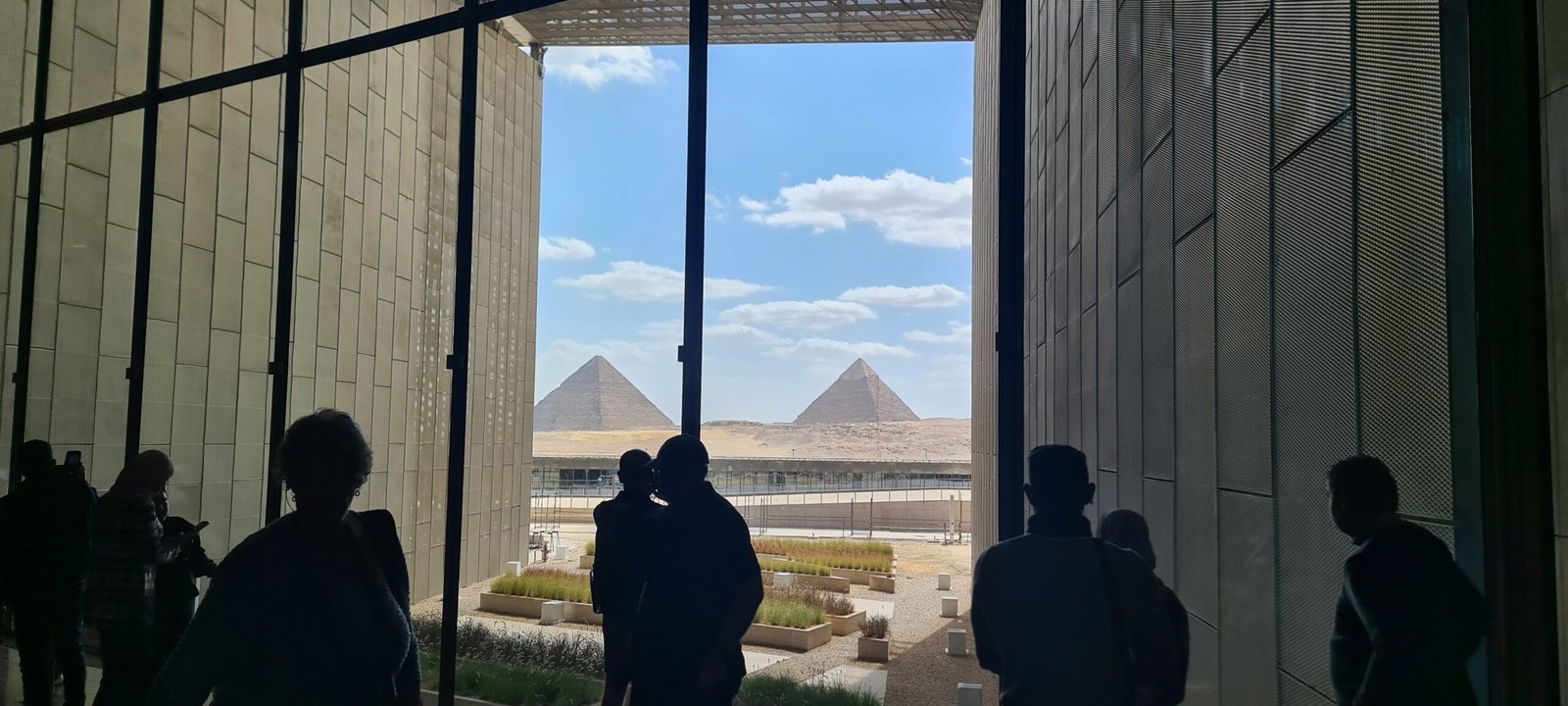
Auch bekannte Stücke können Sie bei einer weiteren Reise anders betrachten, etwa mit Aufmerksamkeit für ihre Erklärung und Präsentation. Das ist etwas anderes als die Behauptung, sämtliche Objekte seien für Sie neu. Wählen Sie zwei oder drei Schwerpunkte statt einer langen Liste. Ist ein bestimmtes Exponat unverzichtbar, holen Sie eine möglichst aktuelle Auskunft ein und überlegen Sie, ob der übrige Ausflug auch bei einer Zugangsänderung interessant bleibt.

Altägyptische Porträtköpfe in einer gemeinsamen Museumsvitrine
Wählen Sie wenige Schwerpunkte; das Foto verspricht nicht jedes Objekt auf Ihrem Rundgang.

5. Welche Wahl bleibt, wenn Sie das GEM bereits besucht haben?

Überlegen Sie zunächst, wie viel Sie dort tatsächlich gesehen haben. Eine kurze Einführung und ein ausgedehnter selbstständiger Museumstag sind unterschiedliche Erfahrungen. Für einen verpassten Sammlungsbereich zurückzukehren kann sinnvoll sein, sofern der geplante Rundgang diesen Bereich voraussichtlich einschließt. Ein zweiter Eintritt allein garantiert keinen anderen Führungsverlauf.

Tahrir ist eine weitere Möglichkeit. Die Museumsseite des Ministeriums nennt unter anderem die Narmer-Palette, die Bestattungen von Juja und Tuja sowie die Schätze von Tanis. Diese Beispiele verdeutlichen, dass Tahrir eine eigene Museumsentscheidung ist. Prüfen Sie aktuelle Zugänge zu unverzichtbaren Objekten und fragen Sie, welche Höhepunkte für die geführte Tour vorgesehen sind.

Geht es bei Kairo zum zweiten Mal vor allem um die königlichen Mumien, muss der Museumsname stimmen: Die Galerie der königlichen Mumien gehört zum Nationalmuseum der Ägyptischen Zivilisation, dem NMEC. Dieses Museum ist in keinem der vier verglichenen Produkte enthalten. Ebenso beweist ein Foto des Cheops-Bootes nicht, dass dessen Museum zu Ihrem Ticket und Rundgang gehört. Solche konkreten Wünsche benötigen eine eigene Bestätigung vor dem Kauf.

Cheops-Boot in seinem Ausstellungsraum
Das Boot dient der Einordnung. Ticket und geplanter Rundgang müssen bestätigt werden; die vier Tourbeschreibungen versprechen diesen Besuch nicht. Matthäus Wander / Wikimedia Commons, CC0; für das Web verkleinert, Bildaufbau unverändert.

6. Können Sie bei Kairo zum zweiten Mal Gizeh auslassen?

Die vier veröffentlichten Gruppenprogramme enthalten Gizeh und die Große Sphinx zusammen mit dem jeweils genannten Museum. Es handelt sich nicht um reine Museumstransfers. Der Hinweis, dass Sie die Pyramiden kennen, ist nützlich, streicht aber weder diesen Stopp noch senkt er automatisch den Preis oder verlängert die Museumszeit.

Möchten Sie Gizeh erneut erleben, überlegen Sie, was Ihnen dort diesmal wichtig wäre: ein vertrauter Panoramablick, eine Erklärung oder die Begleitung eines Erstbesuchers. Unser Sphinx-Ratgeber hilft bei der Vorbereitung eigener Fragen. Die offiziellen Informationen zum Gizeh-Plateau ergänzen den Hintergrund; maßgeblich bleiben die aktuellen Zugangs- und Treffpunktregeln Ihres Ausflugs.

Möchten Sie Gizeh überhaupt nicht besuchen, fragen Sie ein separates Museumsprogramm oder eine private Variante an. Buchen Sie nicht in der Erwartung, einfach länger im GEM zu bleiben und später ohne Absprache abgeholt zu werden. Fahrzeug, Treffpunkt, Tickets und Aufgaben der Reiseleitung können davon betroffen sein. Ein freiwilliges Extra abzulehnen ist etwas anderes, als einen enthaltenen Besichtigungsort oder den Transport zwischen Kairo und Gizeh eigenständig zu verändern.

Große Sphinx von Gizeh in einer Seitenansicht aus dem Jahr 2019
Archivansicht: Eine frühere Reise entfernt Gizeh nicht automatisch aus dem Gruppenprogramm. Warren LeMay / Wikimedia Commons, 2019, CC0; für das Web verkleinert, Bildaufbau unverändert.

7. Wie entscheiden Erstbesucher und Wiederkehrende gemeinsam?

Lassen Sie jede Person ein Hauptinteresse und einen wichtigen Vorbehalt nennen. Sie möchten vielleicht das neue Museum sehen, während Ihre Begleitung unbedingt zu den Pyramiden will. Ein GEM-und-Gizeh-Programm kann beides verbinden, wenn alle den gesamten Ablauf akzeptieren. Möchte jemand ausdrücklich Tahrir besuchen, klären Sie diese Museumsfrage vor der Entscheidung zwischen Bus und Minibus.

Verwandeln Sie den ersten Besuch Ihrer Begleitung nicht in einen schnellen Durchgang durch Orte, die Sie bereits kennen. Lassen Sie Raum für Fragen und die normalen Besichtigungsstopps. Gleichzeitig sollten auch Sie einen nachvollziehbaren Grund für die erneute lange Fahrt haben. Ein kurzes Gespräch über Museum, Wege und Erwartungen ist hilfreicher als die Annahme, dass alle dieselben Motive fotografieren möchten.

Bei Kairo zum zweiten Mal mit Kindern zählt deren heutige Situation. Interessen, Alterskategorie und praktische Bedürfnisse können sich seit der ersten Reise verändert haben. Senden Sie jedes genaue Alter und nennen Sie Anforderungen an Sitzplätze oder Wege. Wenn eine Person optional einen Pyramideninnenraum besichtigen möchte und eine andere nicht, fragen Sie nach dem Treffpunkt. Zwei getrennte geführte Gruppen entstehen dadurch nicht automatisch.

Besuchergruppe vor den Pyramiden von Gizeh
Reisezielillustration einer gemeinsamen Reise; kein belegter Erfahrungsbericht wiederkehrender Kunden.

8. Verändert der Minibus die von Ihnen gewünschte Erfahrung?

Die veröffentlichten Busprogramme nehmen bis zu dreißig Gäste auf, die gemeinsamen Minibusprogramme bis zu acht. Das sind Höchstkapazitäten und keine bestätigten Teilnehmerzahlen für Ihren Termin. Vielleicht bevorzugen Sie die kleinere Gruppe; eine private Fahrt oder individuell bestimmte Route ist dadurch aber noch nicht gebucht.

Trennen Sie drei Entscheidungen: Museum, Gruppenformat und gewünschte Anpassung. Der Wechsel von Tahrir zum GEM verändert das genannte Museum. Der Wechsel vom Bus zum Minibus verändert das Gruppenformat. Gizeh auszulassen, ein zusätzliches Museum zu besuchen oder zu einer bestimmten Uhrzeit zurückzukehren ist ein weiterer Wunsch, der eigens bestätigt werden muss. Der Minibuspreis umfasst nicht automatisch alle diese Änderungen.

Kairo zum zweiten Mal benötigt weiterhin realistische Zeitplanung. Beide Formate veröffentlichen insgesamt etwa siebzehn bis zwanzig Stunden, abhängig von Abholung, Verkehr und Programm. Planen Sie keinen Flug direkt nach einer angenommenen früheren Minibusrückkehr. Teilen Sie das genaue Hotel mit und unterscheiden Sie Abholzeit vom Aktivitätsbeginn. Unser Minibus-Ratgeber erklärt das Format; für Einzelplätze finden Sie Hinweise unter Kairo alleine.

Zwei altägyptische Statuen in einem Museumsatrium
Museum und Fahrzeuggröße werden getrennt gewählt; der gemeinsame Minibus schafft keine private Route.

9. Was kostet Kairo zum zweiten Mal für Ihre Reisegruppe?

Wählen Sie zuerst das Programm, das zu Ihrem neuen Schwerpunkt passt. Die Tabelle verlinkt die vier aktuellen Buchungsseiten und zeigt ihre veröffentlichten Alterskategorien. Ein Wiederholungsrabatt wird nicht vorausgesetzt. Der niedrigste Preis hilft nur, wenn das gewünschte Museum tatsächlich enthalten ist und die restlichen Leistungen Ihren Bedürfnissen entsprechen.

Vier gemeinsame Programme: Museum, Gruppenformat und Alterskategorien

Auf schmalen Bildschirmen seitlich verschieben. Erwachsene: ab 10; Kinder: 4–9; Kleinkinder: 0–3. Ohne Gebietszuschläge, Extras und mögliche Kartengebühren. Ein Wiederkehrerrabatt wird nicht vorausgesetzt.

Programm und maximale Gruppe Veröffentlichte Preise Möglicher Grund für die Rückkehr
Tahrir + Pyramiden im Bus
Gemeinsamer Bus · bis 30
Erwachsene (10+): 65 €
Kinder (4–9): 35 €
Kleinkinder (0–3): 20 €
Die historische Tahrir-Sammlung wählen oder mit Erstbesuchern wiedersehen.
Tahrir + Pyramiden im Minibus
Gemeinsamer Minibus · bis 8
Erwachsene (10+): 80 €
Kinder (4–9): 40 €
Kleinkinder (0–3): 35 €
Tahrir und Gizeh in einer kleineren gemeinsamen Gruppe.
GEM + Pyramiden im Bus
Gemeinsamer Bus · bis 30
Erwachsene (10+): 85 €
Kinder (4–9): 50 €
Kleinkinder (0–3): 20 €
GEM als anderen Museumsschwerpunkt wählen; Gizeh bleibt enthalten.
GEM + Pyramiden im Minibus
Gemeinsamer Minibus · bis 8
Erwachsene (10+): 100 €
Kinder (4–9): 60 €
Kleinkinder (0–3): 40 €
GEM und Gizeh in einer kleineren gemeinsamen Gruppe.

Bei den veröffentlichten Erwachsenenpreisen kostet GEM im gleichen Fahrzeugformat jeweils zwanzig Euro mehr als Tahrir: im Bus fünfundachtzig statt fünfundsechzig Euro, im Minibus hundert statt achtzig Euro. Dieser Vergleich betrifft komplette Ausflugsprodukte. Die Differenz ist kein separat verkaufter Museumseintritt und keine Zusage, dass Sie am Besuchstag ohne Bestätigung das Programm wechseln können.

Zwei Erwachsene und ein achtjähriges Kind ergeben als Fahrpreissumme €165 im Tahrir-Bus, €200 im Tahrir-Minibus, €220 im GEM-Bus oder €260 im GEM-Minibus. Standardabholung und Rücktransfer in Hurghada sind enthalten. Veröffentlichte Gebietszuschläge für Hin- und Rückfahrt betragen €5 pro Person ab Makadi Bay oder Sahl Hasheesh sowie €10 ab El Gouna, Safaga oder Soma Bay. Lassen Sie Hotelzone und Berechnung für jedes Alter bestätigen. Extras, persönliche Einkäufe und etwaige Kartengebühren sind separat.

Besucher und Kamele bei den Pyramiden von Gizeh
Vergleichen Sie den Gesamtpreis vor freiwilligen Extras; Kamelritte sind keine zugesagte Grundleistung.

10. Welche Extras können tatsächlich etwas Neues ergänzen?

Beginnen Sie mit einem konkreten Interesse. Kaufen Sie Zusatzleistungen nicht nur deshalb, weil es Ihr zweiter Besuch ist. Ein Pyramideninnenraum ist eine andere Erfahrung als der Blick auf die Monumente von außen, gehört bei diesen Programmen jedoch nicht zum regulären Plateaueintritt. Fragen Sie nach aktuellem Zugang, separatem Ticket, verfügbarer Zeit und körperlichen Anforderungen.

Unser Ratgeber zur Cheops-Pyramide von innen erläutert diese Option. Ein früherer Außenbesuch beweist nicht, dass ein Innenbesuch heute für Sie geeignet ist. Verzichten Sie darauf, vereinbaren Sie Warteort und Wiedersehen. Dasselbe gilt, wenn Angehörige unterschiedliche freiwillige Aktivitäten wählen und anschließend wieder gemeinsam weiterfahren möchten.

Eine Nilbootfahrt ist, sofern angeboten, freiwillig und zusätzlich zu bezahlen. Kamelritte werden in diesen vier Grundpreisen nicht als enthaltene Leistung zugesagt. Auch wiederkehrende Gäste erhalten keine Garantie für besondere Aussichtspunkte, Sonnenaufgang, Sonnenuntergang, leere Sehenswürdigkeiten oder gesperrte Bereiche. Bei Kairo zum zweiten Mal ist ein erreichbares neues Ziel sinnvoller als eine Liste unbestätigter Extras. Die Bilder illustrieren Reiseziele und Sammlungen, nicht die garantierten Bedingungen Ihres Termins.

Große Sphinx von Gizeh von hinten, fotografiert im Jahr 2011
Archivaufnahme von 2011. Sie belegt weder heutige Fotopositionen noch Sonderzugänge. Diego Delso / delso.photo, 2011, CC BY-SA 3.0; für das Web verkleinert, Bildaufbau unverändert.

11. Wann ist eine private oder längere Planung sinnvoller?

Fragen Sie ein anderes Angebot an, wenn Ihre wesentliche Anforderung nicht in den veröffentlichten Gruppentag passt. Beispiele sind sehr viel Zeit in einem Museum, Tahrir und GEM zusammen, ein zusätzlicher NMEC-Besuch, ein anderer historischer Ort oder ein eigens abgestimmtes Tempo. Das sind Anfragen nach einem anderen Programm und keine enthaltenen Verbesserungen der vier Tabellenangebote.

Lassen Sie sich Transport, Sehenswürdigkeiten, Tickets, Führungssprache, Essen, Abholung, Rückkehr, Gesamtpreis und Stornierungsbedingungen schriftlich auflisten. Ein privates Fahrzeug allein garantiert weder uneingeschränkten Museumszugang noch jede Führungssprache oder die vollständige Durchführung eines zu dicht geplanten Tages. Auch eine längere Reise wird erst konkret, wenn Unterkunft und Beförderung tatsächlich angeboten und vereinbart wurden.

Wählen Sie für Kairo zum zweiten Mal einen Termin, der zu Ihrem übrigen Urlaub passt. Unsere Ratgeber Kairo im Sommer und Kairo im Winter helfen bei der saisonalen Vorbereitung. Erwarten Sie nicht dieselben Bedingungen wie bei der früheren Reise. Auch nach einem damals angenehmen Besuch sollten aktuelle Anforderungen an Wege, Pausen und Fahrzeugzugang erneut mitgeteilt werden, damit die tatsächlich angebotenen Möglichkeiten geprüft werden können.

Besucher vor der Großen Sphinx mit einer Pyramide im Hintergrund
Mit Erstbesuchern zurückzukehren kann bekannten Orten einen neuen Reisezweck geben.
Kamel im Vordergrund eines Pyramidenpanoramas in Gizeh
Gizeh-Illustration, keine Zusage für Kamelritt oder bestimmtes Wetter auf einer privaten Route.

12. Wie buchen Sie Kairo zum zweiten Mal eindeutig?

Senden Sie eine kurze Zusammenfassung der ersten Reise, Ihren neuen Schwerpunkt, Datum, vollständigen Hotelnamen und Gebiet, Erwachsene, jedes Kindesalter, Museum, Fahrzeugwunsch und benötigte Führungssprache. Schreiben Sie ausdrücklich, ob Sie den normalen Gizeh-Stopp akzeptieren oder einen anderen Reiseplan wünschen. Ergänzen Sie praktische Teilnahmevoraussetzungen und bitten Sie um Verfügbarkeit sowie einen vollständigen Preis.

Die veröffentlichten Zahlungsarten sind Barzahlung bei der Abholung vor Tourbeginn ohne Vorauszahlung sowie Visa oder Mastercard online. Preise erscheinen in Euro; Kartenzahlungen werden in ägyptischen Pfund verarbeitet. Prüfen Sie Endbetrag und mögliche Gebühren im Bezahlvorgang. Bestätigen Sie bei Barzahlung die akzeptierte Währung vorher und bewahren Sie Zahlungsbeleg und Buchungsbestätigung zusammen auf.

Lesen Sie die Bedingungen für Stornierung und Änderungen. Vollständige Erstattung gilt regulär bei Absage mindestens vierundzwanzig Stunden vor dem bestätigten Beginn; spätere Absagen und Nichterscheinen werden nicht erstattet. Rechtzeitige Änderungen hängen von Verfügbarkeit und Preisunterschieden ab. Bei Veranstalterabsage wird ein verfügbarer Ersatztermin oder vollständige Erstattung angeboten. Prüfen Sie mitgeteilte Ausnahmen vor Zahlung. Ein früherer Besuch verändert diese Regeln nicht automatisch und reserviert keinen neuen Platz.

Haupteingang und geometrische Steinfassade des Großen Ägyptischen Museums
Nennen Sie das Museum eindeutig und bewahren Sie die neue Bestätigung auf.
Eingang und Vorplatz des Großen Ägyptischen Museums im Abendlicht
Architekturillustration; ein abendlicher Museumsbesuch oder dieses Licht wird nicht zugesagt.

30 Fragen zur Planung von Kairo zum zweiten Mal

Lohnt sich Kairo zum zweiten Mal ab Hurghada?

Das kann sinnvoll sein, wenn Sie einen klaren Rückkehrgrund haben, etwa ein anderes Museum oder eine erstmals reisende Begleitung. Vergleichen Sie diesen Nutzen mit dem gesamten Straßentag von siebzehn bis zwanzig Stunden. Eine frühere Reise macht den erneuten Ausflug weder automatisch notwendig noch sinnlos.

Was sollte ich in meiner alten Buchungsbestätigung nachsehen?

Prüfen Sie Museum, ungefähren Besuchstermin, Gizeh- und Sphinx-Stopps, Pyramideninnenraum und freiwillige Aktivitäten. Unterscheiden Sie tatsächliche Innenbesuche von Außenansichten. Ist der Museumsname unklar, sagen Sie das dem Team, statt sich allein auf einen alten Angebotsnamen zu verlassen.

Ich war früher in Tahrir: Ist das GEM dasselbe Museum?

Nein. Das historische Ägyptische Museum am Tahrir-Platz und das Große Ägyptische Museum bei Gizeh sind verschiedene Einrichtungen. Nennen Sie das gewünschte Museum ausdrücklich. Ein GEM-und-Gizeh-Programm verändert den Museumsteil, enthält aber weiterhin die Pyramiden und die Sphinx.

Brauche ich das GEM nicht mehr, wenn ich Tutanchamun schon gesehen habe?

Das hängt von Ihren Interessen ab. Die heutige Präsentation, andere Galerien oder Architektur können Sie ansprechen, müssen aber keinen erneuten Ausflug rechtfertigen. Entscheiden Sie, was Ihnen wichtig ist, und fragen Sie nach dem vorgesehenen Rundgang Ihres Termins.

Welches Programm wähle ich heute für Tutanchamun?

Wählen Sie eine GEM-Tour und nennen Sie die Tutanchamun-Galerien als Schwerpunkt. Der veröffentlichte Besuch bleibt vom Museumsbetrieb und Ticketzugang abhängig. Er verspricht weder jedes Exponat noch eine Privatbesichtigung oder eine feste Aufenthaltszeit vor einem bestimmten Objekt.

Kann eine Tagestour jede Galerie des GEM abdecken?

Ein vollständiger Besuch aller Galerien wird nicht zugesagt. Das Museum ist eine Station neben Gizeh, Mittagessen und Transfers. Nennen Sie Ihre Prioritäten. Für sehr ausgedehnte selbstständige Museumszeit benötigen Sie ein anderes, ausdrücklich bestätigtes Angebot.

Ist Tahrir nach einem GEM-Besuch noch interessant?

Für Gäste mit Interesse am historischen Museum und seinen Sammlungen kann das passen. Tahrir ist kein weiterer Eingang zum GEM. Informieren Sie sich über die aktuellen Sammlungen und geplanten Höhepunkte, statt den früheren GEM-Besuch als vollständigen Überblick über beide Häuser zu betrachten.

Sind die königlichen Mumien in den verglichenen Touren enthalten?

Die hier erwähnte Galerie der königlichen Mumien befindet sich im NMEC, einem eigenen Museum. Es gehört nicht zu den vier verglichenen Programmen. Ist es Ihr Hauptziel, fragen Sie eine separate Route und einen Gesamtpreis an und nennen Sie die Einrichtung eindeutig.

Bedeutet das Foto des Cheops-Bootes einen enthaltenen Besuch?

Nein. Ein Sammlungsfoto belegt weder die enthaltene Ticketleistung noch den geführten Rundgang. Fragen Sie ausdrücklich nach dem Bootsmuseum, wenn es Ihnen wichtig ist. Rechnen Sie diesen Besuch erst nach Bestätigung für Ihr Programm und Ihren Termin ein.

Kann ich nur das GEM buchen und Gizeh auslassen?

Die vier gemeinsamen Programme enthalten Gizeh. Ein reiner Museumsbesuch benötigt eine eigene bestätigte Organisation. Bleiben Sie nicht ohne Absprache im GEM, während die Gruppe weiterfährt. Ein ausgelassener enthaltener Stopp erzeugt außerdem nicht automatisch einen niedrigeren Preis.

Bekomme ich einen Rabatt, weil ich die Pyramiden bereits kenne?

Ein Wiederkehrer- oder Auslassungsrabatt wird nicht zugesagt. Die veröffentlichten Produkte haben feste Leistungen und Alterskategorien. Fragen Sie für einen anderen Ablauf nach einem Gesamtangebot, statt selbst einen angenommenen Eintrittsbetrag vom Preis der gemeinsamen Tour abzuziehen.

Darf ich die Gruppe verlassen und später wieder dazukommen?

Eine abweichende Regelung muss das Team vorher ausdrücklich mit Treffpunkt, Uhrzeit und Zuständigkeiten bestätigen. Eine Gruppenbuchung ist kein flexibler Einsteigetransfer. Ungeplante Trennung kann Beförderung und Führung betreffen, besonders bei Wegen zwischen verschiedenen Orten in Kairo und Gizeh.

Was tun, wenn meine Begleitung Kairo noch nicht kennt?

Besprechen Sie die Interessen aller Beteiligten vor der Museums- und Fahrzeugwahl. Ein für Sie neues Museum zusammen mit Gizeh für Ihre Begleitung kann beiden entgegenkommen. Lassen Sie Raum für deren erste Eindrücke und setzen Sie nicht Ihre frühere Erfahrung als Tempo für alle voraus.

Können Familienmitglieder zwei getrennte Führungen erhalten?

Das ist nicht standardmäßig enthalten. Ein gemeinsamer Ausflug hat eigene Führungs- und Treffpunktregeln. Erklären Sie unterschiedliche Interessen vor der Buchung, besonders bei Extras. Separate Reiseleitungen oder Fahrzeuge benötigen eine ausdrückliche Vereinbarung und möglicherweise ein anderes Angebot.

Ist der Minibus für wiederkehrende Gäste privat?

Nein. Die veröffentlichten Minibustouren sind gemeinsam organisiert und nehmen bis zu acht Gäste auf. Frühere Buchungen ändern den Produkttyp nicht. Ein exklusives Fahrzeug oder eine individuell angepasste Route muss separat angeboten und vor der Reservierung bestätigt werden.

Garantiert der Minibus mehr Zeit im Museum?

Nein. Eine kleinere Gruppe garantiert weder längere Museumszeit noch andere Reihenfolge oder frühere Rückkehr. Beide Formate nennen insgesamt ungefähr siebzehn bis zwanzig Stunden. Fragen Sie nach dem erwarteten Ablauf, statt die Fahrzeuggröße als Zeitversprechen zu verstehen.

Was kosten Erwachsene bei Kairo zum zweiten Mal?

Die veröffentlichten Preise sind €65 für Tahrir im Bus, €80 im Minibus, €85 für GEM im Bus und €100 im Minibus. Erwachsene sind ab zehn Jahren eingestuft. Verfügbarkeit, Hotelzuschläge, gewählte Extras und etwaige Zahlungsgebühren müssen zum Termin geprüft werden.

Wie viel teurer ist GEM im selben Fahrzeugformat?

Bei den veröffentlichten Erwachsenenpreisen beträgt der Unterschied jeweils €20 für Bus oder Minibus. Verglichen werden komplette Ausflugsprodukte, keine einzelnen Museumstickets. Wählen Sie vor der Buchung das richtige Programm; ein Wechsel am Besuchstag ist nicht automatisch möglich.

Was zahlen zwei Erwachsene mit einem achtjährigen Kind?

Die Fahrpreissummen sind €165 im Tahrir-Bus, €200 im Tahrir-Minibus, €220 im GEM-Bus und €260 im GEM-Minibus. Gebietszuschläge, freiwillige Extras und mögliche Kartengebühren kommen gegebenenfalls hinzu. Es handelt sich um Rechenbeispiele, nicht um rabattierte Familienpakete.

Welche Altersgruppen gelten, und sind Kleinkinder kostenlos?

Erwachsene beginnen ab zehn, Kinder umfassen vier bis neun und Kleinkinder null bis drei Jahre. Kleinkinder zahlen €20 in beiden Busprogrammen, €35 im Tahrir-Minibus und €40 im GEM-Minibus. Nennen Sie das genaue Alter am tatsächlichen Besuchstag.

Welche Transferzuschläge gelten außerhalb Hurghadas?

Veröffentlicht sind €5 pro Person für Hin- und Rücktransfer ab Makadi Bay oder Sahl Hasheesh sowie €10 ab El Gouna, Safaga oder Soma Bay. Bestätigen Sie das genaue Hotel und den Betrag für jeden Gast. Der Zuschlag enthält bereits die Rückfahrt.

Ist der Innenraum der Cheops-Pyramide diesmal enthalten?

Nicht in den vier hier verglichenen Grundpreisen. Plateaueintritt und Innenraumticket sind verschiedene Leistungen. Fragen Sie nach separatem Ticket, Zugang und verfügbarer Zeit. Dass Sie beim ersten Besuch nicht hineingegangen sind, reserviert keinen späteren Innenbesuch automatisch.

Muss ich eine Nilbootfahrt oder einen Kamelritt buchen?

Nein. Eine angebotene Nilbootfahrt ist freiwillig und zusätzlich zu bezahlen; Kamelritte sind keine zugesagte Grundleistung. Besprechen Sie Preis, Zeit und Treffpunkt vorher. Wenn Angehörige teilnehmen und Sie verzichten, vereinbaren Sie einen passenden Warteort mit der Reiseleitung.

Kann ich Tahrir, GEM und NMEC auf der gemeinsamen Tour verbinden?

Diese Kombination ist nicht Bestandteil der vier Produkte. Jedes enthält ein genanntes Museum und Gizeh. Mehrere Museen erfordern eine andere bestätigte Route. Prüfen Sie deren Zeitplan sorgfältig; eine lange Wunschliste beweist nicht, dass alle Besuche angenehm durchführbar sind.

Sind besondere Aussichtspunkte oder Sonnenuntergänge garantiert?

Nein. Die Standardprogramme garantieren weder Sonderzugänge noch bestimmtes Licht oder leere Sehenswürdigkeiten. Befolgen Sie örtliche Regeln und Treffpunktanweisungen. Bilder anderer Termine zeigen nicht automatisch die Bedingungen oder erlaubten Fotopositionen Ihrer eigenen Reise.

Kann ich meine alten Abholdaten wiederverwenden?

Senden Sie Hotelname und Gebiet erneut, auch wenn Sie bereits mitgereist sind. Datum, Hotelzugang, Zimmer und Route können sich unterscheiden. Die genaue Abholzeit wird getrennt vom Aktivitätsbeginn bestätigt; eine alte Nachricht ist keine neue Reservierungsbestätigung.

Kann ich Kairo zum zweiten Mal mit Visa oder Mastercard bezahlen?

Onlinezahlung mit Visa und Mastercard wird angeboten. Preise erscheinen in Euro, Kartenzahlungen werden in ägyptischen Pfund verarbeitet. Kontrollieren Sie Endbetrag und mögliche Gebühren beim Bezahlen und bewahren Sie den Beleg mit Museumsauswahl, Fahrzeug und Abholdaten auf.

Ist Barzahlung am Ausflugstag ohne Vorauszahlung möglich?

Die veröffentlichten Bedingungen erlauben Barzahlung bei der Abholung vor Beginn ohne Vorauszahlung. Bestätigen Sie Währung und vollständigen Betrag vorher. Trotzdem müssen Platz, Termin und Hotelabholung reserviert und bestätigt werden; die Zahlungsart ersetzt diese Organisation nicht.

Gelten für wiederkehrende Gäste andere Stornierungsregeln?

Abweichende Regeln werden nicht zugesagt. Regulär ist vollständige Erstattung mindestens vierundzwanzig Stunden vor dem bestätigten Beginn möglich. Spätere Absagen und Nichterscheinen sind nicht erstattbar; rechtzeitige Änderungen hängen von Verfügbarkeit und Preis ab. Prüfen Sie genannte Ausnahmen vor Zahlung.

Welche Informationen gehören in meine neue Buchungsanfrage?

Nennen Sie frühere Besichtigungen, neuen Schwerpunkt, Datum, Hotelgebiet, Reisende und Alter, Museum, Fahrzeug und Führungssprache. Schreiben Sie, ob Sie den normalen Gizeh-Stopp akzeptieren, erläutern Sie praktische Anforderungen und bitten Sie um vollständige schriftliche Programm- und Preisbestätigung.

Grand Egyptian Museum 2026

Revisiter Le Caire : 12 super conseils depuis Hurghada

Revisiter Le Caire depuis Hurghada peut avoir du sens lorsque vous savez ce que vous voulez découvrir autrement. Votre premier voyage comprenait peut-être les pyramides et le Musée égyptien de Tahrir. Cette fois, vous souhaitez entrer au Grand Musée égyptien, accompagner un proche qui ne connaît pas Gizeh ou consacrer davantage d’attention à un sujet laissé de côté.

Le point de départ est votre ancien programme, pas le prix le plus bas. Notez le musée réellement visité, les monuments que vous avez vus et les étapes que vous accepteriez de refaire. Comparez ensuite cette liste avec les offres actuelles. Changer de musée peut transformer une partie importante du voyage sans supprimer la longue route ni les pyramides d’une excursion collective.

Ce guide aide à choisir entre quatre programmes routiers et à reconnaître les demandes qui nécessitent un devis distinct. Notre guide général du Caire depuis Hurghada présente l’ensemble du trajet. Ici, nous préparons une deuxième visite avec un objectif précis, y compris lorsque les membres d’une famille ou d’un groupe ne connaissent pas tous les mêmes lieux.

Les images illustrent destinations et collections. Elles ne constituent pas un récit vérifié de clients fidèles et ne garantissent ni présentation actuelle, ni accès spécial, ni options comprises.

Programmes publiés et tarifs vérifiés le 3 novembre 2026. Confirmez disponibilité, accès actuels et montant complet de votre réservation.

1. Pourquoi souhaitez-vous revisiter Le Caire ?

Choisissez une priorité principale et un intérêt complémentaire. La première peut être un musée inconnu, une collection ou le plaisir de partager les pyramides avec un proche. Le second peut être un panorama apprécié ou une explication que vous comprenez mieux avec votre expérience. Ces deux repères sont plus utiles pour comparer les offres qu’un simple souhait de voir quelque chose de nouveau.

Considérez le coût de la journée entière dans vos vacances. Les quatre excursions routières présentées durent environ dix-sept à vingt heures au total. Même une destination familière implique transport, attente, marche, repas et retour tardif. Votre expérience aide à vous préparer, mais ne réduit ni la distance ni les aléas de circulation du nouveau départ.

Revisiter Le Caire ne signifie pas que chaque étape doit être inédite. Revoir Gizeh peut être agréable avec un autre musée ou une nouvelle compagnie. En revanche, si votre seul objectif est une longue visite autonome d’un musée, vérifiez que le programme collectif offre réellement le temps recherché. La décision doit correspondre à votre priorité et à votre acceptation du reste du parcours, pas seulement à une belle photographie.

Revisiter Le Caire : pyramide de Gizeh entre de grands blocs de pierre
Revoir un monument connu peut accompagner un nouveau choix de musée.

2. Comment retrouver ce que vous avez vraiment visité ?

Consultez l’ancienne confirmation et vos photos avant de contacter l’équipe. L’expression « musée du Caire » peut désigner plusieurs établissements. Une grande statue ou un objet doré ne suffit pas toujours à identifier le bâtiment. Le nom d’un ancien produit peut également différer du titre utilisé aujourd’hui, notamment lorsque les programmes ont évolué.

Écrivez une courte liste : musée si connu, année approximative, plateau de Gizeh, Sphinx, intérieur d’une pyramide et activités facultatives. Distinguez les endroits où vous êtes entré de ceux aperçus depuis la route. Signalez vos incertitudes ; l’équipe pourra clarifier le nouveau choix sans prétendre reconstituer chaque détail d’une journée ancienne.

Pour revisiter Le Caire, une demande précise serait : « Nous avons déjà vu Tahrir et Gizeh ; notre priorité est maintenant le GEM, et nous acceptons de revoir Gizeh. » Elle distingue immédiatement une réservation GEM classique d’une demande limitée au musée. Si votre première excursion concernait uniquement les pyramides, chacun des deux musées peut apporter un élément nouveau. Vos anciens billets ne déterminent pas les conditions d’accès actuelles.

Statue de Ramsès II dans l’atrium lumineux du Grand Musée égyptien
Retrouvez le nom du musée sur l’ancienne confirmation avant de choisir la prochaine visite.

3. Que peut apporter le GEM après une visite de Tahrir ?

Le Grand Musée égyptien est un établissement distinct près de Gizeh, pas un autre nom du musée historique de Tahrir. Vous pouvez donc changer de musée tout en conservant les pyramides et le Sphinx dans le programme collectif. La question utile est de savoir quelle partie du GEM justifie cette nouvelle journée pour vous.

La présentation officielle des galeries principales évoque notamment société, royauté et croyances. Ces thèmes permettent de préparer une visite au-delà d’une seule photo célèbre. Indiquez votre intérêt pour la vie quotidienne, les représentations royales, les pratiques funéraires ou l’architecture, puis demandez le parcours prévu. Une préférence exprimée ne constitue pas une réservation de visite thématique exclusive.

Consultez la page officielle de préparation du GEM pour les modalités actuelles. Pour revisiter Le Caire, distinguez toujours l’entrée au musée du temps disponible pour l’explorer. L’excursion réunit musée, Gizeh et trajet routier : elle ne garantit ni toutes les galeries ni une durée autonome illimitée. Si vous connaissez déjà certains objets, décidez ce que vous aimeriez mieux comprendre cette fois.

Objets égyptiens anciens dans une vitrine de musée sombre
Illustration de collection : demandez les galeries prévues dans votre programme guidé.

4. Toutankhamon est-il votre raison de revisiter Le Caire ?

Nommez cette priorité sans ambiguïté. La page officielle des galeries de Toutankhamon présente des thèmes comme la découverte, l’identité, l’équipement funéraire et la vie quotidienne. Le musée rattache aussi le masque funéraire d’or à ces galeries. Une ancienne photo de vacances ne prouve pas le lieu actuel d’exposition d’un objet.

Les programmes GEM en autocar et minibus comprennent le musée et ses galeries de Toutankhamon sous réserve du fonctionnement et des accès autorisés par les billets. Expliquez avant réservation que cette collection motive votre retour et demandez le déroulement envisagé. Cela ne garantit ni chaque objet, ni un temps déterminé devant le masque, ni une visite privée.

Vous pouvez apprécier une nouvelle présentation même lorsque certains objets vous sont familiers. Cela ne signifie pas que la collection entière sera nouvelle pour vous. Retenez deux ou trois priorités raisonnables. Notre guide de Toutankhamon depuis Hurghada complète cette préparation. Si un objet précis est indispensable, demandez une information actuelle et réfléchissez à l’intérêt du reste du voyage en cas de changement d’accès.

Têtes sculptées égyptiennes présentées ensemble dans une vitrine
Choisissez quelques priorités ; la photo ne promet pas tous ces objets sur votre parcours.

5. Et si vous avez déjà visité le Grand Musée égyptien ?

Demandez-vous ce que vous avez réellement parcouru. Une courte introduction et une grande journée autonome au musée sont deux expériences différentes. Revenir pour une partie manquée peut être pertinent si le départ envisagé prévoit de l’aborder. Un deuxième billet ne garantit pas, à lui seul, un autre parcours guidé.

Tahrir reste un choix distinct. La page du ministère consacrée au Musée égyptien cite notamment la palette de Narmer, les sépultures de Youya et Touya et les trésors de Tanis. Ces exemples expliquent l’intérêt propre de l’établissement. Confirmez l’accès actuel à toute pièce essentielle et demandez les principaux arrêts prévus dans la visite guidée.

Si vous souhaitez revisiter Le Caire pour les momies royales, identifiez le bon musée : la Galerie des momies royales appartient au Musée national de la civilisation égyptienne, ou NMEC. Il ne figure pas dans les quatre produits comparés. De même, une photo de la barque de Khéops ne signifie pas que son musée est compris dans votre billet ou parcours. Ces demandes nécessitent une confirmation spécifique.

Barque de Khéops présentée dans son espace muséal
La barque illustre le contexte. Confirmez billet et parcours : sa visite n’est pas promise par les quatre descriptifs comparés. Matthäus Wander / Wikimedia Commons, CC0; redimensionnée pour le Web, composition inchangée.

6. Peut-on revisiter Le Caire en supprimant Gizeh du programme ?

Les quatre excursions collectives publiées comprennent Gizeh et le Sphinx avec le musée nommé. Elles ne sont pas de simples transferts vers un musée. Signaler que vous connaissez les pyramides aide l’équipe à comprendre votre projet, mais ne supprime pas automatiquement l’étape, ne réduit pas le prix et n’augmente pas votre temps au musée.

Si vous acceptez de revenir à Gizeh, choisissez ce qui vous ferait plaisir : un panorama, une explication ou la découverte du lieu par votre compagnon. Notre guide du Sphinx aide à préparer vos questions. Les informations officielles du plateau de Gizeh apportent le contexte ; les règles d’accès et rendez-vous du départ restent à respecter.

Si vous ne voulez pas Gizeh, demandez un devis distinct, centré sur le musée ou organisé en privé. Ne réservez pas en supposant que vous pourrez rester au GEM et être récupéré plus tard sans accord. Véhicules, billets, rendez-vous et responsabilités du guide peuvent être concernés. Refuser une option payante est différent de modifier une destination comprise ou d’organiser seul les déplacements entre plusieurs sites.

Grand Sphinx de Gizeh vu de côté en 2019
Vue d’archives : une précédente visite ne supprime pas automatiquement Gizeh du programme collectif. Warren LeMay / Wikimedia Commons, 2019, CC0; redimensionnée pour le Web, composition inchangée.

7. Comment choisir avec des voyageurs qui viennent pour la première fois ?

Demandez à chacun de nommer une priorité et une réserve. Vous souhaitez peut-être découvrir le nouveau musée, tandis qu’un proche veut absolument voir les pyramides. Une formule GEM et Gizeh peut réunir ces intérêts si tous acceptent la journée complète. Si quelqu’un tient plutôt à Tahrir, tranchez cette question avant de comparer autocar et minibus.

Ne transformez pas la première visite de votre compagnon en passage rapide dans des endroits que vous connaissez. Laissez-lui la possibilité de poser des questions et de profiter des arrêts habituels. De votre côté, identifiez ce qui vous donne envie de refaire le trajet. Une discussion sur le musée, la marche et le rythme vaut mieux que supposer que tout le monde recherche les mêmes photos.

Pour revisiter Le Caire avec des enfants, considérez leur situation actuelle. Intérêts, catégorie tarifaire et besoins peuvent avoir changé depuis le premier voyage. Envoyez chaque âge exact et précisez les exigences de siège ou de déplacement. Si un adulte veut entrer dans une pyramide et un autre non, demandez le rendez-vous prévu : cela ne crée pas automatiquement deux groupes guidés indépendants.

Groupe de visiteurs posant devant les pyramides de Gizeh
Illustration de voyage en groupe ; elle n’est pas présentée comme un témoignage vérifié de clients qui reviennent.

8. Le minibus change-t-il l’expérience recherchée ?

Les autocars publiés accueillent jusqu’à trente personnes et les minibus partagés jusqu’à huit. Ces nombres sont des capacités maximales, pas les effectifs confirmés de votre date. Vous pouvez préférer un petit groupe, mais les produits minibus comparés restent collectifs. Ils n’incluent pas par défaut un véhicule réservé à votre usage ni un itinéraire personnel.

Séparez trois décisions : musée, taille du groupe et personnalisation. Passer de Tahrir au GEM change le musée nommé. Passer de l’autocar au minibus change le format. Supprimer Gizeh, ajouter un musée ou demander une heure de retour fixe constitue une autre demande à confirmer. Le tarif minibus ne réunit pas automatiquement ces trois changements.

Revisiter Le Caire demande toujours une planification réaliste : les deux formats affichent environ dix-sept à vingt heures au total selon les prises en charge, la circulation et le programme. Ne placez pas un vol juste après un retour supposé plus tôt en minibus. Confirmez l’hôtel exact et distinguez prise en charge et début de l’activité. Pour réserver une place, notre guide du Caire en solo explique le principe du départ partagé.

Deux statues égyptiennes anciennes dans un atrium de musée
Musée et taille du véhicule sont deux choix distincts ; le minibus partagé ne crée pas un itinéraire privé.

9. Quel budget prévoir pour revisiter Le Caire ?

Choisissez d’abord le programme correspondant à votre nouvelle priorité. Le tableau renvoie aux quatre pages de réservation et reprend leurs catégories d’âge publiées. Aucun rabais de fidélité n’est supposé. Le prix le plus bas n’est utile que s’il comprend le musée que vous souhaitez réellement découvrir cette fois.

Quatre programmes collectifs : musée, groupe et tarifs par âge

Sur écran étroit, faites défiler horizontalement. Adulte : 10 ans et plus ; enfant : 4–9 ; bébé : 0–3. Sans suppléments de zone, options ni frais éventuels de carte. Aucun rabais de fidélité n’est supposé.

Programme et groupe maximal Tarifs publiés Pourquoi l’envisager à nouveau ?
Tahrir + pyramides en autocar
Autocar partagé · jusqu’à 30
Adulte (10+): 65 €
Enfant (4–9): 35 €
Bébé (0–3): 20 €
Choisir la collection historique de Tahrir ou y accompagner un premier visiteur.
Tahrir + pyramides en minibus
Minibus partagé · jusqu’à 8
Adulte (10+): 80 €
Enfant (4–9): 40 €
Bébé (0–3): 35 €
Tahrir et Gizeh dans un groupe collectif plus petit.
GEM + pyramides en autocar
Autocar partagé · jusqu’à 30
Adulte (10+): 85 €
Enfant (4–9): 50 €
Bébé (0–3): 20 €
Choisir le GEM comme autre priorité muséale, avec Gizeh toujours compris.
GEM + pyramides en minibus
Minibus partagé · jusqu’à 8
Adulte (10+): 100 €
Enfant (4–9): 60 €
Bébé (0–3): 40 €
GEM et Gizeh dans un groupe collectif plus petit.

Aux tarifs adultes publiés, passer de Tahrir au GEM ajoute vingt euros dans le même format : soixante-cinq à quatre-vingt-cinq euros en autocar, ou quatre-vingts à cent euros en minibus. Cette comparaison concerne deux excursions complètes. Ce n’est ni le prix d’un billet de musée séparé ni la garantie de pouvoir changer de programme à l’arrivée.

Deux adultes et un enfant de huit ans représentent €165 pour Tahrir en autocar, €200 en minibus, €220 pour GEM en autocar et €260 en minibus. Le transfert standard aller-retour d’Hurghada est compris. Les suppléments publiés sont de €5 par personne pour Makadi Bay ou Sahl Hasheesh et €10 pour El Gouna, Safaga ou Soma Bay, aller-retour. Confirmez l’hôtel et le calcul de chaque âge. Options, achats personnels et éventuels frais de carte restent distincts.

Visiteurs et chameaux près des pyramides de Gizeh
Comparez le total avant les options ; les promenades à dos de chameau ne sont pas promises dans le prix de base.

10. Quelles options apportent une expérience différente ?

Partez d’un intérêt précis plutôt que d’acheter des extras parce que vous revenez. L’intérieur d’une pyramide est une visite distincte des vues extérieures, mais son billet ne fait pas partie de l’entrée standard au plateau dans ces programmes. Demandez accès actuel, billet nécessaire, temps disponible et exigences physiques avant de choisir.

Notre guide de l’intérieur de Khéops détaille cette possibilité. Une ancienne visite extérieure ne démontre pas qu’un passage intérieur vous conviendra aujourd’hui. Si vous y renoncez, convenez du lieu d’attente et du rendez-vous. La même précaution s’applique lorsque plusieurs compagnons choisissent des activités facultatives différentes.

Une promenade sur le Nil, si proposée, reste facultative et payante. Les balades à dos de chameau ne sont pas promises dans les quatre tarifs de base. Revisiter Le Caire ne garantit pas davantage un point de vue inhabituel, l’aube, le coucher du soleil, un site vide ou l’accès à une zone fermée. Un objectif réalisable est plus utile qu’une liste d’options non confirmées. Les photos illustrent les destinations et collections, sans promettre leurs conditions exactes.

Grand Sphinx de Gizeh photographié de dos en 2011
Photo d’archives de 2011 : elle ne prouve ni point de vue actuellement autorisé ni accès spécial. Diego Delso / delso.photo, 2011, CC BY-SA 3.0; redimensionnée pour le Web, composition inchangée.

11. Quand demander un programme privé ou plus long ?

Demandez une autre proposition lorsque votre exigence principale ne correspond pas au départ partagé. Cela peut concerner une longue journée dans un seul musée, Tahrir et GEM ensemble, l’ajout du NMEC, un autre site historique ou un rythme spécialement organisé. Ces demandes portent sur un autre programme, pas sur des améliorations comprises dans les quatre produits du tableau.

Faites préciser transport, sites, billets, langue du guide, repas, prises en charge, retour, total et annulation. Un véhicule privé ne garantit pas à lui seul tous les accès, toute langue de guidage ou la réalisation d’un programme trop chargé. Un séjour plus long n’est une option concrète qu’après proposition et accord sur l’hébergement et les déplacements.

Avant de revisiter Le Caire, choisissez une date compatible avec vos vacances. Nos guides du Caire en été et du Caire en hiver expliquent la préparation saisonnière. N’attendez pas nécessairement la même météo que lors du premier séjour. Même si tout s’était bien passé, indiquez de nouveau vos besoins actuels de marche, de pauses ou d’accès au véhicule.

Visiteurs face au Sphinx avec une pyramide en arrière-plan
Accompagner des premiers visiteurs peut donner un nouvel intérêt à un lieu connu.
Chameau au premier plan d’un panorama des pyramides de Gizeh
Illustration de Gizeh, sans promesse de balade à dos de chameau ni de météo précise sur un parcours privé.

12. Comment réserver clairement pour revisiter Le Caire ?

Envoyez un résumé de la première visite, votre nouvelle priorité, date, hôtel complet et zone, adultes, âge de chaque enfant, musée, véhicule et langue du guide. Dites si vous acceptez l’étape habituelle de Gizeh ou demandez une autre organisation. Ajoutez tout besoin important pour votre participation, puis réclamez disponibilité et total détaillé.

Les modalités publiées permettent le paiement en espèces à la prise en charge avant le départ, sans avance, ou Visa et Mastercard en ligne. Les prix apparaissent en euros, tandis que les paiements par carte sont traités en livres égyptiennes. Vérifiez montant final et éventuels frais avant validation. Confirmez la monnaie acceptée pour les espèces et conservez réservation et justificatif ensemble.

Lisez les conditions d’annulation et de modification. Le remboursement complet standard exige une annulation au moins vingt-quatre heures avant le début confirmé ; après cette limite ou en cas d’absence, il n’est pas prévu. Les changements demandés à temps dépendent des places et différences de prix. En cas d’annulation par l’organisateur, une alternative disponible ou un remboursement complet est proposé. Vérifiez les exceptions annoncées avant paiement. Votre fidélité ne modifie pas automatiquement ces règles.

Entrée principale et façade géométrique du Grand Musée égyptien
Nommez clairement le musée dans la nouvelle réservation et gardez la confirmation écrite.
Entrée et esplanade du Grand Musée égyptien dans une lumière du soir
Illustration architecturale ; l’excursion ne promet ni visite en soirée ni cette lumière.

30 questions pour revisiter Le Caire

Est-ce intéressant de revisiter Le Caire depuis Hurghada ?

Cela peut l’être avec une priorité claire : autre musée, collection ou proche qui découvre les pyramides. Comparez cet intérêt avec les dix-sept à vingt heures de trajet et visites. Un premier séjour ne rend pas le deuxième automatiquement indispensable ou inutile.

Que rechercher dans mon ancienne confirmation ?

Identifiez musée, année approximative, Gizeh, Sphinx, intérieur d’une pyramide et options. Séparez les visites réellement effectuées des lieux seulement aperçus. Si le musée reste incertain, dites-le à l’équipe plutôt que de déduire son identité d’un ancien nom commercial.

J’ai visité Tahrir autrefois : le GEM est-il le même musée ?

Non. Le Musée égyptien historique de Tahrir et le Grand Musée égyptien près de Gizeh sont distincts. Nommez votre choix. Une formule GEM et Gizeh change le musée tout en conservant les pyramides et le Sphinx dans le programme.

Avoir déjà vu Toutankhamon signifie-t-il que le GEM est inutile ?

Cela dépend de vos intérêts. Présentation actuelle, autres galeries ou architecture peuvent vous attirer, sans constituer une raison universelle de revenir. Définissez votre objectif et demandez le parcours envisagé avant de consacrer une nouvelle journée au voyage.

Quelle formule choisir pour Toutankhamon maintenant ?

Choisissez le GEM et signalez la priorité des galeries de Toutankhamon. La visite publiée dépend du fonctionnement du musée et des accès. Elle ne garantit ni chaque objet, ni visite privée, ni durée précise devant une pièce particulière.

Une excursion couvre-t-elle toutes les galeries du GEM ?

Aucun parcours exhaustif n’est promis. Le musée est une étape avec Gizeh, repas et transport. Précisez vos priorités et demandez le parcours prévu. Pour une longue exploration autonome, faites confirmer une autre organisation avant de réserver.

Tahrir présente-t-il un intérêt après le GEM ?

Il peut convenir aux amateurs du musée historique et de ses collections. Tahrir n’est pas une autre entrée du GEM. Consultez les informations actuelles et demandez les principaux arrêts, sans supposer qu’une visite du GEM couvre les deux établissements.

Les momies royales sont-elles incluses dans ces excursions ?

La Galerie des momies royales évoquée ici se trouve au NMEC, un autre musée. Il n’est pas inclus dans les quatre programmes comparés. Si cette visite est essentielle, demandez un itinéraire distinct, un total et une confirmation explicite.

La photo de la barque de Khéops signifie-t-elle que sa visite est comprise ?

Non. Une photo de collection ne prouve ni l’accès permis par votre billet ni le parcours guidé. Posez la question du musée de la barque précisément et attendez une confirmation pour votre programme et votre date avant de l’inclure dans vos attentes.

Puis-je réserver seulement le GEM sans les pyramides ?

Les quatre programmes collectifs comprennent Gizeh. Une visite limitée au musée nécessite une autre organisation confirmée. Ne supposez pas que vous pourrez rester au GEM et être repris plus tard, ou que supprimer une étape réduit automatiquement le prix.

Existe-t-il une réduction parce que je connais déjà Gizeh ?

Aucun rabais de deuxième visite ou d’étape supprimée n’est promis. Les produits publiés ont leurs prestations et catégories d’âge. Pour un autre parcours, demandez un devis complet sans soustraire vous-même un coût d’entrée supposé du tarif collectif.

Puis-je quitter le groupe et le rejoindre ailleurs ?

Une organisation différente doit être expressément acceptée avec lieu, horaire et responsabilités. Une réservation collective n’est pas un service de transport libre. Une séparation improvisée peut modifier guidage et transfert, notamment entre plusieurs sites du Caire et de Gizeh.

Que faire si mon compagnon vient pour la première fois ?

Comparez les priorités avant de choisir musée et véhicule. Un musée nouveau pour vous associé aux pyramides pour lui peut convenir aux deux. Laissez-lui profiter de sa découverte, sans imposer au groupe le rythme de votre visite précédente.

Notre famille peut-elle obtenir deux parcours guidés séparés ?

Ce n’est pas compris par défaut. Un départ partagé suit ses propres arrangements de guidage et de rendez-vous. Expliquez vos différences d’intérêt avant réservation. Guides, véhicules ou parcours distincts exigent un accord spécifique et éventuellement un autre devis.

Le minibus est-il privé pour les clients qui reviennent ?

Non. Les produits minibus publiés sont collectifs, jusqu’à huit personnes. Une ancienne réservation ne les transforme pas en service privatisé. Un véhicule exclusif ou un parcours personnalisé doit faire l’objet d’une proposition et d’une confirmation séparées.

Le minibus garantit-il plus de temps au musée ?

Non. Un groupe réduit ne garantit ni visite plus longue, ni autre ordre, ni retour anticipé. Les deux formats annoncent environ dix-sept à vingt heures au total. Demandez le programme prévu au lieu d’interpréter la taille du véhicule comme une promesse horaire.

Quels tarifs adultes prévoir pour revisiter Le Caire ?

Les prix publiés sont €65 pour Tahrir en autocar, €80 en minibus, €85 pour GEM en autocar et €100 en minibus. La catégorie adulte commence à dix ans. Confirmez disponibilité, transfert, options choisies et frais éventuels pour votre réservation.

Quelle différence de prix entre GEM et Tahrir dans le même véhicule ?

La différence publiée pour un adulte est de €20, en autocar comme en minibus. Elle compare des excursions complètes, pas des billets de musée seuls. Choisissez le bon produit avant réservation : un échange le jour de la visite n’est pas automatique.

Combien paient deux adultes et un enfant de huit ans ?

Les sommes sont €165 pour Tahrir en autocar, €200 en minibus, €220 pour GEM en autocar et €260 en minibus. Ces exemples excluent suppléments de zone, options et frais éventuels de carte. Il ne s’agit pas de forfaits familiaux réduits.

Quelles catégories d’âge s’appliquent, et les bébés sont-ils gratuits ?

Adulte dès dix ans, enfant de quatre à neuf ans, bébé de zéro à trois ans. Les bébés paient €20 dans les deux autocars, €35 en minibus Tahrir et €40 en minibus GEM. Indiquez l’âge exact à la date du voyage.

Quels suppléments de transfert existent hors Hurghada ?

Les suppléments aller-retour publiés sont €5 par personne pour Makadi Bay ou Sahl Hasheesh et €10 pour El Gouna, Safaga ou Soma Bay. Confirmez l’hôtel exact et le tarif applicable à chacun. Le montant annoncé comprend déjà le retour.

L’intérieur de Khéops est-il compris cette fois ?

Pas dans les quatre tarifs standards comparés. L’entrée au plateau et l’accès intérieur sont distincts. Vérifiez billet séparé, accès et temps disponible. Avoir renoncé à l’intérieur auparavant ne réserve pas automatiquement cette visite lors d’une nouvelle excursion.

Faut-il acheter une promenade sur le Nil ou à dos de chameau ?

Non. La promenade sur le Nil, si proposée, est une option payante ; les chameaux ne sont pas une prestation de base promise. Discutez prix, temps et rendez-vous. Si vos proches participent sans vous, convenez du lieu d’attente avec le guide.

Peut-on réunir Tahrir, GEM et NMEC dans la journée collective ?

Cette combinaison n’est pas incluse. Chaque produit comprend un seul musée nommé avec Gizeh. Plusieurs musées demandent une autre proposition. Examinez son horaire : une liste d’attractions ne démontre pas que toutes peuvent être visitées agréablement dans le temps disponible.

Une deuxième visite garantit-elle des points de vue spéciaux ou le coucher du soleil ?

Non. Les programmes standards ne promettent ni accès particulier, ni lumière précise, ni site vide. Respectez les règles et rendez-vous. Les photos d’un autre jour ne déterminent pas la météo, les conditions ou les positions autorisées pour votre visite.

Puis-je reprendre les informations de prise en charge de mon ancien voyage ?

Renvoyez le nom et la zone de l’hôtel. Date, chambre, portail et trajet peuvent être différents. L’heure exacte de prise en charge se confirme séparément du début de l’activité. Un ancien message n’est pas une confirmation de votre nouvelle réservation.

Puis-je payer pour revisiter Le Caire par Visa ou Mastercard ?

Visa et Mastercard sont proposées en ligne. Les tarifs apparaissent en euros et les paiements par carte sont traités en livres égyptiennes. Vérifiez total et éventuels frais au paiement. Conservez le justificatif avec le musée, le véhicule et les informations de prise en charge.

Peut-on régler en espèces le jour même sans avance ?

Les conditions publiées permettent le règlement en espèces à la prise en charge avant le départ, sans avance. Confirmez monnaie et total auparavant. Cette option ne supprime pas la nécessité de réserver une place et de recevoir les bonnes informations de rendez-vous.

Les clients fidèles ont-ils d’autres conditions d’annulation ?

Aucune règle différente n’est promise. Le remboursement complet standard exige au moins vingt-quatre heures avant le début confirmé. Après cette limite ou en cas d’absence, il n’est pas prévu. Les changements à temps dépendent des places et prix ; vérifiez les exceptions annoncées.

Que doit contenir ma nouvelle demande de réservation ?

Indiquez anciennes visites, nouvelle priorité, date, hôtel et zone, voyageurs et âges, musée, véhicule et langue. Précisez si vous acceptez Gizeh, expliquez vos besoins pratiques et demandez un programme ainsi qu’un total complets dans une confirmation écrite.

Giza pyramids during a two Cairo museums trip planning visit

Two Cairo Museums: 12 Super Tips for One Day

Two Cairo museums and the Giza pyramids in one day sounds like a complete introduction to ancient Egypt. From Hurghada, however, the important question is whether the visits fit your actual transport arrangements, admission times and preferred pace. A list of three attractions is not yet a workable itinerary.

The published Hurghada Travels road excursions combine one selected museum, the pyramids and the Sphinx. They do not include both the Egyptian Museum in Tahrir and the Grand Egyptian Museum, or GEM. Visiting both requires a separate, expressly confirmed arrangement. This guide explains what to ask, how to compare the existing programmes and when choosing one museum gives you a more satisfying day.

Dated photographs illustrate the two museums and Giza. They do not document one combined excursion or guarantee current displays. Photo: Luigi Rosa / Wikimedia Commons, CC BY-SA 2.0 (2024; display resized).

Published tour fares and official visitor information checked: 3 November 2026. Confirm availability, pickup and the final total for your hotel and date.

1. Two Cairo museums: establish what you want to see

Start with the reason behind your request. Do you want the historic building and collections at Tahrir, the modern galleries at the GEM, or simply the reassurance that you have not missed a famous attraction? These are different priorities. Writing down your two or three essential experiences helps an organiser assess the request honestly.

The Egyptian Museum stands in Tahrir Square in central Cairo. The GEM is in the Giza area. They are separate institutions, with separate admission arrangements, entrances and visiting conditions. Seeing photographs of both in a travel article does not mean that both are included in the excursion linked beside it. Read the programme itself, particularly the name of the museum.

Our Egyptian Museum versus GEM comparison helps with the collection choice. Here the focus is different: allocating a real day to two Cairo museums and the pyramids after travelling from the Red Sea. Decide which visit matters most before discussing the order. If time becomes limited, an agreed priority is more useful than a vague promise to see everything.

Two Cairo museums: facade of the Egyptian Museum in Tahrir
The Egyptian Museum facade in Tahrir, photographed in 2011; this is a separate institution from the GEM. Photo: Diego Delso / Wikimedia Commons, CC BY-SA 3.0 (2011; display resized).

2. Understand the four published road excursions

Hurghada Travels publishes bus and minibus options for each museum. All four pair the selected museum with Giza and the Sphinx. The bus products list up to 30 guests; the shared minibus products list up to eight. A smaller shared vehicle does not automatically provide a private itinerary, an extra museum or a later departure from Cairo.

Published programmes: one museum with Giza and the Sphinx

Swipe horizontally on a small screen. Prices are for separate one-museum products, before applicable hotel supplements and optional extras; they are not a combined-tour quote.

Published programme Adult fare · age 10+ Shared group
Tahrir + Pyramids by bus €65 Shared bus · up to 30
Tahrir + Pyramids by minibus €80 Shared minibus · up to 8
GEM + Pyramids by bus €85 Shared bus · up to 30
GEM + Pyramids by minibus €100 Shared minibus · up to 8

These adult prices apply from age ten. On the Tahrir bus, children aged four to nine are €35 and infants aged zero to three are €20. On the Tahrir minibus, the corresponding prices are €40 and €35. The GEM bus lists €50 and €20; the GEM minibus lists €60 and €40. Give everyone’s age when requesting the final total, including babies.

The published road outings generally indicate approximately 17–20 hours for the complete excursion. That is not 17–20 hours inside Cairo attractions: it includes travel and the day’s organisation. Check the selected product for its current inclusions and pickup information. For two Cairo museums, request a separate assessment instead of booking one standard excursion and assuming that the second museum can be added on arrival.

3. Separate the long journey from the sightseeing budget

A useful plan has two layers: the whole door-to-door outing and the time available after reaching Cairo or Giza. Hotel collection, travel, comfort stops, city movements, admission and the return journey all belong to the first layer. Only part of it is available for exhibitions and monuments.

Here is deliberately simple arithmetic, not a tour timetable: if your wish list assigns two hours to Tahrir, three to the GEM and two to Giza, it already uses seven hours on site. It has not yet allowed for traffic, security checks, queues, getting back to the vehicle, lunch or a rest. These numbers are an illustration of your preferences, not promised durations or minimum visiting requirements.

Ask the organiser to show where each activity fits and what happens if the arrival is delayed. A plan that works only when every transition is immediate offers little room for a comfortable visit. For two Cairo museums, the acceptable trade-off might be fewer galleries or a different trip structure. Decide that before paying, especially if one person wants detailed explanations while another mainly wants photographs.

Pyramids above Giza city buildings
Giza and the pyramids in 2024: city movements need their own place in the itinerary. Photo: Thesixthscallywag / Wikimedia Commons, CC BY-SA 4.0 (2024; display resized).

4. Two Cairo museums have different closing constraints

Official opening information checked for this guide lists Tahrir’s usual daily visiting hours as 09:00–17:00, with the last ticket at 16:00. The Ministry also lists shorter Ramadan hours separately. Use the official Egyptian Museum visitor information to check the arrangements relevant to your travel date, rather than applying a seasonal timetable throughout the year.

The GEM’s published gallery hours are ordinarily 09:00–18:00, with last entry at 17:00. Wednesday and Saturday gallery hours extend to 21:00, with last entry at 20:00. The museum complex has different opening and closing times from the galleries; an open complex is not a promise that you can enter every exhibition. Consult the official GEM opening hours and the date available through its official ticket service.

Later GEM hours can be a point to discuss when planning two Cairo museums. They do not extend Tahrir’s hours, guarantee evening access to Giza or change a shared excursion’s departure. Your transport, guide and return arrangements must support any later visit. Ask for the actual sequence, not simply confirmation that a building stays open late.

Ramesses II statue in the GEM atrium
Ramesses II in the GEM atrium in 2025; gallery and complex hours are different. Photo: Amr F.Nagy / Wikimedia Commons, CC BY-SA 4.0 (2025; display resized).

5. Choose highlights instead of promising complete collections

Two museums can look manageable on paper when each is reduced to a single line. Inside, visitors need time to move between displays, listen to explanations, read labels and enjoy the objects they came to see. A short highlights route may suit an experienced visitor; it may frustrate someone visiting Egypt for the first time.

Tell the organiser which subjects interest you: monumental sculpture, royal history, everyday objects or the architecture of the buildings. Ask whether a proposed museum visit allows a guided introduction, independent browsing or both. If a particular object is essential, request confirmation of its current display and access. Historical photographs in this guide illustrate the places; they do not certify that every photographed object remains in the same position.

Avoid giving two Cairo museums identical durations just because that makes the timetable symmetrical. Your interests may justify a longer stay in one. The Tutankhamun visit guide can help if that collection is your main reason for choosing the GEM. A clear collection priority often resolves the itinerary question before you need a more complicated booking.

Monumental objects in a GEM gallery
Monumental displays in the GEM, photographed in 2025. Photo: Amr F.Nagy / Wikimedia Commons, CC BY-SA 4.0 (2025; display resized).
Black stone pyramidion in Tahrir Museum
A pyramidion displayed in Tahrir in 2024: choose collection interests before allocating time. Photo: NourhanhMmahfouz / Wikimedia Commons, CC BY-SA 4.0 (2024; display resized).

6. Give Giza its own place in the plan

The pyramids are a separate visit, not the view through a museum window. Ask which Giza stops are planned and how the Sphinx fits the route. Seeing the pyramids in the distance from the GEM is an attractive visual connection, but it does not replace visiting the archaeological area.

Entering a pyramid is also a different decision from visiting the plateau. The published excursion admission should not be read as an automatic inclusion of the Great Pyramid’s interior. Check the optional ticket, availability and effect on the group’s timing. Our guide to going inside the Great Pyramid explains the practical questions, while the Sphinx guide helps distinguish that stop from the museum visits.

With two Cairo museums already on your wish list, extra activities need deliberate choices. A camel photograph, souvenir browsing or an optional Nile activity can consume time that you had mentally assigned to galleries. Ask what is included, what is optional and which activities can be omitted. Do not build a plan around an unconfirmed sunset stop or a guaranteed amount of time at every viewpoint.

Stone blocks on a Giza pyramid
A close view of a Giza pyramid in 2024; a site visit and interior access are separate decisions. Photo: Luigi Rosa / Wikimedia Commons, CC BY-SA 2.0 (2024; display resized).

7. Plan transfers, lunch and pauses as real activities

Tahrir and the Giza attractions are not one walkable museum campus. A route needs vehicle movements between them. The order should reflect confirmed admissions, the day’s operating arrangements and realistic local conditions. A map can show location; it cannot promise your journey time on a particular day.

Ask where lunch falls in the proposed programme. The standard excursions list lunch and drinks, but a separately organised combination needs its own inclusion list. Do not assume that a change of itinerary preserves every feature of the published trip. Explain dietary requirements in advance and ask what can actually be accommodated.

Allow for toilets, water and a chance to sit down without presenting these as guaranteed facilities at every stop. In a group, agree on meeting points and how the guide will explain departure times. Two Cairo museums can become tiring when the only flexible part of the day is the visitor’s rest. If every pause requires giving up a priority attraction, a one-museum plan may be a better match. Read our summer Cairo planning guide for the seasonal comfort questions to raise.

Exhibition hall of the Egyptian Museum in Tahrir
Tahrir exhibition hall in 2022; allow time for movement and explanations. Photo: Richard Mortel / Wikimedia Commons, CC BY 2.0 (2022; display resized).

8. Two Cairo museums with children or older travellers

Assess the proposed pace against the people travelling, not just the adults who make the booking. Share children’s ages, whether someone needs frequent rests and any practical access requirements relevant to the vehicle and route. You do not need to provide unnecessary personal detail to ask clear questions about steps, walking and assistance.

A minibus group size does not establish an accessible vehicle or guarantee seating throughout the attractions. Ask separately about boarding, the walking route, lifts where relevant and the assistance actually available. The Cairo guide for seniors and Cairo with children guide offer more targeted preparation.

For two Cairo museums, identify an acceptable fallback before departure. Would everyone prefer to keep the pyramids and one full museum visit, or is the second museum the main reason for travelling? Avoid dividing the group spontaneously at an entrance without confirmed supervision, transport and meeting arrangements. A simpler itinerary is often easier to enjoy together, especially after an early hotel pickup and before the long return to Hurghada.

Seated statues in the Grand Egyptian Museum
Seated statues at the GEM in 2025; assess the whole visiting route against your group’s needs. Photo: Amr F.Nagy / Wikimedia Commons, CC BY-SA 4.0 (2025; display resized).

9. Check the full cost of the confirmed programme

The four published tour fares are useful comparisons, but none is a quoted price for two Cairo museums. Adding the prices of two standard excursions does not produce a valid private combination. A custom quote needs to state the route, vehicle arrangement, guide, admissions, meals, transfers and any other included services.

For the published programmes, Makadi Bay and Sahl Hasheesh transfers carry a listed €5 per person return supplement. El Gouna, Safaga and Soma Bay carry €10 per person return. Confirm the hotel and final total when booking. These published supplements should not be assumed to define the pricing of a separately arranged itinerary.

Ask whether quoted admissions include both museums and the Giza site, and whether any special access is extra. Keep optional pyramid interiors, a Nile activity if offered, personal purchases and other extras separate from the base total. The Cairo excursion price guide explains the existing options. For two Cairo museums, request a written total in the agreed currency and the payment conditions for that precise arrangement.

Inscribed stelae displayed in the GEM
Stelae displayed at the GEM in 2025; confirm the admissions included in your quote. Photo: Amr F.Nagy / Wikimedia Commons, CC BY-SA 4.0 (2025; display resized).

10. Keep photography expectations compatible with the visit

Decide whether you want a sightseeing day with photographs or substantial time for carefully composed pictures. They create different demands on a packed itinerary. Tell the organiser about any camera equipment and important subjects before booking. Do not assume that permission at one museum applies at the other.

Review the GEM’s official visitor FAQs and Tahrir’s current visitor guidance for equipment and photography restrictions. Follow gallery signs and staff instructions on the day. A ticket for admission is not blanket permission for every kind of photography, support equipment or professional activity.

Our Cairo photography guide covers the more detailed preparation. Here the time question is central: two Cairo museums, Giza, repeated group portraits and a long list of special viewpoints compete for the same available hours. Choose the photographs that matter most. The dated images in this article show actual places and displays; they are illustrative photographs, not a record of one combined excursion sold by Hurghada Travels.

Display cases with small objects in the GEM
Objects displayed in the GEM in 2025; follow the current photography rules. Photo: Amr F.Nagy / Wikimedia Commons, CC BY-SA 4.0 (2025; display resized).
Great Pyramid and camel in the foreground
The Great Pyramid and a camel in 2024; a pictured optional activity is not an inclusion. Photo: Sphotography13 / Wikimedia Commons, CC BY-SA 4.0 (2024; display resized).

11. Compare a simpler day with a separately arranged stay

If the combined day feels rushed, consider the existing one-museum excursion first. You still visit Giza and the Sphinx, and you can choose the museum that best matches your interests. This is often the clearest option when the holiday is based in Hurghada and the available day is fixed.

Another possibility is to ask about a separately arranged Cairo stay or a second visit. This is a planning alternative, not a published overnight package promised by this article. Availability, accommodation, transport and the complete cost would need independent confirmation. Do not assume that a hotel night, flight or extra day’s guide is included in any linked road excursion.

For friends travelling together, discuss whether everyone wants two Cairo museums or whether one person’s ambition is driving the programme. The Cairo with friends guide can help organise those decisions. For couples, the couples’ Cairo guide offers another way to discuss pace. A shared priority is more valuable than completing a checklist that leaves the group exhausted.

Central hall of Tahrir Museum seen from above
Overview of Tahrir’s central hall in 2022: one museum can offer a substantial visit. Photo: Onceinawhile / Wikimedia Commons, CC BY-SA 4.0 (2022; display resized).

12. Send a request the organiser can answer clearly

Include your travel date, hotel, number of guests and ages, then state explicitly that you are asking about two Cairo museums: Tahrir and the GEM, together with Giza. List your essential visits in priority order. Add any optional pyramid interior, photography goal, access requirement or fixed commitment after the trip.

Ask for confirmation of whether the requested combination is available, whether the vehicle is shared or reserved solely for your party, the intended sequence, admission arrangements, included services and the full price. Ask what happens if the schedule changes and which priority would be preserved. A reply that only quotes a standard one-museum product does not confirm your combined request.

Finally, read the applicable payment and cancellation terms before accepting. The published tours allow cancellation at least 24 hours before the confirmed start for a full refund, with different consequences for later cancellation or no-show. A separately agreed programme needs its own confirmed conditions. Refer to the site’s terms and conditions and ask about any difference. For two Cairo museums, the best booking outcome is a precise, feasible agreement that matches the day you want.

GEM atrium with staircase and visitors
The GEM atrium and staircase in 2025; ask which parts fit the proposed route. Photo: Amr F.Nagy / Wikimedia Commons, CC BY-SA 4.0 (2025; display resized).
Pyramids seen through a GEM window
A view of the pyramids from the GEM in 2024 does not replace visiting the Giza site. Photo: Caoimheen3 / Wikimedia Commons, CC BY-SA 4.0 (2024; display resized).

30 questions about two Cairo museums in one day

Can I visit two Cairo museums and the pyramids in one day from Hurghada?

It requires an individual feasibility check and a confirmed arrangement. The long journey, admission cutoffs, city transfers and your desired visiting time all matter. None of the four standard road programmes listed here includes both museums.

Which two museums does this guide mean?

It means the Egyptian Museum in Tahrir Square and the Grand Egyptian Museum in the Giza area. They are separate institutions. The National Museum of Egyptian Civilization is another museum and is not part of this proposed combination.

Do the standard Cairo excursions include both museums?

No. Each published programme includes one named museum together with Giza and the Sphinx. Choose Tahrir or the GEM when comparing products. A link to another museum in an article does not add it to your booking.

Is a shared minibus a private excursion?

No. The published minibus options are shared excursions with up to eight guests. A private vehicle or a different itinerary must be explicitly agreed. Booking several seats does not by itself confirm a custom two-museum programme.

How long is the complete road excursion?

The published products indicate approximately 17–20 hours for the whole outing. This includes the journey and the day’s organisation, not just time inside attractions. Confirm the pickup and expected return for your hotel and selected date.

How many hours should I allocate to two Cairo museums?

There is no universal duration that suits every visitor. Identify your essential galleries and preferred pace, then ask how they fit. The seven-hour example in this guide is illustrative arithmetic for three site visits, not a promised schedule.

Does the seven-hour example include transfers?

No. The example adds two hours at Tahrir, three at the GEM and two at Giza. It excludes transfers, queues, security, meals and rests. Its purpose is to reveal the time still missing from an ambitious wish list.

What are the usual Tahrir opening hours?

The official Ministry information checked for this guide lists 09:00–17:00 daily, with the last ticket at 16:00. Ramadan has a separate, shorter timetable. Recheck the official information for the actual date of your visit.

Does the GEM open later on some days?

The official schedule checked here lists gallery closing at 21:00 on Wednesday and Saturday, with last entry at 20:00. Ordinary gallery closing is 18:00. Recheck your date; later hours do not automatically change your tour transport.

Can late GEM hours solve the whole itinerary?

They may help a separately planned route, but they do not extend Tahrir’s visiting hours or guarantee a later Giza visit. The vehicle, guide and return journey must also be arranged for the proposed timing.

Can I walk between Tahrir and the GEM?

Do not plan them as adjoining attractions on one walkable campus. The proposed combination requires a transport plan between central Cairo and the Giza area. Ask the organiser how the route works without treating a map estimate as a guarantee.

Does seeing the pyramids from the GEM count as visiting Giza?

No. A distant view is different from entering the archaeological area and following the planned pyramid and Sphinx stops. Make sure the written programme distinguishes the museum visit from the Giza visit and its admission arrangements.

Is entry inside the Great Pyramid included?

Do not assume so. Interior access is an optional decision with its own ticket and practical implications. Ask about availability, price and time before booking, particularly if you are already requesting both museums in the same day.

Can I add a camel ride or Nile activity?

Ask separately whether the activity is available, what it costs and how it affects the schedule. Optional activities are not automatically included. With several major visits planned, agreeing which extras to omit can be as useful as adding them.

Is the combination suitable for children?

That depends on the children’s ages, interests and ability to manage the complete journey and visiting pace. Share their ages and rest needs. A one-museum programme may be easier to enjoy than a tightly scheduled combination.

What should older travellers ask before booking?

Ask about vehicle boarding, walking, steps, opportunities to rest and the assistance actually available. Group size alone does not establish accessibility. Explain practical requirements early so that the organiser can assess the whole route rather than one attraction.

Are lunch and drinks included?

The published standard excursions list lunch and drinks. A separately arranged two-museum programme needs its own written inclusion list. Confirm meal timing and dietary requirements, and do not assume every standard inclusion carries over after an itinerary change.

What are the adult prices of the standard tours?

At the check date, Tahrir is €65 by bus or €80 by shared minibus; the GEM is €85 or €100 respectively. These are adult fares from age ten for separate one-museum products, not combined itinerary prices.

How are children and infants priced?

Rates differ by product. Tahrir bus lists €35 for ages four to nine and €20 for zero to three; Tahrir minibus €40 and €35. GEM bus lists €50 and €20; GEM minibus €60 and €40.

Are hotel supplements the same for every location?

No. Published return supplements are €5 per person for Makadi Bay and Sahl Hasheesh, and €10 for El Gouna, Safaga and Soma Bay. Confirm the hotel-specific total. A custom arrangement may have different transfer pricing.

Can I add two standard tour prices to estimate the combination?

That would not produce a valid quote. A combined itinerary has its own transport, guiding, admission and timing requirements. Request one written total for the exact arrangement, including the services and optional extras you have agreed.

Do the museums share a single admission ticket?

Treat them as separate admissions unless a specific offer explicitly states otherwise. Ask your organiser to identify each included museum and ticket. A standard excursion’s museum entry should not be interpreted as entry to any other museum.

Can I pay at pickup?

The published standard tours offer cash payment at pickup before the excursion. Online card arrangements are also described on the booking pages. Confirm the payment method, currency and any applicable charge for a separately quoted combined programme.

What cancellation conditions apply?

The standard products state a full refund for cancellation at least 24 hours before the confirmed start. Later cancellation and no-show have different consequences. Check the precise booking conditions, especially when requesting a separately arranged itinerary.

Can I choose which museum comes first?

You can state a preference, but the organiser must assess it against admissions, local movements and the day’s operating arrangements. Ask for the proposed order in writing. Your preferred sequence is not confirmed simply because you mentioned it.

What happens if arrival in Cairo is delayed?

Ask before booking how the organiser would adjust the itinerary and which priorities would be preserved. Do not assume that every visit can be shortened or moved freely. Last-entry times and the return arrangements remain practical constraints.

Can I bring the same camera equipment into both museums?

Check each institution’s current rules separately and describe your equipment in advance. Permissions, restrictions and charges can differ. Follow signs and staff instructions; admission alone does not authorise every type of equipment or photography activity.

Are the photographs proof of a combined excursion?

No. They are credited, dated photographs of the relevant sites and museum displays. They illustrate the planning guide. They do not document a single Hurghada Travels excursion or promise that every photographed display will be accessible on your date.

Would staying in Cairo make planning easier?

A separately arranged stay can offer another way to distribute visits, but it requires its own confirmed transport, accommodation, admissions and price. This article does not advertise an included overnight package. Ask for an actual proposal before relying on it.

What should I send with my enquiry?

Send the date, hotel, guest numbers and ages, both museum names, Giza priorities and any access or timing requirements. Ask for availability, the itinerary, vehicle arrangement, inclusions, full total and payment and cancellation terms for that specific request.